
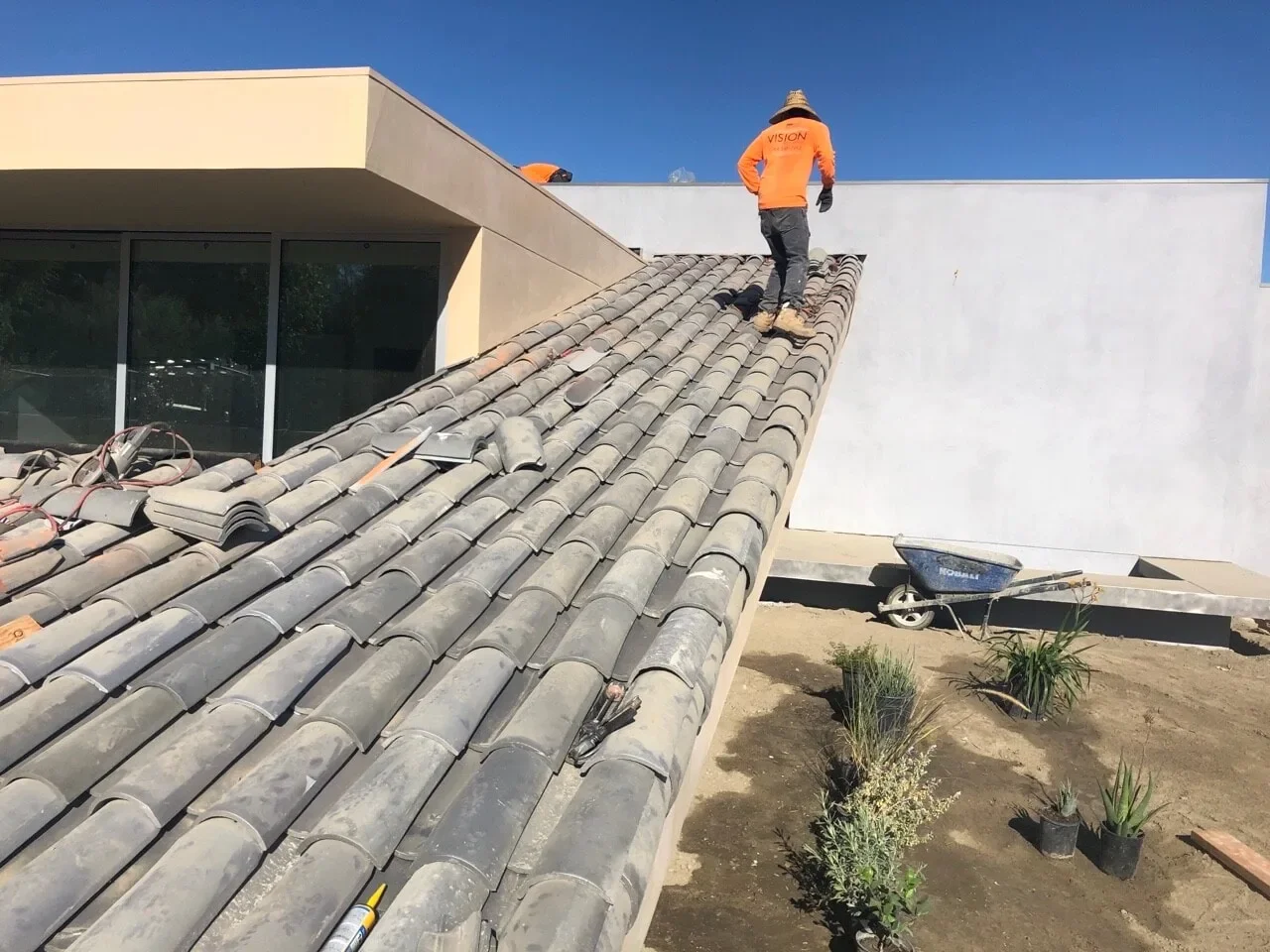
Roof Rejuvenation In Palm Desert, CA
The inspection comes before the recommendation, every time
Vision Roof Services treats asphalt shingle roofs in Palm Desert with Peak 301, a soy-oil rejuvenation product carrying a 6-year manufacturer warranty. The application needs no city permit, does not trigger Title 24 cool-roof requirements, and goes on underneath existing solar panels without detaching the array. Most Palm Desert roofs do not qualify. We inspect first, then tell you which of 4 outcomes your roof is in, in writing, with photos, inside 24 to 72 hours.
What roof rejuvenation does, and what it does not do
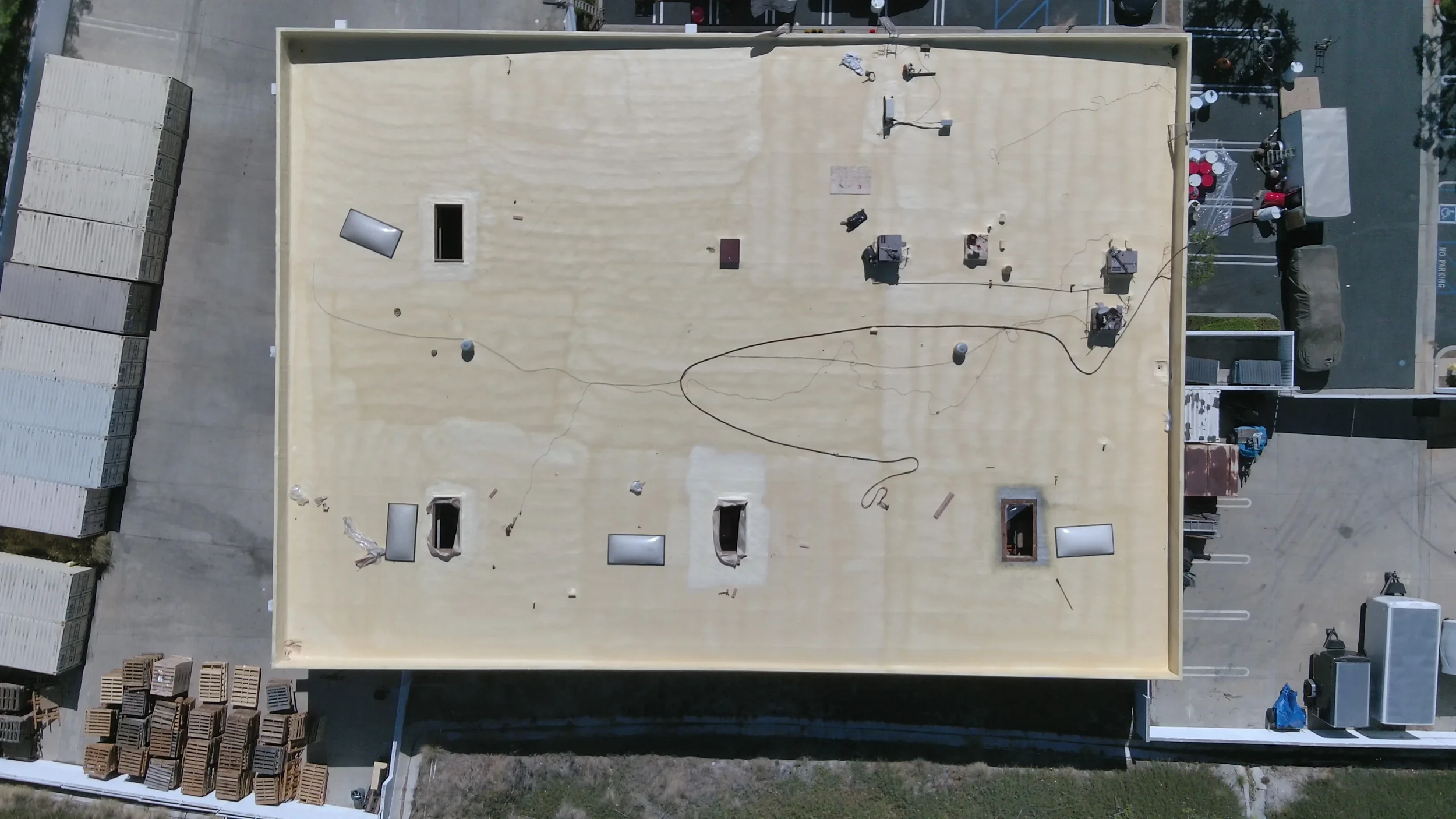
A rejuvenation treatment puts oil back into an asphalt shingle that has lost its own. That is the whole mechanism. Asphalt shingles are a mat saturated with oil-based asphalt and surfaced with mineral granules. Heat and UV drive those oils off. The shingle stiffens, granules let go, edges curl, and the roof starts failing years before the number on the warranty.
A treatment slows that. It does not undo it.
Here is the line to hold on to: rejuvenation buys time on a roof that is still structurally sound. It does not repair a leak, replace decking, reseat flashing, or make an old roof new. If your roof needs a repair, the repair comes first or the treatment goes on top of a problem.
Peak 301 is not the product most articles are describing
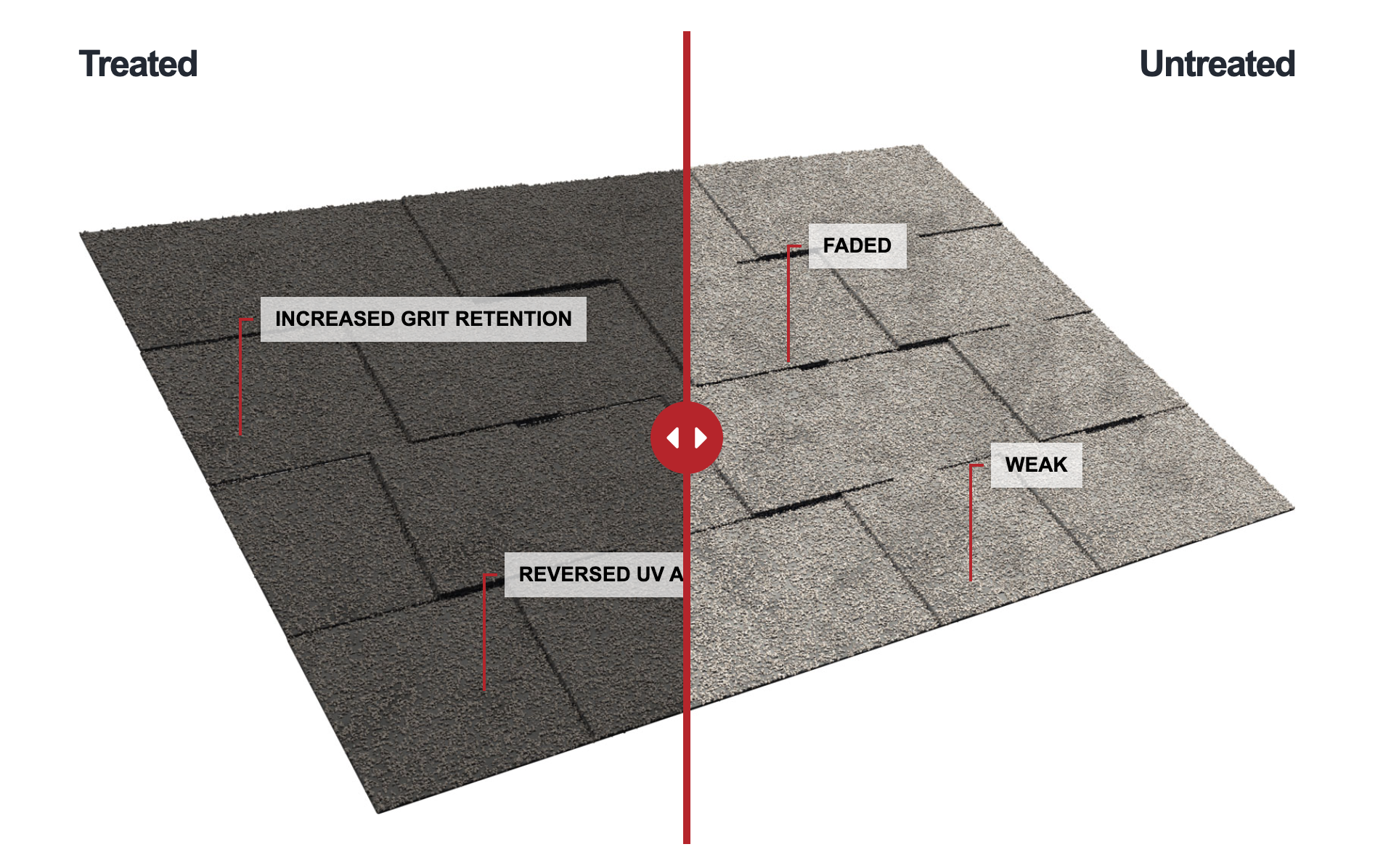
Peak 301 is 35% soy oil and contains no methyl esters. That distinction matters, because nearly every roof rejuvenation article online describes the category as a soy methyl ester spray. That is the chemistry of a different product.
The facts on Peak 301, from the manufacturer:
35% soy oil, no methyl esters. Non-toxic, and harmless to people and pets in the event of runoff.
The manufacturer publishes a restoration of shingle flexibility of nearly 50%, against roughly 20% for competing products.
1 application carries a 6-year warranty.
Applied cost sits under 25% of a full replacement, per the manufacturer.
On the market since October 2021.
2 things to keep straight about those numbers. They are the manufacturer's published figures, not ours, and the underlying test protocol, lab name and ASTM reference have not been released. We quote them as manufacturer claims because that is what they are. What we can tell you from our own inspections is in the next 2 sections.
We also do not repeat the fire-performance claim that circulates with this product category. We could not obtain test data for it. If you see a contractor in the valley advertising improved fire resistance, ask them for the report.
What rejuvenation will not do for your insurance
A rejuvenation treatment does not change your roof's age in an underwriter's file. Nothing sprayed onto a shingle resets the installation date, and roof age is the field carriers actually score.
This is the part of the conversation that ranking pages skip, so here are the numbers as they stand in 2026, reported by Insurance Business on 26 May 2026:
Mercury Insurance and Wawanesa Insurance generally do not insure homes with roofs older than 25 years, with exceptions for tile and slate.
Farmers Insurance Group may limit asphalt roofs past 15 years to actual cash value rather than replacement cost. That is a depreciated payout, not a new roof.
The California FAIR Plan denies full replacement-cost coverage on homes over 25 years old unless the roof was replaced inside that period.
Carriers increasingly underwrite from satellite and aircraft imagery rather than a site visit. Pending California legislation would require disclosure of aerial images used in an underwriting decision.
Read those 4 items again with your own roof's install date in hand. If your asphalt roof is 26 years old, a treatment does not move you back under Mercury's line. If you are with Farmers at year 17, a treatment does not restore replacement-cost coverage.
So what does move an underwriter?
Documented condition. A dated inspection report with photographs showing sound decking, intact flashings, no active leaks and measured granule coverage is a document an adjuster or an underwriter can read. That is what a Roof Health Check produces, and you get it in 24 to 72 hours whether or not you hire us for anything.
Some operators in California advertise documented cases where a treatment satisfied a carrier that had already flagged a home. We have not been able to obtain a carrier letter confirming one, so we will not tell you it works. What we will tell you is the sequence that does work: get your carrier's requirement in writing before you spend a dollar. Ask them the specific question, which roofs they will write and at what age, and what documentation they accept. Then decide. A treatment chosen because a contractor implied it would fix an insurance problem is the worst version of this purchase.
If your carrier has already issued a non-renewal citing roof age, the honest answer is that you are probably looking at a replacement, and we would rather tell you that on the phone than after you have paid us.
The shingle warranty question nobody has answered
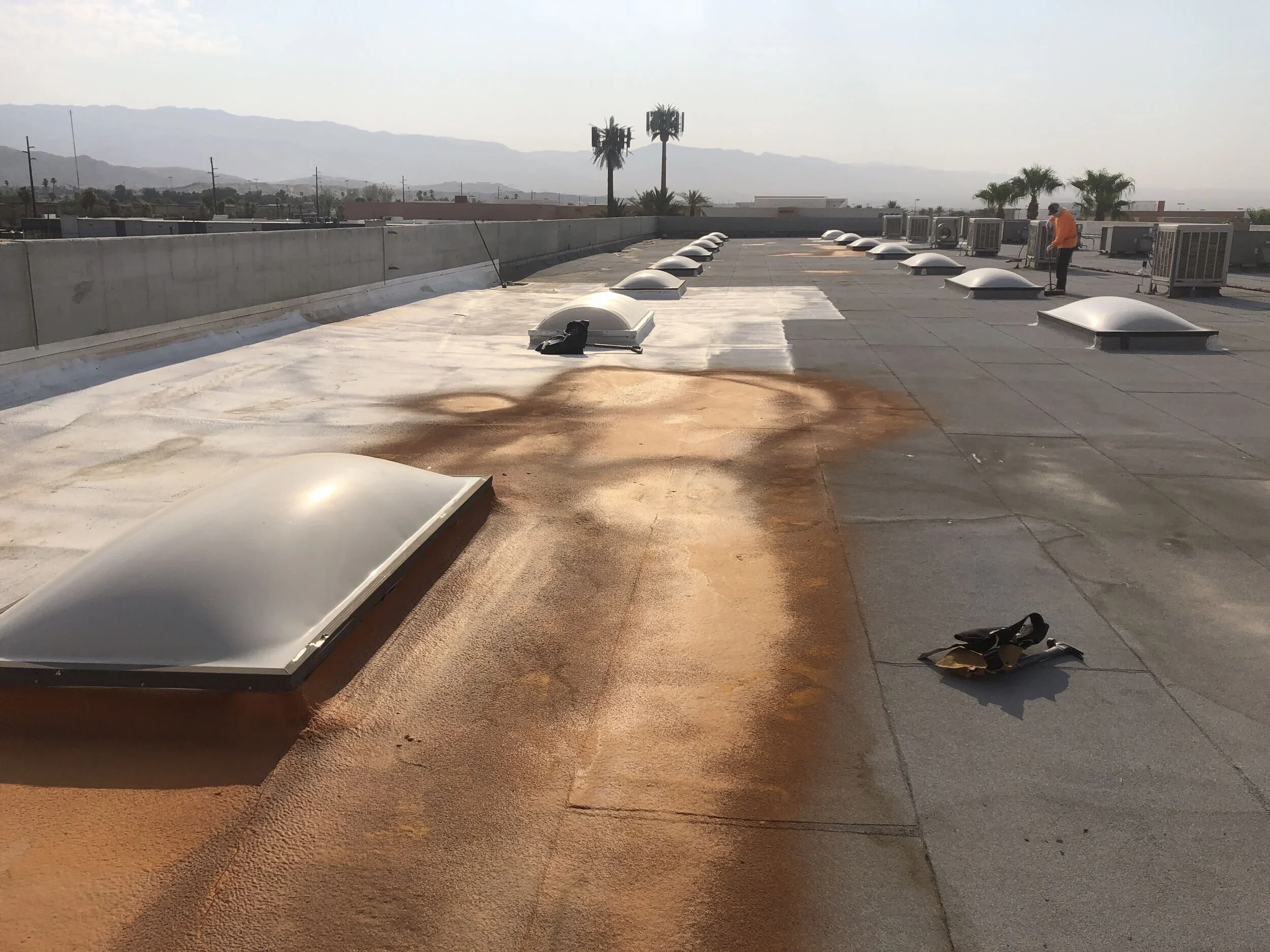
No shingle manufacturer has published a position on Peak 301, or on third-party rejuvenation generally, that we have been able to obtain in writing. We looked. If you find one, send it to us and we will put it on this page.
Here is where that leaves you. Contractor analyses circulating in the trade claim that major manufacturers treat field-applied third-party products as an unauthorized alteration that voids a shingle's limited warranty. Those claims are secondary attributions, not manufacturer letters. The rejuvenation companies say the opposite. Neither side has produced primary documentation, and we are not going to pick a side we cannot support.
3 questions to answer before you treat a roof still inside a manufacturer warranty:
Is the shingle still inside its limited warranty, and how many years remain?
What does the manufacturer say in writing when you ask them directly about a soy-oil rejuvenation product? Ask in email and keep the reply.
What is the remaining coverage actually worth? Most asphalt limited warranties prorate steeply after year 10 and cover manufacturing defects, not normal wear. A prorated year-19 claim on a defect that has not occurred may be worth less than you think.
In practice this rarely bites, because most Palm Desert roofs in the treatment window are already past their non-prorated period. If yours is not, we will tell you to wait rather than put you in a position where a manufacturer can decline you.
Your solar panels stay where they are
Peak 301 goes on underneath an existing solar array. The panels stay mounted.
A tear-off does not have that option. The array comes off, gets stored, then gets remounted and re-inspected once the new roof is on. That is a second contractor, a separate electrical permit, and a real risk of damage during handling, which runs higher on tile than on asphalt.
Worth knowing if you do end up replacing: Title 24 exempts the roof area covered by building-integrated photovoltaic or solar thermal panels from the cool-roof requirement, but the uncovered area still has to comply. Panels get you a partial exemption, not a pass.
4 roofs we will not treat
We turn down more Palm Desert rejuvenation calls than we accept. These are the 4 reasons.
Any roof with an active leak or soft decking. The repair comes first, then we re-inspect and decide.
A mat that cracks instead of bending. Oil does not rebuild a failed mat. Treating one is selling you 6 years of warranty on a roof that will not last 6 years.
Roofs under 8 years old. You would be paying to add oil to a shingle that still has its own.
Anything that is not asphalt shingle. Peak 301 is an asphalt shingle product. Tile, low-slope modified bitumen, spray foam, metal and wood shake all sit outside it. Most roofs in the Coachella Valley are tile or low-slope, which is why more callers hear "not a candidate" from us than hear "candidate."
If your roof is in one of those 4 groups, the Roof Health Check still tells you what it needs. We will point you at a repair, a maintenance schedule, or a replacement plan, and there is no charge for the inspection either way.
Frequently Asked Questions
Does roof rejuvenation work on a Palm Desert roof?
On a sound asphalt shingle roof inside the treatment window, yes, with a 6-year manufacturer warranty behind it. Long-term field performance under sustained Coachella Valley surface temperatures is the open question. The manufacturer publishes lab data on flexibility and granule retention. Multi-year tracking specific to this microclimate does not exist in any source we could find, and we are not going to pretend otherwise. What we can tell you is what our own inspections show, which is on this page.
Will rejuvenation stop my insurance non-renewal?
Probably not, and nobody should tell you it will. Roof age is the field carriers score, and a treatment does not change it. What helps is documentation. A dated inspection report with photographs is something an underwriter can act on. Get your carrier's requirement in writing first.
Will it void my shingle manufacturer warranty?
Unknown, and anyone who answers that with certainty is guessing. No manufacturer has published an obtainable written position on third-party rejuvenation. If your roof is still inside a meaningful warranty period, ask the manufacturer directly in writing before you treat it. We will tell you to wait rather than risk it.
Do my solar panels have to come off?
No. The treatment goes on under the array. A tear-off is the scenario where panels come off, which means a second contractor and a separate electrical permit.
Do I need a permit, and does this trigger Title 24?
No to both, for a treatment on an existing asphalt shingle roof. A treatment is not a re-roof, so Palm Desert does not require a permit for it and the Climate Zone 15 cool-roof requirement does not apply. A replacement requires both.
What happens when the 6 years is up?
We re-inspect. Depending on how the roof has held, the options are another application, a repair scope, or replacement planning. A treated roof still gets an annual inspection in the meantime, and the treatment does not remove the need for one.
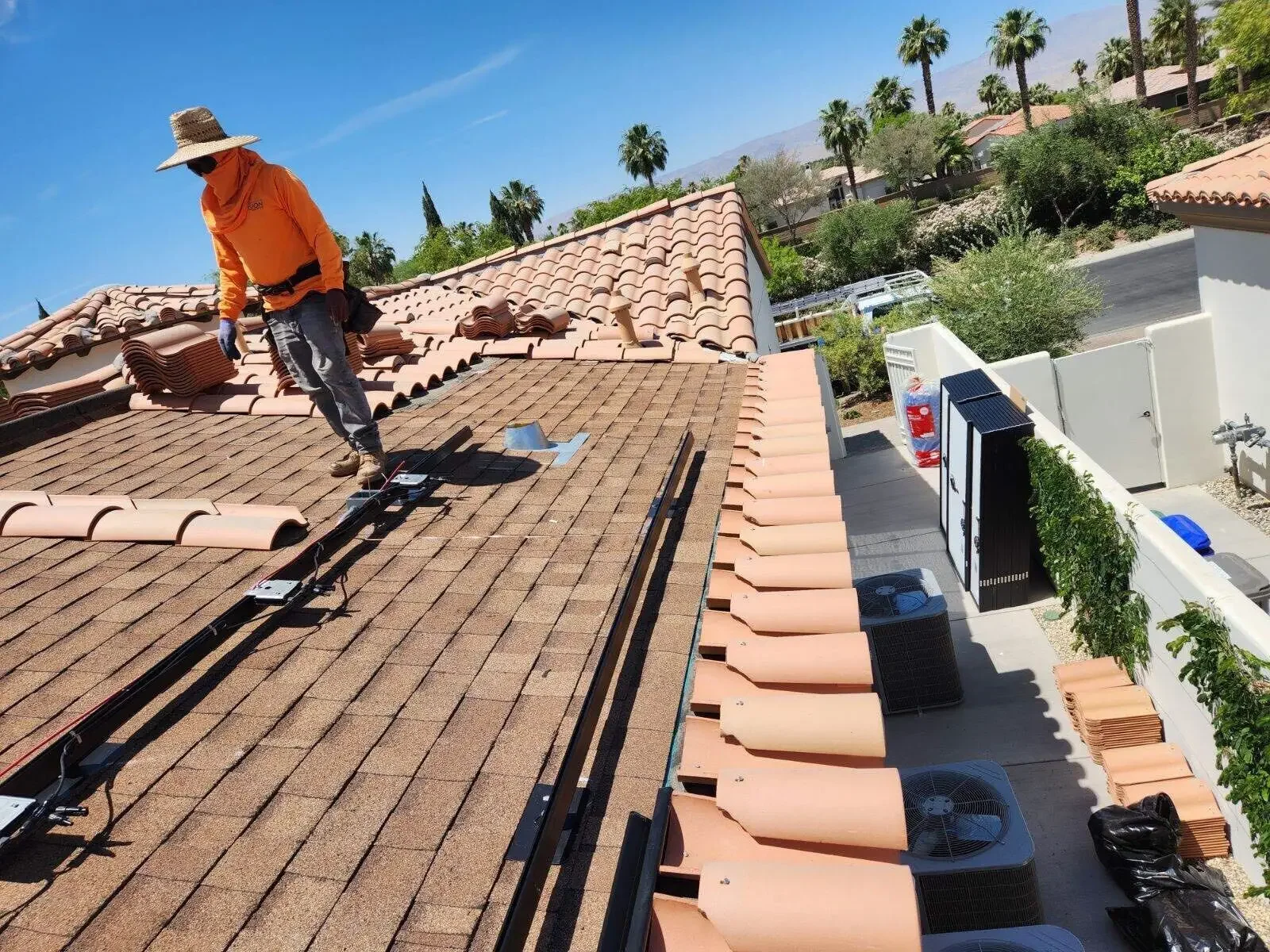
Find out which of the 4 outcomes your roof is in
No charge for the inspection. Written report with photos inside 24 to 72 hours. If your roof does not qualify, we tell you that and tell you what it needs instead.
Or call us at (844) 348-ROOF to discuss our roof rejuvenation solutions.