New Construction Roofing In Palm Desert, CA
Roofing systems for new homes and buildings in Palm Desert
Vision Roof Services installs new-construction roofing in Palm Desert under the 2025 California codes the city adopted by Ordinance 1439 on 8 January 2026. We hold California contractor license 651509, run 60 roofers out of Palm Desert and Mission Viejo, and work as the roofing subcontractor to builders, developers and general contractors on single-family, multifamily and commercial low-slope projects. 2 things decide your roof scope here before anyone talks material: which Title 24 table your building type falls under in Climate Zone 15, and whether the parcel sits inside one of the fire hazard severity zones the city mapped by Ordinance 1429 in June 2025. Get those 2 answers before schematic design and the roof stops being a schedule risk.
What changed for Palm Desert roofs on 8 January 2026
Palm Desert adopted the 2025 California Building Code, the 2025 California Wildland-Urban Interface Code and the 2025 California Fire Code by Ordinance 1439, effective 8 January 2026. Any permit application filed after that date runs under the 2025 cycle. Applications filed before 1 January 2026 run under the 2022 cycle. On a phased tract, that means 2 code editions inside 1 subdivision, and the roof scope is not identical between them.
Worth knowing before you read another roofing page in this market: CBC Chapter 7A is gone. The California Building Standards Commission relocated the regulations from Chapter 7A of the Building Code and Section R337 of the Residential Code into a new standalone code, the California Wildland-Urban Interface Code, Title 24 Part 7, with the building construction requirements landing in Chapter 5. Chapter 49 was deleted from the Fire Code at the same time. If a contractor quotes you Chapter 7A for a 2026 Palm Desert permit, they are reading a code that was retired 8 months ago.
The new Part 7 was itself amended by emergency rulemaking approved in October 2025, so the January 2026 text is not necessarily the current text. Pull the live section before you finalize a detail.
One more local item that almost nobody outside this city knows. Palm Desert amends CBC Section 1203.1 to require, in residential occupancies, air conditioning capable of maintaining a maximum room temperature of 80 degrees F in all habitable rooms. That is a municipal amendment, not a state requirement. It puts a real load on the roof and attic assembly, because the cheapest way to hold 80 degrees in a July where the nearest long-record station averages a 106.9 degree high is to stop the heat at the roof rather than fight it at the register.
Our Roofing Systems for New Construction
Versatile Solutions Tailored to Any Project
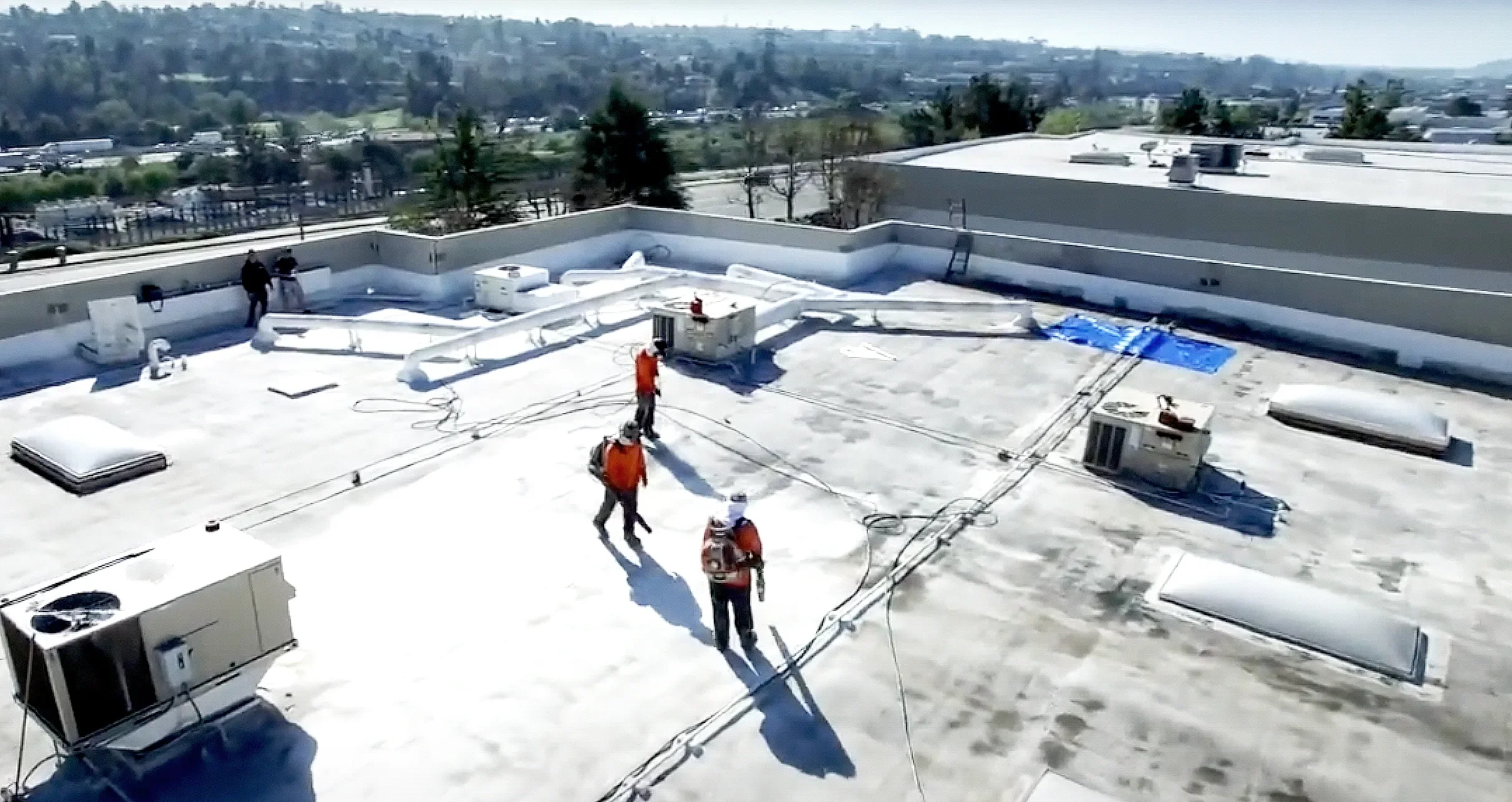
Spray Polyurethane Foam (SPF) Roofing
As licensed SPF roofing contractors, we install spray foam roofing systems that deliver seamless waterproofing and high thermal resistance. Ideal for flat roof installation on commercial buildings, retail centers, and custom homes, SPF offers energy efficient roofing for projects that demand long-term performance and insulation.
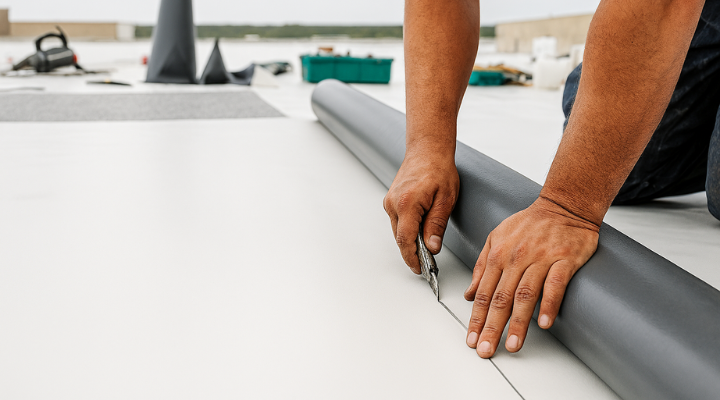
TPO & Single-Ply Membrane Systems
TPO roofing installation is a cornerstone of our commercial roofing contractor services, offering speed, energy savings, and cost efficiency. These single-ply membrane systems, including EPDM and modified bitumen, are ideal for office buildings, warehouses, and multi-family housing roofing.
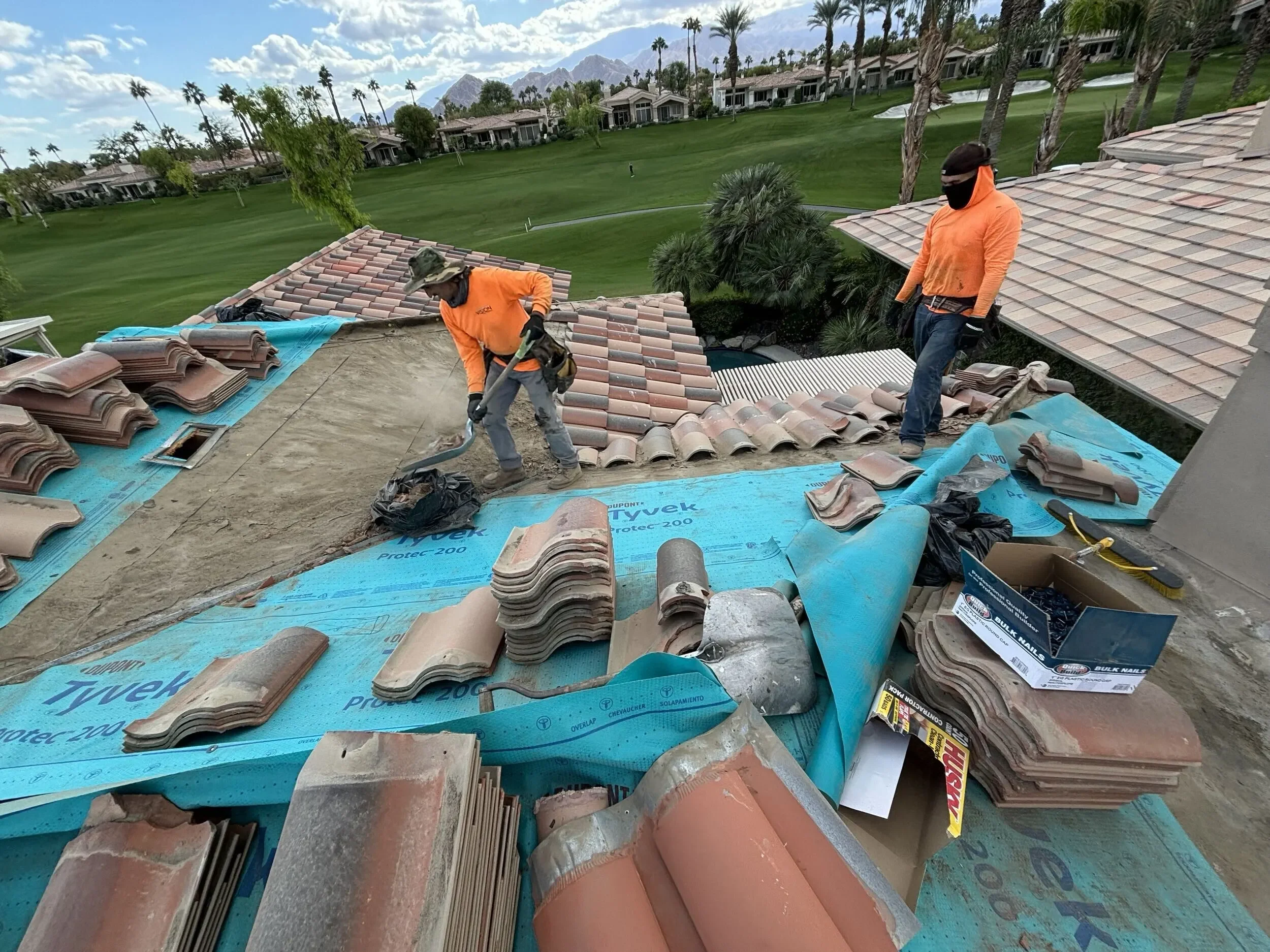
Traditional Pitched Roofs: Tile, Shingle, Slate, Metal
We support residential roofing contractors, custom builders, and developers with high-quality tile, metal, and asphalt shingle installations for subdivisions, townhouses, and custom home roofing. These systems blend curb appeal with durability across Southern California builds.

Silicone & Reflective Roof Coatings
Our spray-applied roof coatings improve building performance and meet California energy compliance standards. Perfect for spring roofing projects or summer roofing construction, these seamless roofing systems extend the life of flat commercial roofs and prep buildings for future upgrades.
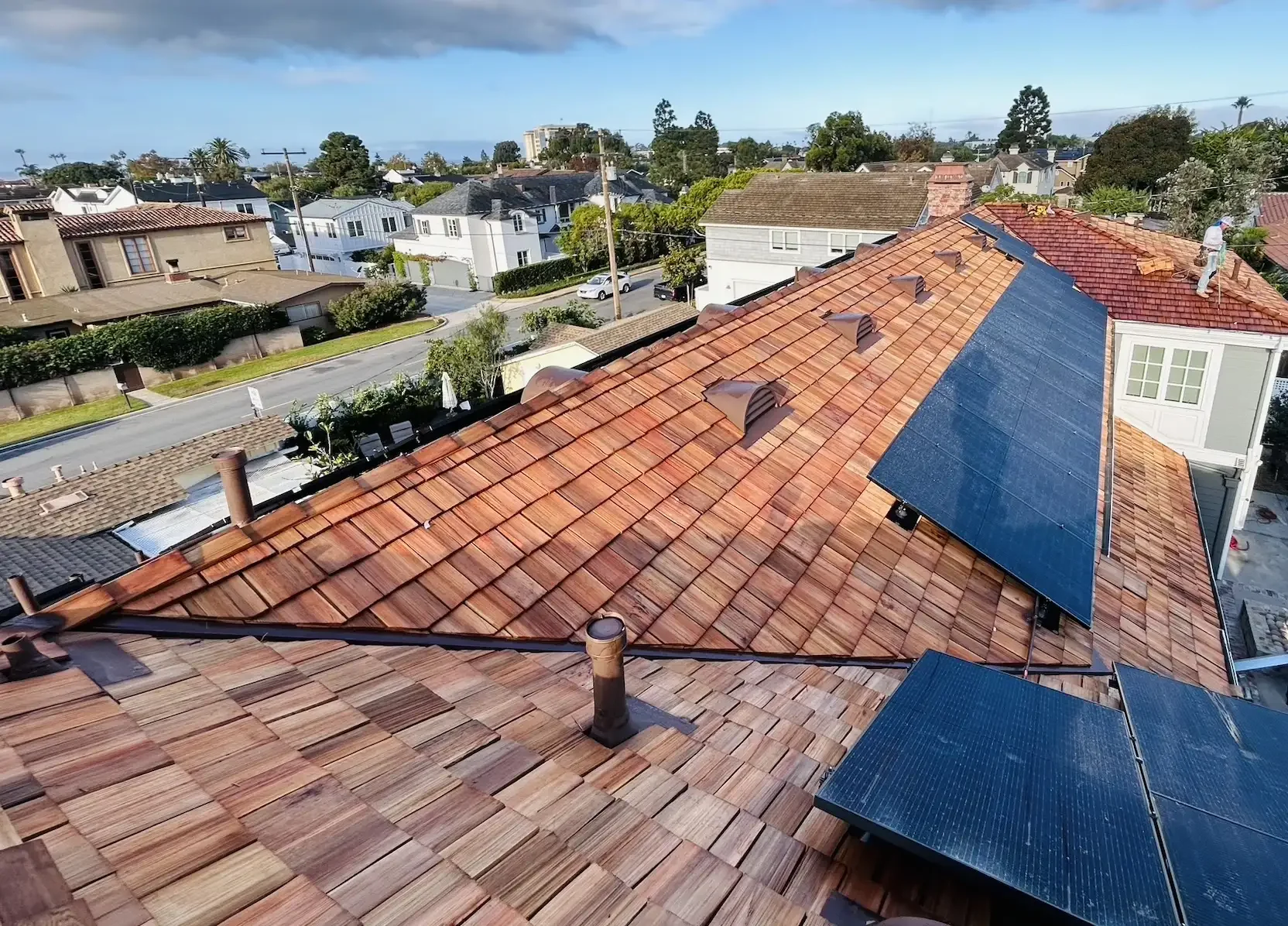
Solar-Ready Roofing Prep
We provide solar-ready roof design and installation prep for both residential and commercial properties, ensuring conduit placement, spacing, and venting are integrated upfront. Our roofing contractor partnerships help reduce retrofits and streamline solar deployment.
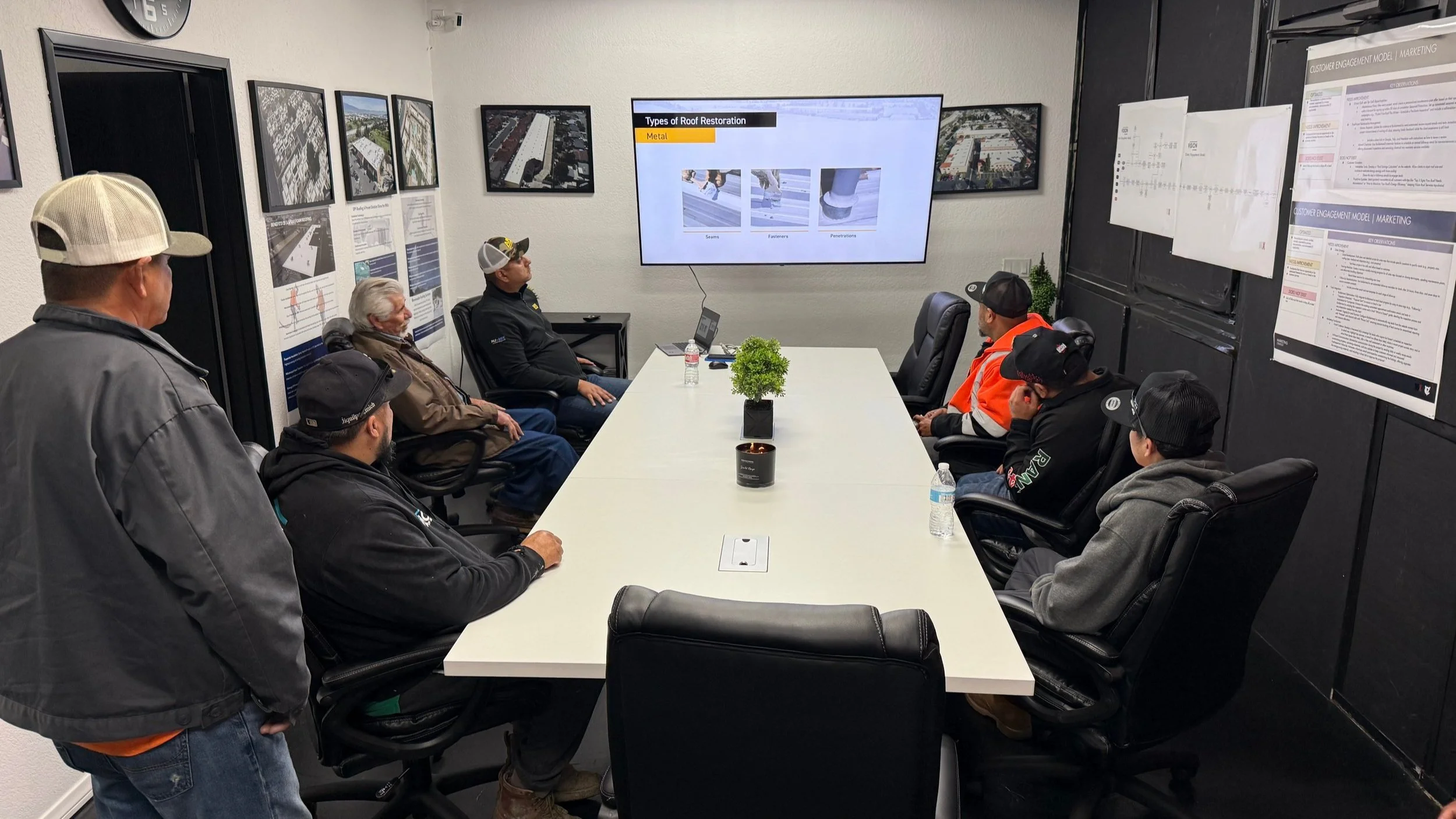
Pre-Construction Planning
We collaborate early with developers, general contractors, and construction teams to ensure every roofing element is accounted for during the design and budgeting phase.
The Roof Critical Path
6 decision points decide whether the roof holds your schedule, and 5 of them happen before a crew ever comes to the site. We run every new-construction project against the same 6. Here they are, so you can check your own project against them today.
Schematic design.
The system and the slope get fixed. Which Title 24 table applies is decided here, by building type and slope, and so is whether you have 1 roof system or 2. A desert elevation that mixes a low-slope section with steeper planes has 2 different reflectance thresholds on 1 house. Who owns it: architect, with the roofer reviewing. Cost of being late: a reflectance value that fails at plan check and a facade decision that has to be reopened.
Contract award.
The material gets ordered. A CRRC-listed tile in a specified color and a State Fire Marshal listed ember-resistant vent are both lead-time items. Ordering them at framing is ordering them late. Who owns it: general contractor and roofing sub together. Cost of being late: the roof waits on a vent.
Dry-in.
The schedule gate for everybody after you. Once the roof is watertight, interior trades can start. In the Coachella Valley the monsoon window runs 15 June to 30 September per the National Weather Service, and July through September carries roughly 19% of the annual rainfall at the nearest long-record station. A deck left open through August is a gamble with drywall money. Who owns it: roofing sub. Cost of being late: interior trades idle.
Before plan check submittal.
The fire zone answer and the CRRC product. The parcel's fire hazard severity zone status determines the assembly listing, the vent schedule and the valley detail. The CRRC-rated product has to be named on the plans with its color, because reflectance is a property of the finish and not of the material category. Who owns it: the design team. Cost of being late: a correction cycle, which in this market is the difference between a spring and a summer roof.
Framing and sheathing sign-off.
Deck acceptance. This is the roofer's first day of real risk and the first point where somebody else's delay becomes the roofer's problem. We walk the deck, document its condition, and accept it or list what has to change. Who owns it: framer to roofer handoff. Cost of being late: every trade behind dry-in slides.
Final.
The compliance paperwork. The Title 24 installation certificate and the roof inspection close the scope. Inspections in Palm Desert run Monday through Friday, 7:30am to 3:30pm, excluding holidays. Who owns it: roofing sub and the documentation author. Cost of being late: a certificate of occupancy that waits on a form.
The code already puts solar on a new Palm Desert roof
A new single-family home in California needs a photovoltaic system to pass Title 24, and the 2025 cycle changed how it is sized. Section 150.1(c)14 sizes the required system off the total solar access roof area, at 18 watts per square foot on a steep-sloped roof and 14 watts per square foot on a low-sloped roof. Battery storage readiness is mandatory on newly constructed single-family homes with electrical service above 125A under Section 150.0(s), unless a battery is already installed.
That turns 3 roof decisions into compliance items:
The solar access roof area drives the system size, so roof geometry and shading are an energy-code input at schematic design, not a later optimization.
The array's attachment points are roof penetrations that have to be detailed and flashed by whoever warranties the roof. Get that in the subcontract, in writing, before either trade mobilizes.
Building-integrated PV area is exempt from the Title 24 reflectance minimums. The uncovered roof area is not.
Our scope is the roof, the mount blocking, the flashing and the waterproofing warranty. We hold a C39 roofing license. Panels and electrical are installed by a licensed C46 solar or C10 electrical contractor, and we work alongside them. 2 contractors, 1 roof, and a documented seam between who owns what, so a leak at a stanchion is not a 6-week argument.
4 new-construction jobs we turn down
We are not the right roofing sub for every project, and saying so early costs you less than finding out at framing.
Single-lot production tract work priced on volume alone. If the award is decided on square-foot price with no scope conversation, a higher-volume production roofer will beat us and should. We compete on schedule reliability and code documentation, and those cost money.
Projects where the roof scope is awarded after framing is up. We will still bid it. What we will not do is promise a date on a deck we have not seen and a material we cannot order in time.
Wood shake or wood shingle in a mapped fire zone. Not a preference. Municipal plan checks in California routinely prohibit wood shake and shingle roof coverings in fire hazard severity zones, including fire-retardant-treated products. If it is in your spec, it is coming out.
Very small scopes outside our core service areas, and gutter cleaning. Not a fit and never has been.
If your project is in group 1 or 2, tell us anyway. We would rather point you at the right roofer than take a job we will be late on.
Frequently Asked Questions
Which code edition does my Palm Desert project run under?
The permit application date decides it. Palm Desert adopted the 2025 California Building Code, Wildland-Urban Interface Code and Fire Code by Ordinance 1439, effective 8 January 2026, and the state's 2025 Title 24 took effect 1 January 2026. Applications filed before those dates run the 2022 cycle. On a phased tract you will have both. Confirm your project number with the plans examiner at (760) 776-6420 and keep the answer in writing.
Does my new Palm Desert home need a Class A roof?
Where the Wildland-Urban Interface Code applies to your parcel, yes: a Class A roof assembly tested to ASTM E108 or UL 790 under CWUIC 504.2. Where it does not, the Building Code floor is Class C under Section 1505.1.2. Palm Desert adopted CAL FIRE's zone map by Ordinance 1429 on 26 June 2025 and its municipal code names moderate, high and very high classes, and in a Local Responsibility Area the WUI Code's construction requirements are written around the high and very high classes. Which class your parcel carries, and whether it pulls the code, is a question for Building and Safety at (760) 776-6420. Clay and concrete tile, slate, brick, masonry, exposed concrete deck, and ferrous or copper shingles and sheets are deemed equivalent to Class A on their own under 504.2.
Why does everyone still say Chapter 7A?
Because they have not updated. Chapter 7A of the Building Code and Section R337 of the Residential Code were both relocated into the new California Wildland-Urban Interface Code, Title 24 Part 7, effective 1 January 2026, with the building construction requirements in its Chapter 5, and Chapter 49 was deleted from the Fire Code. The requirements largely carried over. The citation did not, and the new Part 7 has already been amended once.
What are the exact cool-roof numbers for a 2026 Palm Desert permit?
Climate Zone 15. New single-family steep slope: aged solar reflectance 0.20, thermal emittance 0.75, or SRI 16, under Section 150.1(c)11A. New single-family low slope: 0.63, 0.75, or SRI 75, under 150.1(c)11B. New multifamily steep slope: 0.25 or SRI 23, under Section 170.2(a)1A. New nonresidential low slope: 0.63, 0.75, or SRI 75, in all 16 climate zones, under Section 140.3(a)1Aia. The product has to be CRRC-rated and labeled under Section 10-113, because an unrated product defaults to 0.08 for asphalt shingles and 0.10 for everything else, both at 0.75 emittance.
Is a new-construction roof cheaper than a replacement?
On the same roof area and the same system, yes, and the reason is mechanical rather than promotional. There is no tear-off, no disposal, no unknown number of existing layers and no deck surprises. Published cost figures for this market are almost all replacement figures, which is why they overstate a new-construction roof. We price new construction off the plans, not off a replacement range.
Who holds the roof warranty on a new build, the builder or the roofing sub?
Both, on different documents, and the split has to be written into the subcontract. Our workmanship warranty runs to whoever signs our contract, normally the general contractor or the developer. The manufacturer's system warranty runs to the named party on the warranty document. Separately, California's Right to Repair Act sets the standard the finished roof is measured against. Civil Code 896(a)(4) states that roofs, roofing systems, chimney caps and ventilation components shall not allow water to enter the structure or to pass beyond, around, or through the designed or actual moisture barriers. Civil Code 938 puts the Act's reach on units where the purchase agreement was signed by the seller on or after 1 January 2003. The outside limitation runs 10 years from substantial completion under Civil Code 941, and not later than the recordation of a valid notice of completion. Have your construction counsel confirm which period attaches to a given claim, and put the pass-through language in the subcontract before award.
How long does the roof take, and where does it sit in the schedule?
Roofing sequences after framing and sheathing sign-off, and dry-in is the gate every interior trade waits on. Our median working days from deck acceptance are in the commitments table above. The scheduling constraint in this valley is not the crew, it is the monsoon window from 15 June to 30 September, which carries roughly 19% of annual rainfall at the nearest long-record station. An open deck in August is the most expensive week on the calendar.
Do you work prevailing wage projects?
Yes, and we can produce the documentation your compliance report needs. If your project runs the AB 2011 pathway at 50 or more units, a roofing contractor employing craft employees or letting at least 1,000 hours of subcontracts also carries apprenticeship participation and health care expenditure obligations. SB 6 projects add a skilled and trained workforce requirement, subject to its statutory off-ramps. Send us the pathway with the plans.
Can you install the solar the code requires?
We install the roof, the mount blocking, the flashing and the waterproofing. We hold a C39 roofing license, and California requires a C46 solar or C10 electrical classification for the modules and wiring, so a licensed solar contractor does that half. We coordinate the penetration detail with them so 1 party owns a leak at a stanchion.
Put the roof on the schedule
Send us the plans and we will come back with the Title 24 table your building type falls under, the fire zone question you need answered before submittal, the assembly and vent schedule that clears plan check in this city, and a date.