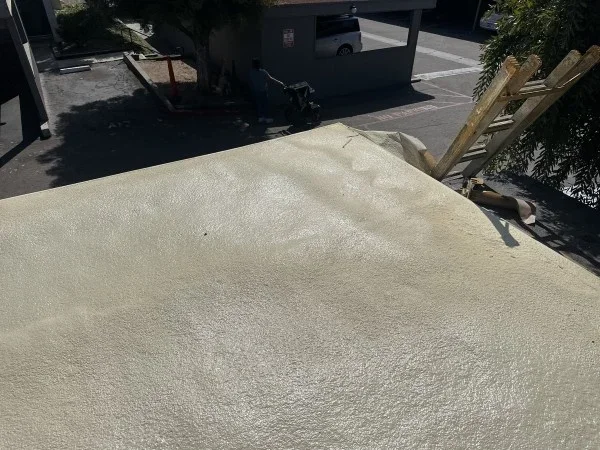
New Construction Roofing In Los Angeles, CA
California C-39 License 651509. Roofing since 1992, about 7,500 jobs completed. Call (949) 779-5664 or send your plans.
We handle new construction roofing in Los Angeles, CA for commercial, multifamily and mixed-use buildings, working as the roofing subcontractor for developers, general contractors and custom home builders. Send us the plan set and we send back a roof sheet that answers LA's 2 cool roof codes, the fire zone question and the solar roof area before the job goes to LADBS plan check.
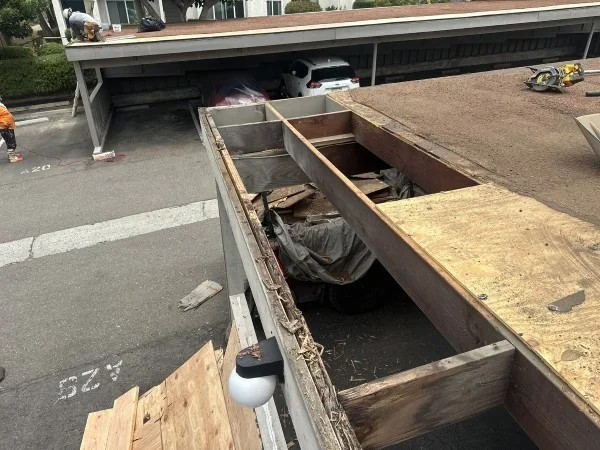
New construction roofing in Los Angeles, CA: the short answer
Vision Roof Services installs roofs on new buildings in Los Angeles: spray foam, TPO and PVC single-ply on low-slope commercial and podium roofs, and tile, metal or Class A shingle on pitched roofs. A new LA roof has to clear 2 cool roof codes at once. The state Energy Code (Title 24, Part 6), which LADBS enforces on every LA permit, asks a new low-slope commercial roof for 0.63 aged solar reflectance. The LA Green Building Code asks for 0.68. The stricter number wins, and it's the one state-focused cost guides leave out.
2 more answers set the roof scope before anyone picks a material. The first is whether the parcel sits in a mapped fire hazard severity zone. If it does, LA's 2026 Building Code amendments apply the new California Wildland-Urban Interface Code (Title 24, Part 7) to the building. The second is how much solar access roof area the 2025 Energy Code counts. On most new nonresidential buildings that number now sets a solar and battery requirement, and the array sits on your roof.
Answer those 3 questions at schematic design and the roof stops being a schedule risk. Leave them to the roofing bid and you find out at plan check, or worse, at final. The rest of this page walks through each one with the code sections, the LA numbers and what they cost. If you're comparing LA roofers in general, start with our Los Angeles roofing team.
Why a new LA roof answers to 2 cool roof codes
A newly constructed nonresidential roof in Los Angeles must meet Title 24 Section 140.3(a)1A and the LA Green Building Code cool roof table. They do not ask for the same thing. Per the California Energy Commission 2025 nonresidential cool roof rules, a new low-slope roof (under 2:12) in every climate zone needs 0.63 three-year aged solar reflectance and 0.75 thermal emittance, or an SRI of 75. LA's Green Building Code (Ordinance 187,208, Division 5) raises that to 0.68 aged reflectance, 0.85 emittance, or SRI 82.
Steep-slope roofs show the same gap. Title 24 asks a new nonresidential steep-slope roof in climate zones 2 and 4-16 for 0.25 aged reflectance and 0.80 emittance, or SRI 23. LA's table asks for 0.28, 0.85 and SRI 27.
Residential is where the gap gets wide. Title 24 sets no prescriptive cool roof value at all for a new single-family home in climate zones 6, 8, 9 or 16, which covers the City of Los Angeles. LA does. Its Green Building Code cool roof table asks a new low-rise home for 0.65 aged reflectance and 0.85 emittance (SRI 78) on a low-slope roof, and 0.25 and 0.85 (SRI 20) on a steep-slope roof. High-rise residential drops emittance to 0.75.
| Building and slope | Title 24 (2025, state) | LA Green Building Code | What you spec in LA |
|---|---|---|---|
| Nonresidential, low-slope (<2:12) | 0.63 aged SR / 0.75 TE, or SRI 75 | 0.68 / 0.85, or SRI 82 | 0.68 / 0.85 or SRI 82 |
| Nonresidential, steep-slope | 0.25 / 0.80, or SRI 23 (CZ 2, 4-16) | 0.28 / 0.85, or SRI 27 | 0.28 / 0.85 or SRI 27 |
| Single-family, low-slope | No prescriptive value in CZ 6, 8, 9, 16 | 0.65 / 0.85, or SRI 78 | 0.65 / 0.85 or SRI 78 |
| Single-family, steep-slope | No prescriptive value in CZ 6, 8, 9, 16 | 0.25 / 0.85, or SRI 20 | 0.25 / 0.85 or SRI 20 |
| High-rise residential | Per 170.2 compliance option | Low 0.65 / 0.75 (SRI 78), steep 0.25 / 0.75 (SRI 20) | LA values |
Some LA cost guides publish 0.20 aged reflectance, 0.75 emittance and SRI 16 as the LA rule. That is a Title 24 steep-slope value for other climate zones and other building types. Put it on an LA plan set and the roof falls short of the city table on every line.
2 practical notes from the product side. First, LA's cool roof table is written in 3-year aged values from the Cool Roof Rating Council directory, not the initial value printed on the spec sheet. A white membrane or coating that reads above 0.80 new can age well below that, so look up the aged number for the exact product and color before it goes on the drawings. Second, the exemptions are real and useful. Roof area under building-integrated solar is exempt from the reflectance minimums, and so is roof construction with at least 25 lb per sq ft of mass over the membrane, which covers most paver amenity decks and green roofs.
Reroofing an existing building follows a different trigger: more than 50% of the roof, or 2,000 sq ft, whichever is less. That's covered on our page for commercial reroof rules in Los Angeles. On a new building there is no trigger. Every square foot of roof is new, so every square foot answers to the table.
The 5-line LA roof sheet: what we answer before plan check
Every LA new construction job we bid starts with the same 5 lines. We fill them in from your plan set and send them back before the roof goes into the construction documents. The roofing material comes last, because these 5 answers decide which materials are even legal on the building.
| Line | The question | What decides it in LA | Who owns it |
|---|---|---|---|
| 1. Climate zone | Which Energy Code rows apply? | ZIP code. LA spans CZ 6 (coast), 8 (South LA), 9 (Downtown, Hollywood, the Valley) and 16 (Tujunga area) | Energy consultant, roofer confirms |
| 2. Cool roof line | Which reflectance number, and which product meets it? | The stricter of Title 24 140.3 / 150.1 and the LA Green Building Code. Named CRRC product and color | Architect, roofer supplies product data |
| 3. Fire zone | Is the parcel mapped? | If mapped, Title 24 Part 7 (WUI Code): Class A roof assembly, ember-resistant vents, enclosed eaves | Design team, confirmed at plan check |
| 4. Solar roof area | How much array, where, and who warranties the penetrations? | 2025 Energy Code 140.10 (nonres) or 150.1(c)14 (single-family). PV area is exempt from cool roof values | Architect, solar sub, roofer |
| 5. Roof weight | Pavers, green roof or mechanical yard? | 25 lb per sq ft over the membrane exempts that area from cool roof values. Structural load set by the engineer | Structural engineer, roofer details drainage |
Line 1 matters more than people expect. LA isn't one climate zone. San Pedro, Venice and the Palisades sit in zone 6. South LA and Palms sit in zone 8. Downtown, Hollywood and the San Fernando Valley sit in zone 9, and the 91040 and 91042 ZIP codes up near Tujunga sit in zone 16. The zone changes insulation targets and some compliance options, so we confirm it from the address before anything else. (Zone mapping per SoCalREN. Confirm the CEC climate zone tool for the exact parcel.)
Line 3 has moved since many LA plan sets were drawn. The LA Building Code treats the Very High Fire Hazard Severity Zone as a fire district within the city, and LA's 2026 code amendments (Ordinance 188,797) apply Title 24 Part 7, the California Wildland-Urban Interface Code, to buildings in a fire hazard severity zone. The 2025 CAL FIRE map update added roughly 20,000 City of LA properties to the very high zone, the first update since 2014. A parcel that wasn't mapped when the project started may be mapped now, so we pull the parcel's current ZIMAS report from LA City Planning before we draw line 3.
Line 4 is the one that bites at the end. If the solar layout, the attachment blocking and the flashing detail aren't on the roof sheet, the solar crew shows up after the roof is finished and drills through a new membrane. We'd rather put the blocking in at framing and flash it once.
Roof systems we install on new Los Angeles buildings
The system follows the 5 lines above, the slope, and how the owner plans to maintain the roof after the warranty starts. These are the 5 we install most on LA new construction.
Spray polyurethane foam (SPF) with a silicone or acrylic coating
Foam is our main system and the one our crews spray most. On a new deck there's nothing to tear off and nothing to dry out, so the foam goes down on a clean, primed substrate. Foam insulates at roughly R-5.5 to R-6.5 per inch, and we build slope into the foam thickness itself, which can replace tapered insulation board on a flat deck. On an LA flat roof the coating is what meets the city's cool roof line, so we spec a coating with a CRRC-listed aged value at or above LA's 0.68. About a dozen of our 60 roofers are trained and certified foam applicators under the General Coatings program. More detail on spray foam roofing in Los Angeles.
TPO and PVC single-ply membranes
Single-ply fits the podium multifamily and mixed-use buildings going up across LA: a Type I concrete podium with wood framing above, a low-slope roof, a mechanical yard and often an amenity deck. We heat-weld the seams and flash every curb, drain and parapet before the deck goes on. Under pavers, the membrane is the waterproofing and the pavers are the walking surface, so we detail the pedestal layout and drain access before the pavers are ordered.
Tile, metal and Class A shingle on pitched roofs
On custom homes and pitched commercial roofs, we install clay and concrete tile, standing seam metal and Class A asphalt shingle. In a mapped fire zone the whole roof assembly has to rate Class A, which means the underlayment and deck count, not only the covering. Wood shakes and shingles are off the table: LA's Building Code allows no wood shake or wood shingle roof covering anywhere in the city (LADBS bulletin P/BC 2026-013).
Reflective roof coatings
On a new LA single-ply or foam roof, a reflective coating is one way to reach the city's 0.68 line. It's also the maintenance plan. A silicone or acrylic coating gets recoated on a schedule instead of replaced, and that keeps the roof inside its manufacturer warranty terms.
Solar-ready roof prep
We set the blocking, install the standoff flashing and write down who warranties each penetration. A licensed C-46 solar or C-10 electrical contractor installs the modules and wiring. We coordinate the attachment detail with them. More on solar roofing for LA buildings.
What a new construction roof costs in Los Angeles
A new construction roof in Los Angeles costs less per square foot than an LA replacement of the same system and size, because there's no tear-off or disposal, and no rot hiding under an old roof. LA rules add cost back in 3 places: a higher-reflectance product to meet 0.68 instead of 0.63, a Class A assembly and listed vents in a mapped fire zone, and solar blocking and flashing.
| System | Installed $/sq ft (LA, replacement) | Source | New construction difference |
|---|---|---|---|
| Asphalt shingle, standard | $7.00-$11.00 | RoofingCalc LA, 2026 | No tear-off; Class A assembly in fire zones |
| Concrete tile | $10.00-$18.00 | RoofingCalc LA, 2026 | No tear-off; structural load set at design |
| Clay tile | $15.00-$25.00 | RoofingCalc LA, 2026 | No tear-off; deemed Class A covering |
| Standing seam metal | $12.50-$20.50 | RoofingCalc LA, 2026 | No tear-off |
| PVC membrane (low-slope) | $8.50-$14.50 | RoofingCalc LA, 2026 | No tear-off; pick a product with aged SR 0.68+ for LA |
Those are replacement ranges published for the Los Angeles market, shown so you can see what drops out. The same LA guide puts installation labor at $3 to $5 per sq ft for asphalt and $5 to $12 for metal or tile. We found no published Los Angeles range for spray foam, so we quote it from your plans. We price new construction from the plans and the roof sheet, not from a per-square-foot list. Square footage, slope, parapet and curb count, the roof deck, the fire zone answer and the solar layout move the number more than the material does.
Where the roof sits in an LA build schedule
The roof gates every interior trade. Until the building is dried in, drywall, flooring and finishes wait. In Los Angeles that gate runs into the rain season. Downtown LA averages 14.25 inches of rain a year, and almost all of it falls between November and March. On October 8, 2026, the NOAA Climate Prediction Center put an El Nino Advisory in effect and gave a strong-to-very-strong event better than 83% odds through January-March 2027. The next update is due November 12, 2026. Downtown LA's record says to plan for rain, not to count on it: the 2 strongest El Nino seasons brought 31.25 inches (1982-83) and 31.01 inches (1997-98), while the strong 2015-16 event brought 9.65 inches, about 65% of normal.
| Stage | Roof decision | What goes wrong if it's late |
|---|---|---|
| Schematic design | 5-line roof sheet: zone, cool roof line, fire zone, solar area, roof weight | Wrong reflectance or a missing Class A assembly at plan check |
| Before plan check submittal | Named CRRC product and color, vent and eave details, PV layout | Corrections cycle on the roof sheet |
| Contract award | Order long-lead items: coating or membrane in the specified color, listed ember-resistant vents, PV mounts | Material arrives after the dry-in date |
| Framing and sheathing sign-off | We walk the deck and accept it or list fixes in writing | Roofing over a deck nobody checked |
| Dry-in | Roof watertight so interior trades start | Rain on open framing from November on |
| Final | Certificates of installation, cool roof labels, LADBS roof inspection | Certificate of occupancy held for paperwork |
Affordable housing projects feel this the most. In December 2025 the City Council wrote Mayor Bass's Executive Directive 1 into the municipal code. ED1 projects get pre-construction review in 60 days at most and permits within 5 days, and by CoStar's count more than 35,000 affordable units had been proposed under it. When the city moves that fast, a roof spec that isn't done at schematic design becomes the thing the schedule waits on.
We learned to do the deck walk on every LA job the hard way. Years ago we'd take the GC's word that sheathing was signed off and show up to nail patterns that wouldn't hold the underlayment. Now we walk it, we photograph it, and you get a written accept-or-fix list before our crew mobilizes. You won't see us start on a deck we haven't seen.
3 LA rule changes that most new construction guides haven't caught
1. LA repealed its all-electric building ordinance. Ordinance 188,716 repealed Ordinance 187,714 in its entirety, effective October 13, 2025, citing the Ninth Circuit's Berkeley gas ban ruling. The repeal is retroactive to any permit that hasn't received a certificate of occupancy (LA City Clerk, Ordinance 188,716). For the roof, that means gas-fired rooftop units and flues are back in play on new LA buildings. More rooftop equipment means more curbs and penetrations, so the curb and flashing schedule belongs on the roof sheet.
2. The 2025 Energy Code took effect January 1, 2026. LA permit applications submitted on or after that date use the 2025 standards, and LADBS set its Energy Code document requirements for plan check in bulletin P/BC 2026-162, effective July 22, 2026. Nonresidential solar and battery requirements under Section 140.10 now reach more building types, including events and exhibits, religious worship, and sports and recreation buildings. The solar access roof area (SARA) includes carports and covered parking, and the array size is capped from SARA at 14 W per sq ft on low-slope roofs and 18 W per sq ft on steep-slope roofs.
3. The fire code moved. The WUI provisions left CBC Chapter 7A and now sit in Title 24 Part 7. Plan notes that still cite Chapter 7A are citing a placeholder. Zone 0, the state's 5-foot ember-resistant zone rule, was adopted by the Board of Forestry on August 19, 2026 and sent to the Office of Administrative Law on August 28, 2026, but it is not yet operative. When it is, it applies to LA parcels in the very high zone, which covers most Palisades rebuild lots.
Roofing new homes in the Palisades rebuild
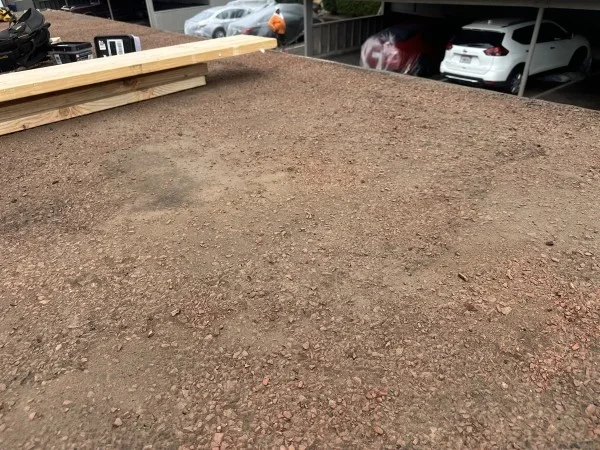
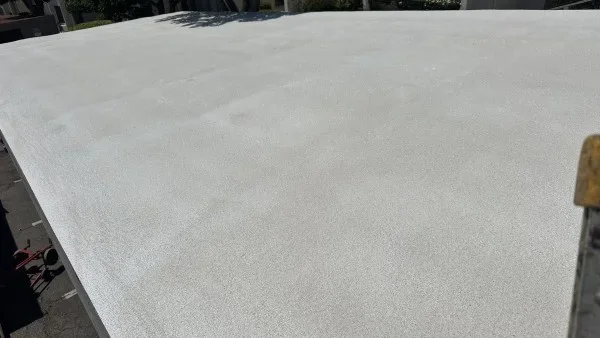
The largest block of new residential construction in the City of LA right now is the Pacific Palisades rebuild after the January 7, 2025 fire. As of October 8, 2026, the Palisadian-Post's Pali Rebuild Map counted 1,862 building permit applications, 1,317 permits issued, 1,126 homes under construction and 50 completed. Mayor Bass's Emergency Executive Order 1, dated January 13, 2025, directed city departments to review rebuild plans in 30 days or less.
Most of those parcels sit in the very high fire hazard severity zone, so the roof is a Part 7 roof: a Class A assembly, ember-resistant vents and enclosed eaves, plus the LA cool roof table on top. Clay tile is deemed Class A as a covering. A steep-slope tile roof in zone 6 still has to meet LA's 0.25 aged reflectance minimum, which narrows the tile colors you can pick. Rebuilding from the old approved plans doesn't freeze the old roof rules. LADBS bulletin P/GI 2026-036 requires rebuild projects that reuse previously approved plans to meet current Title 24 Part 6 energy requirements, with the architect restamping. We work as the roofing subcontractor to the custom home builder on these jobs, and we hand the builder the CRRC data and fire ratings in one packet for plan check.
Who shows up on your LA job site
Dave Bienek started roofing at 15, working beside his father on HOA roofs, and has been in the trade full time since 1998, with roofing experience that goes back to 1992. He founded Vision Roof Services in 2014. Today we run 60 roofers and have completed about 7,500 roofing jobs. Our Los Angeles work runs out of our Mission Viejo office in Orange County. Read Dave Bienek's story for the long version.
Our named Los Angeles project is Paramount Studios at 5555 Melrose Avenue in Hollywood. We're a member of the Spray Polyurethane Foam Alliance, hold General Coatings certification, carry a BBB A+ rating and were a 2024 Best of BuildZoom winner. See LA project photos and scopes.
A new construction job with us runs in 8 steps.
Plan set received. We return the 5-line roof sheet and questions.
Bid built from the plans, with product data for the cool roof line and the fire zone.
Contract and schedule slot tied to your framing date.
Long-lead materials ordered at award.
Deck walk at sheathing sign-off, with a written accept-or-fix list.
Installation and dry-in.
Final inspection support, certificates and CRRC labels.
Warranty registration and an annual inspection and recoat schedule.
After the building is turned over, the roof needs an owner. Our roof rejuvenation and recoat program picks up where the installation warranty starts.
New construction jobs we turn down in Los Angeles
We'd rather tell you now than after bid day.
Wood shake or wood shingle roofs. They're banned in the City of LA, and we won't price one.
Roof scopes awarded after framing with no deck walk allowed. We'll still bid, but we won't commit to a dry-in date on a deck we haven't seen.
Production tract work awarded on bid-day price alone. When we lose, it's usually to a lower number, and on tract volume that's the right call for the builder.
Solar module installation and electrical. We do the roof side. A C-46 or C-10 contractor does the array.
Very small repair-only scopes in LA, and gutter cleaning.
If your job is on that list, call anyway. We'll tell you who we'd send it to.
New construction roofing in Los Angeles: FAQ
Which code edition applies to my new LA building?
The permit application date decides. Applications submitted on or after January 1, 2026 run under the 2025 California codes, including the 2025 Energy Code and Title 24 Part 7. Earlier applications stay on the 2022 cycle. LA's own amendments to the 2025 codes are in Ordinance 188,797, so confirm the edition with your LADBS plan check engineer.
Which cool roof number do I spec on a new LA commercial roof?
For a low-slope nonresidential roof, spec 0.68 three-year aged solar reflectance and 0.85 thermal emittance, or SRI 82. That's the LA Green Building Code value, and it's stricter than the state's 0.63. Use the aged value from the CRRC directory for the exact product and color.
Does my new building need a Class A roof?
If the parcel is in a mapped fire hazard severity zone, yes, and the rating applies to the whole roof assembly. Check the parcel's current ZIMAS report from LA City Planning, which reflects the 2025 map. About 20,000 City of LA properties were added to the very high zone.
Is new construction in LA still required to be all-electric?
No. Ordinance 188,716 repealed the all-electric requirement effective October 13, 2025, retroactive to permits without a certificate of occupancy. Energy Code compliance still pushes many designs toward heat pumps, so check with your energy consultant before you plan the rooftop equipment.
Does the area under solar panels need to meet the cool roof values?
No. Roof area under building-integrated PV or solar thermal panels is exempt from the reflectance minimums. The uncovered roof is not, so the parts between and around the array still need the LA value.
Who holds the roof warranty on a new build?
2 documents, 2 holders. On an LA new build, our workmanship warranty runs to whoever we contract with, usually the GC or developer. The manufacturer warranty runs to the party named on it, usually the owner. Term and coverage depend on the system you choose, so we put both in writing at bid.
Does a Palisades rebuild on the old approved plans keep the old roof rules?
Not for energy. LADBS bulletin P/GI 2026-036 requires rebuilds that reuse previously approved plans to meet current Title 24 Part 6 energy requirements. In the very high fire zone the roof also has to meet Part 7 and LA's cool roof table.
How fast do I get the roof sheet back?
We return the 5-line roof sheet within 3-5 business days of receiving a complete plan set. Our standard Roof Health Check report on an existing roof goes out within 24-72 hours of the visit.
Send the plans and get your LA roof sheet
Send the plan set, the address and your target framing date. You get back the climate zone and Energy Code rows, the LA cool roof line with a named CRRC product, the fire zone answer, the solar area and attachment notes, and a schedule slot tied to your framing date.
Call (949) 779-5664, email connect@visionroof.net, or use the button below. If you send us a project that signs at $10,000 or more, our referral program pays you $500.
Vision Roof Services, 23372 Madero, Ste E, Mission Viejo, CA 92691. (949) 779-5664. Serving Los Angeles from our Orange County office. See all LA roofing services.