
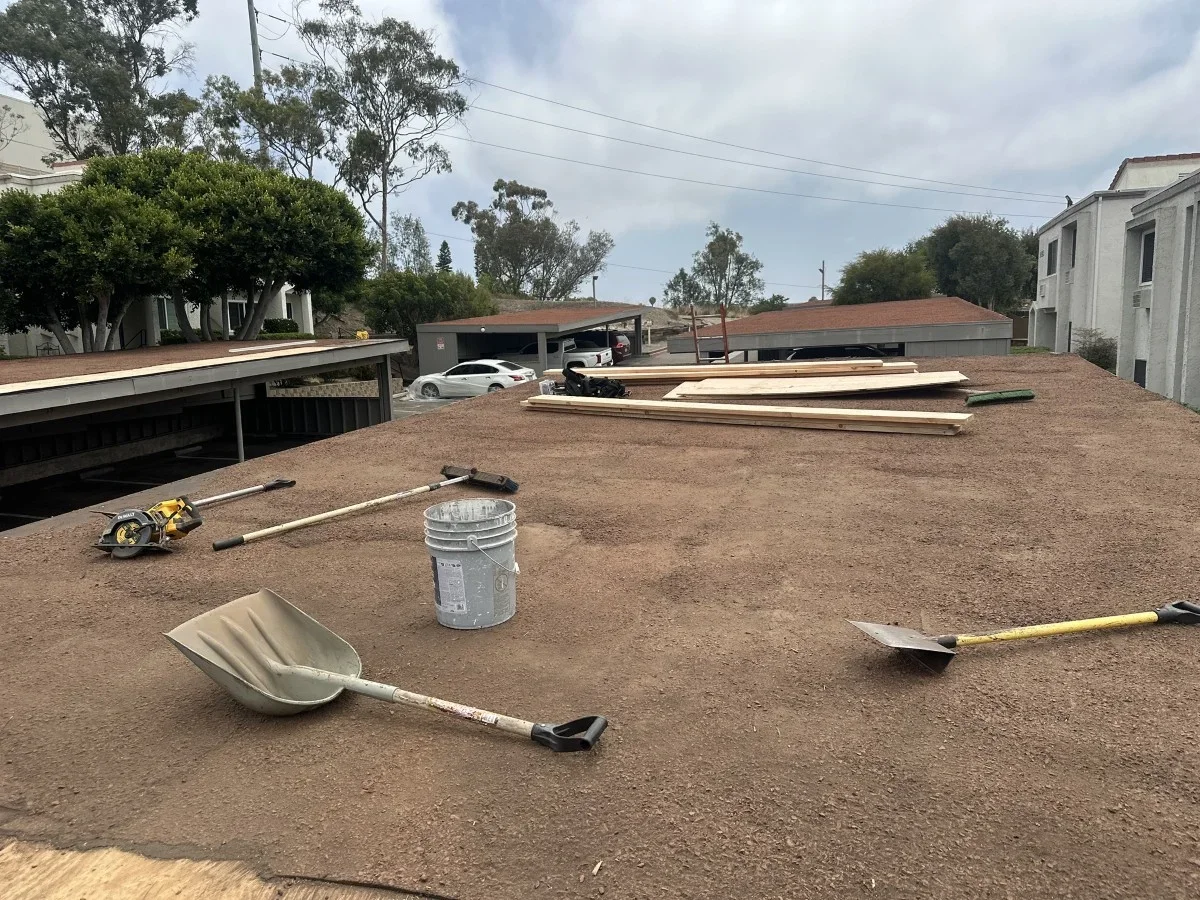
Commercial Roofing In Los Angeles, CA
Spray foam, coatings and flat roof systems for LA warehouses, offices, studios and retail buildings, built to the city's cool roof code instead of just the state's.
For building owners, property managers and HOAs with a low-slope roof that leaks or is near the end of its life. You get a roof walk, core samples where needed and a written report with photos in 24 to 72 hours, at no charge. Or call (949) 779-5664.
Vision Roof Services is a C-39 roofing contractor (CSLB license 651509, issued 1992) that has completed about 7,500 roofing jobs across Southern California and has worked on the Paramount Studios lot at 5555 Melrose Ave in Hollywood. Commercial roofing in Los Angeles, CA runs on 3 numbers most bids skip: the 2,000 square foot state trigger, the 50% city trigger, and the insulation level set by your climate zone. Published 2026 market ranges put a single-ply flat roof in LA at about $6 to $12.50 per square foot installed and a cool roof recoat at about $1.50 to $3.50. A typical recoat or foam recover on an occupied building runs days on a small roof and weeks on a large one, and the building stays open.
Commercial roofing in Los Angeles, CA: the LA 3-Line Reroof Test
Before anyone prices your roof, 3 lines decide what the city will ask for. We call it the LA 3-Line Reroof Test, and we run it on every commercial Roof Health Check in the city. Cross none of the lines and you have a repair. Cross all 3 and you have a permitted reroof that has to hit the city's reflectance numbers and your zone's insulation number.
Line 1: more than 2,000 square feet (state Title 24)
California's 2025 Energy Code applies the cool roof rule when the smaller of 2 areas is replaced, recovered or recoated: more than 50% of the roof, or 2,000 square feet. On any commercial roof over 4,000 square feet, the 2,000 square foot figure is the one that binds. A 30,000 square foot warehouse crosses Line 1 when you recoat 6.7% of it. Above the line, a low-slope roof needs an aged solar reflectance of at least 0.63 and a thermal emittance of at least 0.75, or a Solar Reflectance Index (SRI) of at least 75. The California Energy Commission's 2025 nonresidential cool roof page lists the same numbers for every climate zone. Recoats count. So does a recover.
Line 2: more than half the roof (City of LA Green Building Code)
Los Angeles sets its own, higher bar. Ordinance 187,208, effective November 5, 2021, put Table 99.05.106.13 into the LA Green Building Code for nonresidential buildings. A low-slope roof has to reach 0.68 aged reflectance and 0.85 emittance, or an aged SRI of 82. The city exempts roof repairs and any replacement of 50% or less of the total roof area, so Line 2 sits at half the roof. Read Ordinance 187,208 on the LADBS site for the full exception list.
| Rule | When it applies | Aged solar reflectance | Thermal emittance | Aged SRI (alternative) |
|---|---|---|---|---|
| Title 24, Part 6 (state, 2025 cycle) | More than 2,000 sq ft or more than 50% replaced, recovered or recoated, whichever is less | 0.63 | 0.75 | 75 |
| LA Green Building Code, Table 99.05.106.13 | More than 50% of the roof replaced | 0.68 | 0.85 | 82 |
The gap between the 2 rows is where LA bids go wrong. A coating rated 0.65 aged reflectance and 0.80 emittance passes Title 24 and fails the city. Aluminum-pigmented coatings tend to miss on emittance even when their reflectance looks fine. Ask for the Cool Roof Rating Council product ID on every coating and membrane in your bid and check all 3 aged numbers against the row your project falls in. Where a project covers more than half the roof, recover included, we spec to the city row so the question never comes up at inspection.
Line 3: your climate zone sets the insulation
Los Angeles spans 4 of California's 16 building climate zones, and on a roof replacement the zone decides how much insulation goes back on. Table 141.0-C of the Energy Code asks for R-17 continuous insulation in Zones 6 through 8 and R-23 continuous in Zones 9 and 16, measured on the area being replaced. Same city, same building type, 6 points of R-value apart.
| Climate zone | Example LA areas | Continuous insulation | Or roof U-factor | Spray foam needed at R-5.5 to R-6.5 per inch |
|---|---|---|---|---|
| Zone 6 | San Pedro, Wilmington, Venice, Pacific Palisades | R-17 | 0.047, with at least R-10 above deck | About 2.6 to 3.1 in |
| Zone 8 | South LA, Watts, Palms, West Adams | R-17 | 0.047, with at least R-10 above deck | About 2.6 to 3.1 in |
| Zone 9 | Downtown, Hollywood, San Fernando Valley | R-23 | 0.037, with at least R-10 above deck | About 3.5 to 4.2 in |
| Zone 16 | Sunland-Tujunga (91040, 91042) | R-23 | 0.037, with at least R-10 above deck | About 3.5 to 4.2 in |
Zone boundaries follow ZIP codes and can split a neighborhood. Confirm the zone for your exact address with the California Energy Commission's climate zone search tool before a bid is finalized. Foam thickness is our arithmetic from the published R-value range; the manufacturer's listed R-value for the product on your roof governs.
3 exceptions change the math. A recover that adds at least R-10 of new continuous insulation above the existing roof does not have to meet the table, which works out to about 1.5 to 1.8 inches of foam. Areas that are only recoated need no added insulation. At rooftop units left in place, the insulation can drop to the greater of R-10 or the thickness that still lets the membrane flash up the curb to the manufacturer's height.
One more thing on Line 3. Some 2026 LA cost guides tell owners that Title 24 now requires R-30 on most commercial replacements. That is not what Table 141.0-C asks for on an alteration. If a bid prices R-30 above deck, ask which table it came from. On a 20,000 square foot roof, the difference between R-30 and R-17 is real money.
A worked example: 2 warehouses, same size, different roofs
Take 2 warehouses of 24,000 square feet each, both with an aging built-up roof. One sits in Sun Valley in the San Fernando Valley (Zone 9). The other sits in Wilmington near the port (Zone 6). Both owners want a full tear-off. Both cross all 3 lines, so both need the city's 0.68 / 0.85 cool roof surface. The Sun Valley roof needs R-23 continuous insulation going back on. The Wilmington roof needs R-17. Now say both owners choose a foam recover over the existing built-up roof instead. Neither tear-off happens, R-10 of new foam satisfies the insulation rule in both zones, and the coating still has to meet the city row. This is an illustrative scenario, not a client project, and zone assignments should be confirmed by address.
Recoat, recover or replace a commercial roof in Los Angeles
Most leaking LA flat roofs have 3 possible fixes, and the condition under the surface picks between them, not the sales pitch. A recoat renews the top layer of a sound roof. A recover installs a new system over the old one. A replacement tears down to the deck. Here is what each one pulls in under state and city rules.
| Recoat | Recover | Replace | |
|---|---|---|---|
| Existing roof | Stays; liquid coating over a sound surface | Stays; new system goes over it | Torn off to the deck |
| Title 24 cool roof (over 2,000 sq ft) | Yes, rated coating | Yes | Yes |
| LA Green Code 0.68 / 0.85 (over 50%) | Confirm with LADBS; we spec to it | Confirm with LADBS; we spec to it | Yes |
| Insulation, Table 141.0-C | None required | R-10 continuous added | R-17 (Zones 6, 8) or R-23 (Zones 9, 16) |
| Tear-off and disposal | None | None | Full |
| Disruption to tenants | Lowest | Low | Highest |
| What rules it out | Wet or failing substrate | 2 or more existing coverings, wet insulation, certain existing roof types | Nothing |
The building code rules out a recover when the existing roof is water-soaked or has deteriorated, when it is wood shake, slate, clay, cement or asbestos-cement tile, or when it already carries 2 or more roof coverings. LA's version of the reroofing table, LAMC 91.1512 and Table 1512.1, permits spray foam over an existing built-up roof and lets a protective coating go over existing foam with no tear-off. The same table reads as not permitting foam directly over modified bitumen. That is why we cut cores and take moisture readings before we scope any recover or recoat. If the cores come back wet, the wet material comes out first. If we can't cut cores, we tell you the scope is unknown rather than guess.
Weight is the other LA filter. LADBS guidance treats a reroof with a Class A or B covering under 6 pounds per square foot differently from heavier work (Information Bulletin P/GI 2026-003). Roofing grade foam runs about 2.5 to 4.0 pounds per cubic foot, so 1.5 inches at 2.8 pounds per cubic foot weighs about 0.35 pounds per square foot before coating. A 4-ply gravel-surfaced built-up roof commonly weighs 5 to 6.5 pounds per square foot, about 15 times more. On older LA buildings with no spare structural capacity, that gap decides the path.
Why we spec spray foam on many LA commercial flat roofs
Spray polyurethane foam fits LA commercial roofs for 4 reasons we can point to on paper. It goes over a sound built-up roof without a tear-off. The foam is the insulation, at roughly R-5.5 to R-6.5 per inch, so it counts toward the R-10, R-17 or R-23 the code asks for. It renews by recoating instead of replacing. And it goes on with no open flame. Torch-applied modified bitumen is hot work under Chapter 35 of the California Fire Code, which Los Angeles adopts with local amendments, so a torch job carries a hot work permit and a fire watch. Foam and coatings don't.
Air quality is the LA-specific catch. The South Coast Air Quality Management District caps roof coatings at 50 grams of VOC per liter under Rule 1113, which rules out older solvent-based products. Every coating we put on an LA roof is a compliant formulation, and the product data sheet shows the number.
| Property | Typical figure |
|---|---|
| Density | 2.5 to 4.0 lb per cu ft, closed cell |
| Thermal resistance | R-5.5 to R-6.5 per inch |
| Minimum thickness | 1 inch |
| Compressive strength | Usually above 40 psi |
| Coating, new install | About 20 to 40 mils dry film total |
| Recoat interval | About every 10 to 20 years; the Spray Polyurethane Foam Alliance cites 5 to 20 |
| Service life, maintained | Historical data show maintained SPF roofs past 30 years |
Our crews include about a dozen trained and certified spray foam applicators out of roughly 60 roofers, we hold General Coatings certification, and we're members of the Spray Polyurethane Foam Alliance. Read more on our spray foam roofing page for Los Angeles.
Foam is not the answer on every roof. Overspray carries in wind, so we stage around parked cars, neighbors and rooftop air intakes, and some tight urban sites in Hollywood or Downtown don't suit it on a gusty day. If your roof has 2 coverings already, or the insulation under it is wet, foam goes on after the tear-off, not instead of it.
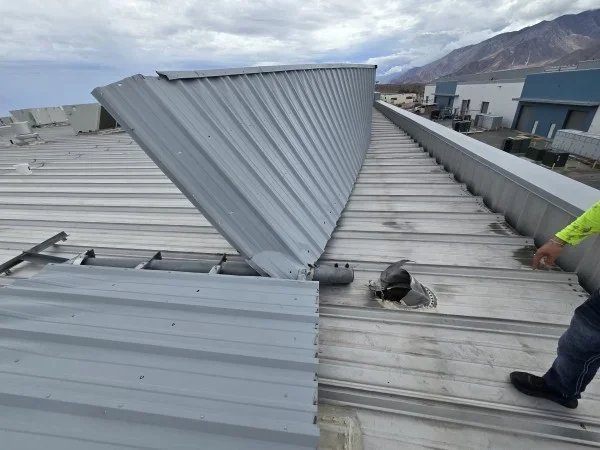
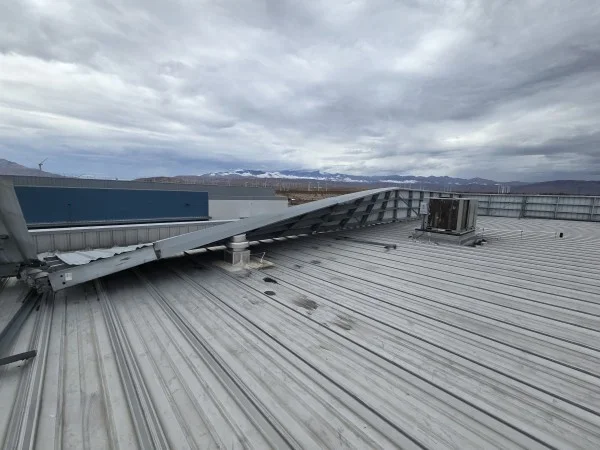
What commercial roofing costs in Los Angeles
A commercial reroof in Los Angeles usually prices per square foot, and the system, the tear-off and the insulation level move that number more than anything else. The ranges below come from 2026 published cost guides for LA and California. They are market ranges, not a Vision Roof Services quote.
| System or scope | Published range | Basis |
|---|---|---|
| Cool roof recoat (acrylic or silicone) | $1.50 to $3.50 | LA contractor guide, June 2026 |
| Spray foam, 2 to 4 in, with silicone coat | $7.00 to $11.75 | National SPF cost guide, Jan 2026; LA labor runs higher |
| TPO single-ply | $6.00 to $12.50 | 2 LA cost guides, Aug 2026 |
| PVC single-ply | $8.00 to $16.00 | LA cost guide, Aug 2026 |
| Modified bitumen, multi-ply | $10.00 to $25.00 | LA cost guide, Aug 2026 |
4 things push an LA bid up or down. Tear-off and disposal, which a recoat or recover avoids. The zone's insulation number, R-17 or R-23, on a replacement. Deck repairs found once the old roof comes off. And rooftop equipment: every curb, duct and conduit run gets flashed. The objection we hear most is that foam costs more up front than a coating or single-ply. Sometimes it does. What changes the comparison is the tear-off you skip, the insulation that comes with the roof, and a recoat every 10 to 20 years instead of a new roof. We offer financing through Acorn Financing.
Does a cool roof cut the electric bill on an LA commercial building?
A reflective roof cuts cooling energy, and how much depends on the building. We won't promise you a number, because the best measured data says the range is wide. Lawrence Berkeley National Laboratory report LBNL-54770 (July 2004) monitored cool roof retrofits on California commercial buildings and measured cooling energy savings of about 52% at a Sacramento retail store, 17 to 18% at a San Marcos school, and 3 to 4% at a Reedley cold storage facility.
The pattern is what matters for an LA owner. A single-story retail or office building with little roof insulation and long cooling hours sees the most. A cold storage building with a heavy insulated envelope sees the least. LADWP does not currently run a commercial cool roof rebate, so the case rests on the bill, the code and the roof's service life. During the Roof Health Check we look at your existing insulation and rooftop units and tell you which end of that range your building is closer to.
EBEWE deadlines and your roof
If your LA building is 20,000 square feet or larger, it falls under the city's Existing Buildings Energy and Water Efficiency program. Owners report benchmarking every year by June 1, and every 5 years complete an energy audit and retro-commissioning (A/RCx) or claim an exemption. Building IDs ending in 0 or 1 are due December 1, 2026. IDs ending in 2 or 3 are due December 1, 2027. The non-compliance fee is $202, plus a 250% late charge.
The roof matters here for one group. A building without a central cooling system can claim an A/RCx exemption by installing 4 of 6 listed measures, and a cool roof built to the LA Green Building Code is one of them. LADBS wants the permit number, and the permit has to be finaled inside the 5-year window before your due date. If your Building ID ends in 2 or 3, a cool roof permit finaled before December 1, 2027 can count. The LADBS EBEWE program page has the filing details. A licensed engineer or architect signs the exemption, not the roofer.
Get a leaking LA flat roof sorted before this winter
On October 8, 2026, NOAA's Climate Prediction Center kept its El Niño Advisory in place and put the odds of a strong to very strong El Niño through January to March 2027 above 83%. Strong El Niño winters have brought some of Southern California's wettest seasons, but not every time, so treat it as a reason to check the roof, not a forecast for your building. Downtown LA's normal season is 14.25 inches of rain. The last 2 seasons swung from 7.74 inches in 2024-25 to 19.07 inches in 2025-26.
Flat roofs fail at the same places every wet LA winter: clogged drains and scuppers, ponding around rooftop units, split flashing at curbs, and blisters in built-up roofs that took on water years ago. A coating doesn't stick to a wet roof, and foam can't go on in the rain, so the dry weeks before the storms are the working window. Our crews schedule most LA recoats and repairs in fall for that reason.
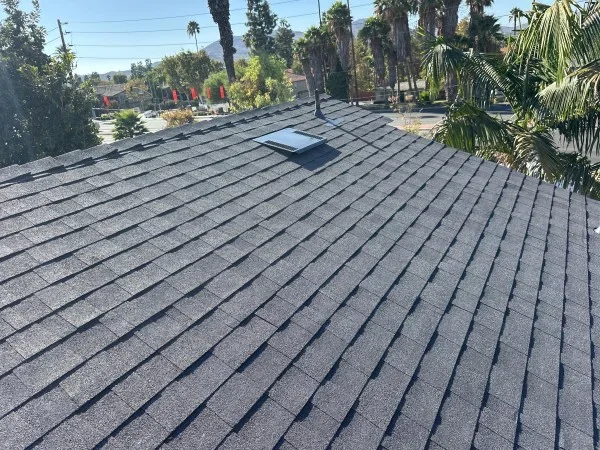
Who we roof for in Los Angeles
Our commercial clients are building owners, property managers and HOAs first, with developers and general contractors on new work. In LA County that has included the Paramount Studios lot in Hollywood. Across Southern California our clients have included Yamaha's facility in Buena Park, LifeStorage in Costa Mesa, American Tower, CBRE, Coreland Companies and Daum Commercial.
Dave Bienek started roofing at 15, working HOA roofs with his father. He's been in the trade since 1992 and founded Vision Roof Services in 2014. That background still shapes how we run commercial work: inspect first, document everything, and keep the roof on a maintenance schedule after the crew leaves. Read the full story on our about page.
Vision Roof Services is BBB A+ accredited and a Best of BuildZoom 2024 winner. Our Palm Desert office holds a 4.8 rating across 42 Google reviews.
See photos and project details on our featured commercial roofing projects.
Client Testimonials
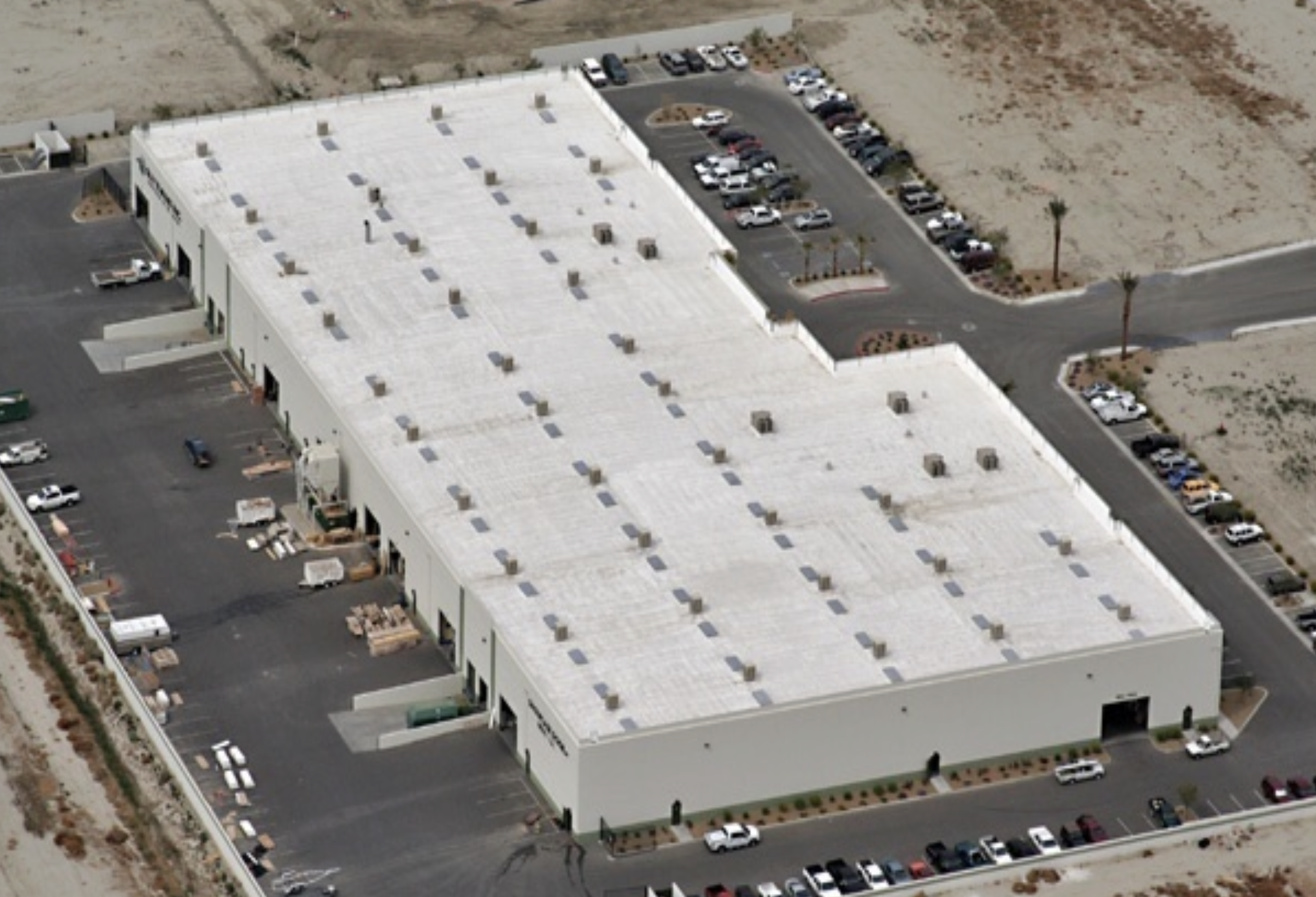
“Vision Roof Services has been an invaluable partner in managing and maintaining the roofs of all my commercial buildings. Over the years, they have re-roofed multiple properties with their superior SPF roofing system, and the results have been outstanding. Not only have my buildings remained completely leak-free, but the energy demand has significantly decreased, which has saved me a great deal on operating costs. Their professionalism, attention to detail, and commitment to quality set them apart. I trust Vision Roof Services entirely to protect and enhance the value of my properties.”
“Vision Roof Services is our go-to partner for SPF roofing on our design-build custom homes in the Madison Club, La Quinta. Vision’s quality of work is exceptional, and their installations are always fast, efficient, and seamlessly integrated into our projects. Vision’s attention to detail and professionalism makes them an invaluable part of our team. I highly recommend them to anyone looking for top-tier roofing solutions.”

Clients


The commercial roofs we turn down in Los Angeles
We say no to 5 kinds of jobs, and telling you up front saves us both a site visit.
A recover over 2 or more existing roofs. The code doesn't allow it, and tear-off is the honest answer.
Foam or coating over a wet roof. Wet insulation comes out first, or the new system blisters within a few seasons.
Any bid without a core cut. If we can't see what's under the surface, we can't price it.
Very small repairs far from our crews. A 2-hour patch across the county costs you more in drive time than in work.
Gutter cleaning and standalone wall foam. We don't do either.
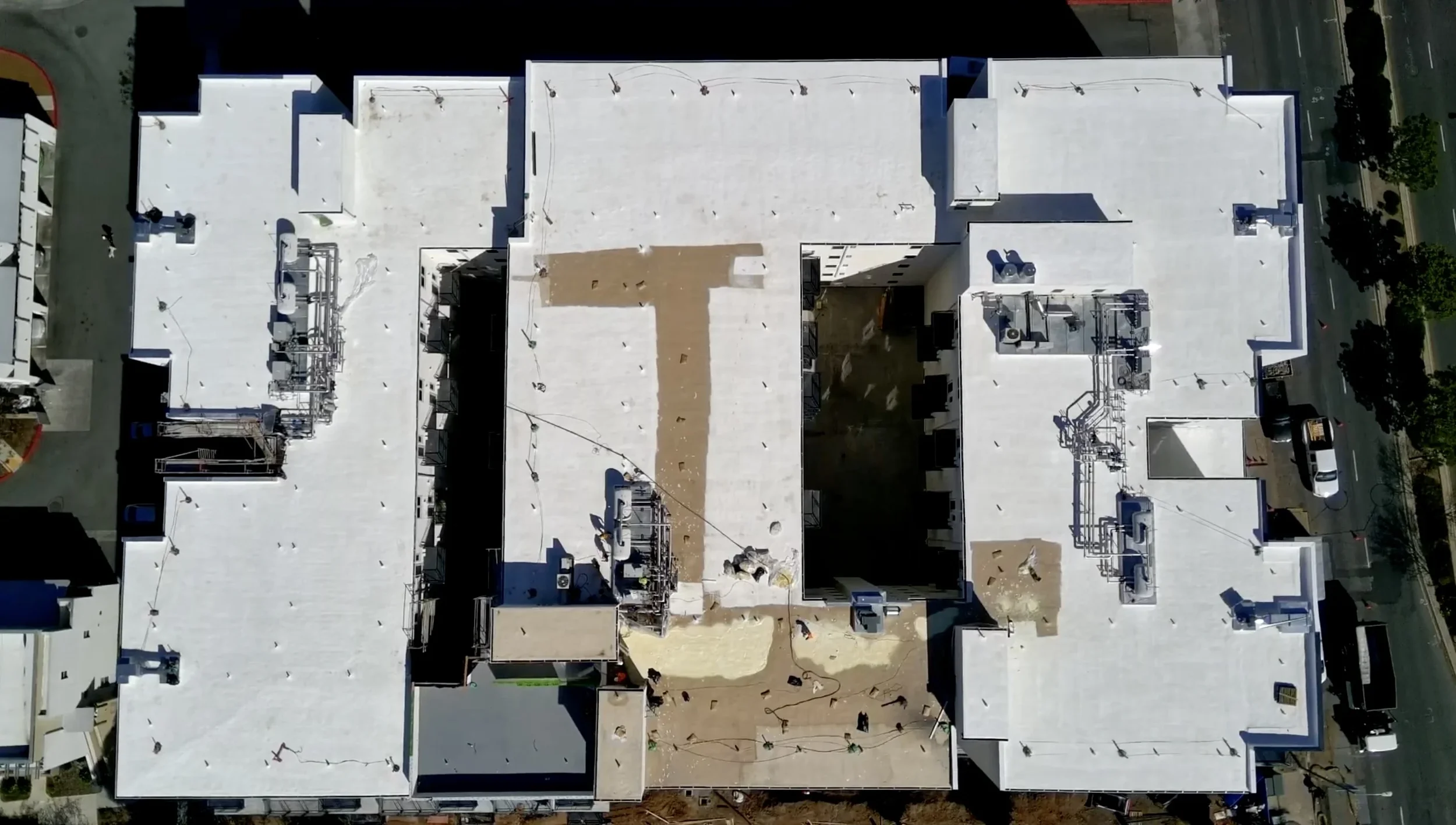
How a commercial reroof in Los Angeles runs with us
A commercial project with us moves through 9 steps, and the first 2 cost you nothing.
First call. We get the address, roof size if you know it, and what's leaking.
Roof Health Check. We walk the roof, photograph drains, flashings, curbs and penetrations, and cut cores with moisture readings where the scope depends on them. Written report in 24 to 72 hours.
Proposal. The path (recoat, recover or replace), the cool roof row it has to meet, and the insulation level for your zone.
Contract.
Scheduling and permits. LADBS permit, energy compliance forms (NRCC-ENV-E), and roof access, staging and hours agreed with property management before day 1.
Installation. Phased by roof area on occupied buildings. Air intakes are shut down or covered while foam goes on, which is standard SPF practice.
Final inspection. City inspection plus our own walk with you.
Invoicing.
Warranty and maintenance. Manufacturer-backed warranty programs depending on the system, plus annual inspections and a recoat schedule.
LA projects run from days to weeks depending on roof size; your proposal states the schedule. Tenants keep working. What voids a coating warranty is usually a missed inspection, a missed recoat, or a new rooftop unit or conduit cut in by another trade without telling the roofer in writing, so we log every penetration after we leave.
If you send us a commercial job that closes, our referral program pays $500 on contracts of $10,000 or more and 5% under $10,000.
Commercial roofing services we provide in Los Angeles
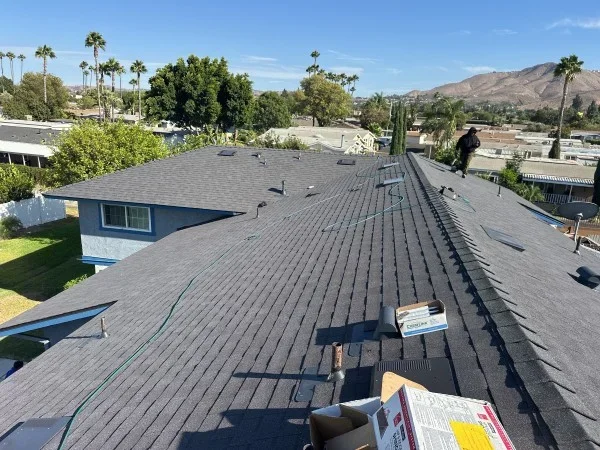
Every service below starts with the same Roof Health Check. See the full list on our Los Angeles roofing services page.
Spray foam roofing (SPF) over sound built-up roofs or new decks.
Silicone and acrylic cool roof coatings rated to the Title 24 and LA Green Code rows. Our roof rejuvenation program covers recoats on existing foam and coated roofs.
Flat roof replacement down to the deck, with insulation to your zone.
New construction roofing for developers and general contractors.
Solar-ready roofing. Roof first, panels second, with mounts flashed into the roof warranty. See solar roofing in Los Angeles.
Leak detection, repair and annual maintenance on commercial flat roofs.
Our commercial roofing work
Take a look at some of the commercial roofing projects we've completed.
Visit the Featured page to see more.
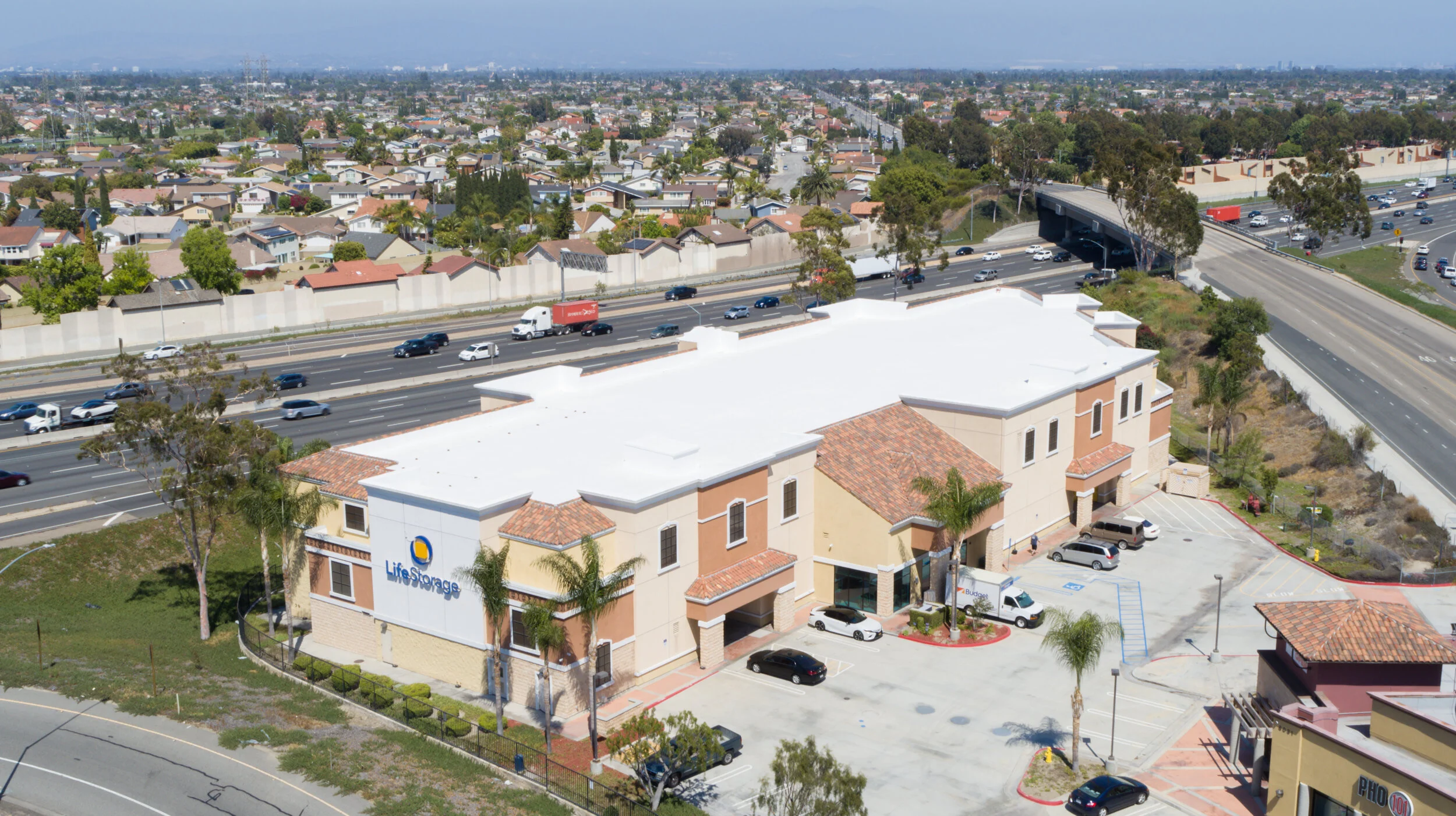


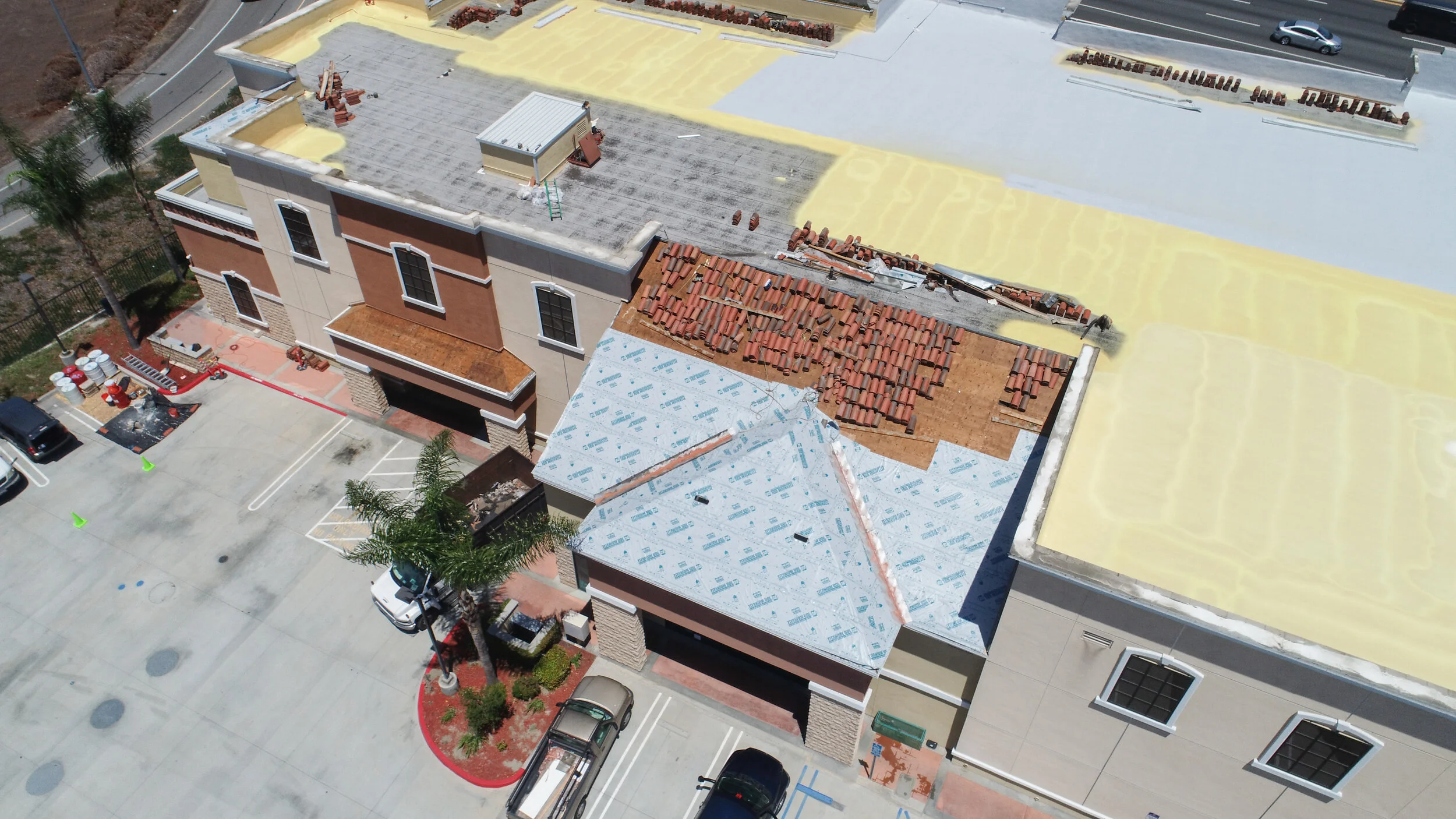


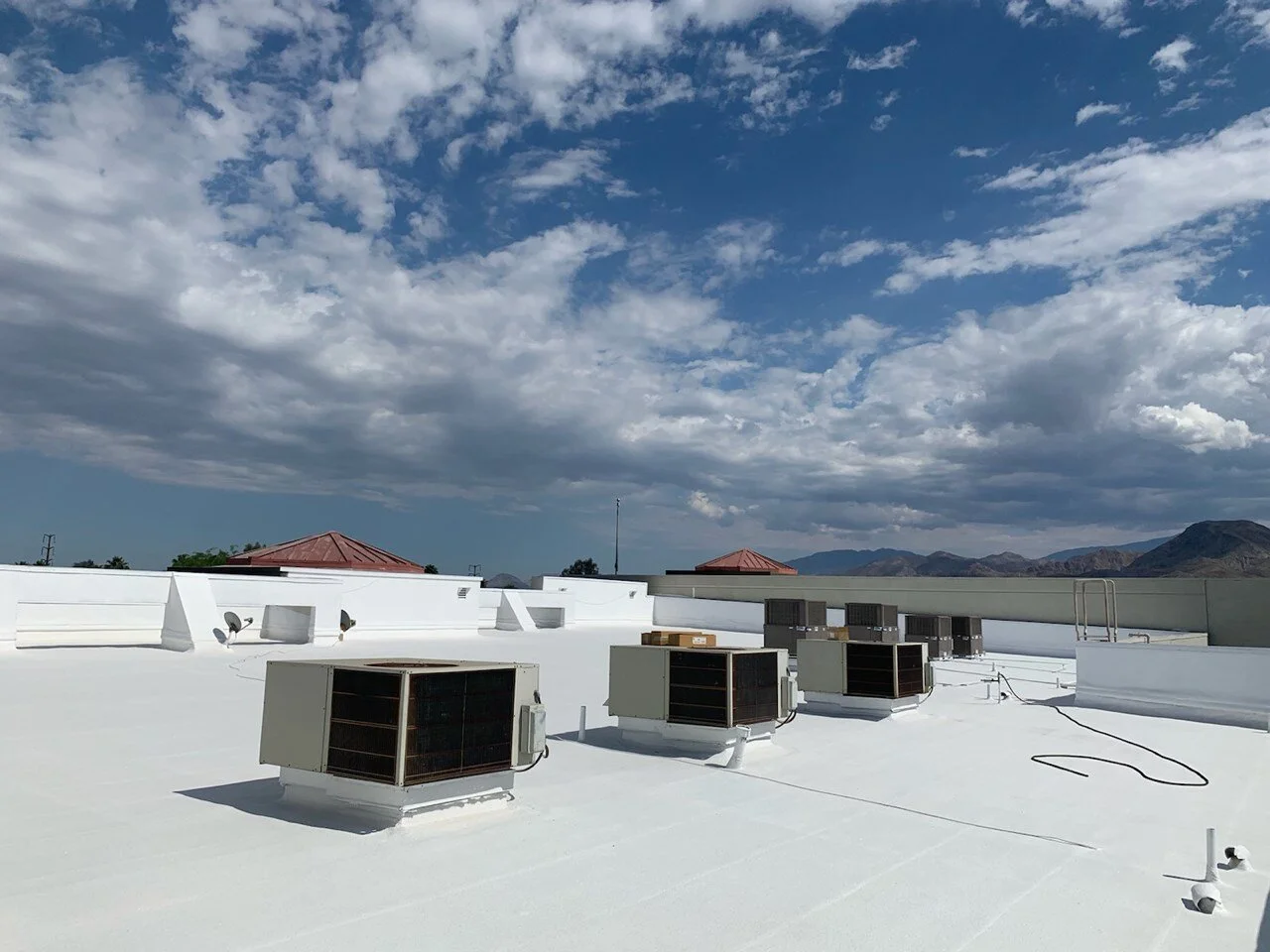


Commercial roofing in Los Angeles: questions owners ask us
Do I need an LADBS permit to reroof a commercial building in Los Angeles?
Yes. A reroof needs an LADBS permit, and above 2,000 square feet it also needs Title 24 energy compliance paperwork (NRCC-ENV-E for nonresidential buildings, not the residential CF1R). Whether your project goes over the counter or through plan check depends on the building, the system and its weight. We pull the permit and handle the forms.
Which cool roof number applies to my building, 0.63 or 0.68?
Both can. Over 2,000 square feet, the state's 0.63 aged reflectance and 0.75 emittance apply. Over half the roof replaced, the city's 0.68 and 0.85 apply. We spec to the city numbers on any project covering more than half the roof.
How much insulation does LA require on a commercial roof replacement?
R-17 continuous in Climate Zones 6 and 8 (coastal and South LA), R-23 in Zones 9 and 16 (Downtown, Hollywood, the Valley, Sunland-Tujunga). A recover needs only R-10 of new insulation, and a recoat needs none. Not R-30.
Can spray foam go over my existing roof?
Often, yes. LA's reroofing table allows foam over a built-up roof. It doesn't allow a recover over 2 or more existing roofs or over wet material, and the modified bitumen row needs a check with LADBS. Core cuts decide it.
How much does a commercial roof cost in Los Angeles?
Published 2026 ranges run about $1.50 to $3.50 per square foot for a cool roof recoat, $6 to $12.50 for TPO, and $7 to $11.75 for 2 to 4 inches of foam with a silicone coat before LA labor rates. Your price depends on tear-off, insulation, deck condition and rooftop equipment. The Roof Health Check gets you a written number.
Will a new cool roof count toward my EBEWE compliance?
Only for buildings without central cooling that use the 4-of-6 measures exemption, and only if the permit was finaled within the 5-year window before your due date. Your engineer or architect files it.
Will solar void my roof warranty?
It can if the installer cuts in mounts without the roofer. Coordinate penetrations through us in writing and the roof warranty stays intact. Better still, roof first and mount the panels after.
What does the free Roof Health Check include?
A roof walk, photos, a look at drains, flashings, curbs and penetrations, core samples and moisture readings where the scope depends on them, and a written report with photos within 24 to 72 hours.
Find out which line your LA roof crosses
Send us the address. We'll walk the roof, run the 3-line test, and send a written report with photos in 24 to 72 hours, at no charge. Then you'll know whether you need a recoat, a recover or a replacement, and which numbers it has to hit.