Whether to repair or replace your roof after storm damage depends on the layer under the damage. If the damage sits in a single area and that layer is dry, repair it. If water has reached the deck or insulation across a big share of the roof, replace it. Do the same when California's building code won't allow new roofing over the old surface. Most roofs here also have a middle option storm guides skip: a recoat on foam and coated flat roofs, or new underlayment under the same tile.
I started roofing at 15, working next to my father on HOA roofs across Southern California. I spent 8 years at a commercial spray foam company and founded Vision Roof Services in Palm Desert in 2014. Our crews have finished about 7,500 jobs, and storm calls follow a pattern. The surface takes the hit. What's under it sets the bill.
A storm damage roof repair fixes the damaged areas and leaves the rest in place. A recoat adds a new protective coating over a foam or coated roof whose foam is still dry. Replacement means stripping every layer to the deck. Moisture decides which one fits: dry layers get repaired or recoated, wet ones come out.
Repair or replace your roof after storm damage: the 2026 decision table
Find your roof type below and check the layer that decides it. Each common Southern California roof has a fix between a patch and a new roof, and the code limits how far each one can go.
| Roof type | What a storm breaks | What decides it | Repair | Middle option | Replace |
|---|---|---|---|---|---|
| Spray foam or coated flat roof | Coating cracks, hail dents, debris punctures, lifted edges | Whether the foam and anything under it is dry | Damage in a single area over dry foam | Recoat when surface damage covers the roof but the foam is dry and bonded | Wet material across 25% or more of the roof, or a soft deck |
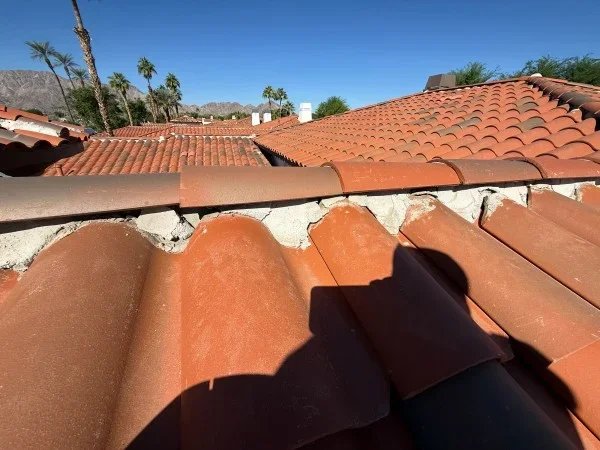
| Concrete or clay tile | Cracked, slipped or missing tiles | Age and condition of the underlayment | 1 or 2 broken tiles on a roof under 15 years old, no leak | Lift-and-relay: new underlayment, sound tiles go back on | Brittle tiles across the roof, more than 1 leak, or a sagging deck |
| Asphalt shingle | Lifted, creased or missing shingles | Deck condition and the number of layers on the roof | Damage on 1 slope over a dry deck | 1 new layer over a dry roof that has only 1 layer now | 2 or more layers already on, or a wet deck |
| Membrane flat roof (TPO, modified bitumen, built-up) | Punctures, open seams, lifted perimeter | Whether the insulation under the membrane is wet | Punctures or seams in a single area | Restoration coating over a dry, sound membrane | Wet insulation across 25% or more of the roof |
Moisture is the test in every row.
What Southern California storms do to a roof
Storms here damage roofs in 3 ways. Wind lifts edges and tiles, hail and flying debris strike the surface, and rain finds every opening the first 2 left behind.
Tropical storms and summer monsoons
Hilary showed what a tropical storm can do here. The National Hurricane Center's report on the August 2023 storm says it brought the first-ever tropical storm warnings to Southern California. Upper Mission Creek logged 13.07 inches of rain, and downtown Los Angeles set a daily record of 2.48 inches on August 20. Palm Springs declared a local emergency. A eucalyptus fell on a home in Palm Desert, and a roof blew off a home near Twentynine Palms.
Monsoons hit on a smaller scale. In the Coachella Valley, a single microburst can pry up tile and lift a roof edge in an afternoon. Edges and ridgelines are where we see it.
Winter storms in an El Niño year
This winter has a strong El Niño behind it. The October 8, 2026 update from NOAA's Climate Prediction Center carries an El Niño Advisory. It puts the odds of a "strong-to-very strong" El Niño through January to March 2027 above 83%. NOAA says that raises the chance of El Niño effects without guaranteeing them. The National Weather Service office in San Diego hosts a 2015 NOAA-funded briefing on El Niño. It says winter rain and snow often run above normal across the southern third of California during El Niño.
If the rain comes, expect more of what we already see most: leaks and aging flat roofs. Winter rain finds cracked coatings, clogged drains and worn underlayment.
When a repair is enough
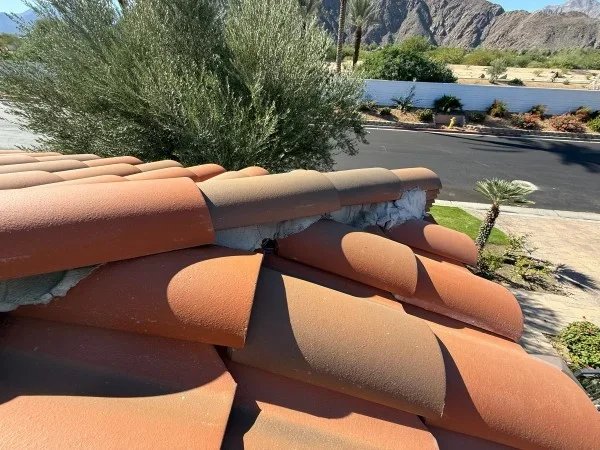
A repair is enough when the damage stays in a single area and the material under it is dry. For tile, that's 1 or 2 broken tiles on a roof under 15 years old with no leak. Shingle damage on 1 slope over a dry deck qualifies too.
Broken tile can't go back on. Section 1512.4 of the 2025 California Building Code bars reinstalling cracked or broken tile, so every damaged piece gets a new tile. Tile availability is one of the things that drives the price.
Age changes the math on tile. In the desert, the tile itself lasts around 40 to 50 years, but the underlayment is usually spent at 20 to 25. Past 20 years, broken roof tiles are usually a symptom, and the work that matters is the underlayment under them.
Why widespread damage on a foam roof often means a recoat
Hail and wind-thrown debris usually crack a foam roof's coating and dent the foam without opening a leak. When the foam tests dry and bonded, a recoat fixes damage across the whole roof for about 30% to 40% of the cost of a new roof.
Most storm guides treat damage across the whole roof as a reason to replace it. That rule fits shingles. It's the wrong rule for foam, and following it can mean tearing off insulation that still works.
A 2000 paper on foam roof storm damage lays out how to read it. Its authors were Mason Knowles, then technical director of the Spray Polyurethane Foam Alliance, and roofing contractor Don Best. Hail usually leaves crow's-foot cracks in the coating and dents 1/8 to 3/4 inch deep in the foam. Debris rarely causes a leak unless it goes all the way through. In observations after Hurricane Andrew, about 2 inches of foam stopped most of it. The authors favor repair over replacement whenever it's practical, and they note this is their own advice, not an industry standard.
Field results point the same way. A 2016 study by Dean Kashiwagi and colleagues looked at a 15-year-old foam roof in the Dallas Independent School District. A hailstorm had the district weighing a tear-off. The study concluded a simple recoat could give the roof another 15 years.
California's building code allows it, too. Section 1512.3 of the 2025 code permits a new protective coating over an existing spray foam roof without tearing anything off. A full recoat on a commercial roof also skips the added insulation Title 24 requires when a roof is replaced or recovered. That exemption tilts the coating versus replacement math toward a recoat after a storm.
Energy rules still apply. If the recoat covers more than 2,000 square feet or 50% of the roof, whichever is less, it has to meet Title 24's cool-roof requirements. That means an aged solar reflectance of at least 0.63 and a thermal emittance of at least 0.75, or an SRI of 75.
How hail and debris show up on foam
Dent size and depth tell you which fix fits. This grading follows the 2000 Knowles and Best paper.
| What you see | Size and depth | Fix |
|---|---|---|
| Light hail marks | Up to 1/2 inch across, under 1/8 inch deep | Caulk and coat; a full recoat depends on how much coating life is left |
| Moderate dents and cracks | 1/2 to 3/4 inch across, under 1/4 inch deep | Caulk or coat the cracks and recoat as needed |
| Deep dents | 3/4 inch or more across, 1/4 inch or deeper | Cut out the damaged foam, caulk and recoat; if it's everywhere, shave the top layer, re-foam and coat |
| Debris cuts | Under 3 inches across | Remove the damaged foam and caulk |
Timing matters in the desert. The same paper says UV damage through hail cracks in hot, dry climates like Phoenix and Las Vegas can take months to set in. It still advises repairs as soon as practical. Summer air in the Coachella Valley runs 110 to 120 degrees, so cracked coating shouldn't sit through a summer.
When the roof has to come off
Replace the roof when wet material runs across 25% or more of it, when the deck is soft or rotted, or when the code won't allow a new layer over the old one. Patching over wet insulation buys months. In our experience, it typically leaks again within a year.
Section 1512.3 of the 2025 California Building Code bars new roofing over a roof that's water-soaked or worn out. It also bars it over a roof that already has 2 or more layers, and over clay, concrete or slate tile. A replacement under Section 1512.2 removes every layer down to the deck.
Tile has its own trigger. Broken tiles on a roof past 20 years, or any active leak, means underlayment work. A lift-and-relay replaces the underlayment, puts the sound tiles back and buys another 20-plus years.
A big replacement also brings energy rules. Replace more than 50% of a home's pitched roof in climate zones 4 and 8 through 15, and the new surface has to meet cool-roof numbers. Those are an aged solar reflectance of at least 0.20 and a thermal emittance of at least 0.75, or an SRI of 16. Homes can qualify for an exception, such as R-38 ceiling insulation. Commercial low-slope roofs follow the 50% or 2,000 square foot line above. That 2,000 square foot line is why we tell owners to check the code before any partial flat roof repair.
How we check a roof after a storm
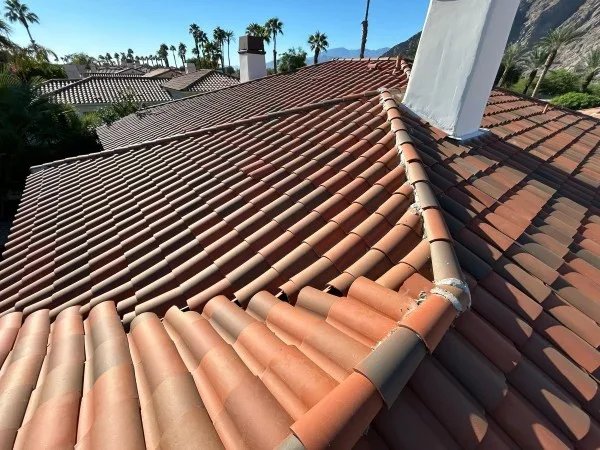
We photograph the roof, test what's under the damage and send a written report with photos within 24 to 72 hours. During a free Roof Health Check, a crew documents the roof, checks the coating and drainage, and probes for moisture wherever the scan flags it. Where the roof is low-slope, we pull core samples from suspect areas. A core shows whether the foam is dry, bonded and thick enough to recoat.
The report ends with a recommendation to repair, recoat or replace, and the photos double as your insurance file. Of our 60 roofers, 12 are certified spray foam applicators through General Coatings.
After the work, our warranty and maintenance program pairs an annual inspection with a recoat schedule. That schedule keeps a foam roof's manufacturer warranty intact. Book a check once a year and again after any major monsoon or winter storm.
Does insurance decide whether you repair or replace?
No. Insurance decides who pays, not what the roof needs. It often covers sudden storm or impact damage, and it usually won't cover age or a worn-out underlayment.
California adds a rule that matters for tile. Title 10, Section 2695.9(a)(2) of the state's insurance regulations covers replacement-cost policies. When replaced items won't match in quality, color or size, the insurer has to replace everything in the damaged area to reach a reasonably uniform appearance. That rule can widen the repair on an older tile roof with a discontinued color.
Before anyone tarps or patches, take dated photos of the roof and the ceilings below, and keep every receipt. If the claim doesn't cover the work, we offer financing through Acorn Financing.
What storm repairs, recoats and replacements cost
A recoat runs about 30% to 40% of a full replacement. Once a repair passes about 30% of a new roof's cost, replacing usually wins.
| Job | 2026 Southern California range |
|---|---|
| Foam recoat or silicone restoration, 10,000 sq ft low-slope roof | $20,000 to $70,000 |
| Full tear-off and new membrane, 10,000 sq ft | $65,000 to $120,000 |
| New commercial spray foam roof | $5.50 to $9.50 per sq ft |
| Asphalt shingle replacement, single-family home | $13,000 to $26,000 |
| Clay tile replacement, single-family home | $24,000 to $44,000 |
These ranges come from our Southern California pricing guide for 2026. Los Angeles quotes land at the top of every range, and Orange County runs higher than the Coachella Valley. Your number depends on the condition of what's under the roof, whether it needs a tear-off, the square footage and the coating system.
Frequently asked questions
How soon after a storm should I get my roof inspected?
Within days, and before the next rain if you can. In hot, dry climates, UV damage through hail cracks on a foam roof can take months to set in. The 2000 Knowles and Best paper still advises repairs as soon as practical. Our Roof Health Check report comes back in 24 to 72 hours.
Can I repair or replace only part of my roof after storm damage?
Yes, if the damage sits in a single area and the layers under it are dry. Title 24 cool-roof rules kick in when you replace more than 50% of a home's pitched roof. On a commercial low-slope roof, the line is more than 50% or 2,000 square feet, whichever is less. Cracked tile can't be reinstalled under the building code, so broken pieces get new tile.
Does a foam roof need replacing after hail?
Not if the foam under the damage tests dry and bonded. Hail tends to crack the coating and dent the foam 1/8 to 3/4 inch deep. A recoat or a cut-and-patch fixes that kind of damage. A 2016 study of a 15-year-old Dallas school district foam roof concluded a simple recoat could add another 15 years.
Will insurance pay to repair or replace my roof after storm damage?
It often covers sudden storm damage, and it usually won't cover age or a worn-out underlayment. In California, a replacement-cost policy has to replace everything in the damaged area when new pieces won't match in quality, color or size, under Title 10, Section 2695.9(a)(2). Dated photos taken before any temporary repair make the claim easier to prove.
How long does a foam roof last after a recoat?
The coating gets reapplied every 10 to 20 years, depending on the coating type and how thick it went on. With that schedule and an annual inspection, a foam roof can last decades. Our warranty and maintenance program pairs the 2 so the next recoat doesn't get missed.
Get your roof checked before the next storm
If you're deciding whether to repair or replace your roof after storm damage, call 844-348-ROOF or book a free Roof Health Check. We do roof repair and restoration on homes and commercial buildings in the Coachella Valley, Riverside County and Orange County. In Los Angeles and San Diego, we work on commercial roofs. Our offices are in Palm Desert and Mission Viejo.