Roof Coating vs. Replacement: A Commercial Owner's Guide
The choice between a roof coating and a roof replacement comes down to one thing: the condition of the deck under your membrane. Coat it if that deck is dry and sound. Replace it if water has soaked the insulation or the structure is failing.
Most building owners never hear this. Plenty of commercial flat roofs get torn off years before they need to be. A roof leaking in three spots isn't automatically a replacement. It's often a candidate for a coating, or for a spray foam recovery, at a fraction of the cost of a full tear-off.
Below are all three paths, what each costs in 2026, how to tell which one your roof qualifies for, and the desert and coastal factors that change the answer across Southern California.
A roof coating is a liquid-applied membrane sprayed or rolled over an existing low-slope roof to add years of life without a tear-off. A roof replacement strips the old system down to the deck and installs a new one. A coating costs less and sends nothing to the landfill. A replacement resets the roof's clock.
Coating, foam recover, or full replacement: what each one really is
There are three ways to handle an aging commercial roof, not two. Most guides skip the middle one, and it's often the smartest spend.
A roof coating (also called a roof restoration) means cleaning the roof, fixing failed seams and flashing, cutting out any wet spots, and applying an acrylic, silicone, or polyurethane coating over what's left. On a sound roof it buys 10 to 20 more years.
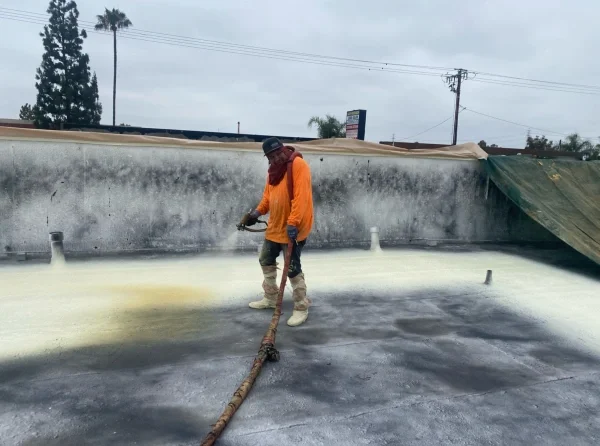
Spray polyurethane foam, or SPF, is a recovery system. A crew sprays closed-cell foam over the existing roof, then protects it with a coating. The foam adds insulation and can be built up to correct ponding, which a flat coating can't do. This is Vision's core commercial spray foam system.
A full replacement tears the roof off to the deck, swaps out wet insulation, and installs a new membrane such as TPO, PVC, or modified bitumen. It costs the most and takes the longest. Sometimes it's the only honest option.
This is how the three compare on a typical low-slope commercial roof:
| Option | What happens | Rough 2026 cost per sq ft | Typical service life | Tear-off needed? |
|---|---|---|---|---|
| Coating / restoration | Clean, repair, then coat the existing roof | $1.50 to $4.00 | 10 to 20 years, longer with a recoat | No |
| Spray foam recover | Foam plus a topcoat over the existing roof | $4.00 to $11.00 | 30 to 50 years on a maintained roof | Usually no |
| Full replacement | Tear off to the deck, new insulation and membrane | $7.00 to $15.00 or more | 20 to 30 years | Yes |
Those are broad industry estimates for 2026, useful for planning, not a quote. Your real number depends on roof size, how much prep the old roof needs, coating thickness, and rooftop access.
When should you coat your roof instead of replacing it?
Coat the roof when the structure is sound and every active problem can be fixed before the coating goes on.
The clearest line comes from manufacturer guidance. GAF's liquid-applied roofing manual calls for a moisture survey first. If wet material shows up across 25% or more of the roof, it points you toward a tear-off. Under that threshold, a coating is usually on the table.
The deck and insulation are dry, or the few wet areas can be cut out and replaced.
Water drains off the roof, or the ponding can be corrected first.
Leaks are few and can be found and repaired. A coating seals pinholes; it doesn't chase down an active leak.
The roof still has structural life left in it.
This 25% rule is why so many coatable roofs get replaced for no good reason. A contractor who only sells tear-offs has little reason to bring it up.
If you do coat, a reflective ENERGY STAR rated coating pulls double duty in a hot climate, which I'll come back to.
When is a full replacement the smarter spend?
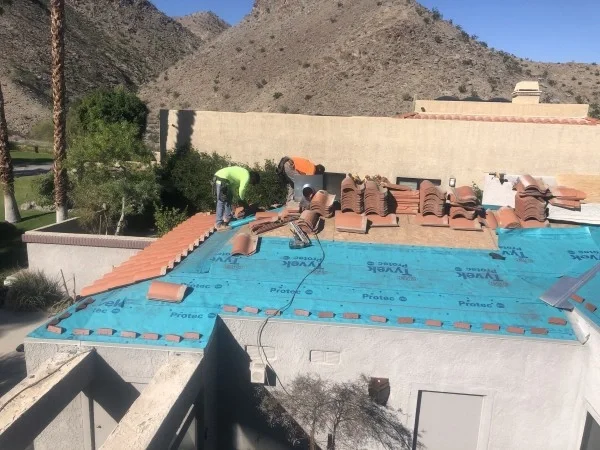
Replace the roof when the deck or insulation is wet or failing. No coating brings back a roof that's already gone.
Wet insulation across a large share of the roof, past that 25% line.
Deck rot or a structural sag.
Ponding that can't be drained or re-sloped.
A roof that's already past its rated service life.
Leaks in several areas that repairs keep failing to stop.
Paying to coat a soaked roof wastes money twice. Once on the coating, and again on the replacement you still end up buying a year later.
Where spray foam changes the math
Spray foam is the option most owners never get quoted, and on the right roof it beats both a thin coating and a full tear-off.
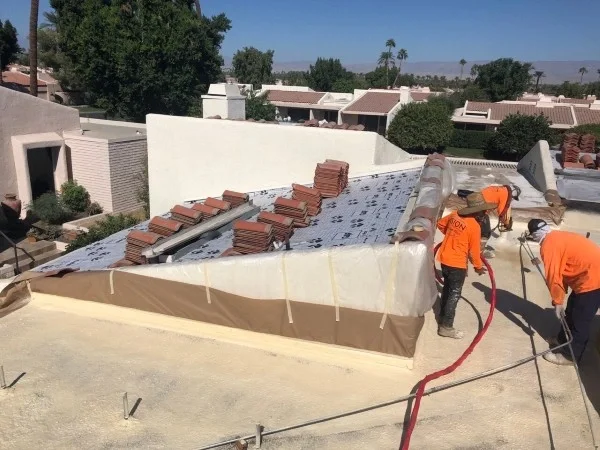
Foam goes on as a liquid, expands, and cures into one continuous surface with no seams. Seams are where single-ply roofs usually fail first, so removing them removes the common leak point. Closed-cell SPF also carries about R-6.5 of insulation per inch, which the Spray Polyurethane Foam Alliance rates as the highest per inch of any commercial roofing insulation. A membrane coating adds almost none.
Because the foam is sprayed, a crew can build it up to re-slope a low spot and push water toward the drains. Try that with a roll of membrane. A silicone or acrylic topcoat goes over the foam and gets recoated about every 10 to 15 years. The SPFA points to foam roofs installed in the 1970s that are still in service today with periodic recoating, which is how a foam system reaches 30 to 50 years.
Most foam jobs skip the tear-off, so tenants keep working and nothing heads to the landfill. Vision installs this system across Southern California, the crew holds a General Coatings certification, and we've done foam and coating work on commercial roofs for Yamaha and LifeStorage. If you want the head-to-head against a welded membrane, we break down foam versus a TPO membrane in a separate piece.
What does each option cost in 2026?
Expect a coating to cost the least, spray foam in the middle, and a full tear-off the most. The gap narrows once you look at cost per year instead of cost today.
Industry estimates for 2026 put a coating at roughly $1.50 to $4.00 per square foot, a spray foam recover at $4.00 to $11.00, and a full replacement at $7.00 to $15.00 or more once tear-off and disposal are counted.
Now the part that matters. A coating that buys 15 years at $2.50 per square foot can cost less per year than a replacement at $10 per square foot that lasts 25, once you plan on a mid-life recoat instead of a second tear-off. Coating warranties track with thickness too. Many manufacturers tie a 10-year warranty to about 20 mils of coating and a 20-year warranty to about 30 mils. Thicker coat, longer coverage. Vision doesn't post flat prices because substrate condition swings the number more than anything else, so the written estimate comes out of the roof inspection, not a price list.
The desert and coastal factors most guides skip
Where your building sits changes the right call as much as the roof's condition does. National guides gloss over this. In Southern California it drives the decision.
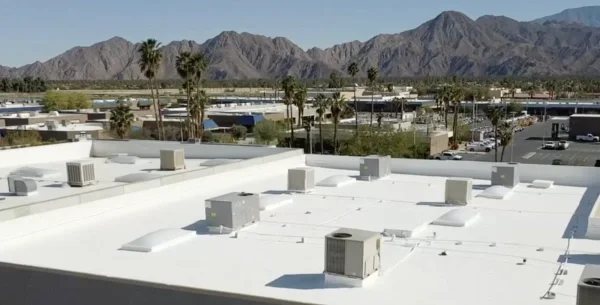
In the Coachella Valley, a dark flat roof can hit 150 degrees or more on a summer afternoon, according to the U.S. Department of Energy. A reflective cool-roof coating stays more than 50 degrees cooler and can cut cooling energy by roughly 7 to 15 percent, which adds up fast in Palm Desert and La Quinta where the air conditioning runs half the year.
Monsoon storms leave water sitting on flat roofs, and that's a coating problem, because acrylic breaks down under standing water. The Roof Coatings Manufacturers Association advises against acrylic where water sits 48 hours or longer, which is why silicone or a re-sloped foam surface is the desert answer.
Closer to the coast in Orange County, salt air and wind reward systems without fasteners or seams to lift. A coating or a foam recover keeps a watertight surface where a mechanically fastened membrane has more places to fail. Vision works across Riverside, Orange, San Diego, and Los Angeles counties, and that service area shapes the recommendation every time.
How to decide between a coating and a replacement
You can't choose between a coating and a replacement without knowing how wet the roof is. That takes an inspection, not a guess from the ground.
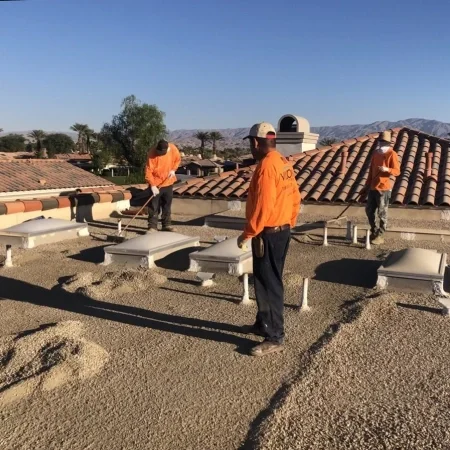
Vision starts every commercial job with a Roof Health Check. A roofer gets on the roof, checks for trapped moisture and ponding, documents the condition, and sends a written report with photos, usually within 24 to 72 hours. That report tells you which of the three paths your roof qualifies for and what it costs.
The stance behind it is simple. We restore or recover a roof when the deck allows it, and replace only when it doesn't. That's commercial roofing built around keeping your existing roof out of the landfill for as long as it's safe to do so.
Roof coating vs. replacement: common questions
Can you put a coating on a leaking roof?
A coating seals pinholes, not active leaks. Find the leaks, repair them, and let the roof dry before any coating goes on. If leaks are spread across the roof, that's usually a sign it needs more than a coating.
How long does a roof coating last?
It depends on the chemistry. Acrylic coatings run about 10 to 15 years and silicone about 15 to 20, and both go longer with a recoat. Thickness matters too: roughly 30 mils of coating can carry a 20-year warranty versus about 20 mils for 10 years.
Is spray foam a coating or a replacement?
Neither, exactly. Spray foam is a recover system, closed-cell foam and a topcoat installed over your existing roof. It adds about R-6.5 of insulation per inch without a tear-off, which a plain coating can't match.
Roof coating vs. replacement: which one is cheaper?
A coating usually costs a third to half of a replacement per square foot, and it skips tear-off and disposal. The catch is that it only pencils out when the deck underneath is dry and structurally sound. Coat a failing roof and you pay twice.
Will a coating or foam roof lower my energy bills?
A reflective coating can cut cooling energy by roughly 7 to 15 percent in a hot climate, per U.S. Department of Energy figures, and spray foam adds insulation on top of that. How much you save depends on your building and how much insulation you started with.
How do I know if my commercial roof needs replacement?
Start with a moisture survey. If 25 percent or more of the roof is wet, or the deck is failing, replacement is the sound call. Below that line, a coating or a foam recover is usually possible.
Does a roof coating affect my warranty?
It can. Check your current roof warranty before coating, and use a manufacturer-backed system installed to spec so the new coating carries its own coverage.
Not sure whether to coat or replace? Find out for sure
The roof coating vs. replacement decision isn't really about which one is better. It's about what your deck can carry today, and that takes an inspection, not a guess. Across about 7,500 completed jobs since 1992, Vision restores or recovers a roof when the deck allows it and replaces only when it doesn't. Book a free Roof Health Check and we'll send a written report with photos within 24 to 72 hours.