12 Types of Roofing Materials and Costs: A Southern California Guide for 2026
Most Southern California homes do well with one of four materials: architectural asphalt shingles, concrete or clay tile, standing seam metal, or a flat-roof membrane. In 2026, installed roofing runs from about $2 per square foot for basic rolled roofing to $30 or more for natural slate, and a typical local replacement lands in the low-to-mid five figures. This guide covers 12 materials, what each costs, how long each lasts, and which ones handle desert heat, coastal salt air, and California fire code. Prices here are 2026 ranges; for your exact number, book a free roof health check.
What are roofing materials?
Roofing materials are the weatherproof outer layer of a roof, chosen by slope, climate, weight, budget, and looks. The main families are asphalt shingles, metal (panels or shingles), tile (clay or concrete), slate (natural or synthetic), wood shakes, and flat-roof systems (built-up, single-ply membrane, and spray foam). Each trades off price, lifespan, fire rating, and energy performance.
How much does a new roof cost in Southern California in 2026?
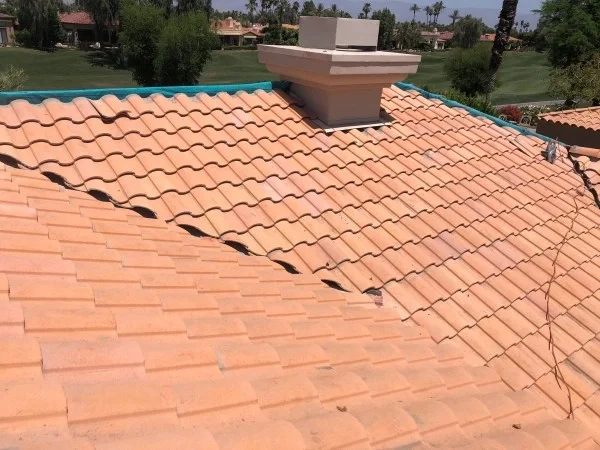
Most homeowners spend roughly $10,000 to $30,000 on a full roof replacement in 2026, and national averages sit near $9,000 to $11,000 for a standard asphalt roof, according to 2026 cost data from Angi and HomeGuide. Three things drive the number: the material you pick, your roof's size and pitch, and labor. Southern California adds two local factors most national guides skip: tile is common here and costs more to carry and install, and California code can require a cool roof or a Class A fire assembly, which changes the material and the price. Vision Roof Services installs across Riverside, Orange, San Diego, and Los Angeles Counties, so local labor and code are built into our estimates.
Here is how the 12 materials compare on 2026 installed cost, typical service life, and Southern California fit.
| Material | Installed cost per sq ft (2026) | Typical lifespan | Southern California fit |
|---|---|---|---|
| Rolled roofing | $2.00 to $5.50 | 5 to 10 years | Sheds, low-slope outbuildings only |
| Built-up roof (BUR) | $2.50 to $6.00 | 20 to 30 years | Older flat commercial roofs |
| Single-ply membrane (TPO, EPDM, PVC) | $4.00 to $9.00 | 20 to 35 years | Strong for flat residential and commercial |
| Spray foam (SPF) | $4.00 to $10.00 | 50+ years with recoats | Excellent on flat desert roofs; adds insulation |
| Asphalt architectural shingles | $4.50 to $9.00 | 15 to 30 years | Budget choice; pick cool-rated, light colors |
| Wood shingles and shakes | $4.50 to $14.00 | 20 to 40 years | Restricted in fire zones; usually avoid |
| Metal shingles and shakes | $8.00 to $16.00 | 30 to 50 years | Great; look of tile or shake, lighter weight |
| Standing seam metal | $10.00 to $18.00 | 40 to 70 years | Excellent for heat, fire, and low slopes |
| Clay tile | $10.00 to $18.00 (ceramic to $30) | 50 to 100 years | Classic desert and Mediterranean choice |
| Concrete tile | $10.00 to $20.00 | 50+ years | Workhorse for hot, dry, high-wind areas |
| Synthetic (rubber) slate | $9.00 to $16.00 | Up to 50 years (warranty) | Slate look without the weight |
| Natural slate | $10.00 to $30.00 | 75 to 150+ years | Premium homes; needs strong framing |
Ranges blend 2026 figures from Angi, HomeGuide, and This Old House with typical manufacturer service life. Your roof's pitch, access, tear-off, and color all move the final price.
Asphalt composite shingles
Asphalt shingles are the most common roofing material in North America because they are affordable and every crew installs them. Architectural (dimensional) shingles run about $4.50 to $9.00 per square foot installed in 2026 and last 15 to 30 years. In desert heat, the low end of that lifespan is realistic: UV and heat dry out the asphalt binder and curl the edges faster than in mild climates. If you choose shingles here, pick a light or "cool" color rated by the Cool Roof Rating Council so the roof reflects more sun. See ourresidential roofing options for shingle upgrades.
Standing seam metal
Standing seam metal uses interlocking vertical panels with raised, concealed seams, so there are fewer places for water to get in. It runs about $10 to $18 per square foot installed and lasts 40 to 70 years. Metal is fireproof, sheds heat well with a reflective finish, and works on low slopes where shingles cannot go. It costs more up front and needs a crew trained to install it, which not every company offers. It is one of the strongest all-around choices for Southern California.
Metal shingles and shakes
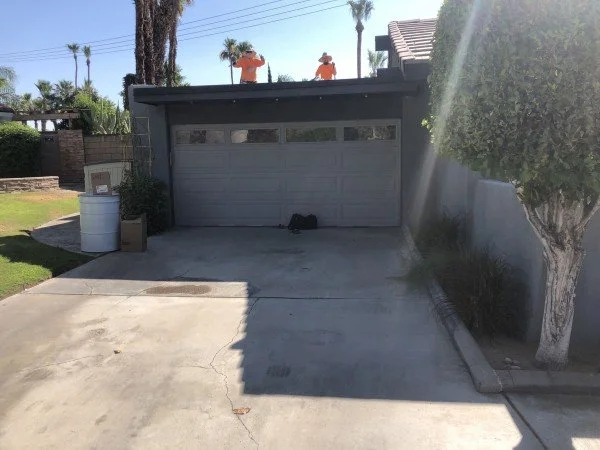
For homeowners who want metal's durability without the panel look, stamped metal shingles can mimic asphalt, wood shake, slate, or tile. They cost about $8 to $16 per square foot and last 30 to 50 years. They are lighter than tile or slate, so they suit homes that cannot carry heavy roofing without added framing.
Clay tile
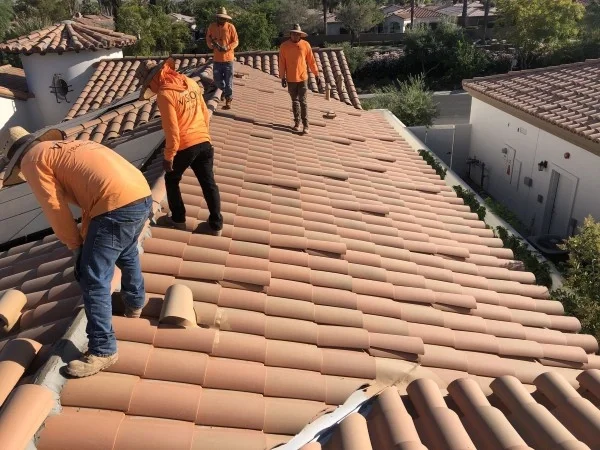
Clay tile is fired earthen clay, often left in its natural reddish color or glazed into ceramic tile. It costs about $10 to $18 per square foot installed, with uncommon ceramic tiles reaching $30, and it can last 50 to 100 years or more. Clay is dimensionally stable under UV and shrugs off salt air, which is why you see it across desert and coastal Southern California. Its mass and the air gap under the tiles help keep attics cooler. It is heavy, so the framing has to support it.
Concrete tile
Concrete tile is molded from sand-mix concrete and colored to almost any hue, in profiles that copy clay barrel tile or low-profile shake. It runs about $10 to $20 per square foot and lasts 50 years or more. You usually pay a bit less than clay for similar thermal and wind performance, which makes it a favorite for hot, dry, windy inland areas. It is our go-to comparison when a homeowner loves the tile look on a budget.
Natural slate
Natural slate is thin sheets of real stone and the longest-lasting roof you can buy, often 75 to 150 years or more. It costs about $10 to $30 per square foot depending on hard or soft slate, and installation is a specialized skill with few qualified crews. Slate is heavy and usually needs engineered framing. If you install slate, it is likely the last roof the house will ever need.
Synthetic (rubber) slate
Synthetic slate copies natural slate using engineered polymers with recycled plastic and rubber. It costs about $9 to $16 per square foot and often carries a warranty up to 50 years. From the ground it is hard to tell from stone, and because it is far lighter, it fits homes that cannot carry real slate. It is a smart middle path between looks and structure.
Wood shingles and shakes
Wood roofs, usually cedar or redwood, are attractive but limited. Shingles are sawn thin and smooth; shakes are split thicker and rougher. They cost about $4.50 to $14 per square foot and can last 20 to 40 years in dry climates. Here is the local catch: California fire code restricts wood roofing in wildfire-prone areas, and many Southern California jurisdictions will not permit it. See the fire-zone section below before you consider wood.
Built-up roofing (BUR)
Built-up roofing is one of the oldest flat-roof systems, made from layers of asphalt-impregnated felt topped with gravel or a cap sheet. It costs about $2.50 to $6 per square foot and lasts 20 to 30 years. It is durable and proven, though heavier and slower to install than newer membranes. You still see it on older flat commercial buildings.
Single-ply membrane (TPO, EPDM, PVC)
Membrane roofs cover flat and low-slope roofs with large sheets that limit seams. Common types are TPO, EPDM (often called rubber roofing), and PVC. They cost about $4 to $9 per square foot and last 20 to 35 years or more with maintenance. White TPO and PVC reflect heat, which helps on flat desert roofs and can support California cool-roof compliance. This is a strong choice for flat residential and commercial roofing projects.
Spray foam (SPF)
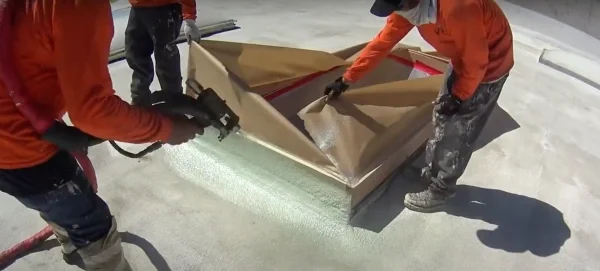
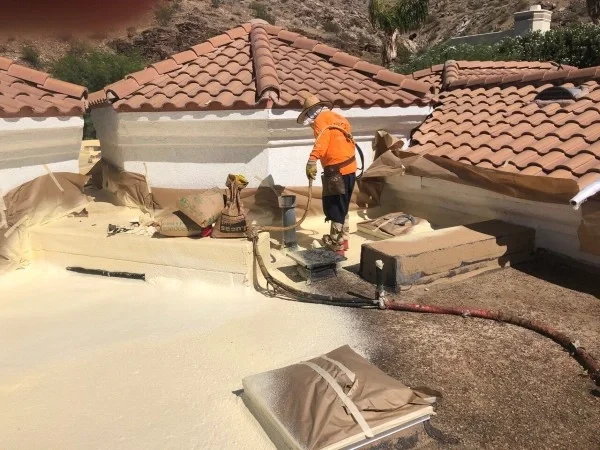
Spray polyurethane foam is applied as a liquid that expands into a continuous, insulating layer, then sealed with a protective coating. It costs about $4 to $10 per square foot and can last 50 years or more when recoated every 10 to 15 years. Foam adds R-value on top of waterproofing, which lowers cooling loads on hot flat roofs, and it self-flashes around penetrations. It is a specialty most roofers do not offer. We do: see spray foam roofing and, for aging foam and coatings, roof rejuvenation.
Rolled roofing
Rolled roofing is mineral-surfaced asphalt in long rolls, the cheapest option at about $2 to $5.50 per square foot, lasting only 5 to 10 years. It goes down fast on low-slope sheds, shops, and utility structures where looks do not matter. It is not a home roof.
Living (green) roof
A living roof grows plants over a waterproof membrane and drainage layer. Cost varies widely by design, from thin "extensive" moss systems to "intensive" gardens that hold people. Green roofs insulate, absorb rainwater, and cool the building, but they need irrigation and maintenance, which is a real commitment in a dry climate. Some building departments restrict them, so check locally first.
What is the best roofing material for Southern California's climate?
For most Southern California homes, concrete or clay tile and standing seam metal are the best all-around picks, because they handle heat, UV, and fire far better than asphalt and last two to three times longer. The right answer depends on your exact microclimate: desert heat and UV in the Coachella Valley, salt air near the coast in Orange and San Diego Counties, and wildfire exposure in the foothills. We break the choice down by material and climate in our companion guide, Best Roofing Material for Southern California. Not sure what your home can carry or what code requires? Ask a roofing expert.
Does California require a cool roof? Title 24 explained
Often, yes. California's Title 24, Part 6 energy code requires cool-roof performance on many steep-slope residential re-roofs in Climate Zones 10 through 15, which includes Palm Desert and much of inland Southern California. A qualifying steep-slope roof generally needs a minimum aged solar reflectance around 0.20 and thermal emittance of 0.75, verified through the Cool Roof Rating Council. The payoff is real: the U.S. Environmental Protection Agency reports that a cool roof can cut peak cooling demand by 11 to 27 percent in air-conditioned homes and lower indoor temperatures by 2.2 to 5.9 degrees Fahrenheit in homes without air conditioning. Tile, metal, and light-colored membranes make cool-roof compliance straightforward. We handle the code and the CRRC paperwork on every residential reroof.
What roofing materials are allowed in wildfire (WUI) zones?
In California's Wildland-Urban Interface and designated Fire Hazard Severity Zones, the roof assembly must be Class A fire-rated, the highest rating, under California Building Code Chapter 7A. Class A materials include concrete and clay tile, metal, slate, and many asphalt shingle assemblies. Wood shakes and shingles cannot meet the Class A roof-covering requirement in these zones, even when treated, so they are effectively off the table for most Southern California foothill and canyon homes. If you are in or near a fire zone, this rule usually decides your material before cost does. We confirm your zone and the required assembly during the inspection.
The cheapest roofing material is not the smartest: cost per year
Rolled roofing is the cheapest material, and asphalt shingles are the cheapest common home roof. But "cheapest" changes when you divide installed cost by real lifespan. Architectural asphalt at about $6 per square foot lasting 20 years works out to roughly $0.30 per square foot per year. Concrete tile at about $12 per square foot lasting 50 years is closer to $0.24 per square foot per year, even though it costs twice as much up front. In desert heat, where asphalt often hits the short end of its life, the gap widens further. Spend a morning on cost per year, not just sticker price, before you decide. These are illustrative figures; your numbers depend on your roof.
What roofing material lasts the longest?
Natural slate lasts the longest, often 75 to 150 years or more, followed by clay and concrete tile at 50 to 100 years and standing seam metal at 40 to 70 years. Asphalt shingles sit at the bottom for longevity at 15 to 30 years, shorter in desert sun. If you plan to stay in the home for decades, a longer-lasting material usually wins on cost per year and means fewer tear-offs over your ownership.
Hidden costs national guides leave out
Per-square-foot prices only cover the surface. A real Southern California estimate also includes tear-off and disposal of the old roof, replacing damaged decking or sheathing, new underlayment, flashing, and proper attic ventilation, plus permit fees that vary by city and county. Tile and slate may need a framing check for weight. Cool-roof and fire-zone compliance can require specific products. This is why two "same size" roofs can be thousands apart, and why a walk-the-roof inspection beats any online calculator.
How to choose: a quick decision guide
Start with three questions. First, how long will you stay? Under 10 years, quality asphalt is fine; longer, tile or metal pays back. Second, what is your climate and zone? Desert heat and fire zones point to tile or metal with a cool-roof rating; flat roofs point to membrane or spray foam. Third, what can your home carry and what is your budget? Heavy tile or slate may need framing work, while metal shingles or synthetic slate give a premium look at lower weight. Bring those answers to your estimate and the material choice gets simple. Browse our featured projects to see these materials on real Southern California homes.
Vision Roof Services has served Southern California for decades, holds California License 651509, and was named a Best of BuildZoom contractor in 2024. Book your free roof health check or call 844-348-7663 to get an exact number for your home.
Double-click to edit...