Roof Rejuvenation vs. Replacement: A Southern California Homeowner's 2026 Guide
Roof rejuvenation vs replacement comes down to one question: are your shingles worn but still solid, or are they already failing? If they're aging and still intact, a rejuvenation treatment can add roughly five years of life for about 15 to 20 percent of the price of a new roof. If they're cracked, curling, bald in patches, or letting water in, no spray will save them, and a replacement is the honest answer.
Out here in the Southern California desert, the deciding factor is usually sun and heat, not the moss and damp you read about in blogs written for wetter states. I'm Dave Bienek, and I've worked on roofs across Southern California since 1992. Below, I compare the two options, what each costs in 2026, and how to tell which one your roof needs.
Roof rejuvenation is a spray treatment that restores flexibility to aging asphalt shingles and adds a few years of life without a tear-off. A roof replacement strips the old shingles down to the deck and installs a new roof. Rejuvenation costs less and keeps your shingles out of the landfill. A replacement resets the clock.
What is roof rejuvenation, and does it actually work?
The treatment itself is simple. Roof rejuvenation sprays plant-based oils onto aging asphalt shingles to restore flexibility and slow granule loss. It works on dried-out shingles that are still structurally sound. It doesn't fix leaks, flashing, or rotted decking, and it can't rebuild shingles that have already cracked, curled, or gone bald.
The oil soaks into the asphalt and brings back some of what heat and time pull out. Treated shingles flex instead of snapping, and they hold onto their protective granules longer. Companies that make these products, such as Roof Maxx, report about five years of added life per application, and up to roughly 15 years if you reapply every five years. Independent roofers, my crew included, will tell you those numbers depend entirely on the shingle. Rejuvenation buys time on a roof that's still sound. It does nothing for one that's already done.
The best candidate is a specific roof: asphalt shingles about 6 to 20 years old, with moderate wear and no active leaks. A proper roof rejuvenation restores flexibility to shingles that dried out early but haven't started to fail. Past that point, you're throwing good money after bad.
How much does roof rejuvenation cost compared to replacement in 2026?
Rejuvenation usually costs about 15 to 20 percent of a full replacement. That's the single biggest reason homeowners look into it.
A new asphalt shingle roof isn't cheap. This Old House puts a 2026 shingle roof replacement at $9,000 to $18,000 for a typical home, and larger or higher-end roofs run past $30,000. Rejuvenation lands in the low four figures for most homes. On price alone, it's not close.
But price per year tells a truer story. Spend, say, $2,000 to add five years and that's about $400 a year. Spend $15,000 on a roof that lasts 25 years and that's about $600 a year. Rejuvenation wins on cash today. A replacement can win on cost per year if your shingles still have real life left. That math is exactly why we inspect before we quote. Vision Roof Services doesn't post flat prices, because roof size, shingle condition, and access change the number on every job. We give you a figure after we've been on the roof, and we offer financing through Acorn Financing if you want to spread a replacement out.
Roof rejuvenation vs. replacement: the key differences at a glance
Rejuvenation's benefits for homeowners come down to cost and convenience. Most treatments wrap up in only a few hours, while a replacement ties up your home for the better part of a week. The full list of benefits for homeowners is worth a read, but this table covers the factors that actually drive the decision.
| Factor | Roof rejuvenation | Roof replacement |
|---|---|---|
| Upfront cost | About 15 to 20% of a replacement, usually low four figures | About $9,000 to $18,000 in 2026, more for large or high-end roofs |
| Added lifespan | About 5 years per treatment, up to ~15 with reapplication | A new roof rated for 20 to 30 years |
| Time on site | A few hours to a day | Several days to a week |
| Disruption | Low. No tear-off, little debris | High. Noise, debris, and a dumpster |
| Best for | Sound shingles roughly 6 to 20 years old | Failing, leaking, or worn-out roofs |
| What it addresses | Shingle flexibility and granule loss only | Shingles, flashing, underlayment, and decking |
These are broad industry ranges for 2026, useful for planning, not a quote. Your real number depends on roof size, shingle condition, and roof access.
When is a replacement the right call?
Replace the roof when it's failing or past its service life, not a day before. Some roofs are past saving, and no treatment changes that. There are clear signs it's time to replace your roof instead of treating it:
Shingles are cracked, curled, or missing across more than about half the roof
Leaks keep coming back after repairs
The deck feels soft underfoot, or you can see it sagging from the ground
Gutters full of granules and shingles that look bald
On that last point, InterNACHI's life expectancy chart lists three-tab asphalt shingles at about 20 years and architectural shingles at about 30. In a mild climate. Which brings me to the part most articles get wrong for our region.
Why desert roofs age faster than the charts say
In the Coachella Valley, shingles rarely rot. They bake. Most rejuvenation-vs-replacement advice online is written for cold, wet places, so it talks about moss, algae, and freeze-thaw damage. That's not your roof. In Palm Desert and across the valley, July highs average above 105 degrees, and stretches past 110 are normal. The sun does the damage here. Ultraviolet light and constant heat cook the oils out of asphalt shingles and loosen the granules that shield them, years faster than moisture does up north.
This Old House notes that a roof's real lifespan depends heavily on climate, and harsh conditions can cut it well below the textbook number. That matches what we see. A shingle roof that might reach 25 years in a mild coastal town often looks 20 years old at 15 in the desert. So two things are true here: desert roofs hit the rejuvenation window earlier, and they crash through it into replacement territory faster. Timing is everything, and it's why an inspection beats a guess.
How we tell the difference: a free Roof Health Check
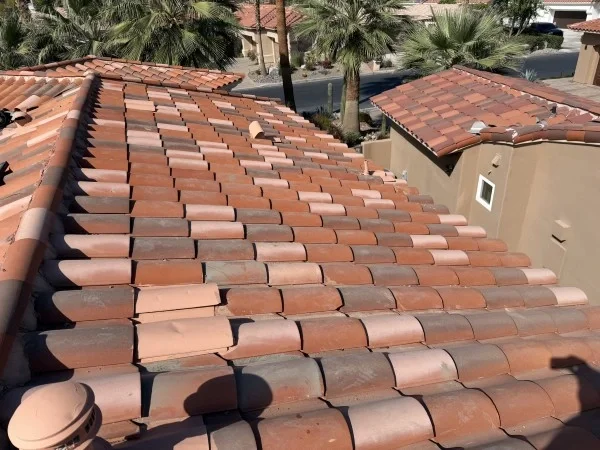
We don't guess whether to treat or replace. We get on the roof and document it. Every recommendation we make starts with a free Roof Health Check. We inspect the shingles for flexibility and granule loss, then check the parts that cause most desert leaks: flashing, valleys, pipe boots, and the decking underneath. You get a written report with photos, usually within 24 to 72 hours, and a straight recommendation.
One thing sets our recommendation apart: we install both. We do rejuvenation, and we do full replacements, plus coatings for flat roofs. So when we tell you a treatment will buy you five good years, or that it won't, there's no thumb on the scale. Companies that sell only one of the two tend to recommend the one they sell. Ask any of them what happens to your roof if you wait, and listen closely to the answer.
What about flat and commercial roofs?
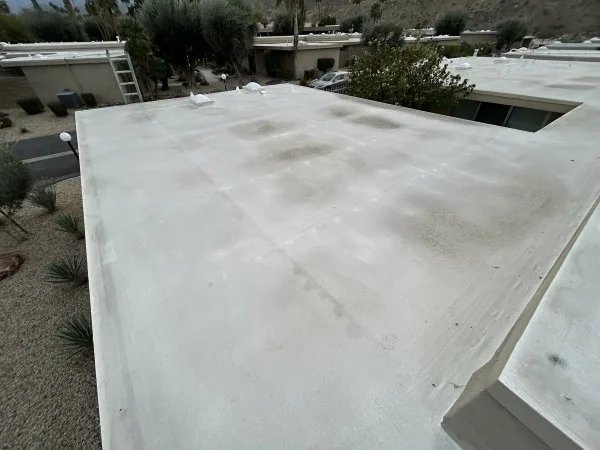
Rejuvenation is a shingle treatment. Flat and low-slope roofs get restored a different way. If you've got a flat or low-slope roof, whether on a home in the valley or a commercial building, shingle rejuvenation doesn't apply. Those roofs get restored with a silicone coating or a spray polyurethane foam system: we clean and repair the existing surface, then recoat or re-cover it instead of tearing everything off. Same idea as rejuvenation, extend the roof you have, but the method is built for membranes and foam, not asphalt.
There's a heat bonus that matters in our climate. A reflective coating bounces sunlight instead of soaking it up. The EPA notes that cool, reflective roofs stay cooler and cut the heat passed into the building, which eases the load on your air conditioning. We handle this work on commercial roofs across Southern California, and we're members of the Spray Polyurethane Foam Alliance, the trade group that sets standards for foam roofing.
Roof rejuvenation vs. replacement: common questions
Does roof rejuvenation actually work?
Yes, on the right roof. It restores flexibility to asphalt shingles that are aging but still sound and can add about five years of life per treatment. It won't fix leaks, flashing, or shingles that are already cracked, curled, or bald.
How much does roof rejuvenation cost compared to a replacement?
Rejuvenation typically runs about 15 to 20 percent of a full replacement. A 2026 asphalt shingle replacement in Southern California averages roughly $9,000 to $18,000, so a treatment is usually a few thousand dollars. Exact pricing depends on your roof size and condition.
How many years does roof rejuvenation add?
Treatment makers report about five years per application, and up to roughly 15 years if you reapply every five years, as long as the shingles stay structurally sound. In the desert, intense heat and UV can shorten that window.
Is my roof too old to rejuvenate?
Rejuvenation works best on asphalt shingles about 6 to 20 years old with moderate wear. Once shingles are failing or the roof is past its rated life, a replacement is almost always the better value.
Does roof rejuvenation work in desert heat?
It can, but the timing is tighter. Sun and 105-degree-plus summers dry shingles out faster, so desert roofs often need treatment earlier and reach replacement sooner than roofs in mild climates.
Will rejuvenation affect my shingle warranty?
It depends on your manufacturer and the product used. Some shingle warranties have conditions about third-party treatments, so check your specific terms first. We review warranty status as part of the Roof Health Check.
Do you offer financing for a new roof?
Yes. Vision Roof Services offers financing through Acorn Financing, and we provide a written quote after a documented inspection rather than a phone estimate.
Not sure whether to rejuvenate or replace? Find out for sure
Before you put money into rejuvenation or a replacement, find out which one your roof actually needs. Vision Roof Services runs a free Roof Health Check across the Coachella Valley and Southern California, from Palm Desert and La Quinta to Orange County, with a written report and photos back to you in 24 to 72 hours. We'll show you what we find and tell you which one, roof rejuvenation or a replacement, is the smarter spend for your home. Palm Desert homeowners rate us 4.8 stars on Google, and we've run that same inspection on thousands of roofs. Book your inspection and we'll take it from there.
Double-click to edit...