How Much Does a New Roof Cost in Southern California? (2026 Pricing Guide)
A new roof cost in Southern California runs about $6.50 to $10.50 per square foot installed in 2026. For a typical single-family home that lands near $13,000 to $26,000 for asphalt shingles and $24,000 to $44,000 for clay tile. Commercial and flat roofs price on a different scale, by system and building size. If your roof is leaking, past 20 years old, or losing shingles after a storm, waiting rarely saves money. The damage spreads to the deck, and a deck repair costs more than the shingles ever would. This guide gives you the real 2026 numbers by material, by roof type, and by region, so you can read a quote and know if it is fair.
Here is the short version. A new roof in Southern California costs about $6.50 to $10.50 per square foot installed in 2026, or roughly $13,000 to $26,000 for an average asphalt home and $24,000 or more for tile. Flat and commercial roofs are priced by system, from about $5.50 per square foot.
Most cost guides stop at asphalt and tile. Across Riverside, Orange, San Diego, and Los Angeles counties, a large share of the roofs we work on are low-slope and commercial, so this guide prices those too, including spray foam and coatings. We install both. You can see the split on our commercial roofing and residential roofing pages.
What's the average new roof cost in Southern California?
The average new roof cost in Southern California in 2026 sits between $10,000 and $35,000 for most homes, with asphalt jobs near the low end and tile near the top. Southern California runs higher than the national average because of labor rates, code requirements, and material mix.
For contrast, HomeGuide puts the national average around $10,800, and Angi reports about $9,600 (the $9,500 figure you see on NerdWallet is drawn from Angi's data, not a separate survey). California is a different market. Modernize's 2026 California calculator lists a statewide average near $26,600, and Instant Roofer's contractor data shows a California average around $17,300 for a 2,375 square foot roof, or about $7.27 per square foot, as of mid-July 2026. Those lead-generation estimators refresh often, so treat any single number as a snapshot, not gospel.
Southern California itself splits by material. A straight asphalt reroof on an average home often runs $13,000 to $18,000. Once you move to concrete or clay tile, which cover a huge share of homes here, the same roof can reach the mid $20,000s or higher.
Cost by roof size
Roofers price by the roofing square, which is 100 square feet of roof surface. In Southern California, plan on roughly $650 to $1,050 per square installed for asphalt or architectural shingles, more for tile or metal.
| Home roof size (sq ft) | Roofing squares | Installed cost, asphalt/architectural (SoCal) |
|---|---|---|
| 1,000 to 1,500 | 10 to 15 | $9,000 to $16,000 |
| 1,500 to 2,000 | 15 to 20 | $13,000 to $21,000 |
| 2,000 to 2,500 | 20 to 25 | $17,000 to $26,000 |
| 2,500 and up | 25 and up | $22,000 to $40,000+ |
These are installed costs for asphalt or architectural shingle. Tile and metal run higher (see the material table). They exclude structural repairs, permit fees, and heavy tear-off.
What is a roofing square?
A roofing square is a 10 foot by 10 foot section of roof, or 100 square feet. Contractors quote in squares because it makes material ordering and labor cleaner. Your roof is not the same size as your floor plan. Because of pitch and overhangs, the actual roof surface usually runs 10 to 40 percent larger than the home's footprint, so a 2,000 square foot house often carries 22 to 24 squares of roof.
New roof cost by material in Southern California
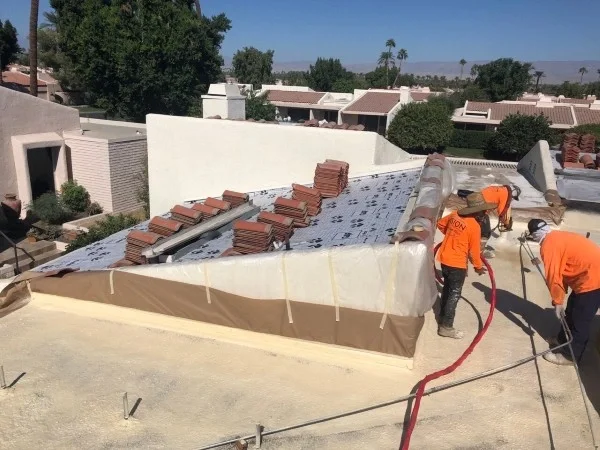
Material is the single biggest lever on your price. Here is what Southern California homeowners are paying per square foot installed in 2026, with a total for a 2,000 square foot roof.
| Material | Installed cost per sq ft | Total, 2,000 sq ft roof |
|---|---|---|
| 3-tab asphalt | $4 to $7 | $8,000 to $14,000 |
| Architectural asphalt | $5.50 to $9 | $11,000 to $18,000 |
| Concrete tile | $9 to $18 | $18,000 to $36,000 |
| Clay tile | $12 to $22 | $24,000 to $44,000 |
| Corrugated metal | $7 to $12 | $14,000 to $24,000 |
| Standing seam metal | $10 to $16 | $20,000 to $32,000 |
| Copper | $20 to $40 | $40,000 and up |
| Wood shake | $8 to $16 | $16,000 to $32,000 |
| Composite shake | $6 to $18 | $12,000 to $36,000 |
Asphalt shingles are the most common and the cheapest way in. Three-tab is the baseline, but I steer most homeowners to architectural shingles. They cost a little more and last far longer, usually 25 to 30 years, with better wind resistance. In Los Angeles, installed architectural asphalt often averages close to $8.50 per square foot once tear-off and underlayment are counted.
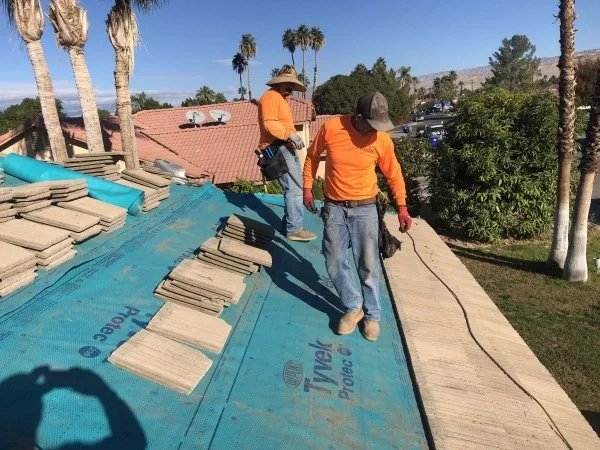
Concrete and clay tile define Southern California curb appeal, and tile handles our heat and fire risk well. The trade-off is weight. Concrete tile weighs 900 to 1,200 pounds per square, and clay weighs more. If your framing was not built for tile, you may need reinforcement before install, which adds cost (more on that below).
Metal keeps growing here for its 40 to 70 year life and fire resistance. One 2026 caveat: metal prices have jumped. The Section 232 tariffs on steel and aluminum rose to 50 percent in 2025, up from 25 percent on steel and 10 percent on aluminum in 2024. According to the Associated General Contractors' reading of federal producer-price data, mill prices for aluminum products were up about 33 percent and steel about 21 percent year over year in early 2026. Skip the tidy "metal is up 15 to 25 percent" line you will see on other sites. It is not backed by a real source, and the raw material moves are bigger than that.
Wood and composite shake give you the shake look. Natural wood is a hard sell in our fire country now (see the code section), so most homeowners who want that look choose composite, which carries a Class A fire rating and lasts longer. Our new construction projects use composite often for exactly this reason.
What does a commercial or flat roof cost in Southern California?
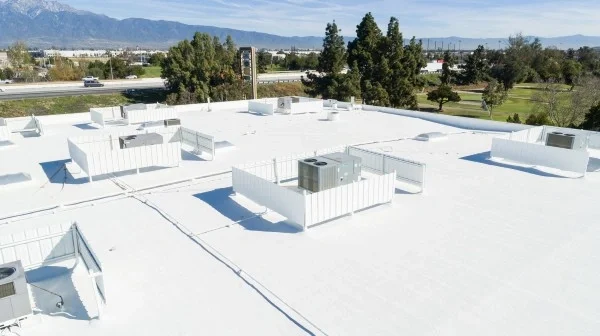
A commercial or flat roof in Southern California costs about $5.50 to $12 per square foot installed in 2026, depending on the system. On a 10,000 square foot building that is roughly $55,000 to $120,000. These are the systems consumer cost guides leave out, and they cover a large share of the roofs across our region.
| System | Installed cost per sq ft | Total, 10,000 sq ft roof |
|---|---|---|
| TPO membrane | $5.50 to $8.50 | $55,000 to $85,000 |
| Modified bitumen | $5.50 to $9 | $55,000 to $90,000 |
| Built-up roof (BUR) | $6.50 to $11 | $65,000 to $110,000 |
| PVC membrane | $7 to $12 | $70,000 to $120,000 |
| Spray foam (SPF) | $5.50 to $9.50 | $55,000 to $95,000 |
| Silicone restoration coating | $3.50 to $7 | $35,000 to $70,000 |
TPO and PVC are single-ply membranes, lightweight and reflective. Modified bitumen and built-up are the older multi-layer systems you still see on a lot of commercial buildings. Each has a place, and the right pick depends on foot traffic, ponding water, and how long you plan to own the building. The named jobs on our featured projects page show the range, including a LifeStorage facility in Costa Mesa and a Yamaha building in Buena Park.
How much does a spray foam roof cost?
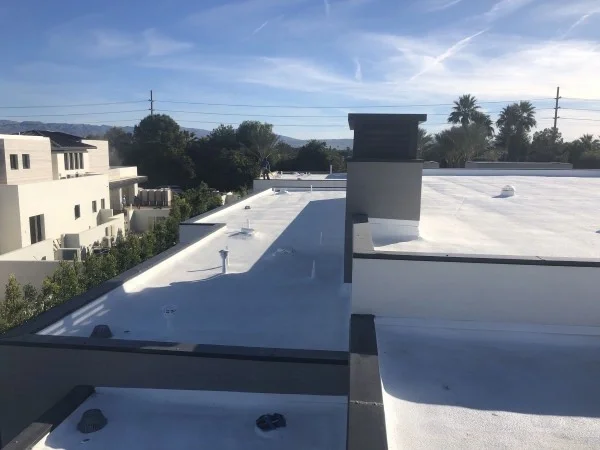
A spray foam (SPF) roof costs about $5.50 to $9.50 per square foot installed on a commercial building in 2026, and roughly $3.50 to $7 per square foot on a residential low-slope roof. Spray foam roofing is our specialty, and it behaves differently from every other system on this page.
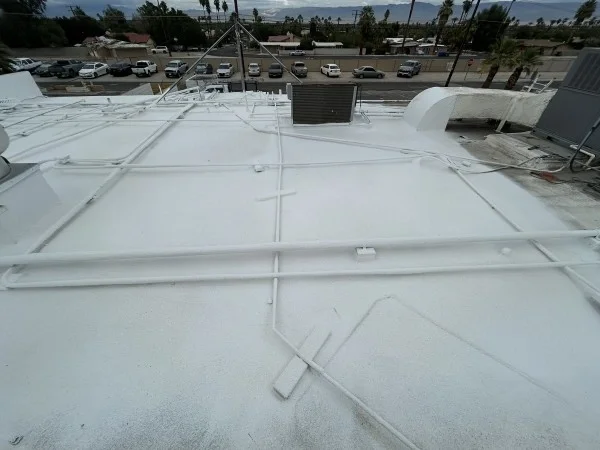
Spray polyurethane foam goes down as a liquid that expands into one continuous, fully bonded layer with no seams to fail. It self-flashes around vents and curbs, so the spots where roofs usually leak are covered. Per the Spray Polyurethane Foam Alliance, closed-cell roofing foam delivers about R-5.8 to R-6.9 of insulation per inch, the highest of any common roof system, and it is light. A finished foam roof weighs around 50 to 60 pounds per square. A built-up gravel roof runs near 600 pounds per square, and tile 900 to 1,200. That weight difference is why foam is often the answer on older buildings that cannot take a heavy roof.
Foam is also a maintenance system, not a one-and-done install. A reflective silicone or acrylic topcoat protects the foam, and per the SPFA that coating is renewed every 10 to 15 years. Recoat it on schedule and the foam itself can last the life of the building. Some of the SPF roofs installed in the 1970s are still in service. You can read how we handle coatings on our roof rejuvenation page.
One honest note on energy, because other sites oversell it. You will see "save up to 40 percent" claims for foam. That number is not real. It traces to a Department of Energy statistic about air-leakage losses, not achievable savings. The figure I will stand behind comes from the EPA: a reflective roof can cut peak cooling demand by 11 to 27 percent in an air-conditioned building, and the Department of Energy measures reflective roof surfaces staying more than 50 degrees cooler than dark ones on a hot day. Real savings depend on your building, your insulation, and your rates. We will not promise a percentage we cannot back.
Restore vs replace: the move most owners miss
Here is the take that saves owners the most money. If your flat roof is leaking but the structure is sound, you often do not need a tear-off and a new roof. You need a restoration.
| Option, 10,000 sq ft low-slope roof | Typical 2026 cost |
|---|---|
| Full tear-off and new membrane | $65,000 to $120,000 |
| Spray foam recoat or silicone restoration | $20,000 to $70,000 |
A recoat runs about 30 to 40 percent of a full replacement, skips the tear-off and the landfill fee, and resets the service clock. It is not always the right call. If the roof is saturated or the deck is failing, replacement wins. But nobody should sign a replacement contract on a low-slope roof without an honest look at restoration first. That is the core of our maintenance-first approach, and it is why owners across the region keep our number.
How California code drives your 2026 roof cost
California building code adds real cost to a reroof in 2026, and the rules changed this year. Two things drive it: energy standards and fire standards.
Title 24 cool-roof rules. The 2025 Building Energy Efficiency Standards took effect January 1, 2026, replacing the 2022 code. When you replace more than 50 percent of a roof (or more than 2,000 square feet), the new surface generally has to meet a cool-roof reflectance minimum and use a product listed by the Cool Roof Rating Council. There is a break worth knowing: heavy roof assemblies at or above 25 pounds per square foot, which includes most clay and concrete tile, are exempt from the reflectance minimum. The California Energy Commission publishes the current standards, and it is worth confirming your climate zone before you buy.
Fire rules. The old Chapter 7A wildfire provisions moved into the new California Wildland-Urban Interface Code, also effective January 1, 2026. If your home sits in a mapped Fire Hazard Severity Zone, your roof covering has to be Class A fire rated, which rules out standard wood shake and pushes you toward tile, metal, composite, or Class A asphalt. This matters more than it used to: Cal Fire's 2025 maps added roughly 1.4 million acres of high and very-high hazard zones statewide, including parcels inside city limits. Check whether your address is newly in scope on the Cal Fire Office of the State Fire Marshal maps before you pick a material.
License and permits. Any reroof that needs a building permit needs a licensed contractor, full stop. California requires a C-39 roofing license (or a B general license) for the work, and as of January 1, 2025 the unlicensed "minor work" ceiling rose from $500 to $1,000, though it does not apply to permitted jobs anyway. You can verify any contractor's license in about a minute on the Contractors State License Board site. Our California license is 651509. Permit fees vary widely by city: Los Angeles reroof permits often run about $250 to $400, San Diego charges nothing for a like-for-like reroof that does not touch the structure, and desert cities like Palm Springs and Palm Desert set their own fee schedules, so call the building department for an exact number.
Rebates, with a reality check. Other guides tell you to grab a PG&E or SDG&E cool-roof rebate. As of 2026, the big investor-owned utilities (PG&E, SCE, SDG&E) no longer run residential cool-roof rebates. The live one in our region is LADWP's, at $0.20 to $0.60 per square foot for a qualifying cool roof over conditioned space, and it needs a Cool Roof Rating Council product ID plus a final permit. If you are outside LADWP territory, do not count on a utility check. And if you are adding panels, our solar roofing crews sequence the array and the roof together so you do not void a warranty.
New roof cost by Southern California region
Southern California is not one roofing market, and price shifts by county.
Riverside County and the Coachella Valley are where we are based, in Palm Desert. Desert heat is brutal on roofs, so reflective systems, foam, and tile all make sense here, and cool-roof compliance is easy to hit with the right product. Pricing is generally friendlier than the coast. You can see our full desert and inland coverage on the areas we serve page.
Orange County pricing sits higher, and coastal cities add salt-air material requirements that push you toward corrosion-resistant metal and premium tile. Both residential and commercial are strong here, and it is a market we are growing in.
San Diego County looks a lot like Orange County on price, with the permit break noted above for like-for-like reroofs.
Los Angeles County is the most expensive of the four, driven by labor and permit costs. We focus on commercial work in LA. Expect quotes at the top of every range in this guide.
Should you repair, restore, or replace?
Repair is the right call when less than about 25 percent of the roof is damaged, the structure is sound, and the roof is under 15 to 20 years old. A useful rule: if repair costs pass 30 percent of a full replacement, replacing usually wins on long-term value. On a low-slope roof, add a third option before you decide: restoration, covered above.
Clear signs replacement beats another patch:
The roof is 20 or more years old with widespread granule loss or curling.
Several areas leak after a single storm.
You have repaired the same spots twice in five years.
You are selling and want to clear a buyer objection.
Does insurance cover roof replacement?
Homeowners insurance usually covers a roof replacement when a sudden, covered peril causes the damage, such as fire, hail, high wind, or a falling tree. It does not cover wear, age, or deferred maintenance. In California, wildfire is a common covered cause in high-risk zones, but carriers have added exclusions and non-renewed policies in those areas, so read your policy language before you assume anything. If you do file a claim, the insurer sends an adjuster, and that adjuster's estimate may not match real contractor pricing. You can bring your own licensed roofer to the inspection, and in most cases you should.
Is a new roof worth it in Southern California?
Yes, and the resale math backs it up. Remodeling's 2025 Cost vs Value report shows an asphalt shingle roof recoups about 68 percent of its cost at resale, one of the higher returns for any exterior project. Metal recoups less, closer to 50 percent. You will see this stat credited to a Harvard study on some roofing sites. That attribution is wrong. Harvard's Joint Center for Housing Studies tracks total remodeling spending, not per-project resale return. The real source is Remodeling's Cost vs Value report. In our market, a new permitted roof also clears a common buyer objection and shortens time on market.
How to get an accurate roof estimate
Get three quotes from licensed contractors, and make them comparable. Ask each one for a line-item breakdown that covers scope (full replacement or overlay), how many old layers come off, the exact material brand and warranty, the labor and crew, who pulls and pays for the permit, what triggers a decking charge, and whether cleanup and disposal are included. A single lump-sum number with no breakdown is impossible to compare and hard to hold anyone to. Labor alone is 50 to 60 percent of most roof jobs, and Southern California crews run about $75 to $125 an hour, so a vague quote hides a lot.
On timing, spring and summer are peak season here, and prices reflect the demand. If your roof is not in active failure, scheduling in late fall or winter can shave 5 to 15 percent in some markets. And before you pay for a standard inspection, which runs about $200 to $450 in California, know that our free Roof Health Check returns a written report with photos in 24 to 72 hours at no cost. It is the same documentation you would get from a paid inspection.
A new roof cost in Southern California always comes down to your material, your roof, and your region, but you should never have to guess. With about 7,500 roofs behind us and 30-plus years in this market, we give you the real number and the honest options, replacement or restoration. Start with a free estimate on our contact page, and read founder Dave Bienek's story on the about us page.
FAQs
How much does a new roof cost in Southern California?
A new roof cost in Southern California is about $6.50 to $10.50 per square foot installed in 2026, or roughly $13,000 to $26,000 for an average asphalt home. Tile pushes past $24,000, and commercial or flat roofs are priced by system from about $5.50 per square foot.
How much does a spray foam roof cost?
A commercial spray foam roof costs about $5.50 to $9.50 per square foot installed in 2026, and a residential low-slope foam roof about $3.50 to $7. A silicone restoration coating over sound foam runs about $3.50 to $7 per square foot, roughly 30 to 40 percent of a full replacement.
How much does a commercial flat roof cost in Southern California?
A commercial flat roof in Southern California costs about $5.50 to $12 per square foot installed in 2026. TPO runs $5.50 to $8.50, modified bitumen $5.50 to $9, built-up $6.50 to $11, and PVC $7 to $12. On a 10,000 square foot building that is about $55,000 to $120,000.
Do I need a permit and a licensed roofer in California?
Almost always, yes. A reroof that needs a building permit requires a licensed contractor with a C-39 roofing or B general license. You can verify any license on the Contractors State License Board site. Permit fees range from $0 for a like-for-like reroof in San Diego to about $250 to $400 in Los Angeles.
Does Title 24 add to my 2026 roof cost?
It can. The 2025 Title 24 energy code, in force since January 2026, requires a cool-roof product when you replace more than half the roof, which can raise material cost. Heavy tile roofs at or above 25 pounds per square foot are exempt from the reflectance minimum.
Should I recoat or replace my flat roof?
If the structure is sound and the deck is dry, a spray foam recoat or silicone restoration usually beats replacement. It costs about 30 to 40 percent of a tear-off and reset the service life. If the roof is saturated or the deck is failing, replace it.
How long does a roof replacement take?
Most asphalt reroofs in Southern California take 1 to 3 days. Tile, foam, and larger commercial systems generally take 5 to 10 days because of weight, coating cure times, and structural work. Weather, permits, and material lead times can extend the schedule.