Broken Roof Tiles in the Desert: Causes, Repair, and the Underlayment Truth
A broken roof tile is a cracked, chipped, or slipped tile that no longer sheds water the way it was built to. On a desert tile roof, though, the tile isn't the part keeping water out of your house. The layer underneath it is, and that layer wears out decades before the tile does. So two or three broken roof tiles on a 20-year-old roof usually mean a bigger clock is running underneath.
I'm Dave Bienek. My crews have worked on roofs across Southern California since 1992, close to 7,500 of them. This guide covers what actually breaks tiles out here, how to tell if it's urgent, when a repair makes sense versus a bigger fix, and what moves the price.
Broken roof tiles are roofing tiles that have cracked, chipped, slipped out of place, or shattered, usually from age, foot traffic, blown debris, or daily heat movement. The tile is a shield. The waterproof layer beneath it, called the underlayment, is the real barrier. Broken tiles expose that layer to sun and rain, which is how a small problem turns into a leak.
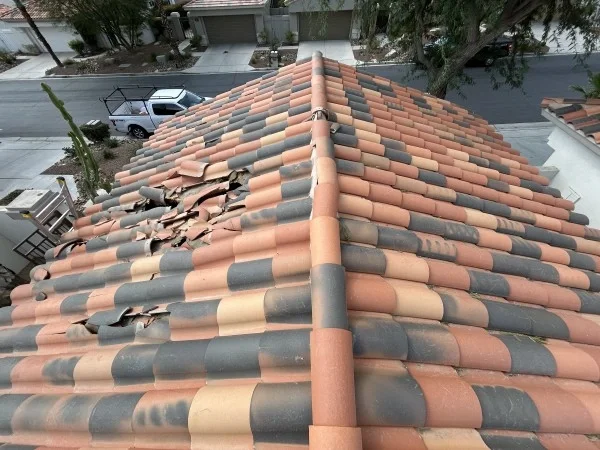
Why roof tiles crack and break in the desert
Most broken tiles out here come from 4 things: age and sun, someone walking the roof wrong, impact from blown debris or branches, and heat that flexes the tile a little every day. Notice what's missing from that list: freeze and thaw. National repair articles lean hard on freezing water splitting tiles. In Palm Desert, La Quinta, or Phoenix, that's not your problem. Your problem is 110-degree summers and relentless UV that make older tiles brittle and fade the color out of concrete.
Foot traffic is the damage people cause themselves. A satellite installer, a solar crew, or an HVAC tech steps on the middle of a tile instead of the supported bottom edge, and it cracks under their weight. You often won't see it until it leaks months later.
Wind gets blamed a lot, but on its own it's rarely the culprit. The Tile Roofing Industry Alliance says a properly installed concrete or clay roof can be built for winds up to 200 mph. What breaks tiles in a monsoon is what the wind throws at them: gravel, branches, a neighbor's patio umbrella.
How concrete, clay, and slate tiles break differently
The 3 tiles you see on desert roofs fail in 3 different ways, and knowing which one you have tells you what to look for.
Concrete tile is the most common on desert tract and HOA homes. The surface coating wears and the color fades to a chalky look first, then the body turns brittle and cracks under foot traffic. A white, powdery bloom on newer tile is efflorescence, which is cosmetic, not a failure.
Clay and terracotta, the classic Spanish barrel look, hold their color far longer but are more brittle, so a dropped branch or a wrong step tends to chip or shatter them outright. Matching a discontinued clay color is the hardest sourcing job of the three.
Slate is rare out here and mostly shows up on custom homes. It splits along its natural layers as it ages, and individual pieces slip when the fasteners or hooks holding them corrode. Whatever the material, the underlayment underneath ages on the same schedule.
How can you spot a broken roof tile?
You can catch most broken tiles from the ground and from your attic. You almost never need to get on the roof, and you shouldn't.
From the ground, use binoculars. Look for tiles that are cracked, chipped, sitting crooked, or slid out of line, plus any dark patch that looks different from the tiles around it. After a storm, walk the yard for tile fragments. Inside, check the attic and ceilings for water stains, a musty smell, or daylight coming through the deck. Tile bits or sandy sediment in your gutters are another tell. And the desert giveaway: tiles that have gone chalky and faded are old, and old tiles crack under the lightest step.
What should you do the moment a tile breaks?
Contain the water first, then get it looked at. What you don't want is a broken tile sitting open through a monsoon.
If water is already coming in, put a bucket under the drip inside and move furniture clear, but stay off the roof, especially when it's wet. Skip the do-it-yourself caulk-and-tarp fix too, because a tarp screwed down through tiles cracks more of them and gets in the way of a proper repair. Take dated photos of the damage, which matters if a storm caused it and you file a claim. Then book an inspection before the next storm, because one open spot can soak a wider stretch of underlayment than you'd guess.
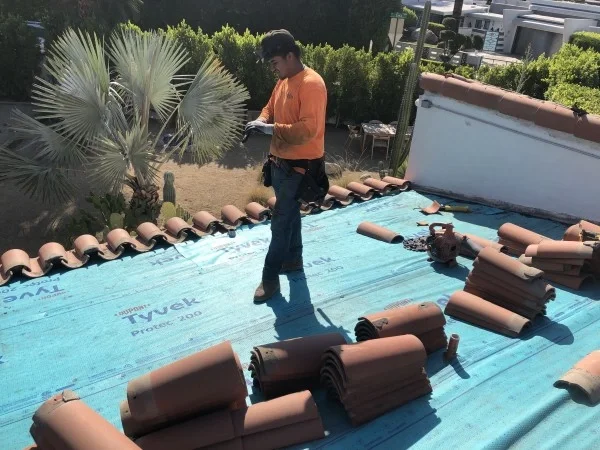
What actually leaks is the underlayment, not the tile
The tile is the sunshade. The underlayment is the raincoat. When a desert roof leaks, the raincoat is usually what failed, not the tile.
The lifespans don't match, and that gap is where the money goes. Home inspectors put clay and concrete tile past 100 years and the felt paper under it at just 15 to 30. Tile makers like Eagle Roofing say a concrete roof is built to last the life of the house. In our desert installs, the tile stays sound around 40 to 50 years while the underlayment is usually spent at 20 to 25. The heat bakes it brittle from below.
That's why a crack-free roof can still leak, and why the right fix is often to pull good tiles, replace the underlayment, and set the same tiles back down. We've written before about why a crack-free tile roof can still leak in desert heat. If your roof is past 20 and you're seeing broken tiles, the tiles are the symptom. The underlayment is the patient.
Should you repair or replace broken roof tiles?
Repair when the underlayment still has years left and the damage is contained. Replace or relay when the underlayment is at the end of its life, even if most of the tiles look fine.
On a Roof Health Check, we make the call by lifting a tile or two and looking at the underlayment underneath, because that's the part that decides everything:
One or two broken tiles, roof under 15 years, no leak: swap the tiles and move on.
Broken tiles plus a roof over 20 years, or an active leak: the underlayment is the real job, and a tile swap buys months, not years.
Widespread brittle tiles, more than one leak, or a sagging deck: you're looking at a full replacement.
We put that in a written report with photos, usually back to you within 24 to 72 hours, so you're deciding on evidence instead of a sales pitch. When it is a contained fix, our tile roof repair crews match and reset the broken tiles the same day.
What does broken roof tile repair cost?
The price of fixing broken roof tiles depends less on the tiles and more on what's under and around them, which is why we don't post a flat rate.
5 things move the number. How many tiles are broken. Whether your tile is still made, because matching a discontinued barrel-tile color often means tracking down salvage, and that drives cost more than the labor does. The condition of the underlayment once we can see it. The pitch and height of the roof, which sets how much staging and fall protection the crew needs. And whether it's a single spot or a whole slope. On a residential roof, one cracked tile over sound underlayment is a small, same-day job. The expensive version is the one where we open it up and the underlayment is already gone.
Insurance is the other cost question. Sudden storm or impact damage is often covered; age and a worn-out underlayment usually are not. Take dated photos when damage happens, because the timeline is what an adjuster checks.
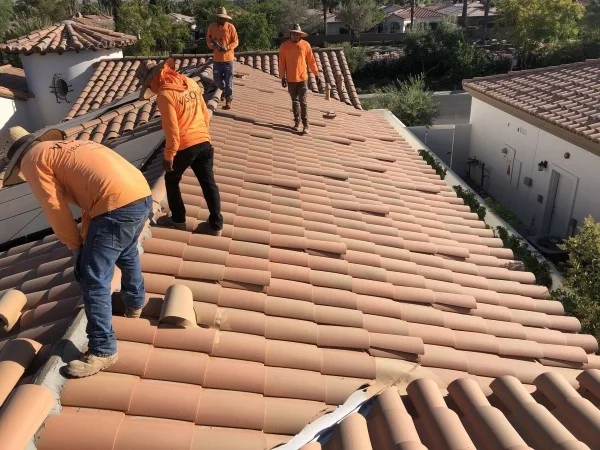
How long tile roofs really last in the desert
The tile can outlast you. The roof system won't, and that gap is the whole story.
Concrete and clay tile carry the highest fire rating, Class A, and take the sun for decades. Slate runs longer still, 60 to 150 years by inspector estimates. But the system around the tile, the underlayment, flashing, and valleys, ages on a desert clock of about 20 years. One more local wrinkle: when you re-cover a steep-slope roof in a hot climate zone like the Coachella Valley, California's Title 24 energy code can require a cool roof, a tile with an aged solar reflectance of at least 0.20 and thermal emittance of 0.75, or an SRI of 16. The Cool Roof Rating Council lists which products qualify, and plenty of standard concrete and clay tiles already do.
Single-tile swap versus a lift-and-relay
Two very different jobs hide behind the words "tile repair," and the difference is thousands of dollars.
A single-tile swap is what it sounds like. We match the broken tiles, replace them, reseal, and we're off the roof the same day. It's the right move only when the underlayment below is still sound.
A lift-and-relay is the desert workhorse most homeowners have never heard of. We number and lift the tiles off a slope, replace the underlayment underneath, then set your original tiles back down. You keep the exact tile you already have, which matters when your HOA expects the street to match and your color hasn't been made in 15 years. It costs far less than all-new tile and buys another 20-plus years. At Vision Roof Services, that's the fix we reach for most on older desert tile roofs. Full replacement is for when the tile itself is spent, not just the layer beneath it.
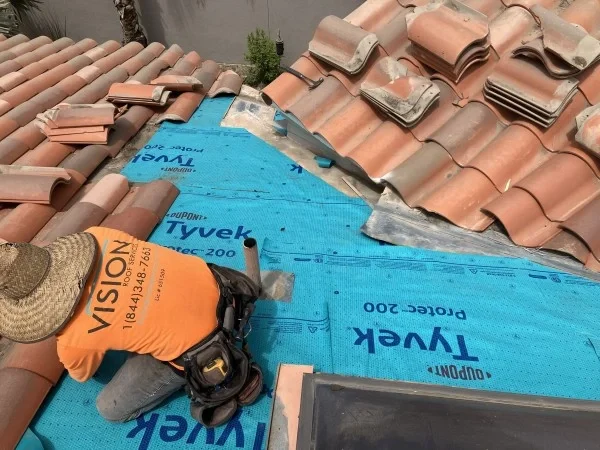
How to stop tiles from breaking again
Keep people off the roof, and get eyes on the underlayment before it fails instead of after.
3 habits save the most roofs. Get a real inspection once a year, especially after monsoon season, so a torn underlayment shows up on a clipboard and not as a stain on your ceiling. Route anyone who has to be up there, solar installers included, onto walk boards and the supported edge of the tile, never the center. Before you add solar panels to a tile roof, weigh the underlayment's age, because pulling panels later to redo the roof is an expensive do-over. A simple yearly maintenance plan that clears the valleys and checks the flashing does more for a tile roof than any product you can buy.
If you've got broken roof tiles on a desert home, the tile is the easy part. The real question is whether the underlayment still has life in it. We'll lift a couple, take a look, and send you a written Roof Health Check with photos, then tell you straight whether it's a quick patch or time to relay. That beats guessing, and it beats paying for a roof you don't need yet.
FAQs
What causes roof tiles to crack in the desert?
In desert climates, broken roof tiles usually come from age and UV, foot traffic from people walking the roof wrong, impact from blown debris, and daily heat movement that flexes the tile. Freeze and thaw, the cause blamed in most national articles, barely applies here. Sun and heat do the damage instead.
Can you replace just one broken roof tile?
Yes. If the underlayment beneath is still sound, a single broken roof tile is a same-day swap. The catch in the desert is matching the tile, because barrel-tile colors from 15 or 20 years ago are often discontinued. The real work is sourcing a match, not the repair itself.
Will a cracked roof tile cause a leak?
Not right away. The underlayment under the tile is the actual water barrier, so one cracked tile rarely leaks on its own. But it exposes that underlayment to sun and rain, and desert felt only lasts 15 to 30 years to begin with. A broken tile speeds up a failure that is already coming.
How long does a tile roof last in Southern California?
The tile lasts a long time, roughly 40 to 50 years in our desert installs and 100-plus by inspector estimates. The underlayment underneath is the weak link, usually 20 to 25 years before it turns brittle in the heat. That gap is why a roof with good-looking tiles can still need work.
Is it cheaper to repair broken roof tiles or replace the roof?
When the tile is fine but the underlayment is failing, a lift-and-relay is far cheaper than a new roof. We number and lift your existing tiles, replace the underlayment, and reset the same tiles, which also keeps your HOA-approved color. Full replacement only makes sense when the tile itself is spent.
How can I tell if my roof tiles are broken without climbing up?
Use binoculars from the ground and look for cracked, chipped, or slipped tiles and dark patches. Check the yard and gutters for tile fragments, and check your attic for stains or daylight after a storm. Faded, chalky tiles are old and crack more easily, so they are worth a closer look.
Does homeowners insurance cover broken roof tiles?
It depends on the cause. Sudden damage from a storm or a falling branch is often covered, while age, wear, and a worn-out underlayment usually are not. Take dated photos when damage happens, because insurers separate a covered event from normal aging, and the timeline is what they check.