Best Roofing Material For Solar Panels In 2026: Flat And Pitched Roofs Compared
Search "best roofing material for solar panels" and every guide hands you the same four: asphalt, metal, tile, tar and gravel. Not one explains what to do with a flat commercial roof or a spray foam roof, which is where most commercial solar in the desert Southwest gets installed. That gap matters. California has required solar on most new homes since 2020, and a rooftop array is built to run 25 to 30 years, so the roof under it has to last at least that long. Vision Roof Services has been on roofs across Southern California since 1992, and we’ve prepped, coated, or replaced more than 7,500 of them. Here’s how each material really performs under panels, and where installs go wrong.
The best roofing material for solar panels is standing-seam metal, because the mounts clamp to the seams and never pierce the roof. Spray foam and single-ply membranes win on flat roofs, and asphalt and tile both work. What really decides it is whether your roof outlasts a 25 to 30 year solar system.
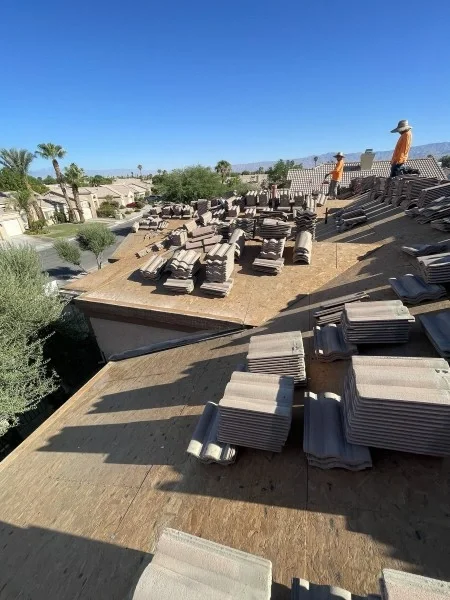
Best roofing material for solar panels, ranked
Standing-seam metal is the top choice, followed by asphalt for pitched homes and spray foam for flat roofs. Tile works but costs more to mount on. Here is how the common materials compare on the two things that decide a solar job: how the panels attach, and how long the roof lasts.
| Roof material | How panels attach | Solar labor | Roof lifespan |
|---|---|---|---|
| Standing-seam metal | Clamps grip the seams, no holes | Low | 40 to 70 years |
| Asphalt shingle | Lag bolts into rafters, flashed | Low to medium | 15 to 30 years |
| Clay or concrete tile | Tiles pulled, tile hooks or flashed feet | High | 50 to 100 years |
| Spray foam (SPF) | Non-penetrating ballast, or curbs foamed and sealed | Low to medium | 20 to 30 years, longer with recoats |
| Single-ply (TPO, PVC, EPDM) | Ballasted, or penetrations with welded boots | Medium | 20 to 30 years |
Standing-seam metal: the one installers ask for
If you have a standing-seam metal roof, you’re in the best position of anyone. Clamps grab the raised seams, so the array mounts with zero holes drilled. No penetrations means almost no leak risk and lower labor. A metal roof also lasts 40 to 70 years, so it will outlive two solar systems without a re-roof. The catch is upfront cost. Metal runs more than asphalt to install, which is why it shows up on maybe one home in eight.
Asphalt shingle: common and cooperative
Asphalt shingles cover most American homes, and every solar installer knows how to work on them. The mounts are lag bolts driven into the rafters, then sealed and covered with flashing so water can’t get in. The weak point is lifespan. A shingle roof lasts 15 to 30 years, and a lot of them are already 15 years old when the homeowner calls about solar. Put a 25-year array on a 10-year-old roof and you’ve signed up for a detach-and-reset halfway through. If the shingles are near the end, replace them first.
Clay and concrete tile: workable, but plan for labor
Tile roofs last 50 to 100 years, so the roof itself is never the problem. The install is. Tile is brittle, so the crew pulls tiles at each mount point and swaps in a flashed steel foot or a tile hook, then works the tiles back around it. That’s slow, skilled work, and it raises solar labor cost more than any other common material. Not every solar crew does it well. On tile, the flashing detail is everything, and a rushed one cracks tiles and leaks two winters later.
Spray foam and flat membranes: the category the solar guides skip
Flat and low-slope roofs are where the residential guides go quiet, and where most commercial solar lives. On a spray foam roof or a single-ply membrane like TPO, panels don’t lie flat. They sit on tilt racking that lifts them to a working angle. That racking either ballasts down with weight so nothing gets drilled, or it lands on curbs that get sealed into the roof. This is Vision Roof Services’ core work, and it’s covered in depth further down, because a spray foam roof and solar are one of the better pairings in commercial roofing.
What roofs aren’t good for solar?
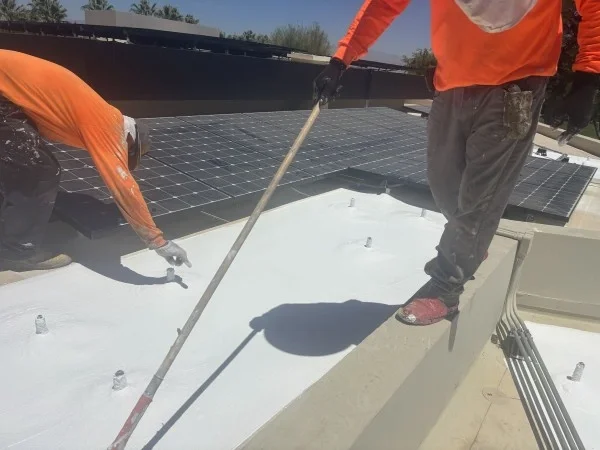
Wood shake and slate are the two to avoid. Wood shake is a fire risk and too soft to hold mounts reliably. Slate is beautiful and lasts a century, but it shatters under foot traffic and drilling, so most installers won’t touch it without a full re-roof to a solar-friendly material first. If you have either, budget for a new roof as part of the solar project.
Can you put solar panels on a flat roof?
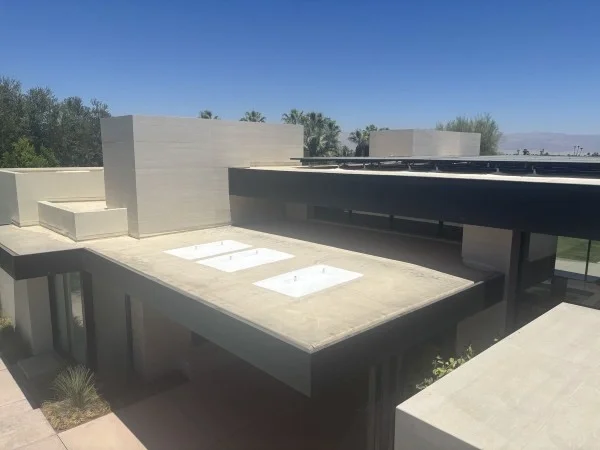
Yes. Flat and low-slope roofs take solar well, and they add a feature pitched roofs can’t: you aim the panels. Instead of living with whatever direction your roof faces, the crew sets tilt racking to point the array south and lift it to roughly 10 to 20 degrees for the desert Southwest. On a flat commercial roof, that control over angle can mean more production than a fixed pitched roof next door. The two mounting methods are ballasted, which weighs the racking down with no holes, and attached, which penetrates the membrane and needs a watertight flashing detail at every foot. On the flat commercial roofs we handle across Southern California, ballasted is usually the safer call because it keeps the membrane intact.
Can you install solar on a spray foam roof?
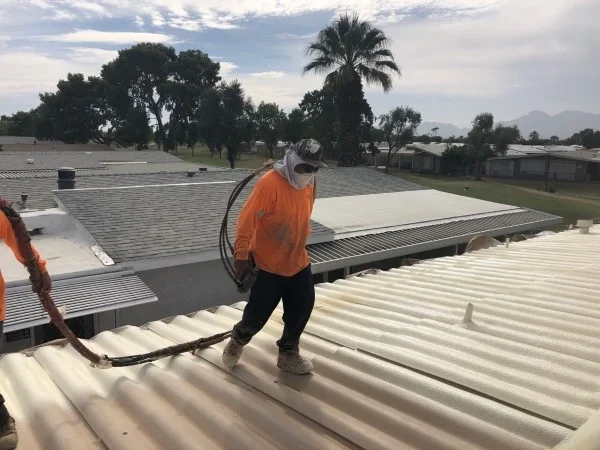
Yes, and it’s one of the strongest matches in commercial roofing. Spray polyurethane foam is light, adding well under a pound per square foot, so it carries an array easily. It also forms one continuous surface, so there are no laps or fasteners for water to find. Solar Power World has documented foam-and-solar as a natural pairing on commercial buildings for exactly these reasons.
There’s one rule that trips people up: don’t mount panels flat against the foam surface. Heat and water get trapped between the panel and the coating and shorten the coating’s life. The panels need to sit up on racking with air moving underneath. When a penetration is unavoidable, the fix is to foam and seal around the stand-off so the roof stays watertight. This is the heart of what Vision Roof Services does. We apply a spray foam base coat and set the mounting points before the solar crew arrives, so the roof is sealed under the array from day one. It’s also why our foam-and-solar systems are built to cut a building’s energy demand by up to 40 percent, since the foam insulates while the panels generate.
Does installing solar panels void your roof warranty?
It can, and this is the question most homeowners never think to ask. Here’s the trap: your roof has a workmanship warranty from the roofer, and a separate solar crew shows up and drills 40 holes in it. If those penetrations aren’t done to the roofer’s spec, the roofing warranty is gone, and now nobody owns the leak. The roofer blames the solar holes, the solar company blames the roof. The way to avoid it is simple. Before anyone drills, confirm how solar affects your roof warranty in writing, and get the roofer and the solar installer coordinating on the mounts. That coordination is exactly why we work hand in hand with solar contractors instead of leaving the roof to chance.
Should you replace or recoat your roof before solar?
If your roof is within about five to 10 years of the end of its life, deal with it before the panels go on, not after. Pulling a system to re-roof later is the expense nobody warns you about. A detach-and-reset, where a crew pulls the array and reinstalls it after the new roof, adds a real cost on top of the roof itself, and a steep roof runs higher still. Coordinating the roof work with the solar removal is the only way to avoid paying twice.
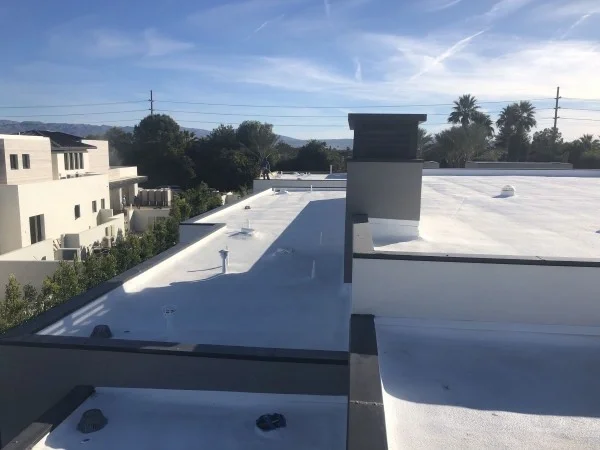
Here’s where the standard advice is wrong for flat roofs. Every residential guide says "replace your roof first." But if you have a structurally sound flat or foam roof, you often don’t need a full tear-off. A silicone recoat restores the membrane, resets the warranty clock, and costs a fraction of replacement, and then you mount solar on a like-new surface. We built our roof rejuvenation service around exactly this call, and a written inspection tells you which way to go. Tear-off makes sense when the deck or insulation is wet. A recoat makes sense far more often than people are told.
Best roof angle, direction, and size for solar
The best setup is a south-facing slope tilted near your latitude. For most of Southern California and Arizona, that’s roughly 30 to 34 degrees. The U.S. Department of Energy’s guidance on going solar backs the south-facing, tilted rule, and east or west roofs still produce enough to be worth it. On a flat roof, none of this limits you, because the tilt racking sets the angle and direction for you.
On size, plan on a modern home needing 17 to 25 panels, and each 400-watt panel eating about 28 square feet of roof once fire-code setbacks are figured in. So a typical residential array wants somewhere around 350 to 600 square feet of clear roof. Commercial flat roofs rarely run short on space. The limit there is usually structural load and shading, not square footage.
Roofing for solar in the desert Southwest
Desert roofs live a harder life, and that changes the material math. Roof-deck temperatures push past 160 degrees on a Coachella Valley summer afternoon, which cooks asphalt and bakes cheap coatings. A light-colored spray foam or a reflective coating throws heat back before it loads the building, which is why foam does double duty here: it insulates, and it keeps the roof cooler under the panels. It’s also the reason California’s move to require solar on new homes hit the desert market first. Vision Roof Services runs crews across the areas we serve from Palm Desert through La Quinta, Rancho Mirage, and into Arizona, Nevada, and Texas, and desert heat management is built into how we spec every foam-and-solar roof.
How Vision Roof Services preps a roof for solar
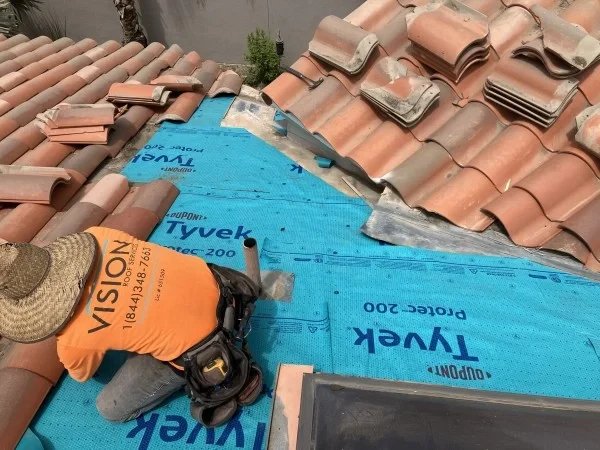
We’re the roof side of your solar project, not the panel salesman. Vision Roof Services works with your solar contractor to make sure the roof under the array is sealed, insulated, and ready to outlast the system. It starts with a free Roof Health Check: an inspector documents the roof and sends a written report with photos, usually within 24 to 72 hours, so you know whether to recoat, repair, or replace before a single panel is ordered. Then we apply the foam base coat and set watertight mounting points. We’ve done this on more than 7,500 roofs across Southern California and the desert Southwest, commercial and residential. If you’re planning solar in Southern California or the desert, start with the roof, and start with a written inspection.
Frequently asked questions
What is the best roofing material for solar panels?
Standing-seam metal is the best roofing material for solar panels, because the mounts clamp to the seams and never pierce the roof, and metal lasts 40 to 70 years. For flat roofs, spray foam and single-ply membranes win. Asphalt and tile both work, as long as the roof will outlast the 25 to 30 year solar system.
Can you put solar panels on a flat roof?
Yes. On a flat roof, panels sit on tilt racking that aims them south and lifts them to about 10 to 20 degrees in the desert Southwest. The racking either ballasts down with weight and no holes, or attaches through the membrane with a sealed, flashed detail at every foot.
Can you install solar on a spray foam roof?
Yes, and it is one of the better pairings in commercial roofing. Spray foam adds well under a pound per square foot and forms one continuous surface, so it carries and seals an array easily. The one rule is to keep panels off the foam surface itself on raised racking, and to foam and seal around any stand-off so the roof stays watertight.
Does installing solar panels void your roof warranty?
It can. If a solar crew drills into a roof that carries a workmanship warranty and the penetrations are not done to the roofer’s spec, that warranty can be voided. Confirm the terms in writing first, and have the roofer and solar installer coordinate on the mounts.
Do you need to replace your roof before installing solar panels?
If your roof is within about five to 10 years of the end of its life, handle it first. Removing and reinstalling an array later, a detach-and-reset, adds a real cost on top of the new roof. For a sound flat roof, a silicone recoat is often the smarter move than a full replacement.
What roofing material is not good for solar panels?
Wood shake and slate are the two to avoid. Wood shake is a fire risk and too soft to hold mounts, and slate is brittle and cracks under drilling and foot traffic. Both usually need a re-roof to a solar-friendly material before panels go on.
What roofing works best for solar in a hot desert climate?
A light-colored spray foam or reflective coating performs best, because desert roof-deck temperatures pass 160 degrees in summer. Reflective foam throws heat back before it loads the building and keeps the roof cooler under the panels, which protects both the coating and the array.