Why Flat Roofs Leak In The Desert: The 9 Causes We See Most
Flat roofs leak because water has nowhere to go. On a pitched roof, gravity sheds rain in seconds. On a flat or low-slope roof, water sits, finds the lowest seam or the smallest crack, and works its way in. In the desert Southwest, sun, heat, and monsoon wind speed that up. The surface bakes, dries out, and splits years before most owners expect it to. Across about 7,500 roofs we've worked on in Southern California, Arizona, and Nevada, leaks and aging flat-roof systems are the number one reason people call Vision Roof Services. Below are the 9 causes we find most, how to catch each one early, and why a recoat often beats a tear-off.
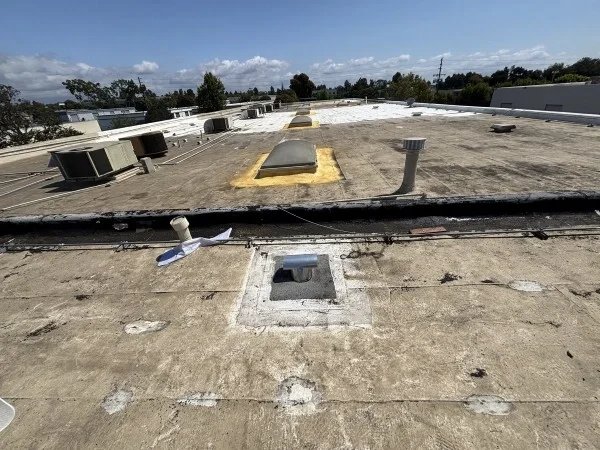
The 9 flat roof leak causes we find most in the desert
Here are the 9 we see most, roughly in the order they show up on a desert roof.
1. Ponding water and a dead-flat slope
Ponding is water that's still sitting 2 days after rain. It's the leak cause we flag most on desert flat roofs. The fix isn't more sealant. It's slope: a tapered insulation cricket, a rebuilt low area, or a new drain so water leaves instead of soaking in.
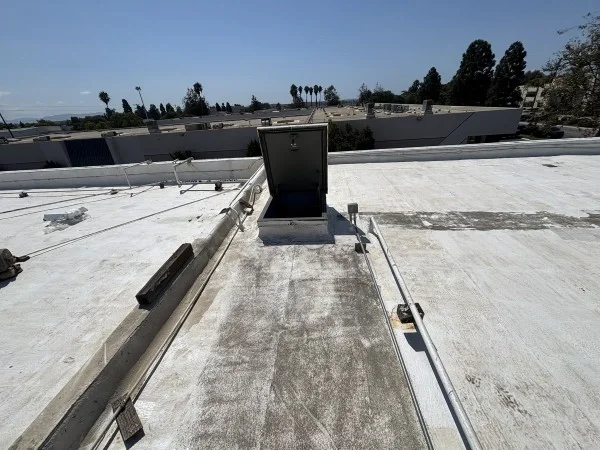
2. Sun and heat breaking down the coating
Desert roofs cook. A dark roof surface can run about 55 degrees hotter than a reflective one on a summer afternoon, according to Lawrence Berkeley National Laboratory. That heat dries out and cracks the top coat, and once it's gone the roof below is exposed. A reflective coating also cuts cooling load: the EPA reports cool roofs can reduce peak cooling demand by 11 to 27 percent. Faded, chalky coating is your early warning.
3. Monsoon microbursts and wind-driven rain
Desert rain isn't gentle. During monsoon season, mid-June through September, the National Weather Service reports downburst winds of 50, 60, and 70 mph, and in rare cases over 100 mph. That wind lifts roof edges and flashing, then drives rain sideways under them. It also carries blowing sand that sandblasts the coating thin. A roof that was fine in June can leak after one August storm.
4. Failed flashing at walls, parapets, and curbs
Flashing seals the joints where the roof meets a wall, a parapet, or a rooftop unit. It's the second thing we check after ponding. Desert heat cycles expand and contract the metal and sealant every day, so old flashing pulls loose and cracks. Stains along a wall line almost always trace back here.
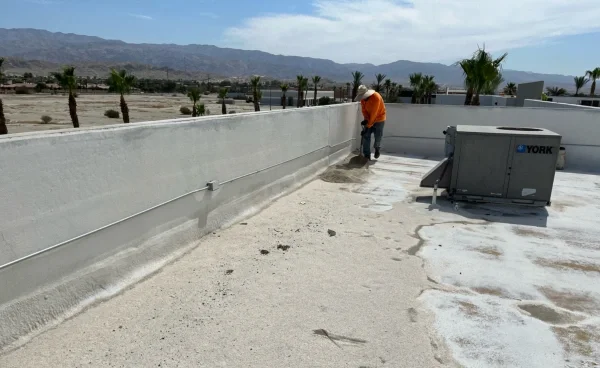
5. Roof penetrations: pipes, vents, and HVAC units
Every pipe, vent, drain, and HVAC curb is a hole someone sealed. On commercial flat roofs, the HVAC curbs are the usual culprit. Boots harden, pitch pans dry out, and the seal around a unit opens up. This is a leading cause of leaks we find on commercial roofs.
6. Blisters, splits, and open seams
Trapped moisture and heat push the membrane up into blisters. When a blister splits, or a seam between two sheets opens, water gets straight in. On a seamed system this is common. It's one reason we favor a single continuous surface with no seams to fail.
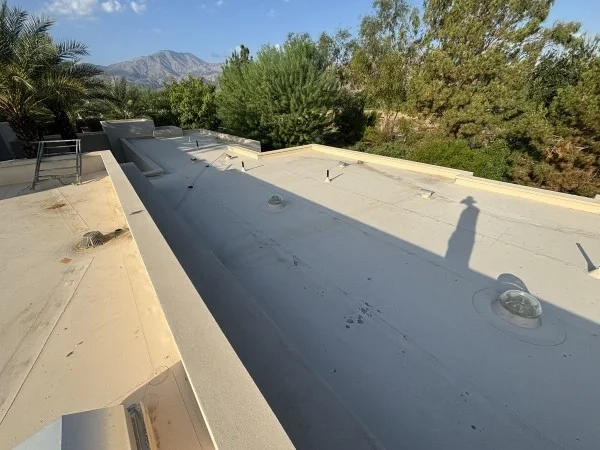
7. A spray foam roof that's overdue for a recoat
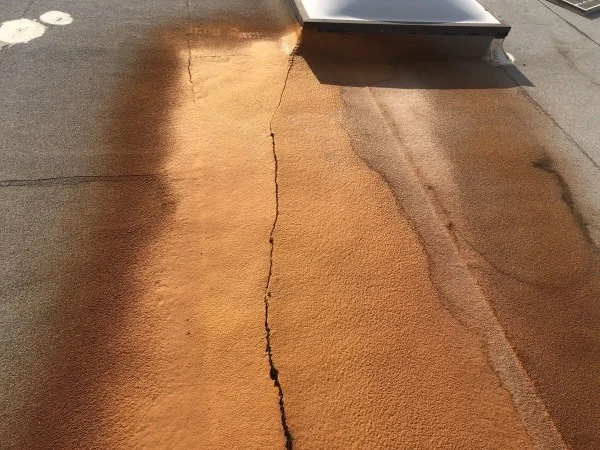
A spray foam roof rarely leaks through the foam. It leaks when the protective top coat wears off and UV starts eating the foam itself. Foam is one continuous surface, so with a recoat every few years the Spray Polyurethane Foam Alliance says it can last 40 or more years. Skip the recoat and you get pinholes, then real damage.
8. Clogged or undersized drains and scuppers
Drains and scuppers are the only way water leaves a flat roof. Fill them with leaves, sand, or a bird nest and the water backs up into a pond. Some older buildings also have too few drains for the area. Clearing them twice a year prevents a lot of leaks.
9. Age, foot traffic, and old patch jobs
Roofs wear where people walk: to the HVAC units, the satellite dish, the access hatch. Old patches lift at the edges and become their own leak. A roof past its service life with a patchwork of repairs is telling you it's time to recoat or, if the deck is wet, replace.
Do spray foam roofs leak?
Rarely through the foam itself, because it's one continuous surface with no seams. Leaks start where the top coat has worn thin or at a penetration. Caught early, the fix is a reclean and recoat, not a replacement. That's why we inspect foam roofs twice a year and after big storms, the same schedule the Spray Polyurethane Foam Alliance recommends.
What causes a flat roof to leak?
Standing water, broken or lifted flashing, an open seam, or a failed coating. Flat and low-slope roofs shed water slowly, so any weak point lets water pool and soak through. In dry, high-heat climates, sun and UV crack the surface first, and monsoon wind drives rain in behind it.
Why do flat roofs leak more than pitched roofs?
Because they barely slope. A pitched roof can drop 6 inches or more per foot. A flat roof usually drops a quarter inch per foot or less, so water lingers instead of draining. Water is also heavy: 1 inch of standing water weighs about 5.2 pounds per square foot. Let it pool across a 20 by 20 foot area and you've added more than a ton of load in one low spot. The low spot deepens, the water stays longer, and the low-slope surface below it breaks down before anything else.
What are the signs your flat roof is leaking?
The stain inside is rarely under the actual hole, because water travels along the deck before it drops. Watch for these:
Ceiling stains, bubbling paint, or a musty smell inside.
Water still standing 2 days after rain.
Blisters, or a chalky, faded top coat.
Exposed foam or bare membrane where the coating is gone.
Cracked or lifted flashing along walls and curbs.
How do you find and fix a flat roof leak?
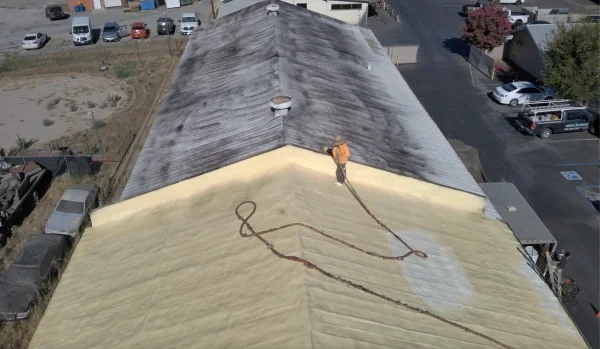
You trace it to the source, not the stain. We walk the roof, scan for trapped moisture, and follow the water back to the failed flashing, seam, or penetration that let it in. Then we fix the cause. A free Roof Health Check documents all of it: we send a written report with photos within 24 to 72 hours of the visit, so you see what we saw.
Use this to match a symptom to a likely cause and fix:
| Leak cause | Where it shows up | Usual fix |
|---|---|---|
| Ponding water | Soft, deep low spot holding water 2+ days after rain | Add slope, a cricket, or a drain; recoat the low area |
| Heat and UV | Chalky, faded, or cracked coating; exposed foam | Reclean and recoat before the substrate is hit |
| Monsoon wind | Lifted edges, torn flashing, debris punctures after a storm | Reseal terminations, patch punctures, refasten edge metal |
| Failed flashing | Stains along walls, parapets, and curbs | Rebuild the flashing detail, not just recaulk it |
| Penetrations | Rings around pipes, vents, drains, HVAC curbs | New boots, pitch pans, or curb flashing |
| Blisters and seams | Raised bubbles or gaps in the membrane | Cut out, reflash, and recoat the seam |
| Foam past recoat | Pinholes, thin or discolored top coat | Reclean and recoat on schedule |
| Clogged drains | Water backing up or overflowing at the edge | Clear, resize, or add drains and scuppers |
| Age and traffic | Worn walk paths, old patches lifting | Recoat, or replace if the deck is wet |
Do you need a new roof or a recoat?
Most flat roofs get torn off years before they need to be. Here's the position that costs us some replacement work: if the deck is dry and the surface is mostly intact, a recoat almost always beats a tear-off. A recoat costs a fraction of a full replacement, keeps your building open during the work, and sends nothing to the landfill. The Spray Polyurethane Foam Alliance puts a maintained foam roof at 40 or more years through recoat cycles, not one-and-done installs. A tear-off is the right call only once water has soaked the insulation or deck, and a moisture scan tells us which one you're facing. This is why we lead with maintenance, not replacement.
How much does flat roof leak repair cost in 2026?
It depends on the cause, the roof system, and how far the water spread. A single flashing repair is a small job. A full recoat costs far less than a tear-off and rebuild, and it buys years. We don't quote a flat price sight unseen, because substrate condition, square footage, tear-off, and the coating system move the number. Financing is available through Acorn Financing. If a storm caused the leak, check whether your homeowners insurance covers the water damage before you pay out of pocket.
How often should a commercial or flat roof be inspected?
Twice a year, and after any major storm. In the desert, the best windows are right before monsoon season and right after it. The Spray Polyurethane Foam Alliance recommends the same twice-a-year cadence plus a check after severe weather. Regular checks catch a $500 flashing fix before it becomes a soaked deck. Our maintenance program keeps the roof, and its warranty, in good standing.
When a desert roof leak needs a pro
Small, dry-surface fixes can wait for a scheduled visit. Standing water, a leak you can't locate, or any sign of a wet deck should not. We've handled roofs for names like Yamaha in Buena Park, LifeStorage in Costa Mesa, and the Invisible House in Joshua Tree, and the pattern holds: the owners who inspect twice a year spend far less than the ones who wait for a stain. Founder Dave Bienek has been on desert roofs since 1992. Book a free Roof Health Check and you'll have a written report with photos in 24 to 72 hours.
FAQs
Why do flat roofs leak more than pitched roofs?
Flat and low-slope roofs drop a quarter inch or less per foot, so water sits instead of running off. One inch of standing water weighs about 5.2 pounds per square foot, and that load plus slow drainage breaks down the low spots first. Most flat roof leaks start where water lingers.
What causes a flat roof to leak in the desert?
Sun and heat, mostly. A dark roof can run about 55 degrees hotter than a reflective one on a summer afternoon, per Lawrence Berkeley National Laboratory, which dries out and cracks the coating. Monsoon microbursts then drive rain under lifted flashing and roof edges.
Do spray foam roofs leak?
Rarely through the foam itself, because it's one continuous surface with no seams. Leaks start where the top coat wears thin or at a penetration. With a recoat every few years, the Spray Polyurethane Foam Alliance says a foam roof can last 40 or more years.
What are the signs of a flat roof leak?
Inside: ceiling stains, bubbling paint, or a musty smell. Outside: water standing 2 days after rain, blisters, a chalky or faded coating, exposed foam, or cracked flashing. Water travels, so the inside stain is rarely right under the hole.
Can a flat roof leak be repaired, or do I need a new roof?
If the deck is dry and the surface is mostly intact, a recoat or spot repair usually fixes the leak for far less than a replacement. A tear-off makes sense once water has soaked the insulation or deck. A moisture scan during an inspection tells you which one you're facing.
How often should a flat or commercial roof be inspected?
Twice a year and after any major storm, which the Spray Polyurethane Foam Alliance also recommends. In the desert, the best times are before and after monsoon season. Vision Roof Services sends a written Roof Health Check report with photos within 24 to 72 hours of the visit.
How much does it cost to fix a flat roof leak?
It depends on the cause, the roof system, and how far the water spread. A single flashing repair is a small job; a full recoat costs a fraction of a tear-off and rebuild. Financing is available through Acorn Financing.