HOA Roof Replacement Rules In California: Permits, Approvals, And Who Pays
In California, an HOA roof replacement runs on 2 tracks at once. There's the building code, which requires a permit for most re-roofs and sets cool-roof standards. And there's your HOA, whose rules decide who approves the work, what it can look like, and often who pays for it. The 2 tracks trip people up in different ways. On a condominium or attached building, the roof is usually common area, so state law puts the replacement and the bill on the association, not the individual owner. On a detached home in an HOA, you own the roof, but the association still controls color and material through architectural review. Get either track wrong and the project stalls, or a board signs off on a cheap re-roof that skips the permit and the state's cool-roof rules. After about 7,500 roofs since 1992, HOA and property-manager work is a big part of what we do at Vision Roof Services, so here's how both tracks actually work.
HOA roof replacement rules in California come from 2 places. The state building code requires a permit for most re-roofs and sets Title 24 cool-roof standards on the material. The community's CC&Rs, together with Civil Code 4765 and 4775, decide who approves the work, who maintains the roof, and who pays for it.
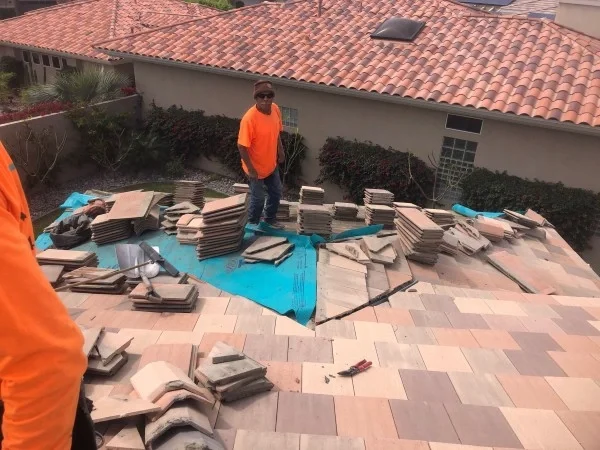
Who pays for an HOA roof replacement, the association or the owner?
In most attached and condominium communities, the roof is common area, so the association is responsible for replacing and maintaining it, not the individual owner. In a detached-home HOA, you usually own your own roof and the association only controls how it looks. Which one you are decides who pays, and it's the question the rest of the field skips.
The rule comes from state law. Under California Civil Code 4775, unless the declaration says otherwise, the association is responsible for repairing, replacing, and maintaining the common area. On a condo, townhome, or other attached building, the roof is almost always common area. So the board owns the roof project and funds it, usually out of reserves. On a detached single-family home inside an HOA, the roof is typically your separate property, and the association's role shrinks to approving the look.
Read your CC&Rs before you assume either way, because the declaration can move the line. Some attached communities carve the roof out as an owner responsibility. Some detached-home HOAs take on shared roof maintenance. The default is the association for common area, but the document controls.
| If your community is... | Who owns and pays for the roof | What the HOA controls | Who runs the project |
|---|---|---|---|
| Condo or attached (roof is common area) | The association, funded from reserves, per Civil Code 4775 unless the CC&Rs say otherwise | The whole replacement: scope, material, contractor, timing | The board and property manager |
| Detached home in an HOA | You, the homeowner | Color and material through architectural review, per Civil Code 4765 | You, with HOA approval before work starts |
| Either, if the CC&Rs reassign it | Whoever the declaration names | Whatever the declaration and rules set | Follow the declaration |
Here's the most expensive myth I see in condo and townhome communities: that each owner pays for their own roof. In an attached building, that's usually backwards. The roof is common area, replacement is the association's job under 4775, and a board that pushes the cost onto owners without the CC&Rs behind it can walk into a dispute it loses. If you're on a board or managing the property, confirm this before you budget a project, because it changes who signs the contract and where the money comes from.
Do you need a permit to replace a roof in California?
Almost always, yes. Most California cities and counties require a building permit for a full re-roof or re-cover, residential or commercial, and your roofer normally pulls it. The details vary by jurisdiction, so the safe move is to confirm with your local building department, but the pattern is consistent across Southern California.
A few specifics worth knowing before you sign anything:
Full replacement and re-cover. A permit is the norm. Most jurisdictions also cap you at 2 total layers of roofing, so a third layer means a full tear-off.
Structural work. New sheathing, decking repairs past a set size, changing the pitch, or adding skylights push you into a permit with inspections every time. The City of Riverside, for example, requires a permit once decking replacement reaches 32 square feet or any structural member is altered.
Commercial and low-slope. These run under the California Building Code and effectively always need a permit for a re-roof, plus plan review when the work touches structure or drainage.
Solar. A rooftop solar array carries its own separate permit, apart from the roofing permit.
Small repairs. Patching a few square feet, a pipe boot, or sealant work usually doesn't need a permit. When you're not sure, call the building department.
At Vision Roof Services, we pull the permits and handle the inspections as part of the job on the HOA, commercial and multi-family roofs we take on, so a board or property manager isn't chasing the city. If you're comparing bids, confirm that permit handling is in the quote and not billed back to you later.
| Job type | Permit typically required? | Title 24 cool-roof rule triggered? | Who usually pulls it |
|---|---|---|---|
| Residential full re-roof | Yes, in most jurisdictions | Yes, on the re-roofed area | Your roofer |
| Commercial or low-slope re-roof | Yes | Yes, low-slope tier | Your roofer |
| Roof coating or maintenance recoat | Often no (treated as maintenance), but confirm locally | Not usually, if no new roof layer | Not usually needed |
| Structural work, new decking, or solar | Yes, with inspections or plan review | Depends on scope | Your roofer or solar installer |
Do you need a permit to recoat or restore a flat roof?
Usually not, and that's one of the reasons a coating can be the right call on a sound flat roof. A maintenance recoat that adds no new roofing layer is generally treated as maintenance, not a re-roof, so many California jurisdictions don't require a permit for it. A re-cover, meaning a new membrane or layer over the existing roof, is a different thing and usually does need a permit and counts toward the 2-layer limit. Because this line moves by city, confirm with your building department before the crew shows up.
This matters most on commercial and HOA buildings with big flat or low-slope roofs. A sound roof that's just worn on top can often be restored with a roof rejuvenation coating that resets its service life without a tear-off, which is faster, cheaper, and lighter on the building than a full replacement. A spray foam roof works the same way once it's on: you recoat it on a schedule instead of tearing it off. The catch is honesty about condition. If the deck is wet or the roof is genuinely done, a coating over a dead roof is money wasted, and we'll tell you that in writing rather than sell it.
Title 24 cool-roof rules for desert and commercial re-roofs
If you re-roof in California, the new roof has to meet the state's Title 24 energy code, and in the desert that bar is high. Title 24 sets a minimum solar reflectance on the roofing material, and the required number depends on your climate zone and whether the roof is steep-slope or low-slope.
Here's where Vision's market lives. Palm Desert and the rest of the Coachella Valley are in Climate Zone 15, the hottest zone in the state. Per the California Energy Commission's Title 24 standards, summarized by the Cool Roof Rating Council, a low-slope re-roof in that zone has to hit a minimum 3-year aged solar reflectance of 0.63, a thermal emittance of 0.75, and an SRI of 75. Steep-slope re-roofs across those zones face a lower bar, a 0.20 aged reflectance and an SRI of 16, which most shingle colors now meet in a cool-rated version. The low-slope number is the strict one, and it's exactly what a reflective-coated foam or single-ply roof is built to clear. It's the same standard behind the cool roofs going on across the Coachella Valley, where a low-slope roof bakes for months.
Now the position I'll take that some contractors won't put in writing: on an HOA or commercial building, the lowest re-roof bid is usually the one that left out the permit and the Title 24 upgrade. In Climate Zone 15, a compliant low-slope re-roof has to reach that 0.63 reflectance. A bid that skips it isn't a better price on the same job, it's a cheaper, non-compliant job that can fail inspection or come back as a problem when the building sells. Boards line up 3 numbers and take the lowest without seeing that 1 of them quietly dropped code. Ask every bidder to confirm, on paper, that the roof meets Title 24 for your zone.
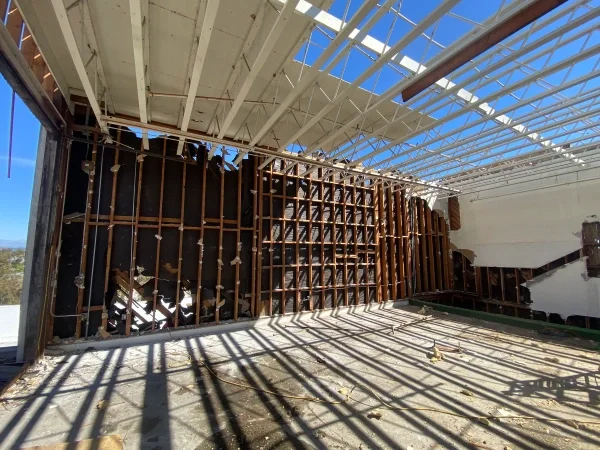
How HOA roof approval actually works, from the board's side
On an attached community, a roof replacement is a board project, and it moves through a predictable set of steps: a reserve study or funding check, competitive bids, a board vote, and written notice to owners before work starts. On a detached home, it's simpler: you submit your plan to the architectural committee and wait for a written decision.
For a board or property manager running a common-area roof, the sequence looks like this. Confirm the roof is common area and funded (reserves or a special assessment). Get bids on a matched scope, meaning the same material, the same Title 24 compliance, and permits included, so you're comparing like for like. Take it to a board vote at an open meeting. Then give owners the notice your CC&Rs require before the crew arrives. Skipping the matched-scope step is where boards get burned, because 3 bids on 3 different scopes aren't a comparison.
For a homeowner in a detached-home HOA, the architectural review is the gate. Civil Code 4765 holds the association to a fair, reasonable process. A decision has to be made in good faith, can't be unreasonable, arbitrary, or capricious, and if the association turns you down, the denial has to be in writing with the reason and a path to ask for reconsideration. Submit early, include your material, a color sample, and your contractor's information, and keep the written approval in your file. Approval before work starts is what keeps you off the wrong end of a violation notice.
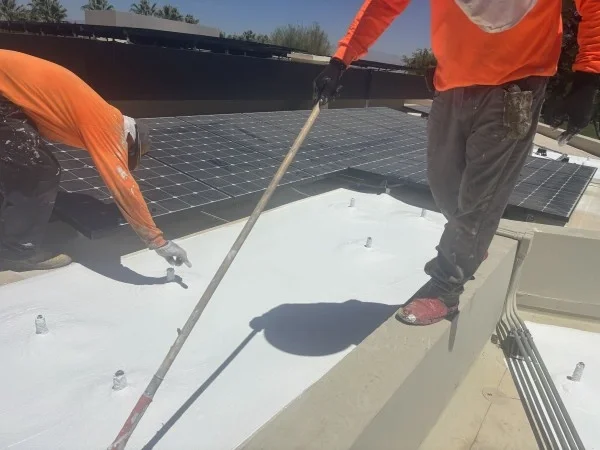
What an HOA can control: roof color, material, and solar
Within limits, yes on color and material, and mostly no on solar. An HOA can hold you to an approved palette and a material standard when its governing documents give it that authority, but it has to apply the rules reasonably. It cannot use a vague "doesn't fit the neighborhood" to deny you without a real, written standard behind it.
Solar is different, because state law protects it. Under California Civil Code 714, an HOA can't effectively prohibit a solar energy system. It can impose reasonable restrictions, but not ones that cross the statute's line: for a photovoltaic system, a restriction can't raise the system cost by more than $1,000 or cut its efficiency by more than 10 percent. So an HOA can ask for reasonable placement, but it can't zone your panels into a shaded corner or price them out. If you're weighing panels, remember that a roof's age and condition decide the project before the array goes up, HOA or not.
The risk of skipping the permit or the HOA approval
Skipping either one turns a finished roof into a liability. Unpermitted work can mean fines, a forced correction, and a failed sale later, because home inspectors and buyers' lenders flag work with no permit on record and can require you to pull a retroactive permit or redo it. It can also void your roofing warranty and complicate a homeowner's insurance claim, since the permit and its inspection are the record that the work met code.
Inside an HOA, skipping the architectural approval adds a second problem. The association can issue a violation, order the work undone, and in an attached community a board that authorized an unpermitted common-area roof can expose itself to a claim from owners. The permit and the approval aren't red tape, they're the paper trail that protects the roof, the warranty, and whoever signed the contract.
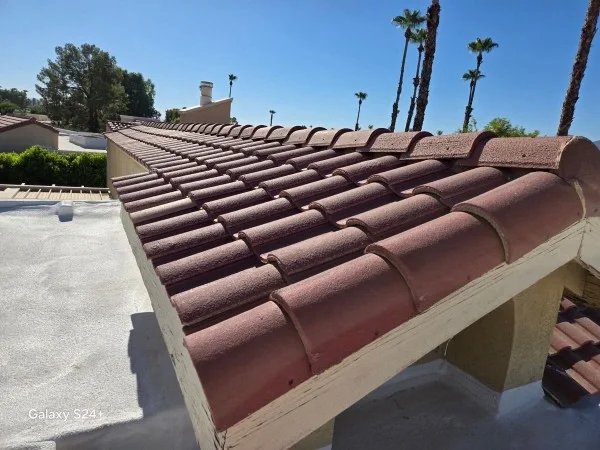
What an HOA board or homeowner should do before a 2026 roof project
Start with a written assessment of the roof, then line up the code track and the HOA track before anyone climbs up. That order saves the most money and the most time.
Get the roof documented. Book a free Roof Health Check and you'll have a written report with photos, usually within 24 to 72 hours, showing the roof's condition, remaining life, and whether to repair, recoat, or replace.
Settle who owns the roof. Read the CC&Rs. On an attached building, confirm it's common area and how it's funded before you budget.
Match the scope on every bid. Same material, permits included, and Title 24 compliance for your climate zone, stated in writing.
Run the HOA track. Board vote and owner notice for a common-area roof, or an early architectural submission for a detached home.
Confirm permit handling. Make sure the contractor pulls the permit and books the inspections, and that it's in the price.
That's the process we run for HOAs, property managers, and building owners across the Coachella Valley, Orange County, Riverside, Los Angeles, and San Diego, and into Arizona, Nevada, and Texas. The team I built has put those written reports in front of thousands of owners since 1992, our commercial work includes the LifeStorage location in Costa Mesa and the Yamaha facility in Buena Park, and we hold a 4.8 star rating across 42 Google reviews on our Palm Desert profile. If you're facing an HOA roof replacement, book a Roof Health Check and we'll tell you exactly where the roof stands and which approvals it needs. Call 844-348-ROOF. If the timing's tight, we offer financing through Acorn Financing.
FAQs
Who is responsible for roof replacement in an HOA in California?
In most attached and condominium communities, the roof is common area, so under Civil Code 4775 the association is responsible for replacing and maintaining it unless the CC&Rs say otherwise. On a detached home in an HOA, the owner usually owns the roof and the association only controls color and material. Always read your declaration, because it can move that line.
Do you need a permit to replace a roof in California?
Almost always. Most cities and counties require a permit for a full re-roof or re-cover, residential or commercial, and always for structural work, new decking past a set size, or a pitch change. Your roofer normally pulls it. Small patch repairs usually don't need one, and requirements vary by jurisdiction, so confirm with your local building department.
Can an HOA tell you what color or material your roof has to be?
Yes, within limits. If the governing documents give the association authority, it can enforce a color palette and a material standard, but Civil Code 4765 requires the review to be reasonable and any denial to be in writing with a reason and a path to reconsideration. It can't reject your roof on a vague aesthetic with no written standard behind it.
Can an HOA stop you from putting solar panels on your roof?
No, not effectively. California Civil Code 714 bars an HOA from prohibiting a solar energy system. It can set reasonable placement rules, but for a photovoltaic system it can't add more than $1,000 to the cost or cut efficiency by more than 10 percent.
Do you need a permit to recoat or restore a flat roof?
Usually not. A maintenance recoat that adds no new roofing layer is generally treated as maintenance, so many jurisdictions don't require a permit. A re-cover with a new layer over the existing roof usually does need one and counts toward the 2-layer limit. Confirm with your building department, since the rule changes by city.
What happens if roof work is done without a permit?
Unpermitted work can bring fines, a forced correction, and problems at resale, since inspectors and lenders flag missing permits and may require a retroactive permit or a redo. It can also void your roofing warranty and complicate an insurance claim, because the permit inspection is the record that the work met code. Inside an HOA, it can also trigger a violation.
How long does HOA roof approval and permitting take?
The permit is often the fast part: many California cities issue a residential re-roof permit within a few days, while structural or commercial plan review can run 2 to 6 weeks. The HOA track is what to plan around. Architectural review and, on a common-area roof, a board vote and owner notice can add weeks, so start both early.