The best cool roof for Coachella Valley heat comes down to one thing first: your roof's slope. On the flat and low-slope roofs that cover most desert commercial buildings and a lot of newer Palm Desert homes, spray polyurethane foam with a white reflective coating is the cool roof I recommend most often. On pitched roofs, light concrete tile, clay tile, and reflective metal are the top picks. Here's what actually holds up when the roof deck is sitting past 150 degrees in July.
A cool roof is a roof built or coated to reflect more sunlight and trap less heat than a standard dark roof. It works through two measured properties: solar reflectance, which is how much sun the surface bounces back, and thermal emittance, which is how fast it releases the heat it does soak up. The higher both numbers are, the cooler the roof runs.
Most articles on this topic stop there and hand you a generic list. This one is built from what I see on desert roofs every week, including the part nobody likes to say out loud: a cool roof does not stay cool on its own.
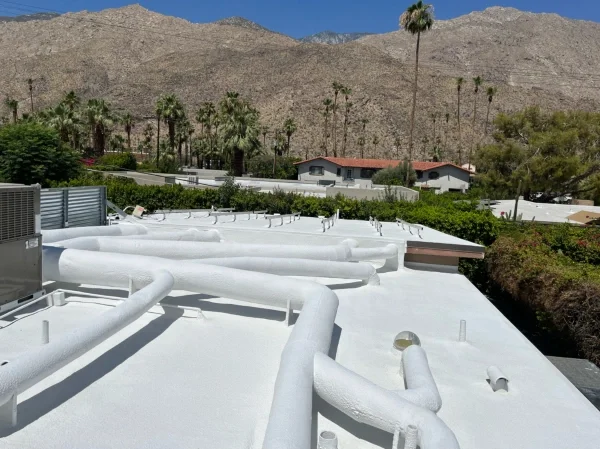
What a cool roof does in 115 degree desert heat
A cool roof keeps the sun's heat from ever reaching the inside of your building, and the desert is where that matters most. A dark roof can top 150 degrees on a July afternoon, far hotter than the air around it. A cool roof can stay up to 60 degrees cooler than a black roof in summer, according to the U.S. Department of Energy, so far less heat drives down into the rooms below. On a 115 degree Coachella Valley day, that gap decides how hard your AC works.
I won't promise you a set number, because your insulation, ductwork, and thermostat habits all move it. What I can tell you is what I feel with my own hand. I've walked dark flat roofs in July that were too hot to kneel on, then stepped onto a freshly coated white roof next door and stood there fine. A cool roof is also one piece of a wider energy-efficient roofing setup, alongside insulation and attic airflow.
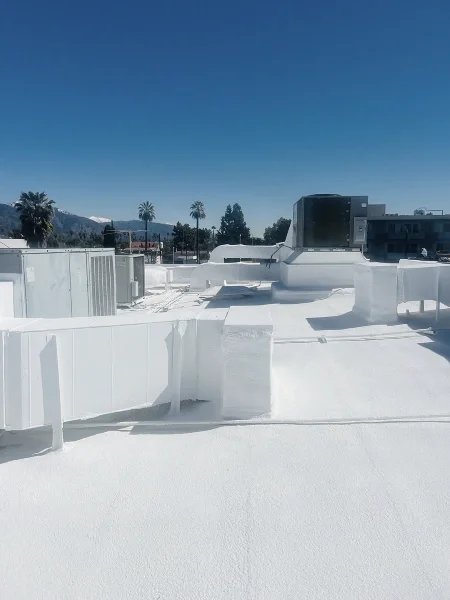
The best cool roof for a flat desert roof in 2026
For a flat or low-slope roof, spray polyurethane foam with a white reflective coating is the strongest cool roof, and it's the system we install and coat more than any other. Foam goes on as a liquid, expands, and hardens into one continuous surface with no seams. Seams are where flat roofs leak, and desert monsoon storms find every one of them. The foam adds insulation on top of your deck, and the white coating is what turns it into a cool roof.
Two more reasons it fits the desert. It's light, so it rarely needs structural work. And it usually goes right over your existing roof, which cuts tear-off. We keep a dozen certified foam applicators on a crew of 60, and we've sprayed and coated this system on everything from a Yamaha facility in Buena Park to a Life Storage in Costa Mesa to the Invisible House out near Joshua Tree. If you're weighing foam against a single-ply membrane, the seams are the deciding factor in blowing dust and hard rain.
One honest catch: the coating is the cool part, and coatings wear. More on that below.
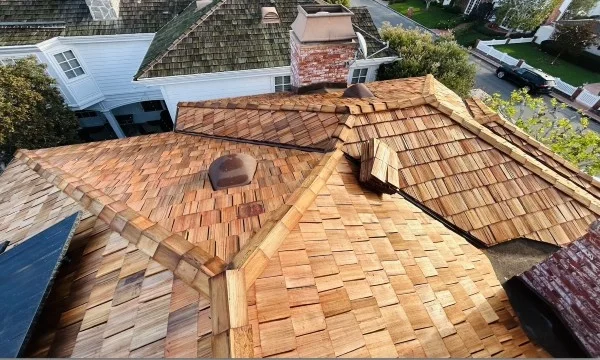
Cool roofs for pitched desert homes
For pitched roofs on desert homes, light concrete tile, clay tile, and reflective metal lead. Tile has been the desert choice for a century for good reason. The tiles sit on battens with an air gap underneath, so heat vents out before it reaches your deck, and clay and concrete ignore the UV that cooks asphalt shingles. Pick a light or glazed color, because a dark tile still soaks up heat.
Reflective metal is the other strong pick. Factory cool-pigment finishes reflect a large share of the sun's energy, and a standing-seam metal roof can last 50 years or more. Whatever you choose, look for a product that's been independently rated by the Cool Roof Rating Council, so the reflectance number is tested, not just printed on a brochure.
| Roof type | Best slope | Why it works in desert heat | What to look for | Typical service life |
|---|---|---|---|---|
| Spray foam (SPF) with white coating | Flat, low-slope | No seams, adds insulation, reflective top coat, goes over existing roof | Certified applicator, set recoat schedule | Decades with regular recoats |
| Concrete or clay tile | Pitched | Air gap vents heat, ignores UV, light colors reflect | Light or glazed color, CRRC rating | 50 years or more |
| Reflective (cool-pigment) metal | Pitched, some low-slope | Reflects a large share of sunlight, sheds heat fast | Factory cool-pigment finish, CRRC rating | 40 to 70 years |
| White TPO or PVC membrane | Flat, low-slope | White surface reflects sunlight, heat-welded seams | High solar reflectance, sound welds | 20 to 30 years |
Why does a cool roof stop being cool?
A cool roof stops being cool because its reflectance fades, and most companies won't tell you that. A new white roof can reflect around 80 percent of sunlight. Then desert dust settles into the surface, the coating chalks under UV, and that number starts falling within the first couple of years. This isn't my opinion. ENERGY STAR rates roofing on both initial and aged solar reflectance for this exact reason: the aged figure is lower. The Department of Energy even lists the endurance of high reflectance over time as one of the three things to check before you buy a cool roof.
So a cool roof isn't a buy-it-once purchase, and out here it ages faster than almost anywhere. Blowing dust and some of the hardest UV in the country work on the coating every day. The roofs that stay cool are the ones that get washed and recoated on a schedule. The ones that get ignored run hot again within a few summers, and the owner never connects it to the roof.
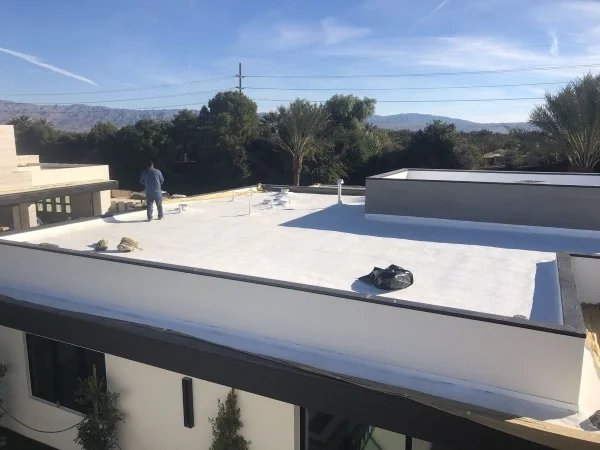
How do you keep a desert cool roof working?
You keep a desert cool roof working by inspecting it once a year, keeping it clean, and recoating before the coating wears through to the foam or membrane. That's the whole job. We built our Roof Health Check around it. We inspect the roof, document every problem with photos, and send you a written report within 24 to 72 hours, with no upsell on a roof that's fine.
On desert roofs we mostly find three things: dust caked into the coating, chalking from UV, and water left ponding after a monsoon cell. Caught early, all three are cheap to handle, and a recoat resets the clock. That recoat, sometimes called roof rejuvenation, can add years before a full replacement. Our Palm Desert office holds a 4.8 star rating across 42 Google reviews, and many of those come from owners we've kept off the replacement treadmill. We serve the whole Coachella Valley: Palm Desert, La Quinta, Rancho Mirage, Palm Springs, Indian Wells, Indio, and Cathedral City.
Where a cool roof fits with insulation and solar
Get the roof right first, then add insulation and solar on top of it. A reflective roof and good insulation cut the heat coming in, so your other upgrades work less hard. If you plan to add solar, put it on a cool roof that has years of life left, because pulling panels later to fix a tired roof underneath costs far more than sequencing it right the first time.
If your roof is dark, aging, or already losing to the sun, a cool roof is the upgrade you'll feel on every 115 degree afternoon. The right one depends on your slope, and the one real mistake is treating it as install-and-forget. Book a free Roof Health Check with Vision Roof Services, and we'll tell you exactly where your roof stands, in writing, within 24 to 72 hours.
FAQs
What is a cool roof?
A cool roof is a roof built or coated to reflect more sunlight and hold less heat than a standard dark roof. It is measured by solar reflectance and thermal emittance, and higher numbers mean a cooler roof. In desert heat, a cool roof can stay up to 60 degrees cooler than a black roof.
What is the best cool roof for a flat roof in the Coachella Valley?
For a flat or low-slope desert roof, spray polyurethane foam with a white reflective coating is the strongest cool roof. It cures into one surface with no seams, adds insulation, and reflects sunlight once coated. It also usually installs over the existing roof, which cuts tear-off.
Do cool roofs really work in extreme desert heat?
Yes. A dark roof can top 150 degrees on a summer afternoon. The U.S. Department of Energy reports that a cool roof can stay up to 60 degrees cooler than a black roof, which means far less heat pushes into the building below.
How long does a cool roof last in the desert?
It depends on the system. Foam and coating roofs last decades when recoated on schedule, tile can last 50 years or more, and reflective metal often lasts 40 to 70 years. The reflective performance, though, needs upkeep well before the roof itself wears out.
Does a cool roof need maintenance?
Yes. A cool roof's reflectance fades as dust settles and the coating ages, which is why ENERGY STAR rates initial and aged reflectance separately. Annual inspection, cleaning, and recoating on schedule keep it performing in the desert.
Can I put a cool roof over my existing roof?
Often, yes. Spray foam and reflective coatings can usually go over a sound existing roof, which lowers tear-off and disposal. An inspection confirms the deck and current roof are dry and stable enough first.
Which Coachella Valley cities does Vision Roof Services cover?
Vision Roof Services covers Palm Desert, La Quinta, Rancho Mirage, Palm Springs, Indian Wells, Indio, and Cathedral City, and provides commercial roofing across the wider Southern California desert.