Most homes in Southern California need their gutters cleaned twice a year. Clean them once in late spring, before fire season, and again in fall, before the winter storms arrive. If your roof sits under palms, eucalyptus, or pines, plan on three or four rounds instead. That's the short answer.
Gutter cleaning is the removal of leaves, needles, seed pods, and grit from the gutters and downspouts that carry roof runoff away from your walls and foundation. How often you need it depends on your trees, your roofline, and your local weather. In Southern California, fire risk and concentrated winter rain set the schedule.
The longer answer matters more here than almost anywhere else. In our climate, gutters collect more than fall leaves. They fill with dry, flammable litter through the hottest months, then have to move a whole winter's worth of rain in a handful of storms. Across the roughly 7,500 roofs our team has worked on around the Coachella Valley and Orange County, a clogged gutter sits behind a large share of the edge leaks and rotted fascia we get called to fix. What follows is how to set your own schedule, and what to watch for on the roof itself.

Your 2026 Southern California gutter-cleaning schedule
The baseline is to clean your gutters twice a year, then adjust for your yard. Two cleanings, late spring and fall, cover most homes with light or moderate tree cover. Add rounds if your roof collects heavy debris.
Trees drive most of it. Palms drop fronds and seed strings all year. Eucalyptus sheds bark and leaves in nearly every month. Pines and California pepper trees pack needles into gutters and downspout mouths, where they knit into a mat water can't pass. If any of these hang over the roof, clean your gutters every three to four months.
Wind does the rest. Santa Ana events push dust and grit onto roofs fast, often right before the driest, highest fire-risk stretch of the year. After a hard blow, take a look even if you cleaned recently. The same seasonal maintenance routine that keeps the roof sound keeps the gutters clear.

When is the best time of year to clean gutters here?
Late spring and early fall. Those two windows line up with the two threats a Southern California roof actually faces.
Clean your gutters in late spring to clear the dry fuel that stacks up before fire season. Clean again in fall to open everything before the rain. And here, the rain isn't spread out. Researchers at Scripps Institution of Oceanography found that in Southern California, as few as 10 to 40 hours of rain a year produce more than half of the annual total, and a single storm can drop 10 to 30 percent of the year's rain.
That's the whole case for a fall gutter cleaning. Your gutters can sit dry for months, then have to move a huge volume of water in one atmospheric river. If they're packed with summer debris when that storm lands, the water goes over the edge and down your walls instead of out the downspout.

How clogged gutters damage your roof
Water is heavy, and it always finds the lowest path. When a gutter clogs, runoff backs up under the roof edge and pools against the fascia, the board the gutter hangs from. Give it a few wet weeks and that board rots, the gutter pulls away, and water works behind it toward the roof deck and eaves.
This is the part most gutter articles skip. A clogged gutter is rarely just a gutter problem. On the roofs we inspect, trapped water at the edge shows up as stained soffits, peeling paint, swollen sheathing, and interior ceiling stains along outside walls. Left through a wet winter, it becomes a roof repair.
So we treat the gutter line as part of the roof, not a separate accessory. Our free Roof Health Check looks at the roof edge, flashing, and drainage together, and you get a written report with photos within 24 to 72 hours.
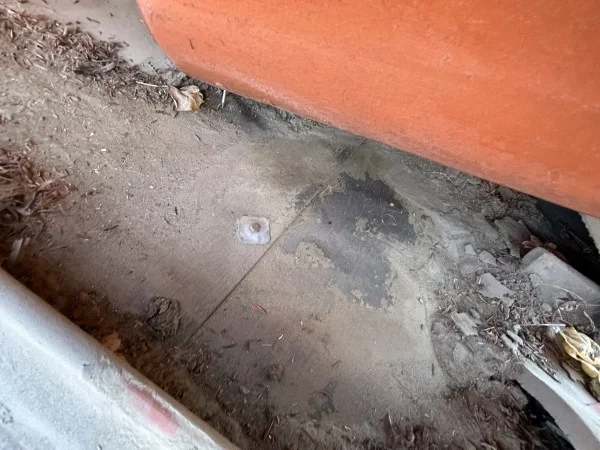
Can dirty gutters really start a fire?
Yes, and in Southern California this is the real reason to take gutter debris seriously. During a wildfire, most homes don't ignite from a wall of flame. They ignite from embers. CAL FIRE warns that windblown embers can ignite homes up to a mile from the fire front. They land on roofs, in vents, and in gutters.
A gutter full of dry palm fronds and pine needles is ready fuel at the edge of your roof. An ember drops in, the debris catches, and fire moves straight to the fascia and deck. California's fire agency tells homeowners to keep gutters free of plant debris and to fit noncombustible metal gutter covers and a metal drip edge at the roof line. Researchers at the Insurance Institute for Business and Home Safety found the same pattern: bare metal guards hold up, while plastic ones can melt in an ember storm.
If you live near open hills, from Rancho Mirage out to the canyon edges of Orange County, clearing the gutters before fire season is home hardening, not housekeeping.
Signs your gutters need cleaning now
You don't have to guess. A few things tell you the gutters are backed up. Water sheets over the front edge during rain instead of draining to the downspout. Gutters sag or pull away from the fascia under the weight of wet debris. Dark streaks run down the siding below the gutter line. Weeds sprout in the trough. Birds, rodents, wasps, or mosquitoes gather at the roofline.
One more sign points at the roof, not the gutter: shingle granules collecting in the trough. That grit means the roof surface is wearing, the kind of problem regular roof inspections catch early, and it's worth knowing how long your roof lasts before the next big storm. Spot any of these and clean the gutters soon, whatever the season. Overflow in particular means water is already going somewhere it shouldn't.

DIY or hire a pro: what's safe on a Southern California roof
On a single-story home, with solid footing and a good ladder, gutter cleaning is a reasonable weekend job. Wear gloves, use a scoop, bag the debris, and flush the gutters and downspouts until water runs clear at the bottom. Never work in wind or rain, and don't rest the ladder on the gutter itself.
Call someone if the roof is two stories, steep, or hard to reach, or if there are power lines near the edge. Falls from ladders are one of the most common causes of home injury in the country, and a foam or tile roof edge cracks easily under a misplaced boot.
One honest note: we don't offer gutter cleaning. Plenty of local services handle that well. What we do is inspect the roof and the gutter line for damage, catch the rot and flashing problems early, and make the repairs, the same way we would on any residential roof. If you're already booking a cleaning, it's a good time to have the roof itself looked at.
Do gutter guards mean you never clean again?
No. Guards cut how often you clean gutters, but they don't end it. Fine debris, palm seed strings, pollen, and grit still slip through or pile on top, and downspout mouths still clog. With guards, plan on a yearly inspection and rinse rather than skipping upkeep.
If you're choosing guards in a fire area, material matters. Bare metal covers, aluminum or steel, resist embers and won't melt. Foam and plastic inserts can burn, or trap fine debris that stays damp and feeds rot. A guard stretches your schedule. It isn't a reason to ignore the roof edge for good.
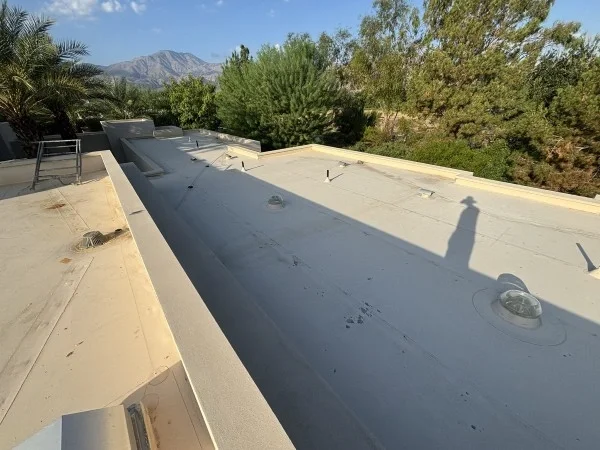
Flat and low-slope commercial roofs are different
Most flat and low-slope roofs don't drain to gutters at all. They move water through internal drains and scuppers, the openings cut into the roof edge or parapet. When those clog with leaves and grit, water has nowhere to go, so it ponds.
Ponding is a serious problem on a flat roof. Standing water adds weight, works into seams, and shortens the life of the membrane or coating. For property managers and HOA boards across Los Angeles, Orange County, and the desert, clearing roof drains and scuppers before the winter storms is the flat-roof version of gutter cleaning, and it belongs on the same schedule.
Our commercial crews check drains, scuppers, and low points on every visit, because a blocked drain on a large flat roof can do more damage in one storm than a season of clogged gutters on a house.
Book a roof check before the next storm
For a Southern California home, the routine is simple. Clean your gutters twice a year, add rounds under palms or pines, clear them before fire season and again before the winter rain, and treat the roof edge as part of the job. Do that and you head off most of the leaks and fascia damage we see every winter.
If you want a second set of eyes, we'll take a look. A free roof check from Vision Roof Services covers the roof, the flashing, and the gutter line, with a written report and photos within 24 to 72 hours. We publish these Southern California maintenance guides with a marketing partner, so homeowners can stay ahead of the next storm. Book your inspection early, and get your gutter cleaning on the calendar while you're at it.
FAQs
How often should you clean gutters in Southern California?
For most homes, twice a year: once in late spring before fire season, and once in fall before the winter storms. Homes under palms, eucalyptus, or pine trees often need cleaning every three to four months. Check again after any strong Santa Ana wind event.
When is the best time of year to clean gutters here?
Late spring and early fall. Southern California gets more than half its yearly rain in only about 10 to 40 hours, usually in a few intense storms, so gutters need to be clear before winter. The spring cleaning clears dry debris before fire season.
Do clogged gutters really cause roof damage?
Yes. When gutters back up, water sits against the fascia and roof edge, which leads to rot, pulled-away gutters, and leaks that reach the roof deck and eaves. On many roofs, edge leaks trace back to a gutter that was never cleared.
Can dirty gutters be a fire risk?
In Southern California, yes. CAL FIRE warns that windblown embers can ignite homes up to a mile from a wildfire, and debris-packed gutters are easy fuel at the roof edge. Clearing gutters before fire season is part of home hardening.
Do gutter guards mean I never have to clean my gutters?
No. Guards reduce how often you clean, but fine debris and downspout clogs still build up. Plan on a yearly inspection and rinse. In fire areas, choose noncombustible metal guards, since plastic ones can melt.
How do I know if my gutters need cleaning?
Watch for water spilling over the edge in rain, gutters sagging or pulling away, stains on the siding, plants sprouting in the trough, or pests around the roofline. Any of these means it's time to clean the gutters, whatever the season.
Do flat commercial roofs need the same attention?
Yes, though most flat roofs drain through internal drains and scuppers instead of gutters. When those clog, water ponds and shortens the roof's life. Property managers should clear roof drains before the winter storms, on the same schedule as gutter cleaning.