
Roofing Maintenance Tips for All Seasons
Most roof maintenance advice online was written for snow country. Copy a spring-summer-fall-winter checklist onto a Palm Desert or Phoenix roof and you'll spend the winter worrying about ice dams that never form while the real damage happens in July. Out here roofs don't fail from freezing. They fail from UV that bakes the coating and dries the sealant, from 150-degree deck temperatures that expand and shrink the roof every single day, from monsoon and Santa Ana wind that drives rain under the edges, and from water that ponds on a flat section and just sits. Vision Roof Services has maintained and replaced about 7,500 roofs since I started in this trade in 1992, and the warm-climate failures repeat the same short list. Two habits prevent most of them: a documented inspection twice a year and after every big wind or monsoon event, and keeping your coating and your warranty paperwork current. If your roof is past its second decade or you've spotted a stain, start with a free Roof Health Check and a written report with photos.
Roof maintenance is the routine of inspecting, cleaning, and repairing a roof on a schedule so small problems get caught before they cause leaks or structural damage. In a warm, dry climate that means two documented inspections a year, clearing debris and drains, checking flashing and sealant, and recoating foam roofs before the surface wears through.
That last part, the schedule, is where the four-season checklist quietly fails you. So here's how to maintain a roof for the climate you actually live in.

Why a warm, dry climate ages a roof differently
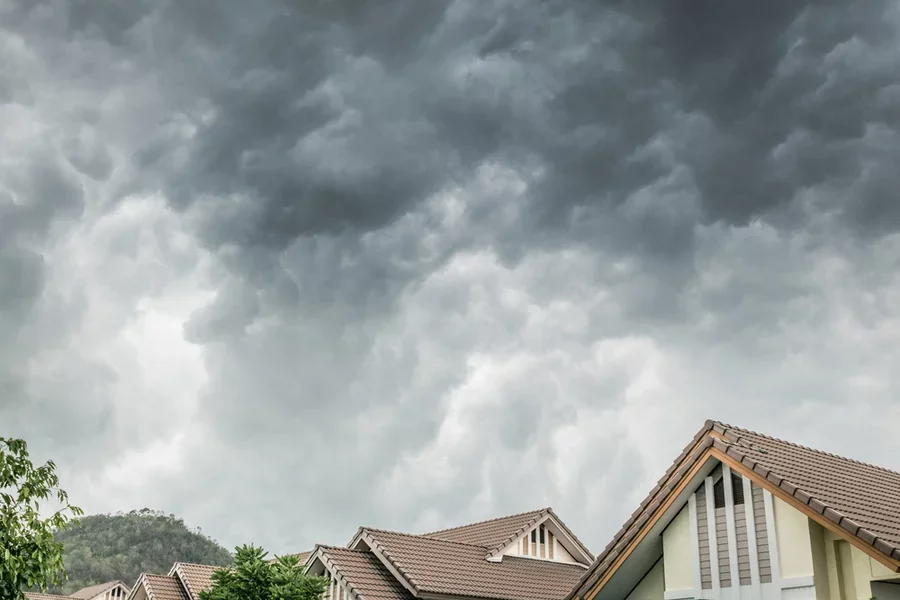
Heat and sun do the damage here, not cold. A roof in the desert Southwest takes constant UV, daily thermal cycling, and a short violent storm season, and each one attacks a different layer. UV breaks down asphalt binders and dries out sealant and underlayment. The daily swing from cool night to 150-degree afternoon expands and shrinks every material on the roof, which works fasteners loose and opens seams over the years. Then the monsoon or a Santa Ana event drives rain sideways under flashing the sun already dried and cracked.
Flat and low-slope roofs add one more failure mode: ponding. Water that can't drain in a day or two sits on the membrane, ages it faster, and finds every weak seam. Dust makes it worse. A film of desert grime holds moisture against the surface and hides the early cracking you'd otherwise catch. None of this shows up on a snow-country checklist, which is why the generic version misses what matters here.
How often should you inspect a warm-climate roof?
Twice a year, plus a check after any major wind or monsoon event. That cadence isn't ours alone. The Spray Polyurethane Foam Alliance, the trade body we belong to, says an SPF roof should be inspected twice a year and after severe weather, and the same rhythm fits tile, shingle, and single-ply roofs in this climate. Spring and fall are the practical windows: once before the summer UV and heat peak, once before the wet season.
The word that carries the weight is documented. A glance from the driveway isn't maintenance. A real inspection walks the roof, checks the flashing, drains, sealant, and every penetration, and produces a written record with photos and dates. That record does two jobs. It tells you what's changed since last time, and it's the paperwork your warranty leans on, which I'll come back to. Our free Roof Health Check hands you that written report within 24 to 72 hours of the visit.
Your warm-climate roof maintenance checklist
Forget the four seasons. Organize maintenance around the four things that actually threaten a roof here: sun, heat cycling, storm wind, and standing water. Here's the checklist that matches those threats, and roughly when each item comes due in the desert Southwest.
| Maintenance Task | Why It Matters Here | When |
|---|---|---|
| Clear debris off the roof and out of drains, valleys, and gutters | Trapped debris holds moisture and blocks drainage, the top cause of flat-roof failure | Before storm season, and after every wind event |
| Check and reseal flashing, penetrations, and seals | UV and heat dry out sealant first, and that's where leaks start | Twice a year |
| Look for ponding on flat sections after rain | Standing water past 48 hours ages the membrane and points to a slope or drain problem | After each rain |
| Inspect the coating on foam and flat roofs for thinning or blisters | The coating is the sacrificial layer; once it wears through, the roof is exposed | Twice a year |
| Wash off dust and grime buildup | Desert dust holds moisture against the surface and hides early cracking | Once or twice a year |
| Trim branches touching or overhanging the roof | Abrasion and wind-driven limbs damage the surface | As needed |
| Book a documented professional inspection | Catches what a ground-level look can't, and keeps your warranty record current | Twice a year, plus after major storms |
Notice what's missing: snow, ice dams, and frozen gutters. If your current plan spends time on those, it was written for a different state.
Can skipping maintenance void your roof warranty?
It can, and this is the part most owners never get told. A manufacturer warranty puts the upkeep on you, and skipping it or letting the wrong person touch the roof can cost you the coverage you paid for. Carlisle SynTec's owner's manual tells building owners to inspect the roof about every six months and keep maintenance records, and it makes the warranty null and void if anyone repairs or alters the roof without the manufacturer's written approval.
Read that twice, because it's a trap two ways. First, no records means no proof you kept up the roof, which is the first thing a manufacturer asks for on a claim. Second, the handyman who patches a leak, or the solar crew that bolts panels through your membrane, can void the warranty on the whole roof if they aren't authorized. That's why "will solar void my roof warranty?" is a question we field constantly, and the straight answer is that it can, unless the penetrations are done and documented the right way. Keep a maintenance file, and use a roofer authorized on your system for any work, and the coverage holds.
What a foam or coated flat roof needs to reach 40 years
A sprayed foam or coated flat roof is the one system where maintenance isn't optional, it's the whole design. Foam goes down as one continuous layer with no seams, then a coating goes over the top, and that coating takes the UV hit so the foam doesn't. Recoat it on schedule and the roof keeps going. The Spray Polyurethane Foam Alliance puts it plainly: with regular care and recoating, a spray foam roof can last 40 years or more. Skip the recoats and the same roof fails early, because once the coating wears through the sun gets at the foam.
There's an energy angle, and it also rides on upkeep. A reflective coating only reflects while it's clean and intact. The U.S. EPA reports that a reflective roof can cut a building's peak cooling demand by 11 to 27 percent, and lower peak indoor temperature by 2.2 to 5.9 degrees in buildings without air conditioning. Let dust build up and the coating degrade, and you give that back. A dozen of our 60 roofers are trained and certified through General Coatings for this exact work, because a foam roof lives or dies on its coating.
How Vision Roof Services keeps warm-climate roofs off the repair cycle
We lead with maintenance, not tear-offs, because the cheapest roof is the one you keep alive. It starts with a free Roof Health Check: a technician walks the roof, documents the flashing, drains, coating, and penetrations with photos, and you get a written report within 24 to 72 hours with the honest call, maintain it, recoat it, or replace it. When a roof can be saved with a recoat or a roof life extension treatment instead of a replacement, we say so, and you keep the money.
We've maintained and replaced about 7,500 roofs since 1992, we hold a 4.8 star rating across 42 Google reviews on our Palm Desert profile, and our commercial maintenance work includes named jobs like the Yamaha facility in Buena Park and LifeStorage in Costa Mesa. Our residential roofing and commercial crews cover the Coachella Valley from Palm Desert to La Quinta, Rancho Mirage, and Palm Springs, and you can see the full list of areas we serve across California, Arizona, Nevada, and Texas.
Want to know what your roof needs before the next storm season? That's what a real roof maintenance plan buys you. Book a free Roof Health Check and you'll have a written report, with photos, within 24 to 72 hours. Call 844-348-ROOF.
Warm-climate roof maintenance questions we hear
How often should you do roof maintenance in a warm, dry climate?
Inspect and maintain your roof twice a year, plus a check after any major wind or monsoon event. The Spray Polyurethane Foam Alliance recommends this twice-a-year-plus-storms cadence for foam roofs, and it fits tile, shingle, and single-ply roofs in the desert Southwest too. Sun and heat age a roof faster here, so documented twice-a-year roof maintenance catches problems while they're still cheap to fix.
Does roof maintenance really matter if it never snows?
Yes, maybe more. Warm-climate roofs fail from UV, daily heat cycling, monsoon wind, and water that ponds on flat sections, not from ice. A roof left unmaintained in the desert can lose its coating and start leaking years before a maintained one does. The threats are different from snow country, but they aren't smaller.
Can skipping maintenance or an unauthorized repair void my roof warranty?
It can. Carlisle SynTec's owner's manual, for example, tells owners to keep maintenance records and inspect about every six months, and it voids coverage if anyone repairs or alters the roof without the manufacturer's written approval. No maintenance file, or an unauthorized patch, can cost you the warranty on the whole roof.
Will installing solar panels void my roof warranty?
It can, if the panels are mounted through the roof by a crew that isn't authorized on your system, because most warranties void coverage for unauthorized penetrations. Coordinate solar with a roofer authorized on your roof, and make sure every penetration is flashed and documented. Handled that way, solar and your warranty can coexist.
How often should a foam roof be recoated or inspected?
Inspect a foam roof twice a year and after severe weather, and recoat it on the schedule your installer sets, before the coating wears through. With that regular care, the Spray Polyurethane Foam Alliance says a spray foam roof can last 40 years or more. Neglected, the same roof fails early once the sun reaches the foam.
What roof maintenance can I do myself, and what needs a pro?
From the ground you can safely clear gutters, watch for debris buildup, and check interior ceilings for stains after rain. Walking the roof, checking flashing and coating, and producing the documented report your warranty needs is a job for a roofer with the right footwear and training. The pro inspection matters twice a year; your own checks fill the gaps between.