Roof Replacement With Solar Panels In The Desert
Roof replacement with solar panels is simplest before you ever go solar. If your roof won’t outlast the panels, deal with it before the array goes up. Panels last 25 to 30 years. A tired asphalt roof in Coachella Valley sun usually won’t. Put a system on a roof with eight years left, and you’ll pay to pull the whole array down and reset it years before the panels stop working.
Most articles on this topic are written by solar companies. This one comes from the crew that removes, reinstalls, and re-coats the roof under your panels. Vision Roof Services has worked Southern California roofs since 1992, and we’ve finished about 7,500 of them, commercial and residential, since founding in 2014.
Roof replacement with solar panels means taking off an existing rooftop array, tearing off and rebuilding the roof beneath it, then reinstalling the panels. Done before you go solar, it’s a normal re-roof. Done after, it adds the labor to take the array down and put it back, which is why handling the roof first usually costs less.
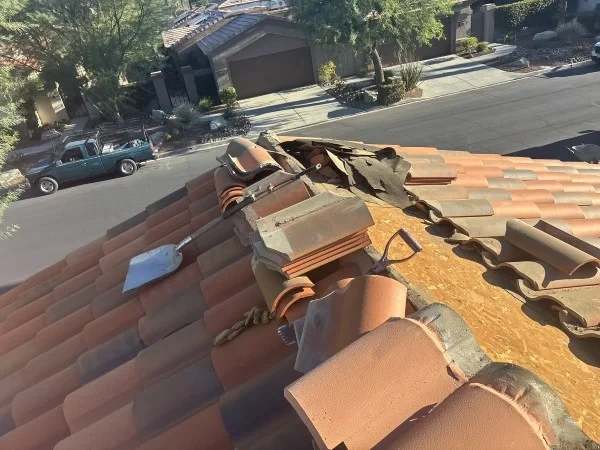
Do you need to replace your roof before installing solar panels?
Not always, but often, and the deciding factor is remaining roof life, not roof age alone. Because panels are built to run 25 to 30 years, your roof should have close to that left. If it doesn’t, replacing or recoating first is almost always easier on your wallet than paying to remove and reset the array later.
A good installer will tell you this. If yours waves off the roof and your shingles are curling, that’s a reason to slow down. We’ve been called to leaks under two-year-old arrays that a rushed solar sale should have caught. Figuring out when to replace your roof is step one, and it starts with an honest look at what’s up there.
Roof age and material set the timeline
If you have asphalt shingles and the roof is past 15 years, plan on replacing it before panels go on. That’s the national rule of thumb, and in the desert it’s generous. Heat and UV age a shingle roof faster here than the 15 to 30 year range you’ll read elsewhere. We see desert shingle roofs hit the wall closer to the low end of that.
Different materials change the math. Here’s how we size it up before a solar job.
| Roof type | Typical lifespan | If it’s under ~10 years old | If it’s 10 to 20 years | If it’s 20-plus years |
|---|---|---|---|---|
| Asphalt shingle (desert) | 15 to 25 years | Inspect, then panels | Inspect closely, likely replace first | Replace first |
| Concrete or clay tile | 50-plus years | Panels, careful mounting | Underlayment check | Underlayment likely due |
| Metal | 40 to 70 years | Panels | Panels | Inspect, usually fine |
| Sprayed foam (SPF) with coating | Indefinite with recoats | Panels | Recoat, keep panels | Recoat, keep panels |
| Built-up or single-ply flat | 10 to 20 years | Panels | Inspect, plan recoat or replace | Replace or convert to foam |
Lifespan ranges above come from roofing and solar industry data (ConsumerAffairs put asphalt at 15 to 30 years, metal at 40 to 70, tile at 50-plus). The desert adjustment and the foam line are ours, from three decades of local work.
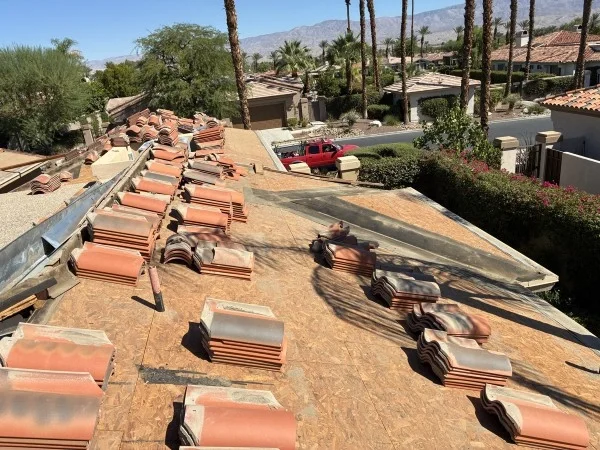
What shapes the cost of roof replacement with solar panels in 2026
There’s no single price, and anyone quoting one without seeing the roof is guessing. What you’ll pay depends on your system size, your roof type, how the panels are mounted, and whether the panels can stay on site during the work. Published national estimates vary widely from source to source, which is a fair sign of how much the details matter.
A couple of things are worth knowing up front. Doing the roof and solar as one project tends to cost less than splitting them, because the array only gets handled once. The U.S. Department of Energy notes the same, since a combined job skips a second removal later. And a new roof costs enough on its own that a surprise panel bill on top is the outcome to avoid.
Here’s what actually moves the number.
| What drives the cost | Why it matters |
|---|---|
| System size (panel count) | More panels means more to detach, handle, and reset |
| Roof type and pitch | Tile and steep roofs take more care than a walkable flat roof |
| Mounting method | Ballasted, clamped, or drilled-and-flashed each come off differently |
| Roof condition | A recoat costs far less than a full tear-off and rebuild |
| Panel storage | Keeping panels on site avoids an extra handling step |
We don’t quote a roof over the phone. We look at it first, put the numbers in writing, and spell out removal and reinstall by panel count in the contract, so nothing’s hidden.
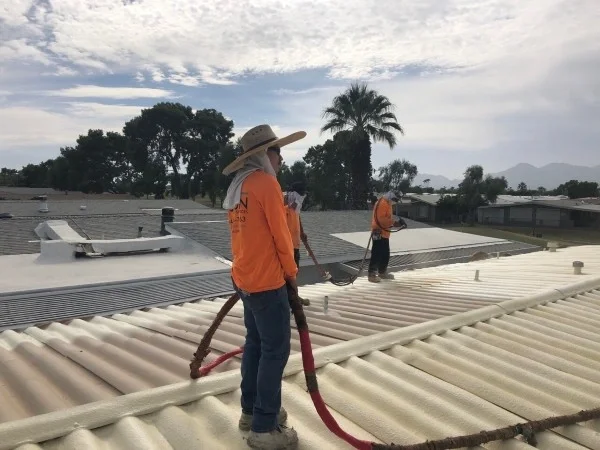
Can you put solar panels on a flat or foam roof?
Yes, and it’s common on the commercial and desert-modern buildings we cover, but the roof under the racking matters more than on a pitched shingle roof. Flat and low-slope roofs hold water longer, so a marginal membrane becomes a leak once you add penetrations or ballast and shade. This is the part almost no solar article addresses, and it’s most of our commercial roofing work.
For building owners, property managers, and HOAs, the sequence is the same but the stakes are higher. A re-roof on an occupied commercial building with an array on it is disruptive and expensive. That’s why we push the roof decision to the front. We’ve reset and reworked roofs under solar on large commercial jobs across Orange County, and the pattern holds: the cheapest time to fix a flat roof is before the panels, or during a planned recoat, never after a leak. If your building shows the signs a commercial roof needs replacing, handle that first.
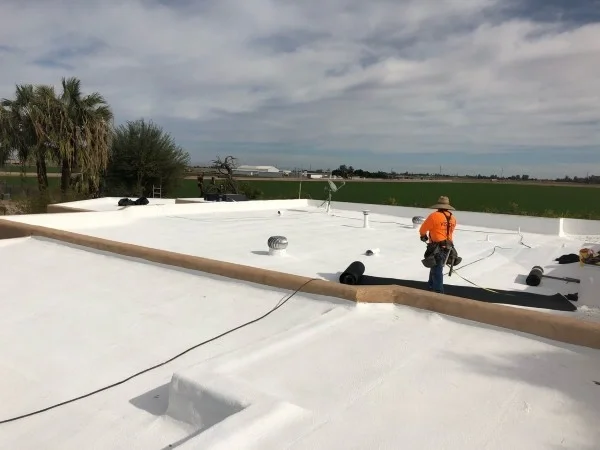
The recoat option most solar articles ignore
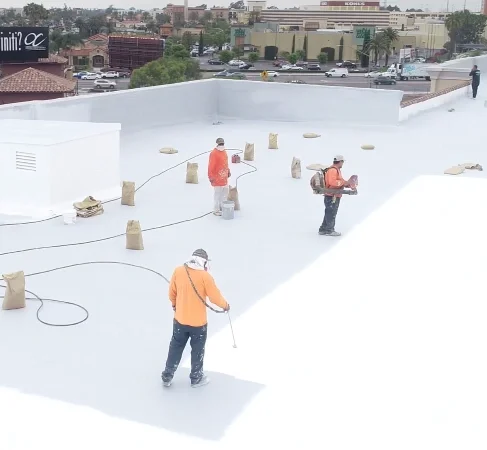
If your roof is a sprayed polyurethane foam or coated flat roof, you may not need a replacement at all, and you may not need to fully remove the array. This is the piece the national guides miss because they assume asphalt shingles. On a foam roof, we clean it, make repairs, and re-coat it with silicone, which resets the roof’s service clock 10 to 15 years. No tear-off. No landfill. Often minimal panel disturbance.
That changes the whole “you’ll pay to remove your panels” story. The Spray Polyurethane Foam Alliance notes that foam roofs can be renewed with recoats rather than replaced, which is why a well-maintained SPF roof can outlast several arrays. A foam roof also adds insulation the panels don’t, and on our desert commercial jobs that’s meant lower summer cooling bills. If a full replacement isn’t warranted, roof rejuvenation or a recoat is the move, and it’s a fraction of a tear-off.
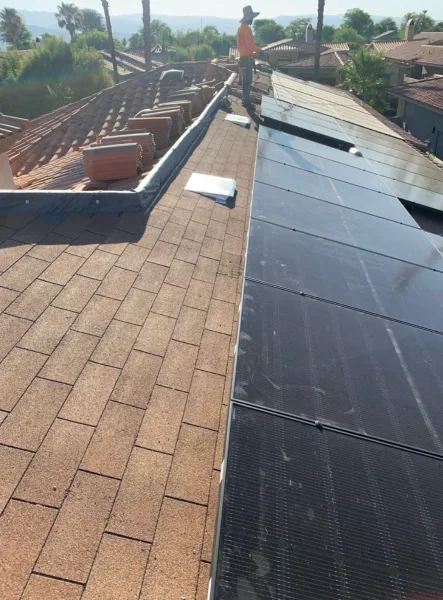
Do solar panels void your roof warranty?
Installing panels shouldn’t void a roof warranty, but it often affects one, and the two get confused constantly. Here’s the split. On a shingle roof, drilling and flashing mounts through the field can void the manufacturer’s coverage for the area under the array, which is why the solar company usually issues its own workmanship warranty, often around 10 years, for the section they touched. On a foam or coated roof, the manufacturer’s coating warranty (the kind we install through General Coatings) stays intact as long as penetrations are flashed to spec and the recoat schedule is kept.
The mistake is assuming the solar installer’s warranty covers your roof. It usually covers their work, not the roof system. Read both before you sign, and ask who owns a leak two years out. We cover this in detail in our piece on how long a roof warranty lasts and what quietly voids it.
Going solar in 2026 when you need a new roof
It still can pay off, but the 2026 math is different from what older articles show, so run your own numbers. The big change: the federal residential solar tax credit ended for systems installed after December 31, 2025, per a Congressional Research Service brief. If you buy panels with cash or a loan in 2026, that 30 percent credit you’ve read about is gone. Only third-party lease and power purchase agreements still reach it, through the commercial credit, into 2027.
So the case for solar now leans harder on the electric bill and the house itself. A Lawrence Berkeley National Laboratory study found buyers paid a premium of about $15,000 for a home with an owned array, and solar homes have tended to sell faster. Weigh that against a roof that’s on its last years. If you’re re-roofing anyway, adding solar during the same project is the efficient path, and the trade-offs are laid out in our take on solar roofing for Southern California homes.
What a roof inspection should tell you before you commit
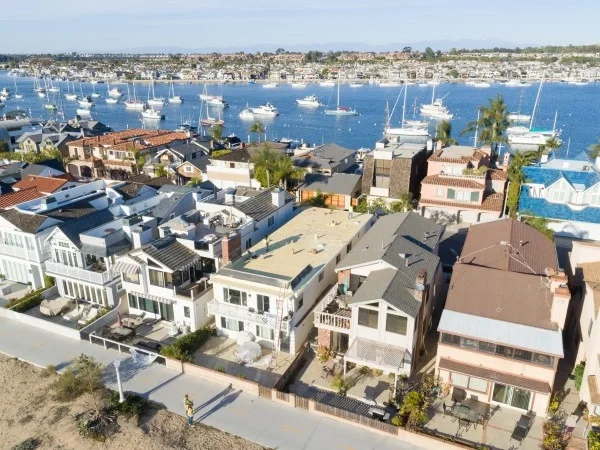
Before you sign a solar contract, you should have a written read on your roof’s remaining life, not a guess. A verbal “looks fine” from a solar salesperson isn’t that. Our Roof Health Check puts it in writing, with photos, usually within 24 to 72 hours of the visit, so you can decide with facts instead of pressure.
A real inspection answers four things: how many years the roof has left, whether it needs repair or full replacement, whether a recoat is the smarter spend, and how mounting will interact with your warranty. Get those answers first. The panels are the easy part.
Get the roof right before the panels go on
Solar is a 25-year bet on the surface it sits on. The costly mistakes we get called to fix trace back to the same thing: someone treated the roof as an afterthought and paid to move panels twice. Roof replacement with solar panels only turns expensive when it’s out of sequence. Whether the answer is a full replacement, a foam recoat, or a documented green light, make the roof call first. Start with a written roof check, then let the panels go up on something built to outlast them.
Frequently asked questions
Do you need to replace your roof before installing solar panels?
Not always, but usually if the roof won’t last as long as the panels. Solar systems run 25 to 30 years, so your roof should have close to that left. If it doesn’t, replacing or recoating first beats paying to remove and reset the array later.
How much does it cost to remove and reinstall solar panels for a roof replacement?
There’s no flat rate. It depends on how many panels you have, your roof type, and how they’re mounted, so published estimates vary a lot. The reliable pattern: doing the roof and solar as one project costs less than splitting them, because the array only gets handled once. We put removal and reinstall in writing, by panel count, after we see the roof.
Can you put solar panels on a foam or flat roof?
Yes. Foam and flat roofs take solar well, but the roof condition matters more because low-slope roofs hold water and leaks are harder to trace under an array. On a sprayed foam roof you can often recoat and keep the panels rather than tear off, which is why we push the roof decision before the panels on commercial and desert-modern buildings.
Will solar panels void my roof warranty?
Panels shouldn’t void a roof warranty, but mounting can affect one. On shingle roofs, drilled mounts can void the manufacturer’s coverage for the area under the panels, so the solar company issues its own workmanship warranty for that section. On a coated foam roof, the manufacturer warranty stays intact if penetrations are flashed to spec and the recoat schedule is kept.
Is roof replacement with solar panels worth it in 2026?
It can be, but the numbers changed. The federal residential solar tax credit ended for systems installed after December 31, 2025, so a cash or loan purchase in 2026 gets no federal credit. The case now rests on electric bill savings and home value, where owned solar has added a premium of around $15,000 at resale, so re-roofing and going solar in one project is the efficient route.
Can you recoat a roof instead of replacing it before solar?
Often, yes, if it’s a sprayed foam or coated roof. A clean and silicone recoat resets the roof’s service life 10 to 15 years without a tear-off, and usually without fully removing the array. It costs far less than a full replacement and keeps a maintained foam roof running through several sets of panels.