What Is The Most Common Roof Repair Homeowners Face?
The most common roof repair is a leak, and most leaks trace back to worn shingles or failed flashing. I've inspected roofs across the LA basin, Orange County, and the desert, and one call beats the rest: a brown ring on the ceiling after the first hard rain.
Leaks usually start with cracked shingles, failed flashing around chimneys and vents, or clogged valleys. Left alone, a small leak rots the deck and grows mold, and a patch becomes a full rebuild.
The Five Roof Repairs We See Most Often
Five problems make up most of our repair calls here.
| Repair | Most common SoCal cause | How fast to act |
|---|---|---|
| Roof leak | Failed flashing, cracked vent collar, clogged valley | Within days |
| Damaged shingles or tiles | Sun, heat, Santa Ana wind | Before the next rain |
| Gutter and drainage backup | Leaves in gutters and valleys | Each season |
| Poor attic ventilation | Too few intake and exhaust vents | Next visit |
| Sagging roofline | Rotted decking or broken rafters | Right away |
Leaky Shingles and Cracked Tiles
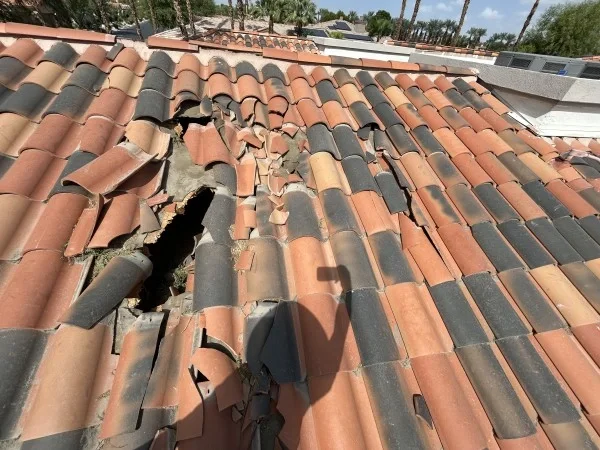
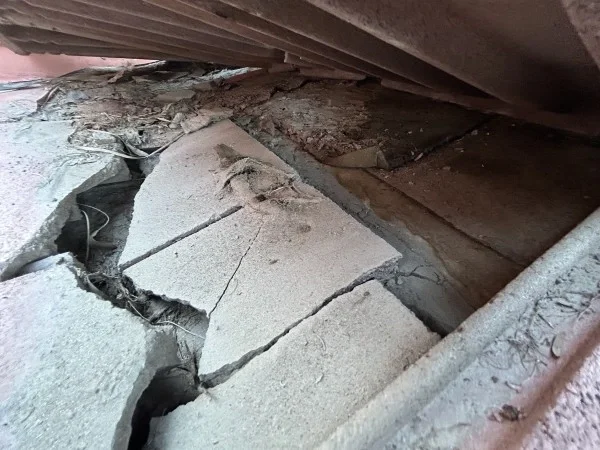
Shingles curl, crack, and shed granules after years of sun and Santa Ana wind. Tiles crack or slip, but the real trouble hides underneath: the felt paper below usually fails in 20 to 30 years, long before the tile does. A good professional roof repair swaps the bad pieces and checks that hidden layer.
Why Does Flashing Cause So Many Leaks?
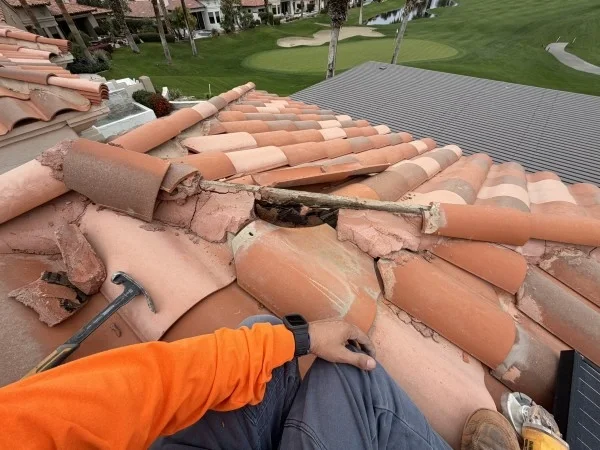
Flashing is the thin metal that seals the seams where your roof meets a chimney, vent, skylight, or wall, the weakest link on most roofs. When it lifts or rusts, water runs past the shingles into the house. A roofer pulls the old metal and seals in new. Skip the hardware-store tube of black goo; it hides the leak just long enough for the deck to rot.
Gutters and Drainage
Clogged gutters back water under the bottom shingles and dump it against your foundation. On a steep roof, they protect your fascia more than the roof itself. Skip the "maintenance package" that's mostly a gutter scoop, but clear the gutters and check the valleys where slopes meet.
Is Poor Attic Ventilation Wrecking Your Roof?
Yes, more often than people think. A hot, stuffy attic bakes shingles from below and traps moisture that grows mold. Good airflow pulls heat and damp air out through intake and exhaust vents near the eaves and ridge. ENERGY STAR notes that summer airflow moves super-heated air out and protects the shingles above.
A Sagging Roofline
A roof that dips or waves means something structural is wrong: rotted decking, broken rafters, or too much weight on a weak frame. Don't sit on this one. Call a licensed roofer or structural engineer the week you spot it.
Roof Leaks: Still the Most Common Roof Repair
Across every roof we service, leaks drive the most repair calls. A 2025 Ruby Home analysis tied about a third of roof replacements to ignore leaks. They start quiet, then surface as a ceiling stain weeks later.
Here's how to find one early:
After a rain, check the attic with a flashlight for wet wood or damp insulation.
Trace the water uphill; the stain sits below the actual hole.
Photograph the spot for your roofer, and for homeowners insurance if it becomes a claim.
Then move fast. Pull the wet insulation and dry the area, because the EPA says mold can start growing within a day or two.
What Else Should You Watch for on the Roof?
A few smaller problems show up between the big jobs, worth a walk-around.
Missing or Lifting Shingles
Bald patches, curled corners, or granules by the downspout mean a shingle is failing. Replace it before the next storm.
How Do You Spot Flashing That's About to Fail?
Look where the roof meets a chimney, skylight, or vent pipe. Rust, gaps, or a dry-rotted rubber collar are the usual leak points.
Sloppy Past Installation
Exposed nails, shingles set too high, and caulk where metal belongs are someone's old shortcut. Industry data pins 82 to 87% of roof warranty claims on bad installation, not materials.
Condensation That Looks Like a Leak
In a poorly vented attic, warm indoor air hits the cold deck and drips like a leak with no hole. The fix is airflow, not sealant.
An Aging Roof in the Sun
Southern California sun is brutal on roofs. The Department of Energy puts a dark shingle roof past 150°F on a hot afternoon, while a reflective roof stays about 50 degrees cooler and lasts longer. Asphalt shingles run 15 to 30 years here, less inland. Once curling and granule loss show up every season, knowing your roof's lifespan helps you plan ahead.
The most common roof repair is a leak, and almost every leak is smaller when you catch it early. A 22-year-old roof stays quiet until a January storm finds the weak spot. Regular roof inspections twice a year keep you ahead, and when the job outgrows a flashlight and a ladder, that's what Vision Roof Services is for.
FAQs
What is the most common roof repair?
The most common roof repair is fixing a leak. Most leaks trace back to worn or cracked shingles, failed flashing around chimneys and vents, or clogged valleys and gutters that push water under the roof.
What causes the most common roof repair?
Leaks usually start at the seams, not in the open field of shingles. Failed flashing and dried-out pipe collars lead the list, followed by missing shingles and clogged valleys. A 2025 Ruby Home analysis tied about a third of full roof replacements to leaks that owners let slide.
How do I know if my roof is leaking?
Check the attic with a flashlight after a rain for wet wood, dark streaks, or damp insulation. Indoors, watch for a brown ring on the ceiling. Water runs downhill, so the stain usually sits below the actual hole.
Why does roof flashing fail so often?
Flashing is the thin metal that seals the seams where your roof meets a chimney, vent, skylight, or wall. It's the weakest point on most roofs, and once it lifts or rusts, water slips past the shingles into the house.
How long does a roof last in Southern California?
Asphalt shingle roofs usually run 15 to 30 years here, and less in the hotter inland areas. Intense sun and heat age shingles faster, so once you see curling and granule loss every season, it's time to plan ahead.
When should you repair a roof instead of replacing it?
Repair makes sense for localized damage on a roof that still has life in it. Once damage spreads past about 20 to 30% of the surface, or the roof is over 20 years old with repeat problems, a patch gives you only a fraction of a new roof's lifespan, and replacement is the smarter move.
How do roofers find a hidden roof leak?
Pros go past a visual check. They use moisture meters, infrared cameras, and targeted water testing to trace water back to its entry point, which is often far from where the stain shows up inside.