6 Common Roofing Scams And How To Avoid Them In 2026
The FTC logged roughly 81,925 home improvement complaints in 2024, and roofing sits near the top of that list every year. Roofing scams follow a pattern. An out-of-state crew shows up after a storm, offers a "free inspection," pressures you to sign something fast, and collects a deposit you'll never see again. Or a contractor comes in with a bid so low it doesn't make sense, then hits you with surprise charges once your old roof is already torn off and sitting in a dumpster.
I've watched this cycle repeat across Southern California for years. The scams don't change much. But homeowners keep falling for them because these operators are good at manufacturing urgency during the one moment you feel least prepared to slow down.
Roofing scams are deceptive practices used by unlicensed or dishonest contractors to overcharge, underdeliver, or collect payment for work that's never completed. The most frequent types include storm chasing, fake damage claims, large upfront cash deposits, insurance fraud, and high-pressure sales. Homeowners who spot these patterns early can avoid losses that regularly exceed $15,000 per incident.
What Are the 6 Most Common Roofing Scams?
Six scam types account for the vast majority of complaints homeowners file about roofing contractors. Each one works because it targets a different pressure point.
Storm Chasers
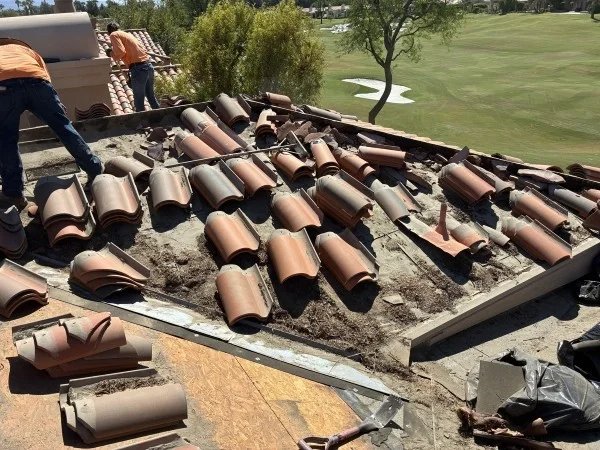
Storm chasers are out-of-state crews that follow severe weather into neighborhoods and knock on doors offering fast repairs. They collect deposits, rush through substandard work (or skip it entirely), and leave before anyone files a complaint. The BBB has issued multiple alerts about this tactic in 2025 alone, and the Connecticut Department of Consumer Protection published a joint warning in July 2025 after a wave of complaints tied to fake roofers following spring storms.
The tell is simple. No local office. No permanent address. No company ID or branded uniform. Sometimes they'll claim they're "already working on a neighbor's roof." I've seen this line used on the same block by three different crews in the same week after a hailstorm hit parts of the Inland Empire.
If someone knocks on your door after a storm, ask for their contractor license number and their local business address. A legitimate roofer with 7,500 completed jobs (like our team at Vision Roof Services) won't flinch at that question. A storm chaser will pivot, deflect, or disappear.
Why Are Low Bids a Red Flag?
A bid that comes in 30 to 40 percent below the other two or three quotes you've gathered is not a deal. It's a setup. Roofing materials, labor, safety requirements, and permit fees don't vary that much between contractors working in the same zip code. When a bid is dramatically lower, the math only works if they're cutting materials, skipping permits, or planning to hit you with change orders after tear-off.
I've seen homeowners choose the lowest bid on a roof replacement, then spend double fixing the result within 18 months. The NRCA reported in 2024 that 85% of roofing contractors struggle to find skilled labor. That shortage means fly-by-night crews fill the gap with inexperienced workers who rush through installs, skip flashing details, and ignore manufacturer specs. The "savings" disappear fast.
Get at least three itemized quotes. If one doesn't line up, that's your answer.
Fake or Exaggerated Damage
Some dishonest contractors fabricate or exaggerate roof damage to push unnecessary replacements. They might crease shingles during an "inspection," show you photos from a different property, or point to normal granule loss as evidence of failure. This one relies on homeowners not knowing what real damage looks like.
Normal wear doesn't always require replacement. Before agreeing to any work, get an independent inspection from a contractor who documents everything with photos and video from your actual roof. If someone can't show you dated, geo-tagged images of the damage they claim to have found, walk away.
Permit and Insurance Fraud
Two red flags in one. First, if a contractor asks you to pull the building permits yourself, that's a signal they're either unlicensed or trying to dodge inspection accountability. Licensed roofers handle permits. Period.
Second, if someone offers to "waive" or "absorb" your insurance deductible, that's insurance fraud in most states. They inflate the invoice to cover the deductible amount, which puts you on the hook if your carrier audits the claim. The BBB flagged this as a growing problem in 2025 and 2026 reporting, with insurance-related roofing complaints rising alongside the use of peer-to-peer payment apps that leave less paper trail.
If anyone promises a "free roof through insurance," they're lying.
Do High-Pressure Sales Tactics Signal a Scam?
Almost always, yes. "This price expires today." "Your roof could collapse any day now." "You have to sign before your insurance deadline." Every one of these lines is designed to stop you from getting a second opinion.
A contractor with a real operation and a full schedule doesn't need to pressure anyone. They'll give you a written inspection report, a clear scope of work, and time to compare. At Vision Roof Services, our Roof Health Check reports go out within 24 to 72 hours, with photos and documentation included. We've never once told a homeowner they had to sign before they left the kitchen table.
If you feel rushed, that's the red flag. Slow down.
Large Upfront Cash Deposits
BBB data from 2026 indicates that roughly 20% of all roofing complaints involve deposit theft. The pattern is predictable. The contractor demands 50% or more upfront, insists on cash or Venmo, and either vanishes or stalls the project indefinitely.
Industry standard for a deposit is 10 to 15 percent, paid by check or credit card, tied to a signed contract with milestones. Anything above that, especially in cash, is a red flag you shouldn't ignore. Established contractors have supplier accounts and material credit. They don't need your money to buy shingles.
Red Flags That Signal a Roofing Scam
The scams above get the headlines. But the warning signs that show up before money changes hands are what actually save you. Here's what to watch for during the quoting and hiring process.
No Written Contract
A verbal agreement is worth nothing when your roof leaks six months later. Any contractor who won't provide a written contract that includes scope of work, material specs (brand, type, color), start and end dates, payment schedule, warranty terms, and change order procedures is someone you shouldn't hire. If promises aren't written down, they don't exist.
No Verifiable Local Presence
A company with no physical office, no website, and no history in your area is a risk. Before you hire anyone, search their business name, check Google and BBB reviews, and confirm their address is real. Companies with decades of local roots and verifiable project histories are the ones that show up when something goes wrong two years later. The ones operating out of a pickup truck with out-of-state plates won't.
Won't Show Licensing or Insurance Proof
This is non-negotiable. Any contractor should hand over their General Liability certificate, Workers' Compensation certificate, and contractor license number without hesitation. If they stall, dodge, or tell you "it's being renewed," move on. You can verify California contractor licenses directly through the CSLB. Without proper coverage, you're personally liable for property damage and on-site injuries.
What Does It Mean if They Ask You to Pull Permits?
It means they probably can't. Licensed contractors pull their own permits and coordinate inspections as part of a standard residential roofing project. If they're pushing that task onto you, they either aren't licensed or they've been flagged by the local building department. Either way, you're taking on legal and financial risk for someone else's shortcuts.
Communication Drops Off After Payment
This one creeps up on people. The salesperson was responsive and attentive during the quoting process. You paid the deposit. Then silence. No scheduling update, no return calls, no clear timeline. This pattern is common with fly-by-night operators and is itself a warning that the project may stall or never start.
Solid contractors maintain consistent contact throughout the job, from scheduling through final inspection. If communication vanishes after money moves, you've got a problem.
Constant "Cost Creep" Without Documentation
Unexpected charges pop up on plenty of roofing jobs. Sometimes there's real structural damage hidden under old layers. But a contractor who keeps adding charges without written change orders, photo evidence, and your approval is padding the bill. Every price change should come with documentation you can review before agreeing to pay.
How Do You Avoid Roofing Scams in 2026?
The tactics change slightly year over year (social media scams and fake portfolios are on the rise in 2026), but the defenses stay the same. Here's what works.
Check Licensing and Insurance First
This is the single most effective step. Federal consumer protection agencies stress that verifying licensing and insurance eliminates the majority of bad actors before you even discuss pricing. Ask for certificates. Confirm them with the issuing agency. Don't take a photocopy at face value.
Ask for Local References
Request at least three references from projects completed in your immediate area within the last 12 months. Call them. Ask about communication, timeline accuracy, and whether the contractor came back to address any issues. A company with real community roots will have no trouble producing these names.
Look Into Reviews and Business History
Google reviews, Yelp, and BBB profiles tell you a lot. But don't just look at the star rating. Read the negative reviews. Look for patterns. Multiple complaints about deposits, no-shows, or unfinished work are a clearer signal than a perfect 5.0 from 12 reviewers. And check how long the business has been operating. A company that opened last month and has 40 five-star reviews deserves skepticism.
Should You Ever Pay a Large Deposit Upfront?
No. If your roof has storm damage, your first call should go to your insurance company. An adjuster will inspect the damage and start the claims process. If a contractor shows up unannounced asking for money before any of that happens, that's a scam in progress.
Standard deposits run 10 to 15 percent, paid by traceable methods, with a signed contract outlining milestones for the remaining balance. Anyone asking for 50% in cash before a single material delivery should be shown the door.
What About Door-to-Door Roofers After a Storm?
Not all of them are scammers. Legitimate local contractors sometimes canvass affected neighborhoods after a storm. The difference is that a real crew carries company ID, branded uniforms, a local business address, and won't push you to sign anything on the spot. Storm chasers show up in unmarked trucks, hand you a card with a PO box, and want a signature before you've had time to think.
The NRCA has distinguished between legitimate traveling crews that carry proper licensing and predatory operators. But the burden of proof falls on you to verify. If you can't confirm their license and local address within five minutes, they haven't earned your time.
Get the Full Scope in Writing
A real estimate breaks down materials, labor, permits, timeline, warranty terms, and workmanship guarantee details. It's not a one-page summary with a number circled at the bottom. If someone gives you a handshake quote and says "we'll figure out the details later," they're counting on your trust to cover their lack of documentation.
Here's a contrarian take most articles won't give you. "Getting three bids" is repeated everywhere as the gold standard. And it's incomplete advice. Three bids from three storm chasers still gives you three bad options. The quality of the contractors you're comparing matters far more than the number of quotes. Two bids from a team with a strong local reputation and verifiable history will protect you better than five bids from strangers.
How Can You Tell if a Roofing Company Is Legit?
A legitimate roofing company will pass every check on this list without hesitation. Licensed and insured, with certificates you can verify independently. An established local presence with a physical office address and years of community history. Consistent online reviews across multiple platforms. A clear, written scope of work before any money changes hands. And verifiable references from past customers in your area.
Actually, let me reframe that. The better question isn't "is this company legit?" It's "would this company still be here in three years if something goes wrong with my roof?" Because that's the real test. A fly-by-night crew can have a license. They can have insurance for another month. What they can't fake is 30 years in the business, 7,500 completed projects, and a BBB A+ rating that came from decades of showing up and doing the work right.
The single best thing you can do is slow down. Roofing scams work because urgency overrides judgment. The storm isn't going away. Your insurance claim isn't expiring tonight. And any contractor worth hiring will give you the space to verify everything before you sign.
Frequently Asked Questions
How do you know if a roofing contractor is running a scam?
The most common signs include demanding large cash deposits upfront, refusing to provide a written contract, having no verifiable local business address, and pressuring you to sign before you can compare other bids. BBB data from 2026 shows that 20% of roofing complaints involve deposit theft. If anything feels rushed or the contractor can't produce licensing and insurance on the spot, stop the conversation.
Are door-to-door roofers after a storm always scammers?
Not always, but proceed carefully. Legitimate contractors sometimes canvass storm-affected neighborhoods. The difference is that real companies carry proper ID, branded uniforms, a physical office address, and won't push for a signature or deposit on the spot. Storm chasers typically have unmarked trucks, out-of-state plates, and no online presence you can verify.
What is a normal deposit for a roofing job?
Industry standard is 10 to 15 percent of the total project, paid by check or credit card, tied to a signed contract with milestone payments. Any contractor demanding 50% or more in cash before delivering a single material is a major red flag. The BBB reports that P2P payment apps like Venmo and Zelle are increasingly used in roofing scams because they offer almost no buyer protection.
Can a roofer really get me a "free roof" through insurance?
No. No legitimate contractor can guarantee a free roof or promise to waive your insurance deductible. Waiving deductibles is illegal in most states and is a form of insurance fraud. Your deductible, depreciation, and any uncovered portions remain your responsibility. The FTC logged roughly 81,925 home improvement complaints in 2024, and insurance manipulation schemes are a growing portion of that number.
How do I check if a roofing company is properly licensed?
Search your state's contractor licensing board. In California, that's the Contractors State License Board (CSLB). You can verify active license status, bond information, and complaint history online in minutes. Also ask the contractor for their General Liability and Workers' Compensation certificates, and confirm them directly with the insurance provider.
What happens if I pay a deposit and the roofing company disappears?
You'll likely need to file a police report, report the company to the BBB and your state attorney general, and potentially pursue small claims court. If you paid by credit card, you may be able to dispute the charge. If you paid in cash or via P2P app, recovery is much harder. This is why traceable payment methods and written contracts matter.
Will a bad roofing scam experience affect my homeowners insurance?
It can. Frequent claims, denied claims tied to fraudulent contractors, or claims associated with poor workmanship can lead to higher premiums, increased deductibles, or even non-renewal of your policy. Insurers are scrutinizing storm-related claims more heavily in 2025 and 2026 as fraud patterns increase.
Double-click to edit...