What Are The Black Streaks On My Roof? A Southern California Guide
Black streaks on your roof are usually algae. In most of the country that answer is enough. In Southern California it is not, because a coastal roof in Mission Viejo and a desert roof in Palm Desert live in different weather, and the streaks do not always mean the same thing.
Here is the short version. On an asphalt shingle roof near the coast, black streaks on a roof almost always come from a blue-green algae called Gloeocapsa magma. Inland and out in the desert, that same dark streaking is often plain dirt, road film, or a coating wearing down, not a living thing at all. Tile and foam roofs add their own wrinkles. We have worked on roofs across coastal Orange County and the Coachella Valley, so this guide sorts out what your streaks actually are, by climate and by roof type, and what to do next.
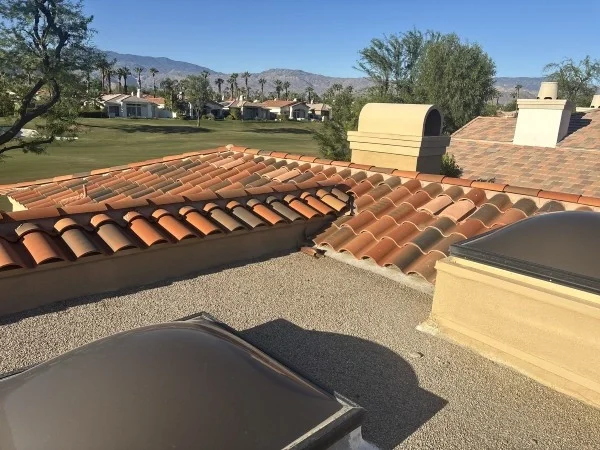
What are the black streaks on your roof?
Black streaks on your roof are colonies of Gloeocapsa magma, a blue-green algae that feeds on the limestone filler in asphalt shingles. The algae itself is blue-green. It grows a dark, tar-colored sheath to shield itself from the sun, and that sheath is the black stain you see running down the slope.
The streaks run top to bottom for a reason. Colonies start high where spores settle, then grow heavier and creep downward with every rain. They show up first on the shaded, slower-drying parts of a roof. Spores travel by wind and by birds, which is why one stained roof often means a few more on the same street.
Black streaks, moss, and lichen are not the same thing
Not every dark patch on a roof is algae, and the difference decides what you do about it. Algae mostly stains. Moss and lichen actually damage. Telling them apart from the ground is the first step.
| Growth | What it looks like | What it means for the roof |
|---|---|---|
| Algae (Gloeocapsa magma) | Flat black or brown streaks, usually running down the slope | Mostly cosmetic early. Safe to clean. |
| Moss | Thick, green, raised clumps, often along shingle edges | Holds water against the roof and lifts shingles. Remove it. |
| Lichen | Crusty, gray-green patches that look glued on | Roots into the shingle mat. Hard to remove, often a sign of an aging roof. |
If you are looking at flat streaks, it is probably algae. Raised or crusty growth is a reason to get someone on the roof. From a driveway these three blur together, and a wrong guess sends you down the wrong path.
Are black streaks common on Southern California roofs?
Sometimes, and it depends on where you live. Algae needs steady moisture, shade, and warmth to take hold. Southern California hands out those conditions unevenly, which is why two homes an hour apart can tell different stories.
Near the coast, from Mission Viejo through the rest of Orange County, the morning marine layer keeps roofs damp for hours. North-facing slopes and shaded, tree-covered lots stay wet the longest, and that is where Gloeocapsa magma settles in. Coastal homes with asphalt shingles are the usual case, and that is most of the residential roofing we clean and inspect out here. Black streaks on a roof are a regular thing in these neighborhoods.
Out in the desert, the math changes. Palm Desert, La Quinta, and the rest of the Coachella Valley run hot and dry for most of the year. The Asphalt Roofing Manufacturers Association ties algae growth to warm, humid conditions, and the desert rarely holds the humidity algae needs to spread. So when we get a call about black streaks on a desert roof, it is often not algae at all. It is blown dirt, road film, or exhaust residue collecting on the shaded side, or a coating that is chalking as it ages. Same dark streak, two different problems, which is why a fix built for a humid Ohio roof can be wrong for a home in the desert. Most desert homeowners are looking at a cleaning and maintenance question, not an algae infestation.
What dark streaks mean on tile, flat, and foam roofs
Most black-streak advice assumes an asphalt shingle roof. Plenty of Southern California homes have tile, and most commercial buildings here run flat foam or coated roofs. The streaks read differently on each.
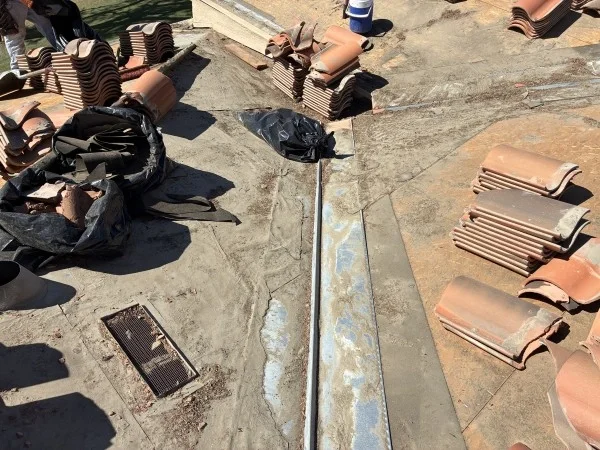
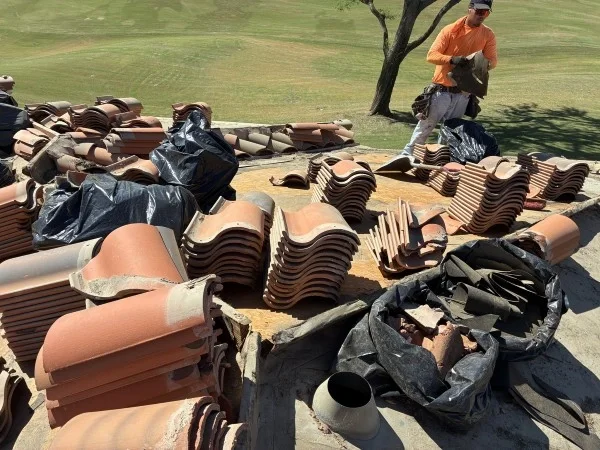
On a concrete or clay tile roof, dark streaking is usually algae or moss on the porous top surface, plus trapped dirt. The tile is tough, but the growth holds moisture and can work into the underlayment over time. Cleaning takes a gentle hand, and a tile roof repair is the wrong place for a pressure washer.
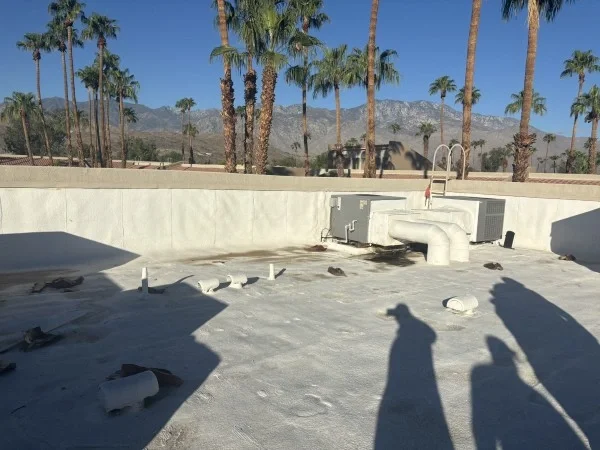
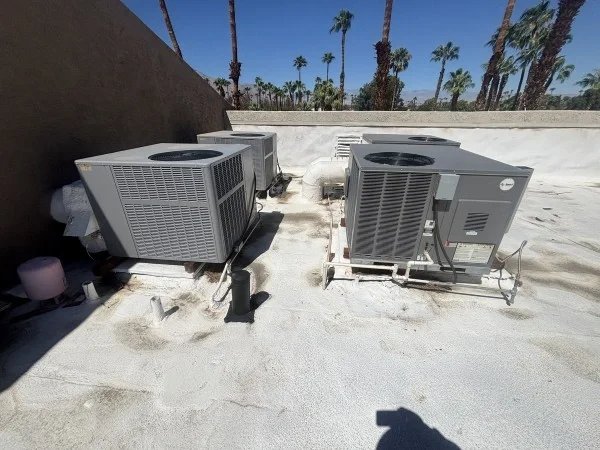
On the flat and low-slope commercial roofs we handle, dark streaks almost never mean Gloeocapsa magma. More often it is ponding water leaving a dirt ring, biological film in a spot that stays wet near a drain or an HVAC unit, or a silicone or acrylic coating chalking as it nears the end of its service life. On as pray foam roof, that coating is the layer we clean and recoat, and those are maintenance questions rather than algae problems. A streak over a low spot can also be the first hint of standing water that should not be there.
Black streaks do more than dull your curb appeal
Caught early, algae is mostly a looks problem. Left for years, it stops being cosmetic. The algae eats the limestone filler in shingles, which loosens the protective granules and washes them into your gutters. Fewer granules means a shingle that ages faster and cracks sooner.
Color matters too. The U.S. Department of Energy notes that dark roofing reflects as little as 5 to 20 percent of the sunlight that hits it and soaks up the rest as heat. Black streaks turn parts of your roof darker still, so a streaked roof runs hotter under the same sun, and that heat load is real in an Inland Empire or desert summer.
The bigger worry is what algae invites next. Damp, shaded shingles that grow algae will grow moss and lichen too, and those hold water against the roof. That is when a curb-appeal issue turns into granule loss, lifted shingles, and eventually leaks, which is the point where black streaks start shortening how long the roof lasts.
Should you pressure wash black streaks off your roof?
No. Pressure washing is the one move that turns a cosmetic problem into real damage, and we talk homeowners out of it every season. A pressure washer blasts the granules off your shingles, the same granules the algae has not finished eating yet.
The Asphalt Roofing Manufacturers Association is blunt about it and says to never take a power washer, brush, or broom to asphalt roofing, because high pressure strips granules and can drive water under the shingles. The safe route is a low-pressure treatment. ARMA points to a 50/50 mix of laundry-strength chlorine bleach and water, sprayed on, left to sit for 15 to 20 minutes, then rinsed with low-pressure water and no scrubbing. Wet down your plants before and after, since the runoff is hard on landscaping. A wet roof is slick, and this is dangerous work on a ladder or a slope, so ARMA itself points homeowners to professionals. On the flat and low-slope roofs we service, soft washing does the same job without the granule damage.
How to keep black streaks from coming back
Removal is temporary. Without changing the conditions, black streaks on a roof come back within a year or two. Prevention is about drying the roof out and starving the algae.
Start with sunlight and airflow. Trim branches back so they are not shading the roof or dropping leaves that trap moisture. Keep gutters and valleys clear so water leaves fast instead of pooling. On the shaded north slope, where streaks always start, a look a few times a year catches growth early.
For a longer fix, metal does the work for you. A strip of zinc or copper installed near the ridge releases trace ions every time it rains, and those ions keep algae from taking hold on the slope below. If you are already replacing the roof, shingles made with copper or zinc granules build that same protection into every course and hold off algae for decades. We walk through those choices when we help homeowners pick a roof for Southern California conditions.
Clean or replace: how to make the call
Clean when the roof is sound and the problem is only on the surface. Replace when the streaks are riding on top of real damage. The trick is knowing which one you have, and that is hard to judge from the yard.
Cleaning is the answer when the shingles are still in decent shape, the streaks are flat and dark, and there is no leak underneath. A newer roof with algae just needs a wash. But if the roof is past 15 years, shedding granules, curling at the edges, or already leaking, washing it only buys time on something that is failing. At that point, replacing it with algae-resistant materials solves the streaks and the age at once, and figuring out when to replace your roof is a decision worth making before the next leak. If you are replacing anyway, it is also the moment to weigh solar roofing while the roof is open. Flat and foam roofs have a middle option that shingles do not. A sound but tired coating can often be cleaned and recoated instead of torn off, which is where roof rejuvenation comes in.
Not sure which one your roof needs? Every job we take starts with a Roof Health Check. You learn whether those black streaks are surface algae, moss that is holding water, or a coating at the end of its run, and you get a plan that fits the roof instead of a guess. A first look at the problem is what a roof inspection is built for.
We would rather keep a roof healthy than sell you a new one, so our first move is almost always maintenance, not a tear-off. If you have black streaks on your roof anywhere from Mission Viejo to Palm Desert, Vision Roof Services can tell you what they mean and what, if anything, they are doing to the roof underneath. Book a Roof Health Check and stop guessing from the driveway.
FAQs
What are the black streaks on my roof?
Black streaks on a roof are colonies of Gloeocapsa magma, a blue-green algae that feeds on the limestone filler in asphalt shingles. The algae grows a dark protective sheath against the sun, which is the black stain you see. It starts on shaded, north-facing slopes that stay damp the longest.
Are black streaks on a roof always algae in Southern California?
No. Near the coast, in places like Mission Viejo and much of Orange County, the marine layer keeps roofs damp and black streaks usually are algae. In the dry desert around Palm Desert and the Coachella Valley, the same dark streaking is more often dirt, road film, or a wearing coating, because the humidity algae needs is rarely there.
Can I pressure wash black streaks off my roof?
No. The Asphalt Roofing Manufacturers Association warns against using a power washer, brush, or broom on asphalt roofing, because high pressure strips the protective granules and can force water under the shingles. A low-pressure treatment or professional soft washing is the safe way to clean a roof.
Why do black streaks appear on only one side of my roof?
One slope, usually the north-facing one, gets less direct sun and stays damp longer after dew or rain. Algae needs that lingering moisture and shade, so it colonizes the slow-drying side first while the sunnier side stays clear.
Do black streaks damage the roof or just look bad?
Early on they are mostly cosmetic. Over time the algae loosens the granules that protect the shingle, and the darker surface holds more heat. Damp, algae-covered slopes also invite moss and lichen, which trap water and can lead to granule loss and leaks.
How soon can Vision Roof Services tell me what my roof streaks are?
A Roof Health Check puts one of our roofers on the roof to document what is growing or failing, and you get a written report with photos, usually within 24 to 72 hours. You find out whether the streaks are surface algae, moss holding water, or a coating at the end of its life, then a plan built for that roof.
Will black streaks come back after cleaning?
Yes, usually within a year or two, unless the conditions change. Trimming back shade, keeping gutters clear, and adding zinc or copper at the ridge slow regrowth, and copper or zinc granule shingles hold algae off for decades on a replacement roof.