Roof Inspection In Southern California: What To Check
A roof inspection is a professional check of your roof's structure, surface, and drainage to catch damage before it reaches the inside of your building. In Southern California that means looking for different things than a guide written for the Midwest would. Our roofs bake under UV most of the year, take Santa Ana wind gusts in fall, then get hit by atmospheric rivers that pond water on every low-slope roof in the region. Those are the failures we look for first.
This is written for the people who actually own the roof: homeowners with residential roofs in the Coachella Valley, property managers and HOA boards across Orange County and the Inland Empire, and owners of commercial flat roofs in Los Angeles and San Diego. Whether you're buying, selling, or keeping what you have in service, this covers what a real inspection includes and what your report should tell you.
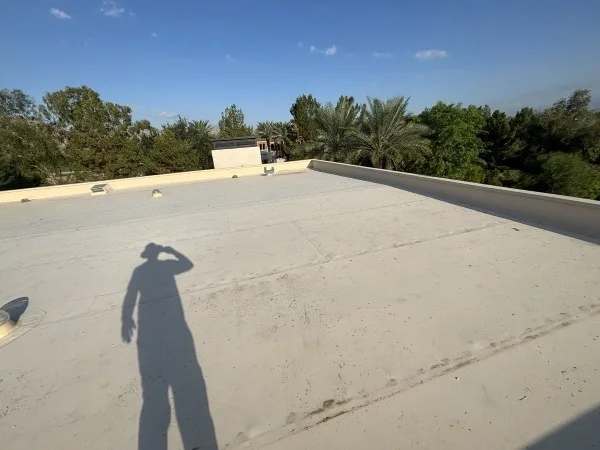
What is a roof inspection?
A roof inspection is a documented assessment of a roof's condition by a qualified roofer or inspector. It covers the structure underneath, the surface materials on top, the flashings around every penetration, and the way water drains off. The inspector records what they find with photos and notes, then rates whether the roof needs monitoring, a repair, a coating, or full replacement.
That's the plain version. What separates a useful inspection from a five-minute glance is the report you get afterward. It also depends on whether the person on the roof knows what a Southern California roof is up against.
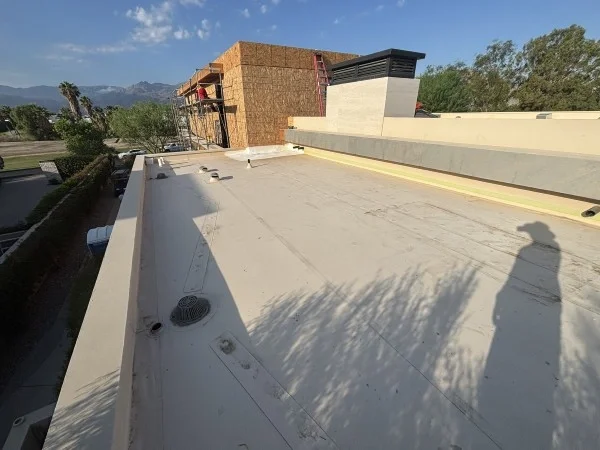
Why Southern California roofs need their own inspection
SoCal roofs face wind, embers, ponding rain, and hard UV that national inspection guides ignore. A local inspection checks for four things those guides skip, and all four come from our climate, not a generic checklist. We look for them on every roof we inspect across Southern California.
Wind uplift comes first. Santa Ana events drive gusts that lift tile, tear at shingle edges, and peel back flat-roof membranes. The Insurance Institute for Business and Home Safety has studied how roof edges fail under wind load. The edge is almost always where it starts, so we check every edge, ridge, and fastener line.
Ember exposure is second. In a wildfire, it's rarely the wall of flame that takes a building, it's embers landing in gaps, valleys, and vents. CAL FIRE's home-hardening guidance points to the roof as the most vulnerable surface on the structure. We look hard at vents, valleys, and any spot where dry debris collects.
Then there's water. When an atmospheric river parks over the coast, flat and low-slope roofs collect standing water, called ponding. Ponding finds every weak seam and tired flashing. On the commercial roofs we maintain across Orange County, it's the first thing we check after a wet stretch.
Last is UV. Our sun dries out sealants and chalks coatings faster than almost anywhere in the country. The Cool Roof Rating Council rates roofing products for solar reflectance, and California's Title 24 code pushes cool-roof surfaces for a reason. A coating that's chalking is a roof telling you it's due.
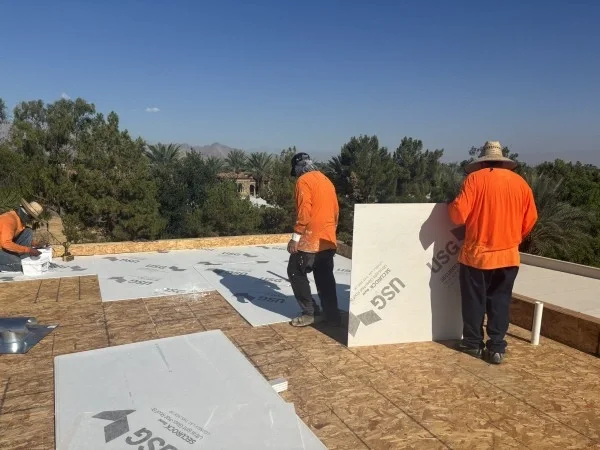
What a Roof Health Check covers
Our inspection, the Roof Health Check from Vision Roof Services, follows the same order every time. We walk the structure for sagging, soft decking, and framing problems. We check the surface, whether that's tile, shingle, single-ply, or sprayed foam, for cracks, blisters, missing pieces, and wear. We inspect flashings and penetrations, the pipes, vents, skylights, and curbs where most leaks actually start. We check drainage and look for ponding. Then we go inside, into attics and ceilings, for stains that prove water is already getting through.
Every Roof Health Check ends with a written report and photos, usually within 24 to 72 hours. A document you can keep, compare against next year's, or hand to a buyer. We run that same process on residential and commercial roofs alike.
What your inspection report tells you
A good report ends with a decision: monitor, repair, recoat, or replace. One thing most companies won't say out loud: a failing flat roof usually doesn't need a tear-off. Caught early, a silicone coating or a rejuvenation treatment can add years of service life to a roof that looks finished. We land on that call more often than a full replacement, because it's the honest read on a roof that still has good bones. When the structure is too far gone, the report says so.
How often should a Southern California roof be inspected in 2026?
Once a year is the baseline, plus a check after any major Santa Ana wind event or heavy storm. Flat and low-slope roofs earn a look twice a year, because ponding and seam wear move faster on them. Once a roof passes ten years old, annual isn't optional. After a hard wind season, a quick look can catch lifted tiles before the next rain drives water under them. Between visits, watch for granules in the downspouts, cracked or lifted tiles, and any new stains on inside ceilings. That cadence is the heart of regular roof inspections, and it keeps a small fix from becoming a big one.
Do you still need a roof inspection after a home inspection?
Usually, yes. A home inspector is a generalist covering the whole house in a few hours. InterNACHI, the group many home inspectors belong to, publishes a standard of practice for the roof. It has them note the roof's shape without specializing in it. They'll flag the obvious from a ladder or the ground, but they rarely get onto a steep or fragile roof. A roofing specialist inspects that one system in depth and knows the local failure modes. For the most important system on the building, the deeper look is worth the separate visit.
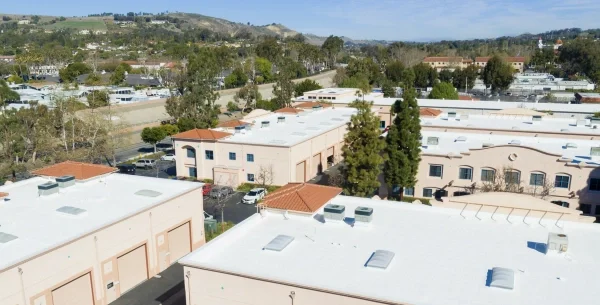
Drone or walked: how a roof inspection is done
Both have a place. A drone captures a fragile tile roof or a steep pitch safely, and it's quick. But a camera can't press on a soft spot, lift a shingle, or feel a spongy deck. The strongest inspections use drone images to document and a physical walk to confirm. On a steep tile roof, we fly the drone first. Then we set a ladder at the eave to confirm what the camera saw. Be cautious of anyone selling a drone-only inspection as the full picture, especially on a low-slope roof where the trouble hides under the surface.
Warning signs you shouldn't wait
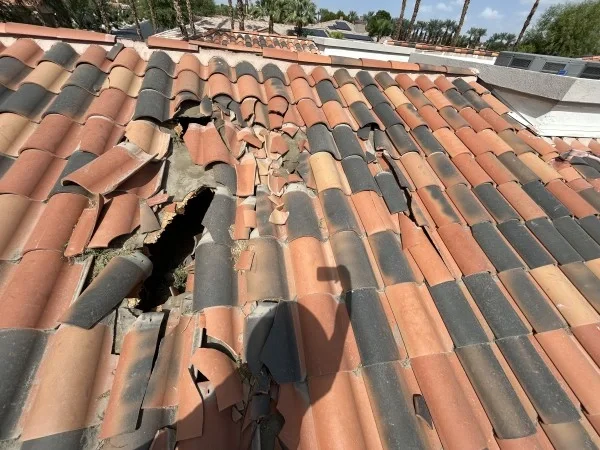
Some signs mean you call now, not at your next annual check: water stains on interior ceilings or walls, missing or sliding tiles, a pile of granules in the gutters, daylight showing through the attic, or standing water still sitting on a flat roof two days after rain. Any of these means the roof is already losing, and an inspection tells you how far. These are the types of roof damage we tell owners to catch early, before water gets into the structure. We keep these guides current with help from a marketing partner, but every roofing call in them is ours.
A roof inspection is the simplest way to stop a small problem from reaching the inside of your building. The smart move is to book a roof inspection, keep the report, and stop guessing about what's over your head.
FAQs
How often should I get a roof inspection in Southern California?
At least once a year, plus a check after any major Santa Ana wind event or heavy storm. Flat and low-slope roofs deserve twice-yearly looks, because ponding and seam wear move faster on them. Once a roof passes ten years old, treat annual inspections as a rule.
Do I still need a roof inspection if I already had a home inspection?
Usually, yes. A home inspector is a generalist who reviews the whole house and often checks the roof from a ladder or the ground. A roofing specialist gets on the roof, knows local failure modes, and inspects that one system in depth.
What does a roof inspector check on a flat or low-slope roof?
Seams, flashings, penetrations, the coating or membrane surface, and drainage. On low-slope roofs, ponding water is the biggest concern, since standing water finds every weak seam. Across roughly 7,500 roofs we've worked on, aging flat-roof systems are one of the two problems we catch most.
Can a roof inspection tell me whether to repair, recoat, or replace?
Yes. A thorough inspection ends with that call. Many failing flat roofs don't need a tear-off; caught early, a coating or rejuvenation can add years of service life. The report should spell out which path your roof is on.
How long does a roof inspection take?
Most take 45 minutes to a couple of hours. A small single-story home goes quickly, while a large commercial roof or a multi-building HOA property takes longer. Storm-damage inspections run longer, because everything gets documented for a possible claim.
Is a drone roof inspection as reliable as walking the roof?
A drone is useful for steep or fragile roofs and for fast documentation, but it can't feel a soft deck or lift a shingle. The strongest roof inspection pairs drone images with a physical walk. Be wary of a drone-only inspection on a low-slope roof.