Roof Cleaning In The Coachella Valley: A Desert-Safe Guide
In the Coachella Valley, roof cleaning is mostly about clearing wind-blown dust, sand, and monsoon debris, not scrubbing algae. The humid-climate advice you find online, pressure washing and bleaching black streaks, can crack desert tile and strip a foam or coated roof. The safe method depends on what you have up there: a gentle low-pressure rinse for tile, a soft wash with a mild, non-corrosive cleaner for foam and coatings, and no pressure washer on any of it. The best time is before monsoon season. And on a roof surface that bakes past 150 degrees in July, the smartest move is often to let a licensed roofer do it. Here is how desert roof cleaning actually works, roof by roof.
What is desert roof cleaning? It is the removal of dust, sand, and storm debris from a roof in an arid climate like the Coachella Valley, using low pressure and mild cleaners matched to the roof type. Unlike humid-region cleaning, it rarely targets algae, and its real job is protecting the roof surface and, on light-colored roofs, its reflectance.
Does a desert roof actually need cleaning?
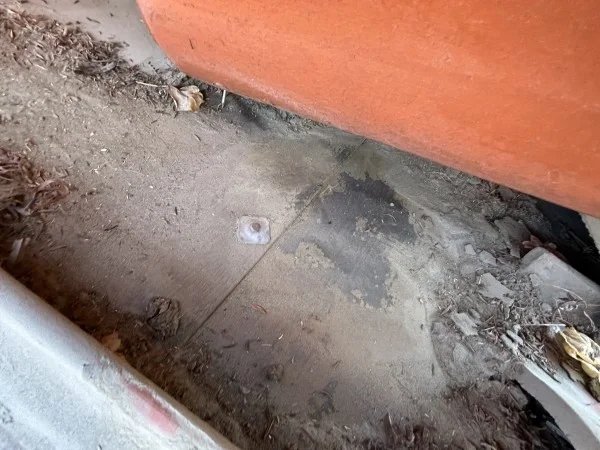
Yes, but not for the reason most articles assume. Out here the problem is not organic growth, it is grit. Blowing dust and fine sand settle into tile pans, pack around flashings, and collect in roof valleys and drains. When the summer monsoon rolls in, usually between July and September, thunderstorms drive that debris into low spots and clog scuppers and gutters right when you need them to move water. The National Weather Service ties the valley's monsoon season to heavy downpours, strong gusts, and blowing dust, so a roof that looked fine in May can pond water by August.
Dust does something else on a light-colored roof: it dulls the surface. Vision Roof has inspected enough valley roofs since 2014 to see the pattern. A dirty roof holds heat and hides small problems. A clean one lets you (or your roofer) actually see the cracked tile or the worn coating before it leaks.
Why humid-climate roof-cleaning advice fails in the desert
Here is the contrarian part. Most "how to clean your roof" guides are written for the Southeast and Pacific Northwest, where algae and moss are the enemy. They tell you to spray a bleach solution and, far too often, to reach for a pressure washer. Follow that in Palm Desert and you can do real damage: bleach runoff kills the desert landscaping you fought to keep alive, and high pressure blasts the granules off shingles, chips glazed tile, and tears the topcoat off a foam roof. You would be treating a problem you probably do not have with a method your roof cannot survive. Match the method to the desert and to your roof type instead.
How do you clean a tile roof without cracking it?
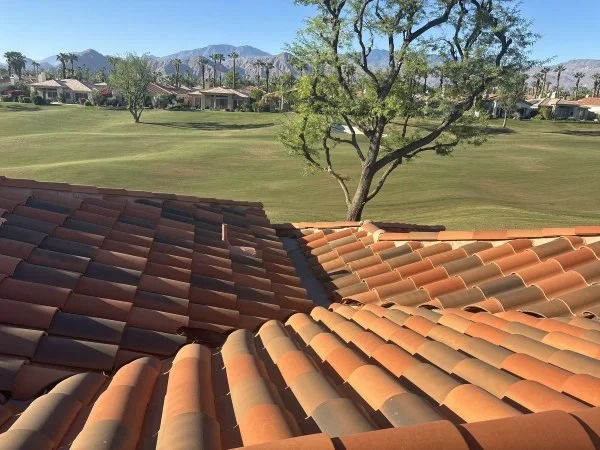
Work from a ladder or walk boards, never straight on the tiles. Concrete and clay tile are common on valley homes, and they carry your weight only at specific points. Step wrong and you get a hairline crack that leaks months later. Clear loose dust and debris with a leaf blower or a soft broom first. Then rinse with a garden hose or a low-pressure nozzle, top down, letting the water carry grit off the field. For stubborn spots, a soft-bristle brush and a mild cleaner beat any pressure setting. If you find tiles that are already cracked or slipped during the clean, flag them for repair rather than working around them.
How do you clean a foam or coated roof?
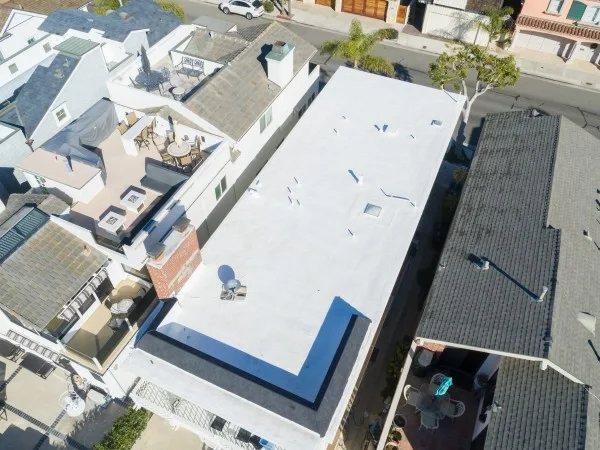
Gently, and never with a pressure washer. Spray polyurethane foam and silicone or acrylic coatings, which cover a lot of valley flat and low-slope roofs, have a thin protective topcoat that high pressure will erode. The accepted practice across foam-roof manufacturers is to sweep or lightly rinse two to three times a year, use a soft-bristle brush with a mild, non-acidic cleaner, and rinse at low pressure. Keeping that surface clean is not just cosmetic. The U.S. Environmental Protection Agency notes that a reflective, low-slope roof holds its cooling performance only when it is kept clean, since dust lowers the reflectance that keeps the building cooler. On a foam or coated roof, cleaning and inspection go hand in hand, because you are also checking the topcoat for wear before a recoat is due.
Can you pressure wash a roof?
No. Not tile, not shingle, not foam, not coated. It is the single most common way homeowners damage a roof they were trying to protect. Asphalt shingle manufacturers are blunt about it: their guidance is to never pressure wash a shingle roof, because it strips the protective granules and shortens the roof's life. Foam and coating topcoats erode the same way. If a surface needs more than a low-pressure rinse and a soft brush, that is a sign the roof needs a professional, not more pressure.
Do you still get algae or moss in the desert?
Rarely, and only in specific spots. The dry heat that makes the Coachella Valley punishing for people is also hostile to algae and moss. Where you do see it, it is almost always on a north-facing slope that stays shaded, under a patch of overspray from a lawn sprinkler, or below a tree that drips. If that is your situation, spot-treat only that area with a mild cleaner and rinse well. You do not need to bleach an entire desert roof to kill a shaded corner of growth, and you should not.
When should you clean your roof in the Coachella Valley in 2026?
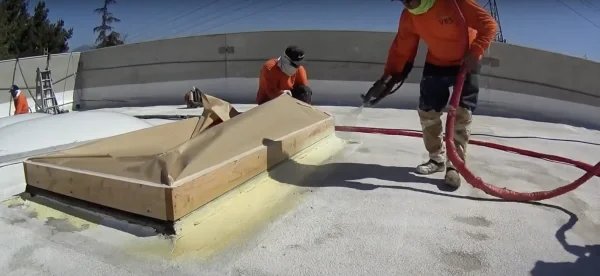
Before monsoon season, and again after it. That rhythm is the core of seasonal roof maintenance in the desert. A spring clean clears the winter's dust and gives you a clear look at the roof before the summer storms arrive. A fall pass clears out whatever the monsoon drove into your valleys and drains. Skip the middle of summer for the work itself: a roof surface in direct July sun can climb well past 150 degrees, which is dangerous to stand on and hard on any cleaning solution, which dries before it can work. If you only do this once a year, do it in spring.
Is it safe to clean your own roof in 115-degree heat?
Often, no. The valley regularly runs past 110 degrees in summer, and Palm Springs has hit an official 123. Add a steep tile roof or a ladder on hot, loose ground and the fall risk is real. Light dust on a single-story, low-slope roof is a reasonable homeowner task on a cool morning with the right footing and a spotter. A steep roof, a two-story home, a tile roof you would have to walk, or any roof with visible damage is a job for a licensed roofer. Vision Roof works on roofs across the Coachella Valley every week, and the crew carries the fall protection and the footing know-how that a Saturday cleaning does not.
The Vision Roof Health Check: cleaning done the professional way
Here is the alternative to climbing up yourself. Vision Roof's free Roof Health Check sends a roofer to document the roof's condition and return a written report with photos, usually within 24 to 72 hours. You see the dust load, the debris in the valleys, the tiles or coating that need attention, and what maintenance actually protects the roof, without setting foot on a 150-degree surface. It fits the company's maintenance-first approach, the same logic behind regular roof inspections: catch the small thing during a clean, not the leak after the storm. That is professional roof maintenance, not guesswork.
How often should desert roofs be cleaned and inspected?
Clean once or twice a year, and inspect on the same rhythm. For most valley homes, a spring and fall pass covers it. Foam and coated roofs want the same twice-a-year rinse plus a professional inspection, because their topcoats wear on a schedule: most need a recoat every 5 to 10 years depending on the product and the sun exposure. Tile roofs need less cleaning but a yearly look for cracked or slipped pieces. The habit that saves the most money is the boring one: a scheduled inspection that turns a two-dollar fix into a note on a report instead of a ceiling stain.
FAQs
Do desert roofs really need cleaning if there is no algae?
Yes. In the Coachella Valley the issue is wind-blown dust, sand, and monsoon debris, not algae. That grit packs into tile valleys and drains and, on light-colored roofs, dulls the surface. Roof cleaning here is really about clearing debris and protecting the roof, usually once or twice a year.
Can I pressure wash my tile or foam roof?
No. Pressure washing chips tile, strips granules off shingles, and erodes the topcoat on foam and coated roofs. Use a low-pressure rinse and a soft-bristle brush instead. If the roof needs more than that, it needs a roofer, not more pressure.
When is the best time for roof cleaning in the Coachella Valley?
Before monsoon season and again after it, so spring and fall. A spring clean clears winter dust before the summer storms, and a fall pass clears what the monsoon drove into your valleys. Avoid midsummer, when the roof surface can exceed 150 degrees.
How often should a desert roof be cleaned and inspected?
Once or twice a year for most valley homes. Foam and coated roofs want the same twice-a-year rinse plus a professional inspection, since their topcoats typically need a recoat every 5 to 10 years. Tile roofs need less cleaning but a yearly check for cracked pieces.
Is it safe to clean my own roof in the desert heat?
Light dust on a single-story, low-slope roof can be a homeowner task on a cool morning with good footing and a spotter. A steep roof, a two-story home, a walkable tile roof, or any visible damage is a job for a licensed roofer. Valley summers regularly pass 110 degrees, which makes roof work genuinely risky.
Does a clean roof stay cooler?
On a light-colored or coated roof, yes. The EPA notes that a reflective roof keeps its cooling performance only when it is kept clean, because dust lowers the reflectance that bounces sunlight away. Clearing dust helps the surface do its job through the desert summer.
What roof types are common in the Coachella Valley?
Concrete and clay tile on many homes, spray foam and coatings on flat and low-slope roofs, and some asphalt shingle. Each cleans differently, which is why matching the method to the roof type matters more here than any single cleaning product.