How Long Does A Metal Roof Last In California? A Roofer's Answer
How long does a metal roof last? In Southern California, plan on 40 to 80 years, and the number depends far more on the panel type, the coating, and who maintains it than on the metal itself. A standing seam roof, installed and looked after well, can reach the top of that range. An exposed-fastener panel baking in the desert sun can start leaking in 20. We've installed and torn off roofs across Riverside, Orange, San Diego, and Los Angeles counties and at Vision Roof Services the pattern holds every time: the metal almost never fails first. The details do.
So how long does a metal roof last?
A metal roof's lifespan is the number of years the panels and their coating keep a building watertight before they need replacement, not just repair. A widely used home-inspector life-expectancy chart puts metal roofing at 40 to 80 years, with copper past 70, far longer than the 15 to 30 years typical of asphalt shingles.
The catch is that "metal roof" covers a dozen systems that age very differently. Here's how they break down.
Metal roof lifespan by material: 2026 service-life ranges
The metal you pick sets the ceiling on lifespan. Installation and upkeep decide whether you reach it.
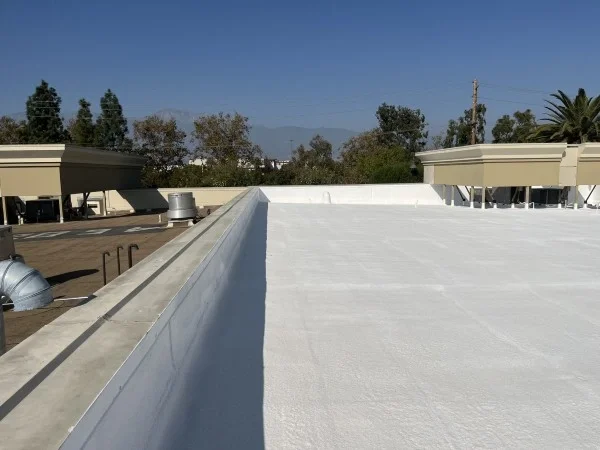
One caveat: metal isn't the right call for every roof. On low-slope commercial roofs, a foam or coating system often sheds water better than metal.
Why standing seam outlasts screw-down
Standing seam lasts longer, usually 40 to 70+ years against 20 to 30 for exposed-fastener panels, and the reason is movement.
Metal grows and shrinks every day as it heats and cools. Standing seam panels hang from concealed clips that let them slide with that movement. Screw-down panels, also called exposed-fastener or ag panels, are pinned straight through the metal, so every temperature swing works the screws loose and grinds the rubber washers flat. Once a gasket fails, water finds the hole. In our work, those exposed fasteners are the single most common source of leaks on a metal roof, and leaks are the number one reason our phone rings. On a screw-down roof, plan on re-fastening and replacing washers every 5 to 10 years. Standing seam is also the base we prefer for solar, because the mounts clamp onto the seams without punching holes in the roof.
What actually makes a metal roof fail early in Southern California?
Three local stressors do most of the damage across Southern California, and none of them is the metal rusting through the middle of a panel.
Desert thermal cycling
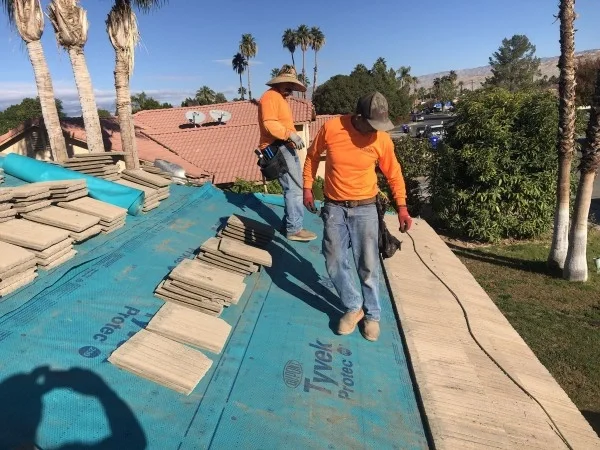
In the Coachella Valley, summer highs clear 110 degrees and then fall hard after sundown. That daily expansion and contraction is punishing on fixed fasteners. It's why we steer Palm Desert, La Quinta, and Rancho Mirage clients toward standing seam whenever the roof allows.
Coastal salt air
On Balboa Island and down through San Diego, salt attacks cut edges, fasteners, and any bare steel first. Aluminum and well-coated panels hold up far better a few blocks from the water.
Santa Ana winds and debris
Our winds pack leaves and grit into valleys and behind panel ribs, where moisture sits and corrosion starts. In fire season, those same winds carry embers.
The maintenance-free myth that shortens metal roofs
Metal roofs are low-maintenance, not maintenance-free, and treating one as install-it-and-forget-it is how a 70-year roof becomes a 30-year roof.
Almost every brochure calls metal "maintenance-free." After decades on Southern California roofs, we'll push back. The panels can outlast two shingle roofs, but the fasteners, sealants, and flashings around them wear on a schedule. CAL FIRE also asks homeowners in fire country to keep the roof clear of debris and close the gaps where embers slip under the covering, which is maintenance by another name. We built our roof health check around this: a written report with photos, usually back to you within 24 to 72 hours, plus a recoat schedule that keeps the warranty intact. A metal roof rewards a once-a-year look. Give it none and it will find a way to leak.
Metal roofs and California Title 24 cool-roof rules
A bare metal roof is not automatically a cool roof in California, which surprises a lot of homeowners.
Bare metal reflects sunlight but sheds very little of the heat it soaks up, so on its own it can miss California's Title 24 marks. A steep-slope roof needs an aged solar reflectance of at least 0.20 and a thermal emittance of at least 0.75; a low-slope roof needs 0.63 and 0.75. Bare metal's emittance sits near 0.05 to 0.10. A factory reflective coating fixes that and can push a metal panel past 0.63 reflectance and 0.75 emittance, which clears both marks. If cool-roof compliance matters for your project, confirm the product carries a Cool Roof Rating Council label.
Metal holds up in wildfire country
Metal is noncombustible, and installed as a Class A assembly it's one of the stronger roofs you can put on a home in a Wildland-Urban Interface zone.
When you replace a roof in a California WUI area, the whole assembly, meaning the covering, underlayment, and deck, has to earn a Class A fire rating, and standing seam metal over the right underlayment qualifies. The weak point isn't the metal. It's the openings. CAL FIRE points to embers entering at eaves, valleys, and gaps as the real threat, so the install details and yearly debris clearing matter as much as the panel. On a new build, you can design the whole assembly for Class A from day one.
So how do you get 70 years out of a metal roof?
Start with the right system for your microclimate, insist on clean installation details, and give it a yearly check.
Pick standing seam with a quality coating for the desert and for fire country. Lean on aluminum or well-coated panels near the coast. Make sure whoever installs it details the flashings, valleys, and fastener lines correctly, because that's where the years are won or lost. Then keep up with it. How long a metal roof lasts is mostly a choice, not a coin toss, and in Southern California it's the choice between a roof you install once and a roof you fight for two decades. Our residential metal work runs from the desert to the coast, and a yearly inspection is the fastest way to see where yours stands.
FAQs
How long does a metal roof last?
Most metal roofs last 40 to 80 years, based on home-inspector life-expectancy data, with copper passing 70 years. Standing seam systems reach the top of that range, while exposed-fastener panels usually last 20 to 30 years.
How long does a metal roof last in the desert?
In the Coachella Valley, daily temperature swings above 110 degrees work fasteners loose, so a fixed-fastener roof ages faster there. A standing seam roof with a quality coating and a yearly inspection is the better bet for a long life in the desert.
What makes a metal roof fail before its time?
Exposed fasteners with worn rubber washers, failed flashings, and debris left sitting in valleys cause most metal roof leaks. The panel itself rarely fails first.
Do metal roofs really need maintenance?
Yes. Metal roofs are low-maintenance, not maintenance-free. A yearly inspection of fasteners, sealants, and flashings, plus clearing debris, is what gets a metal roof to the high end of its lifespan.
Is a metal roof a cool roof under Title 24?
Not on its own. Bare metal has low thermal emittance, near 0.05 to 0.10, so it needs a reflective coating to meet California's Title 24 marks of 0.20 reflectance for steep slopes or 0.63 for low slopes, both at 0.75 emittance. Look for a Cool Roof Rating Council label.
Are metal roofs good for wildfire zones?
Yes. Metal is noncombustible, and a Class A metal assembly is a strong choice in a Wildland-Urban Interface area. Keep eaves, valleys, and gaps sealed and clear so embers can't get underneath.
Do metal roofs leak or attract lightning?
A correctly installed metal roof rarely leaks, and most leaks trace to fasteners or flashings, not the panels. Metal roofs do not attract lightning, and if struck they spread the energy safely across the surface.