12 Types Of Roof Damage Homeowners Must Catch Early
The 12 most common types of roof damage are hail, wind, water, ice, structural, UV and heat, moss, tree, flashing, mechanical, pest, and snow. Some hit overnight in a storm. Others build for years while nobody looks up. After 30-plus years on Southern California roofs, I'll tell you the slow, quiet damage does the worst harm. By the time you see it, the water's already in the walls.
Roof damage is any break or weak point that lets water get past the roof. The types split into two buckets: sudden storm damage that shows overnight, and slow wear that builds for months or years. Which bucket yours falls in decides almost everything, including whether insurance pays.
That last part matters more than most homeowners realize. Vision Roof Services has worked on roughly 7,500 roofs since I started in this trade in 1992, and the damage that actually fills our schedule isn't the dramatic storm kind. It's leaks and aging flat-roof systems that sat too long. The Insurance Institute for Business and Home Safety estimates that roof-related damage drives 70 to 90 percent of insured residential catastrophe losses. Your roof is where most big claims start, so knowing the type of damage you're looking at is the first move.
Here is how the two groups compare:
| Damage group | Common causes | How fast it shows | Typical insurance view |
|---|---|---|---|
| Sudden storm damage | Hail, wind, water, falling trees | Overnight | Usually covered |
| Slow wear | Sun, moss, pests, flashing, install errors | Months to years | Usually excluded |
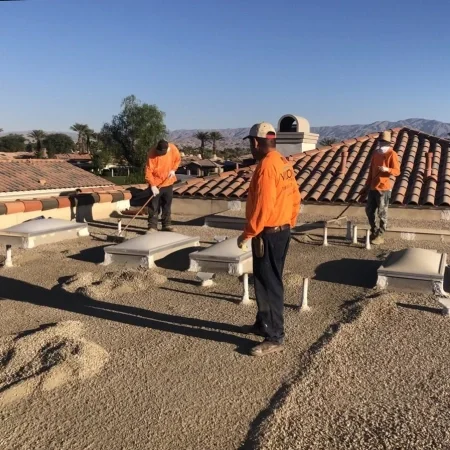
Which Types of Roof Damage Come From Weather?
Weather causes most roof damage, full stop. Four kinds do the heavy lifting.
1. Hail Damage
Hail damage shows as dark, bruised spots where granules got knocked off. It starts as ice in a storm's updraft. After a storm, dents on the car, AC unit, or gutters mean your roof took hits too. Coastal LA rarely sees bad hail; the deserts and mountains do. New shingles shrug off small hail, but IBHS testing shows that resistance drops within about five years.
2. Wind Damage
Wind damage looks like lifted, creased, or missing shingles, and Santa Ana season is when we get the calls. My contrarian takes after hundreds of inspections: most wind damage is really an install problem. A roof nailed right should not strip in a 55 mph gust, and IBHS research on roof coverings agrees. Once a shingle lifts, its seal is gone for good, so in gusty zones, pick shingles rated for higher winds.
3. Water Damage
Water damage means moisture got past the roof: ceiling stains, a musty attic, drips in the rain. It runs along beams before dropping, so the stain is rarely under the leak. Water is only the symptom; the culprit is a cracked tile, a popped nail, or failed flashing, and whether your insurance covers the leak comes down to that cause.
4. Ice Damage
Ice damage comes from ice dams, ridges of ice at the eave that push melt water back under the shingles. Straight talk: in LA, San Diego, or most of Orange County, this is not your problem, so skip ahead. For cold-climate readers, an ice dam is really an attic problem. Heat escaping the attic melts snow that refreezes at the edge, so new shingles do nothing; you fix the attic. Insurers often deny these as maintenance.
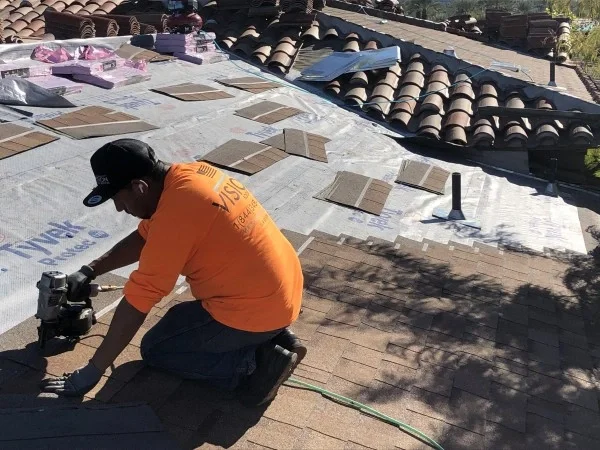
Structural and Surface Damage That Builds Over Time
Beyond storms, four kinds of roof damage creep in slowly.
5. Structural Damage
Structural damage is the scary one: a sagging ridge, soft spots underfoot, or daylight through the attic boards. The decking under your shingles is the foundation; a perfect shingle on rotted decking still fails. Decking lasts 20 to 30 years, but trapped moisture and weak airflow cut that short, which is why how long a roof lasts comes down to ventilation.
6. UV and Heat Damage
UV and heat damage shows as curled edges, cracks, blisters, and fading. Inland and high-desert heat bakes the oils out of asphalt until it turns brittle. The U.S. Department of Energy notes a cool, reflective roof runs up to 50°F cooler than a dark one, so dark asphalt on a desert house is a slow mistake. Weigh the best roofing material for our climate before you re-roof.
7. Moss and Organic Growth
Moss and organic growth is the green or black fuzz on shaded, damp slopes. It holds water against the shingles and pries up the edges. Rare on a baking inland roof, common on damp coastal slopes. Do not pressure-wash it; that strips the granules and makes it worse.
8. Tree Damage
Tree damage runs from a branch rubbing the surface raw to a limb through the deck. Small branches scrape granules and clog valleys, and overhanging limbs give roof rats a bridge onto the house. Trim anything over the roof and you solve both at once.
Maintenance and Installation Mistakes That Cause Roof Damage
A lot of roof damage is self-inflicted or built in on day one.
9. Flashing Damage
Flashing damage is the leak nobody expects. Flashing is the metal sealing the joints at chimneys, vents, skylights, and valleys. Most leaks start here, not out in the field of shingles. It rusts, lifts, or was sealed badly last time, so quality roof repair around every roof penetration is where to look first.
10. Mechanical Damage
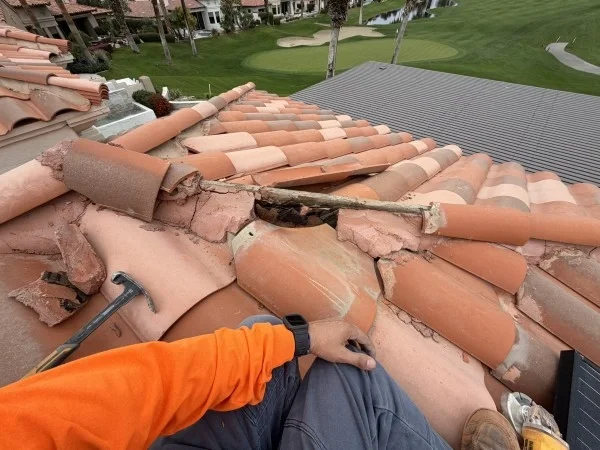
Mechanical damage is what people cause on the roof: walking hot shingles, dragging ladders, or a careless solar install. In our market it is cracked clay and concrete tiles, because tile snaps under foot traffic and few know how to walk it.
11. Pest Damage
Pest damage happens when animals claim your roof. Around here it is roof rats, plus squirrels and birds. They find a small gap, chew it wider, and nest inside, adding a water entry point. A hole the size of a quarter is all they need.
12. Snow Damage
Snow damage is dead-weight stress. Heavy, wet snow pushes down on the structure, and flat or low-slope roofs handle it worst. Not a coastal worry, but real for mountain cabins.
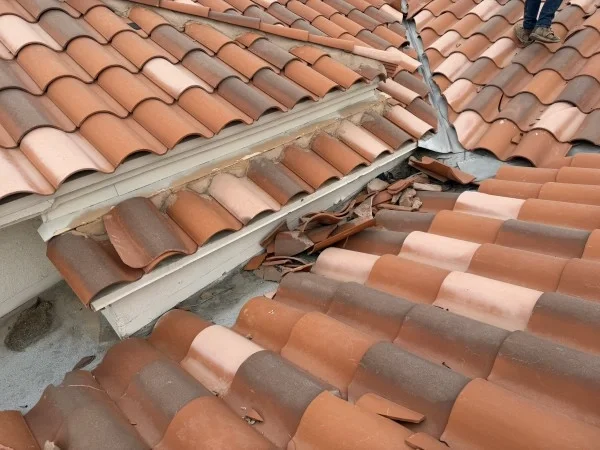
The roof damage we get called about most in Southern California
Across roughly 7,500 roofs since 1992, the damage that fills our schedule isn't hail or falling trees. It's water and age. Two patterns repeat more than all the storm calls combined.
First, leaks and aging flat-roof systems. A flat roof that ran a few years past its recoat is our number one call, and it's almost never one dramatic failure. It's a coating worn thin, a seam that opened, and a drain that ponded, all at once.
Second, on pitched desert roofs, it's the layer you can't see. The tile outlives the felt underneath it. Homeowners look up, see intact tile, and assume the roof's fine, while the underlayment beneath went brittle at 20 to 25 years and started letting water through. We also pull a lot of tile cracked by foot traffic, because the last person up there stepped wrong. If you've got tile, the honest question isn't "how do the tiles look," it's "how old is the underlayment," and that's a question for residential roofing crews who work tile all week.
How do you find hidden roof damage you can't see from the ground?
You find hidden roof damage on the roof and in the attic, not from the driveway. A look from the ground isn't an inspection. A real one walks the roof, probes the decking for soft spots, checks every flashing and penetration, reads moisture with a meter, and scans for wet insulation with a thermal camera. That's how you catch the leak while it's still a $300 fix instead of a ceiling.
The numbers back up doing this on a schedule. Verisk's 2026 U.S. Roof Report found that 38 percent of U.S. homes had roofs in moderate to poor condition, and those roofs ran about 60 percent higher loss costs than roofs in good shape. Translation: most damage is already in progress by the time anyone looks, and the longer it hides, the more it costs. That's the whole case for regular roof inspections instead of waiting for a stain.
It's also why we lead with a free Roof Health Check instead of a sales pitch. A technician walks the roof, documents the flashing, drains, coating, decking, and every penetration with photos, and you get a written report within 24 to 72 hours with the honest call: maintain it, patch it, recoat it, or replace it. If a free Roof Health Check turns up nothing urgent, you've spent nothing and you know where you stand.
How Do You Prevent Roof Damage in 2026?
You prevent most roof damage by catching it early and fixing small problems before they spread. None of this is hard.
Look at the roof twice a year, and after any big wind or rain.
Keep gutters and valleys clear so water drains instead of pooling.
Trim every branch hanging over the roof.
Check the attic, not just the surface, for stains, light, and damp insulation.
Fix small stuff fast. A loose flashing now is a ceiling repair next winter.
Here is the part nobody says straight: a look from the ground is not an inspection. Real diagnosis means the attic, a moisture meter, and sometimes a thermal camera. The data agrees: Verisk's 2025 analysis found 38% of U.S. homes had roofs in moderate to poor shape, and roofs with under five years of life left took about 50% more storm damage. Routine professional roof inspections catch small problems early, and the right professional guidance is the difference between a patch and a full tear-off.
One thing to remember. Of all the types of roof damage here, the kind that wrecks a home is rarely the dramatic storm. It is the small leak or worn flashing you ignored for two years. Catch it early, and lean on a Southern California roofing team like Vision Roof Services or a free roof health check when you are unsure.
FAQs
What are the most common types of roof damage?
The most common types of roof damage are hail, wind, water, ice dams, structural, UV and heat, moss, tree, flashing, mechanical, pest, and snow. They split into sudden storm damage and slow, age-related wear. Roof-related damage drives an estimated 70% to 90% of insured home catastrophe losses, per the Insurance Institute for Business and Home Safety.
Does homeowners insurance cover roof damage from storms or ice dams?
Sudden storm damage from a covered event, like wind tearing off shingles, is usually covered. Ice dams and slow leaks are trickier, since insurers often call them maintenance issues and deny the claim. The cause decides the outcome, so photograph the damage and get a professional assessment before you file.
What is the difference between cosmetic granule loss and real hail damage?
Some granule loss is normal aging, not a claim. Insurable hail damage means functional harm: fractured shingles, exposed mat, or cracks that let water in. IBHS testing shows aged shingles fail under hail that new ones survive, so age changes what counts as damage.
How do you find hidden roof damage you cannot see from the ground?
Hidden roof damage is found on the roof and in the attic, not from the driveway. Pros check decking for soft spots, scan for moisture with a meter, and use thermal imaging to find wet insulation. Verisk's 2025 analysis found 38% of homes had roofs in moderate to poor condition.
How can I prevent the most common types of roof damage?
You prevent most types of roof damage with a routine: inspect twice a year and after big storms, clear gutters, trim overhanging branches, and check the attic for moisture. Fixing small issues fast stops them spreading into the decking and walls.