How Long Does A Commercial Roof Installation Take?
A commercial roof installation usually takes 1 to 4 weeks of active work. A small, simple flat roof can be done in about a week. A large building with multiple drains, curbs, and hidden deck problems can run a month or more. That range is real, but I'll be straight with you: "1 to 4 weeks" is close to useless as a planning number on its own, and I'll show you why.
The install itself is rarely the slow part. Scheduling is. So is whatever the crew finds after they pull the old roof off.
A commercial roof installation is the full process of tearing off the old roof, prepping the deck, and installing a new roofing system on a commercial building. For most low-slope and flat roofs, active work runs 1 to 4 weeks. Building size, roof complexity, the system you choose, and the weather decide where you land in that range.
This piece walks through every stage and how many days each one eats. We're not touching pricing here. That's a separate conversation, and folding it in just muddies the timeline question. We're also sticking to commercial work, not houses, since the two move at completely different speeds.
What affects a commercial roof installation timeline in 2026?
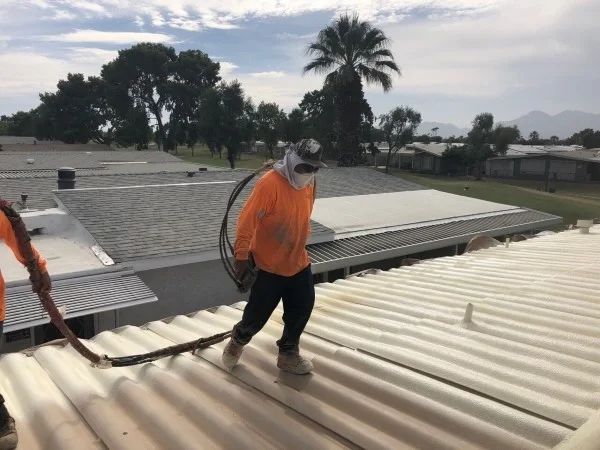
The biggest timeline drivers are roof size, system type, the condition of what's underneath, weather, and crew availability. Get a read on those five early and you can predict the schedule within a few days.
Every commercial roofing project moves through the same stages, but the clock runs differently for each building. What moves the needle:
Roof size and layout. A 5,000-square-foot roof with two drains installs fast. A 50,000-square-foot roof packed with HVAC curbs, skylights, and pipes can triple the detail work.
System type. Single-ply membranes go down quickly. Multi-layer systems take much longer (more on that below).
What's under the old roof. Rotted or wet decking is the most common surprise on a tear-off, and it's the one that blows up schedules.
Weather. Rain and cold stall adhesives and seam welding. Adhered systems are pickier than mechanically fastened ones.
Permits and inspections. Some cities sign off in days. Others sit on it.
Crew availability. This one's quietly become the biggest wildcard, and most articles skip it.
That last point deserves more than a bullet. Roofer employment is projected to grow about 6% through 2034 according to the Bureau of Labor Statistics, but demand is climbing faster than crews can be trained. A 2024 NRCA survey found 85% of roofing contractors struggle to hire skilled labor, up from 82% in 2022. When the good crews are booked out, your "two-week job" waits in line before it ever starts.
The commercial roof installation process, stage by stage
Here's what actually happens on site, and how long each stage takes on a typical job. Five stages, from teardown to the final walkthrough.
Step 1: Tearing off the old roof (1-3 days)
Most jobs start by stripping the old membrane, insulation, and flashing down to the deck. This tear-off and roof restoration work usually takes 1 to 3 days, depending on how many layers are up there and how stuck-down they are.
Crews haul the old material into dumpsters, then inspect the exposed deck for water damage and rot.
This is where I'll push back on a common shortcut. Plenty of owners get talked into a "recover," laying a new membrane over the old one to save a few days. Sometimes that's fine. Often it just buries a wet, failing deck you'll pay for twice. If a crew won't pull a core sample or run a moisture scan before recommending a recovery, get a second opinion.
Step 2: Checking the structure and planning the job (3-7+ days)
Once the deck is exposed, the contractor evaluates the framing, slope, and every penetration. On bigger or older buildings, an engineer confirms the structure can carry the new system's weight.
This stage runs 3 to over 7 days. It usually includes:
Assessing deck condition and slope
Checking for trapped moisture or weakened framing
Confirming the design meets current building codes
Setting up staging and delivery access
Ordering materials and locking in the crew schedule
If the inspection turns up structural repairs, replacing beams or fixing water intrusion, this phase can stretch past a week on its own.
Step 3: Repairing or replacing the deck (3-5 days)
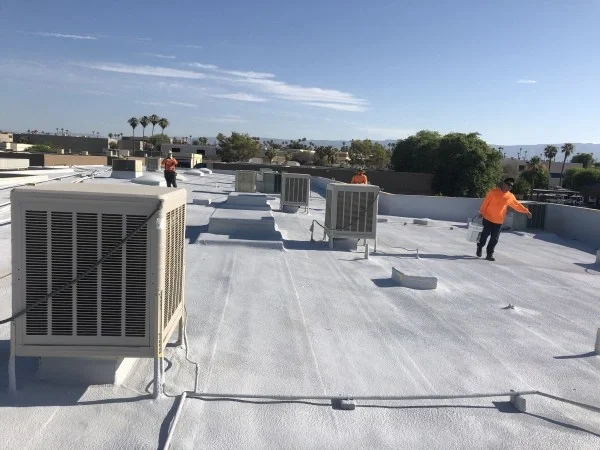
The deck is the foundation the whole roof sits on. If it's rotted, rusted, or sagging, it gets repaired or replaced before anything new goes down. Plan on 3 to 5 days, more if the damage is widespread.
A sound deck is what keeps the new roof from leaking early. Rush it and you'll be re-roofing again in a few years.
Step 4: Installing the new roof system (2-14 days)
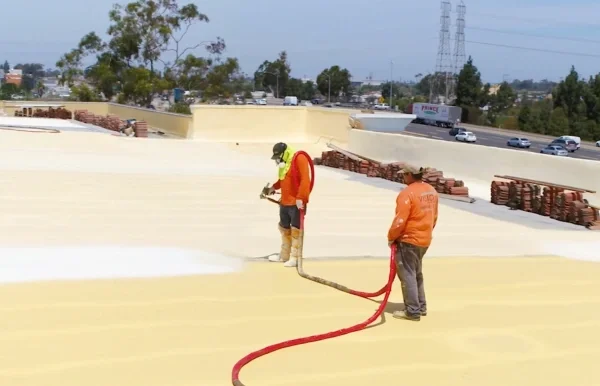
This is the stage with the widest swing, because install speed depends almost entirely on the system you pick. Most commercial buildings have flat or low-slope roofs, which usually means a membrane system. Here's how the common options compare on speed:
| Roofing system | Typical install time | Why |
|---|---|---|
| Single-ply (TPO, PVC, EPDM) | 2–5 days | Goes down in one layer, heat-welded or mechanically fastened |
| Modified bitumen | 3–7 days | Multiple layers, torch or adhesive applied |
| Built-up roofing (BUR) | 1–2 weeks | Several layers of asphalt and felt, the most labor-heavy |
| Ballasted | Add several days | Quick base install, then ballast rock placed on top |
| Hot-applied | Add curing time | Needs heating and cure windows between coats |
Single-ply is the fast lane, which is part of why TPO has become the fastest-growing roofing material in the country at roughly 6.79% annual growth, helped by the fact that it installs fast and meets cool-roof energy codes. On a clean, open deck, an experienced crew can lay 4,000 to 12,000 square feet of mechanically fastened TPO roofing in a single day. Add tear-off, tricky details, or a cold snap and that daily number drops fast.
During this stage crews also install insulation, vapor barriers, and any cover board the system calls for. Cold or wet weather can pause the whole thing, since most adhesives and welds need dry surfaces and a temperature floor to set right.
Step 5: Flashing, drains, and final details (2-4 days)
After the membrane is down, crews handle the detailed work that actually keeps water out. This runs 2 to 4 days and covers:
Metal flashing and edge terminations
Sealing around vents, curbs, and skylights
Tying in drains, gutters, and downspouts
Welding and waterproofing seams
A final walkthrough and inspection
Don't underrate this phase. Most commercial roof leaks I've traced over the years didn't start in the open field of the membrane. They started at a flashing or a drain someone rushed. If details need correcting, the timeline grows here too.
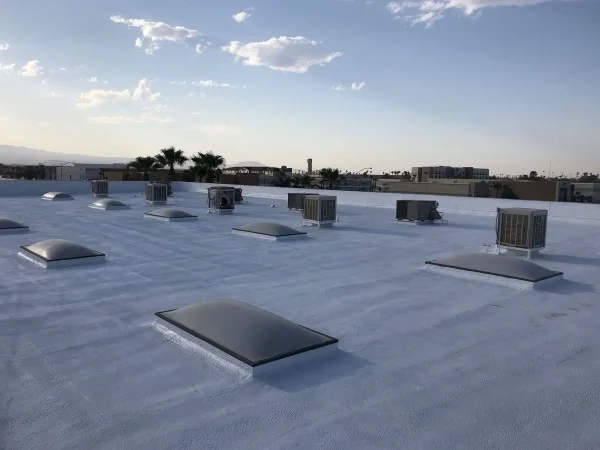
How long does a full commercial roof installation take?
Add it all up and most commercial roof installations land at 1 to 4 weeks of active work. A new roof on a simple, sound building finishes near the short end. A large, aging roof that needs deck repairs and heavy detailing pushes toward the long end, or past it.
But active work and total timeline aren't the same thing, and this is where owners get caught off guard. Construction worker shortages are now the leading cause of project delays, with 54% of contractors in a recent AGC workforce survey reporting jobs held up for exactly that reason. In some metros, the wait just to get a quality crew on the calendar stretches to eight weeks. Your roof might be installed in nine days. Getting to day one is the real variable.
I used to tell owners to just double the install estimate to be safe. Actually, that framing is wrong. The install estimate is usually solid. It's the front end, scheduling, permits, and material lead times, that you should pad. Lock your crew in early and the back half tends to behave.
Does your contractor choice change the timeline?
Yes, more than most owners expect. The same roof can take two weeks with a seasoned crew or drag for six with one that's learning on your building. Experience shows up in how fast a team spots a deck problem, sequences the work, and keeps moving when the weather turns.
A crew worth hiring gives you a realistic schedule instead of a fantasy one to win the job, staffs the work properly, follows code, and keeps your building usable while they're up there.
This is also why I'd be wary of the proposal promising the most aggressive schedule. A timeline far shorter than everyone else's usually assumes perfect weather, no hidden deck damage, and a crew that may not even exist yet. When reality hits, that schedule slips hardest. If you want to dig into this, our breakdown on vetting a roofing contractor covers the questions that actually matter. I'd take an experienced commercial roofing crew with a slightly longer estimate over a rushed one every time.
Planning your commercial roof installation
If you take one thing from this article, make it this. The install rarely runs late. The front end does. A commercial roof installation moves through tear-off, structural checks, deck work, the new system, and detailing in about 1 to 4 weeks once a crew is on site. So the smartest move you can make is to start early, get the structure assessed before you're under pressure, and book a crew with a real track record before the busy season fills up. Do that, and the timeline stops being a guessing game.
FAQs
How long does a commercial roof installation take on a large building?
A large commercial roof installation, think 50,000 square feet with many drains, curbs, and skylights, often runs 3 to 4 weeks or longer. The membrane itself might only take a few days, but the detailed work around all those penetrations is what stretches the schedule. Smaller roofs under 10,000 square feet usually finish in about one to two weeks.
What is the fastest commercial roofing system to install?
Single-ply membranes like TPO, PVC, and EPDM install fastest, often in 2 to 5 days on a mid-sized roof. Built-up roofing is the slowest at 1 to 2 weeks because crews apply several layers of asphalt and felt. TPO is now the fastest-growing roofing material in the U.S. at about 6.79% annual growth, partly because it goes down so quickly.
Why do commercial roof installations get delayed?
Most delays come from things that happen before or around the install, not the install itself. Labor shortages are now the leading cause of construction project delays, with 54% of contractors in a recent AGC survey reporting jobs held up for that reason. Weather, permit waits, and hidden deck damage found during tear-off are the other big culprits.
Can a commercial roof be installed in winter?
Yes, but cold and wet weather slows certain systems. Adhesives and heat-welded seams need dry surfaces and a minimum temperature to cure properly, so adhered membranes are harder to install in winter than mechanically fastened ones. Many contractors schedule major commercial work for spring or early fall to avoid weather delays.
Does tearing off the old roof add much time to a commercial roof installation?
The tear-off itself usually takes only 1 to 3 days. The risk is what crews find underneath. Rotted or water-damaged decking is the most common surprise on a commercial roof installation, and major deck repairs can add several days to a couple of weeks. A moisture scan before the project starts helps catch this early.
Will my business have to close during a commercial roof installation?
Usually not. Most commercial roof work happens above an operating building, and crews can phase the job to keep your business running. Noise, deliveries, and equipment staging are the main disruptions. A good contractor maps out a schedule that works around your hours before day one.