Commercial Roofers In Irvine, CA
Vision Roof Services installs and maintains commercial low-slope and spray foam roofs across Irvine and Orange County. CSLB C-39 #651509. General Coatings certified.
Who we are for
A commercial roofer who reads Irvine's forms before writing your bid
2 contractors can walk the same Irvine roof and come back a hundred thousand dollars apart. Usually that is not margin. One is quoting a recoat, one is quoting a recover with R-10 above the deck, and one has read the question on the city's form about removing roofing down to the deck and priced the tear-off that follows. The gap lives in the paperwork. You can read the paperwork yourself, and this page walks you through it.
SPECIALTY
Commercial spray foam
Spray polyurethane foam and coating systems are our core work. We also install and service TPO, PVC, and other low-slope single-ply roofs.
LOCAL
Orange County jobs
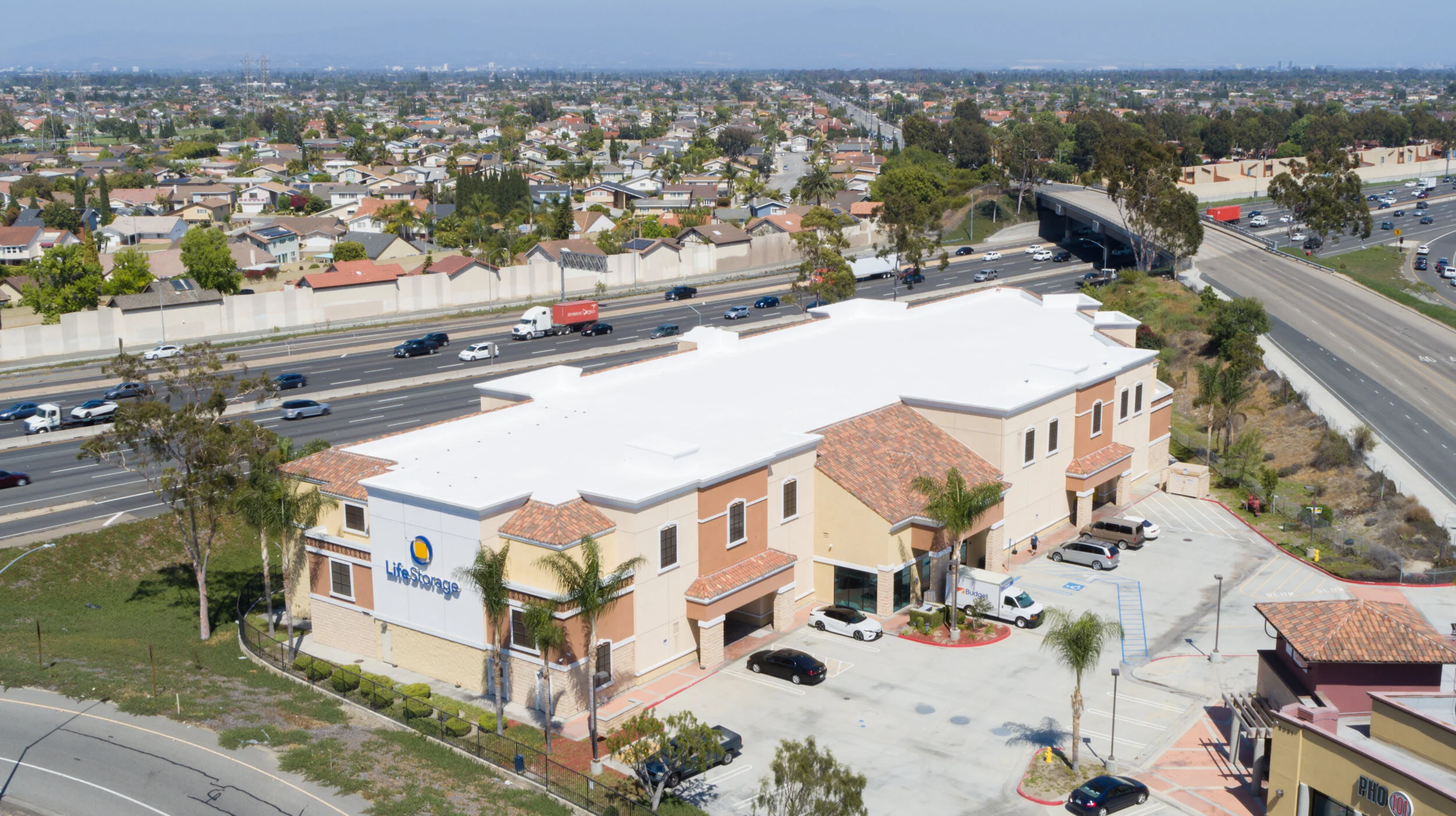
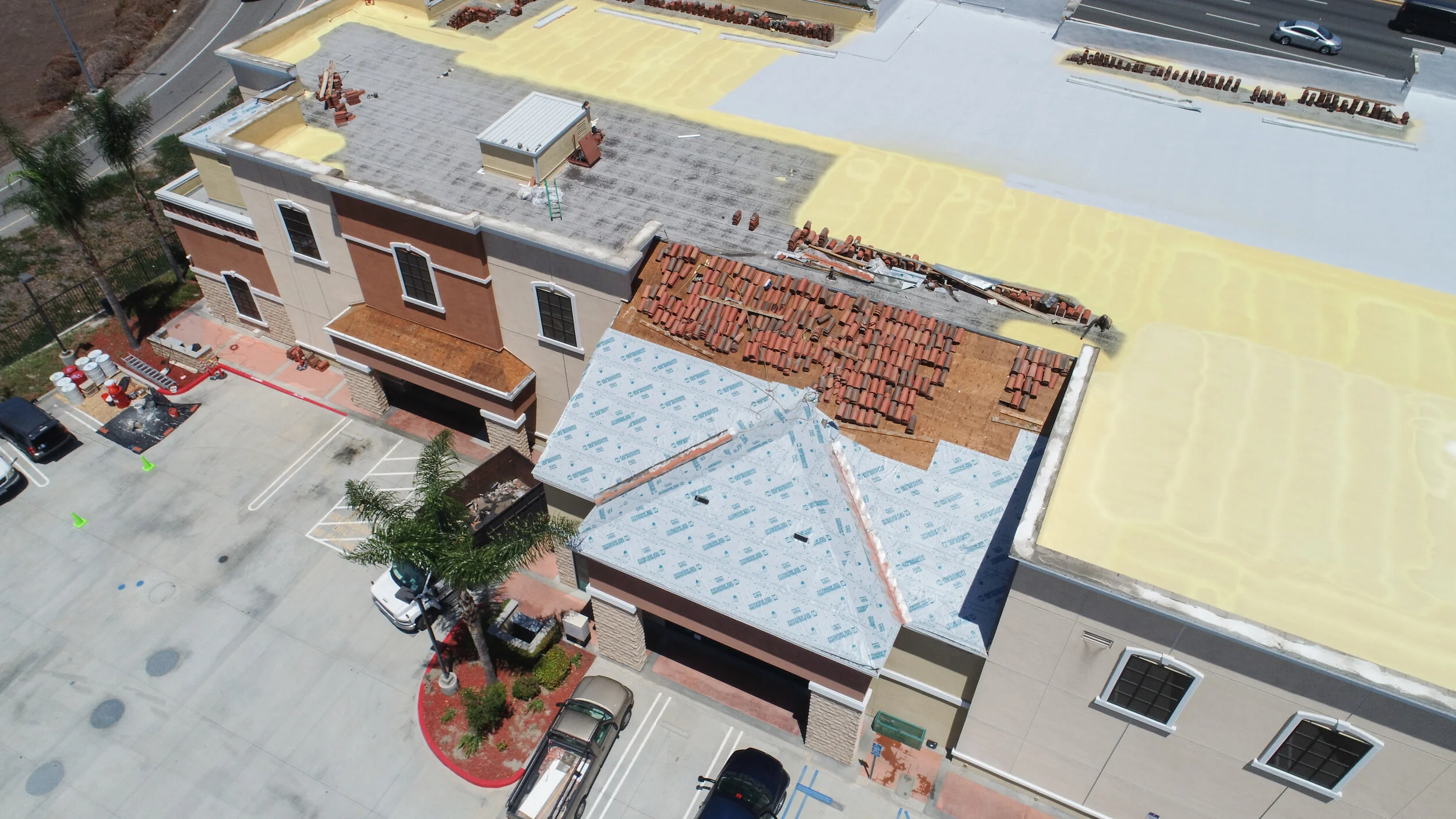
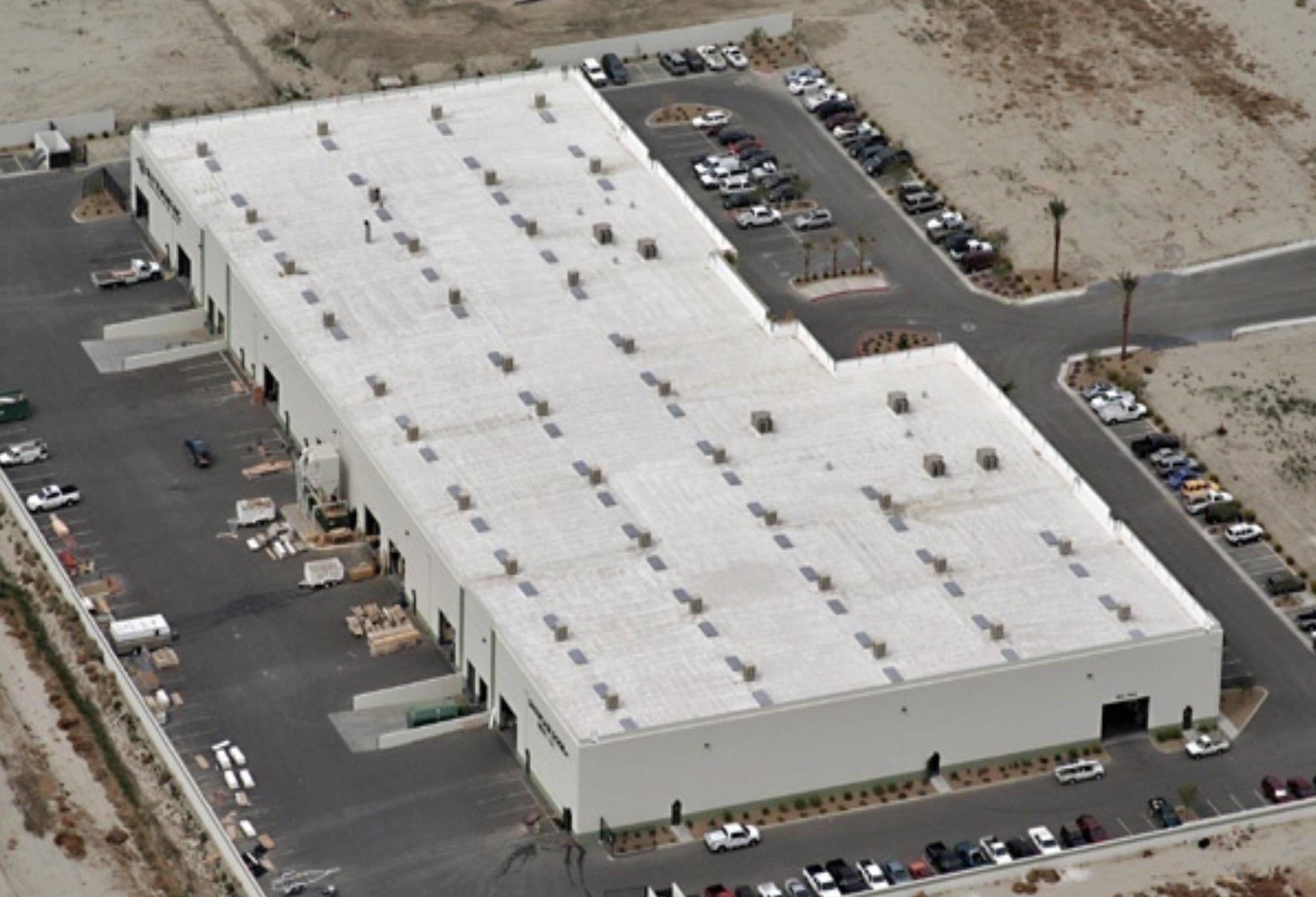
Recent Orange County commercial work includes the LifeStorage facility in Costa Mesa and the Yamaha facility in Buena Park. Both sit in Title 24 Climate Zone 8, the same zone as Irvine.
PROCESS
Inspection before proposal
Every job starts with a free Roof Health Check: a documented inspection with photos, written up in 24 to 72 hours, so the bid matches the roof instead of a guess.
What a commercial re-roof permit costs in Irvine right now
As of August 15, 2026, a commercial re-roof in Irvine carries $773.16 in fixed city permit fees: $259.70 plan check, $376.74 inspection, $73.08 permit issuance, and a 10% automation fee that adds $63.64. Those are printed line items in Schedule II of the city fee schedule under Resolution 24-41, not an estimate. The schedule resets every August 15.
The automation fee is the line that gets left off bids. Item 21 of the schedule reads "10% of all Building, Grading, Electrical, Plumbing, Mechanical plan check application and inspection permit fees," with a single exception for residential remodel projects. A commercial re-roof does not qualify for that exception.
One more line scales with the job. Item 22, the state-mandated S.M.I.P. seismic fee, runs $30.80 for each $100,000 of valuation on commercial work. On a $200,000 re-roof that is another $61.60, putting the city and state total near $835.
City of Irvine commercial re-roof permit fees, Schedule II, Resolution 24-41
| Line item | Effective 8/15/2025 | Effective 8/15/2026 |
|---|---|---|
| Re-roofing plan check, each commercial job | $251.41 | $259.70 |
| Re-roofing inspection, each commercial job | $364.71 | $376.74 |
| Permit issuance, all commercial | $70.75 | $73.08 |
| Automation fee, 10% of plan check plus inspection | $61.61 | $63.64 |
| Fixed city permit total | $748.48 | $773.16 |
| S.M.I.P. seismic, per $100,000 of valuation | - | $30.80 |
Fees are the small number on a commercial re-roof. What decides the big number is which of 4 questions on Irvine's Re-Roof Questionnaire you answer yes to.
The 4 questions on Irvine's Re-Roof Questionnaire
Irvine's commercial re-roof application package is 4 documents, filed through the IrvineReady! online portal: the Building Permit Application (Form 65-59), the Re-Roof Questionnaire (Form 66-27), the Recycling and Diversion of Construction and Demolition Waste Assessment 2.0 (Form 66-122A), and the Electronic/Digital Signature Disclosure. One step catches first-time filers. In the Project Type drop-down you select "For Permitting--Other," which is not an obvious choice for a roof.
The questionnaire itself is Form 66-27, currently at revision 02/26. It runs one page. 4 questions on it set your scope, your engineering cost, and whether you land inside Title 24.
1. Does the new system add more than 4 pounds per square foot?
Straight from the form: "If the net increase in weight to the roof structure exceeds 4 psf, the proposed work must be justified via plans and calculations prepared and stamped by a California registered engineer or architect showing roof plans, framing plans with vertical support elements."
Net increase. You subtract the weight you tear off. Overlay a heavier assembly on a 1970s deck because it looked cheaper in the meeting and you have just bought a structural engineer, a roof plan, and a framing plan on top of the roof itself.
This is one reason owners of older Irvine industrial buildings ask us about spray foam. A finished SPF and coating system is light, and on many roofs it keeps the net change under the line. We still run the number on your assembly. We do not assume it.
2. Is the building over 10,000 square feet of floor area?
If yes, and the roof is low-slope or flat, Irvine wants your address painted on the roof. Municipal Code section 5-9-517 L.6: numerals arranged parallel to the addressed street, white on a black background, minimum 4 feet high and 18 inches wide. Buildings with a range of addresses put the lowest and highest numbers at their respective ends of the roof. On light-colored roofing, black lettering goes on instead of white.
That last clause is the one people miss on a cool roof. You are installing a bright reflective surface to hit Title 24, so your numerals flip to black. Small line item, easy inspection failure if nobody owned it in the bid. We went looking for this requirement on the Irvine roofing pages ranking in September 2026 and did not find it on any of them.
3. Is the work over 2,000 square feet, or more than half the roof?
This is the cool-roof trigger. The form states it as "replacement, recovering or recoating area greater than 2,000 sf or more than 50% of the total roof area." The 2025 Energy Code writes the same rule at section 141.0(b)2Bi as "more than 50 percent of the roof area or more than 2,000 square feet of roof, whichever is less."
Whichever is less. On a 30,000 square foot warehouse, 2,000 square feet is under 7% of the roof, so the square-foot number binds long before the percentage does. Owners who assume they have room under a "half the roof" rule are usually already in Title 24.
4. Are you removing roofing down to the deck or the recover boards?
Fourth question, smallest print, biggest bill. This is the one that pulls a job out of cool-roof-only and into the insulation table. It gets its own section below.
The Title 24 numbers for an Irvine commercial roof
Irvine sits in Title 24 Climate Zone 8. For a non-residential low-slope roof, under 2:12 pitch, the minimum is an aged solar reflectance of 0.63 and a thermal emittance of 0.75, or a Solar Reflectance Index of 75. Aged means measured after 3 years of weathering, not the number off the datasheet. The product has to be listed in the Cool Roof Rating Council directory, and the CF1R and CF2R paperwork travels with the permit.
Title 24 cool-roof minimums that apply in Irvine, Climate Zone 8
| Building and slope | Aged solar reflectance | Thermal emittance | or SRI |
|---|---|---|---|
| Non-residential, low-slope (under 2:12) | 0.63 | 0.75 | 75 |
| Non-residential, steep-slope (2:12 and up) | 0.25 | 0.80 | 23 |
| Hotel/motel, low-slope, Climate Zone 8 | Exempt | ||
| Hotel/motel, steep-slope | 0.20 | 0.75 | 16 |
At least one Irvine roofing page publishes a 0.55 minimum. That figure belongs to hotel and motel guest-room buildings in hotter climate zones. It is not the Irvine commercial number. Carry 0.55 into a bid meeting for an Irvine office building and you are short on a product spec that gets checked against a CRRC listing at plan review.
The exemption box that is not yours
Form 66-27 carries a line reading "Low-sloped roofs, less than 2:12, exempt from cool roof requirements in climate zone 8." It sits on the Hotel/Motel side of the form, not the Non-Residential side. The hotel and motel low-slope cool-roof requirement is written for hotter climate zones and does not reach Zone 8, so that category has nothing to meet here. The non-residential low-slope requirement, by contrast, applies in every climate zone in the state. If your building is an office, a warehouse, an R&D shell, or retail, that box is not yours to check.
It is the most misread line on the form. Confirm it with Building and Safety at 949-724-6300 before plan check rather than after.
Check the revision stamp on the questionnaire
Irvine revised Form 66-27 in February 2026. The current revision, REV 02/26, cites the 2025 California Building Energy Code section 141(b)2B. The revision before it, REV 01/23, cites the 2022 code and is still in circulation. Irvine's own building codes page says plan review applications submitted on or after January 1, 2026 comply with the 2025 California Building Standards Code with Irvine amendments.
The reflectance values did not change between the 2 cycles. The compliance software and the CF1R and CF2R documentation did. Look at the footer of the questionnaire your contractor hands you. If it reads REV 01/23, it is the old form, and the compliance paperwork behind it is probably the old paperwork too.
Client Testimonials
“Vision Roof Services has been an invaluable partner in managing and maintaining the roofs of all my commercial buildings. Over the years, they have re-roofed multiple properties with their superior SPF roofing system, and the results have been outstanding. Not only have my buildings remained completely leak-free, but the energy demand has significantly decreased, which has saved me a great deal on operating costs. Their professionalism, attention to detail, and commitment to quality set them apart. I trust Vision Roof Services entirely to protect and enhance the value of my properties.”
“Vision Roof Services is our go-to partner for SPF roofing on our design-build custom homes in the Madison Club, La Quinta. Vision’s quality of work is exceptional, and their installations are always fast, efficient, and seamlessly integrated into our projects. Vision’s attention to detail and professionalism makes them an invaluable part of our team. I highly recommend them to anyone looking for top-tier roofing solutions.”

The insulation fork nobody prices in the bid
Back to question 4. Take the roof down to the deck or to the recover boards and Table 141.0-C applies. Irvine's line, Climate Zones 6 through 8, reads R-17 continuous insulation, or a U-factor of 0.047 with at least R-10 above the deck.
2 exceptions carry real money:
A recover that adds at least R-10 of new continuous insulation above the existing roof is relieved from the full table.
A recoat, meaning a liquid-applied coating over the existing surface, is not required to be insulated at all.
How scope changes what Title 24 asks for, and what the market charges
| Scope | What the code asks for | Contractor-reported SoCal rate, 2026 | On a 20,000 sq ft roof |
|---|---|---|---|
| Recoat | Cool-roof values only. No insulation. | $1.50 to $7.00 per sq ft | $30,000 to $140,000 |
| Recover plus R-10 c.i. above deck | Exception from Table 141.0-C | Membrane $8 to $14, insulation $2 to $6 | $200,000 to $400,000 |
| Full replacement to deck | R-17 c.i., or U-0.047 with R-10 above deck | $8 to $20 per sq ft installed | $160,000 to $400,000 |
Rates above are ranges published by Southern California commercial roofing contractors in 2026, gathered here for comparison. They are not a Vision Roof Services quote. Your number comes off the Roof Health Check.
That table is the spread. One bidder is coating. One is recovering and dropping R-10. One is tearing off a deck that never had insulation above it and building a legal assembly from scratch. Title 24 does not let you put back what was there.
Irvine has a lot of those decks. The city's General Plan describes the Irvine Business Complex as dating from the 1970s and as the largest business complex in the Orange County region. Buildings from that era were roofed before California required above-deck insulation on a commercial alteration. When one of them goes to tear-off, the insulation is a new line on the bid, not a swap for something that was already up there. Our post on roof coating versus full replacement walks the same decision without the Irvine code layer.
Tear-off is a city process, not a dumpster
The same packet includes a Recycling and Diversion of Construction and Demolition Waste Assessment. On a non-residential job the diversion targets are 100% of non-hazardous excavated soil and land-clearing debris, 75% of non-hazardous concrete and asphalt, and 65% of all other non-hazardous construction and demolition debris.
The form also states that the waste management plan is approved and a bond is posted at permit issuance, by check or surety bond. Your tear-off has a plan, a target, and money held against it before the first crew arrives.
Ask every bidder who writes the waste management plan and who posts the bond. If the answer is a shrug, they have not permitted a commercial re-roof in Irvine.
Clients


The Irvine Commercial Re-Roof Scope Test
Run these 5 before you collect bids. They come off Irvine's own paperwork, and they sort a recoat from a replacement before anybody gives you a price.
Slope and existing system. Low-slope, under 2:12? Then you read the non-residential low-slope column, and what is up there now decides whether you can build over it.
Measure the 2,000. Get the exact area you are touching and the total roof area. Over 2,000 square feet, or over half the roof, whichever is less, and Title 24 is on.
Weigh it. New assembly weight minus torn-off weight. Over 4 psf net and you are buying stamped plans and framing calculations.
Deck or no deck. Ask each bidder to write down: recoat, recover, or replacement, and whether the work goes to the deck. That one line decides whether Table 141.0-C applies and whether R-17 or R-10 lands in your budget.
Name the product. Not "a white membrane." A CRRC-listed product ID, with the aged solar reflectance and thermal emittance printed on the bid, plus the Class A listing.
3 more to add to the same sheet: who installs the rooftop numerals if the floor plate is over 10,000 square feet, who files the waste management plan and posts the diversion bond, and who owns the HVAC curbs and flashings if mechanical work is happening at the same time. Hand the sheet to every bidder. Bids that arrive 4 times apart usually stop being 4 times apart.
Class A, and the one-year clock
Irvine's local amendment, word for word: "All new roofs shall be covered with Class A material in accordance to UL 790 or ASTM E 108. For re-roofing, where less than 50 percent of a roof covering is replaced within any one year period, Class A roofing shall be used, unless the existing roofing to remain has a Class B or lesser rating, in which case the replacement roofing may be reduced to Class B."
Read the clock in that sentence. It is a one-year period, not a project. Patch 30% of a roof in March and another 30% in September and you have crossed 50% inside the window. The whole thing is a Class A job.
When foam is the right call, and when it is not
Spray polyurethane foam goes on as a liquid and cures into one continuous surface with no seams, which is where most flat roofs start leaking. It is light, it adds R-value above the deck, and on a sound substrate it often goes over the existing roof, which keeps the tear-off and the diversion bond off your bill. We cover the system itself in more depth on our commercial roofing services page.
Good fit
Low-slope commercial roofs with a sound, dry substrate. Buildings where tenant operations make a full tear-off expensive. Roofs crowded with penetrations and odd geometry, where a poured surface seals better than sheet seams.
Not the right call
Roofs with widespread wet insulation or structural problems a coating would only cover up. Surfaces that cannot be cleaned and prepped properly. Buildings where the net weight math lands over 4 psf and the engineering cost eats the savings. In those cases we recommend the repair or the replacement that actually fixes the roof, even when it is the larger job.
We are also not the right call for gutter cleaning, or for a small isolated repair outside our core service areas. Those jobs cost you more through us than they should, and we will tell you so on the first call.
About that 40 percent energy-savings number
You will see 10 to 30 percent cooling savings quoted on a lot of roofing pages, including older copy of our own. We went looking for the Orange County study behind it and could not find one.
The closest real work is a 2004 Lawrence Berkeley National Laboratory report, "Monitoring the energy-use effects of cool roofs on California commercial buildings," LBNL-54770. It instrumented an office building in Irvine. In the report's own words, "the retrofit never occurred," so no Irvine numbers were ever produced. 3 buildings did complete pre- and post-retrofit monitoring. A Sacramento retail store measured about 52 percent cooling savings. A San Marcos elementary school measured 17 to 18 percent. A Reedley cold-storage facility measured 3 to 4 percent.
3 to 52 percent. That is the honest spread, across 3 buildings in 3 climate zones, and it is not a 10 to 30 percent band.
Here is what we will tell you instead. A cool roof lowers rooftop surface temperature and cuts summer cooling load. How much depends on your insulation, your HVAC, your operating hours, and what is up there today. A 1970s IBC shell with nothing above the deck has far more to gain than a 2015 Spectrum building that already meets current code. We will not put a percentage on your building without metering it, and we do not promise a savings figure.
How to check us, and everyone else bidding
Look us up before you call. Vision Roof Services was founded in 2014. The C-39 license it operates under, CSLB #651509, was issued July 31, 1992 and is current and active through July 31, 2028, with a $25,000 contractor bond on file and no disciplinary actions. That record takes 30 seconds to pull at cslb.ca.gov.
3 things worth checking on any bidder:
Classification, not just the word "licensed." A Class B general building license can hold the prime contract on your roof, but has to subcontract the roofing to a licensed C-39 rather than self-perform it, under Business and Professions Code section 7057. Ask which license is doing the actual work. Our post on what licensed, bonded and insured actually means goes through the rest of the checks.
Bond amount. The statutory California contractor bond has been $25,000 since January 1, 2023. Aggregator and lead-gen sites still print the old $15,000 figure and stale classifications. Use the CSLB record, not a badge on a homepage.
Workers' compensation status, live. It sits on the same CSLB page as the license.
The penalty side changed this summer. SB 779 took effect July 1, 2026 and raised the minimum civil penalty for unlicensed contracting from $200 to $1,500, with the $15,000 ceiling unchanged. The license threshold moved to $1,000 in combined labor and materials on January 1, 2025 under Business and Professions Code section 7048. Any job that needs a building permit, which a commercial re-roof does, needs a licensed contractor at any price.
Specializing in Spray Polyurethane Foam (SPF)
This General Coatings video displays the commercial spray foam roofing process.
For property owners and managers, polyurethane spray foam roofing is an ideal solution for preserving the value of commercial buildings. This advanced roofing system provides unparalleled protection against the region's intense sun, heat, and occasional heavy rains.
By offering superior insulation and creating a durable, seamless seal, our spray foam roofs help maintain stable indoor temperatures and significantly reduce energy costs. This not only improves the building's energy efficiency but also enhances its overall structural integrity, ensuring long-term value and reliability.
Our spray foam roofing is adaptable to various roof shapes and sizes, making it the perfect choice for commercial properties seeking sustainable and cost-effective roofing solutions. With VRS, you can trust that your investment is protected by a high-performance roofing system designed to last.
The Vision Roof Services process
Initial contact. Tell us the building, the roof, and the problem.
Roof Health Check. Documented inspection with photos. Written report in 24 to 72 hours.
Proposal. System options and a firm price matched to what the inspection found, with the recoat, recover, or replacement call written down.
Contract and scheduling. Night and weekend windows available to limit disruption to tenants.
Installation. Most projects run several days to several weeks depending on size.
Final inspection and warranty. City sign-off, then annual maintenance with a recoat schedule as needed.
Track record
60 roofers on the crew, 12 certified SPF applicators
2014 founded; CSLB license #651509 issued in 1992
A+ BBB accredited, 2024 Best of BuildZoom
Credentials
CSLB #651509, C-39 Roofing, licensed and insured
$25,000 contractor bond on file
General Coatings certified, 2025 Platinum Award
BBB A+ accredited
Spray Polyurethane Foam Alliance member
Frequently asked questions
Do I need a permit to re-roof a commercial building in Irvine, and what does it cost?
Yes. Commercial re-roofs go through plan review and inspection, filed on the IrvineReady! portal as a 4-document package. Fixed city fees as of August 15, 2026 come to $773.16: $259.70 plan check, $376.74 inspection, $73.08 issuance, and a 10% automation fee of $63.64. On top of that the state S.M.I.P. seismic fee runs $30.80 per $100,000 of valuation. None of that includes engineering, the diversion bond, or the roof itself.
What does Irvine's Re-Roof Questionnaire actually ask?
Form 66-27 asks 4 things that change your scope: whether the new system adds more than 4 psf net to the structure, whether total building floor area is over 10,000 square feet, whether the replacement or recover or recoat area is over 2,000 square feet or more than half the roof, and whether the work goes down to the deck or the recover boards. Each yes opens a different requirement, and they stack.
Does my Irvine re-roof have to meet Title 24 cool-roof rules?
If you alter more than 2,000 square feet or more than 50% of a non-residential low-slope roof, whichever is less, then yes. In Climate Zone 8 that means a CRRC-listed product with an aged solar reflectance of at least 0.63 and thermal emittance of at least 0.75, or SRI of at least 75, plus CF1R and CF2R paperwork at plan review. Applications filed on or after January 1, 2026 run under the 2025 Energy Code.
Will spray foam add too much weight to my roof?
Usually no, and that is one of the reasons owners pick it on older buildings. A finished SPF and coating system is light, and Irvine measures the net increase, so the weight you tear off comes back out of the total. Cross the 4 psf line and the city wants roof plans, framing plans, and vertical support calculations stamped by a California registered engineer or architect. We run that arithmetic during the Roof Health Check rather than after you have signed.
Does my building need address numbers painted on the roof?
If the total building floor area is over 10,000 square feet and the roof is low-slope, yes. Irvine Municipal Code section 5-9-517 L.6 calls for numerals parallel to the addressed street, at least 4 feet high and 18 inches wide, white on a black background, or black lettering where the roofing is light colored. Put it in the bid. It is cheap to install with the roof and irritating to add after an inspection flags it.
Can spray foam go over my existing roof?
Often, yes. SPF is lightweight and applies over many sound existing roofs, which avoids tear-off cost, disposal, and the diversion bond. The deciding factor is the substrate. Widespread wet insulation or saturation has to come off first. A moisture scan during the Roof Health Check tells us which path your roof is on.
How long does a commercial spray foam roof last?
Maintained properly, an SPF roof is a long-term system. The foam itself lasts decades, and the protective top coat gets renewed on a recoat schedule rather than torn off. What decides real service life is maintenance: semi-annual inspections, drain cleaning, and timely recoats. Neglect is the fastest way to shorten the life of a good foam roof. More on why commercial roofs are built flat and what that does to drainage.
Will adding solar void my roof warranty?
Not if it is coordinated correctly. Mounts and penetrations have to go in to the roofing manufacturer's specification, and the roof under the array should be sound before panels arrive. The cleanest result comes from sequencing the roofing and the solar mounting so one party owns the watertight detail.
Nearby Orange County service areas
Our Mission Viejo office at 23372 Madero Ste E is the closest one to Irvine, and the same crews run South Orange County. See also commercial roofers in Mission Viejo and roofers in Orange, CA. For residential and general roofing inside the city, start at roofers in Irvine, CA.
Free Roof Health Check
A licensed Vision Roof Services roofer inspects your commercial roof, documents what we find with photos, and sends a written report in 24 to 72 hours. No cost, no obligation, no pressure. You get the recoat, recover, or replacement call in writing, with the Title 24 trigger and the 4 psf math shown.
Or call 949-779-5664 to talk through your building.
Our Work
Recent commercial projects, including the LifeStorage facility in Costa Mesa and the Yamaha facility in Buena Park.
Visit the featured projects page for more.