How To Check If A Roofer Is Licensed, Bonded, And Insured
A roofer should be licensed, bonded, and insured in every state we work, and you can confirm all three yourself, for free, in about 10 minutes before you sign anything.
Here's the short version. Ask any roofer for their state license number, their bond, and a certificate of insurance. Then look up the license number in your state's contractor database, and call the agent named on the insurance certificate to confirm the policy is active. A copy taped to a truck door proves nothing. The state database and the insurer do. Vision Roof Services has carried these licenses, bonds, and insurance policies across California, Arizona, Nevada, and Texas since Dave Bienek started roofing in 1992, and the rules are different in every one of those states. This guide covers what licensed, bonded, and insured each mean, how to verify them where you live, and the extra proof a commercial building owner should ask for.
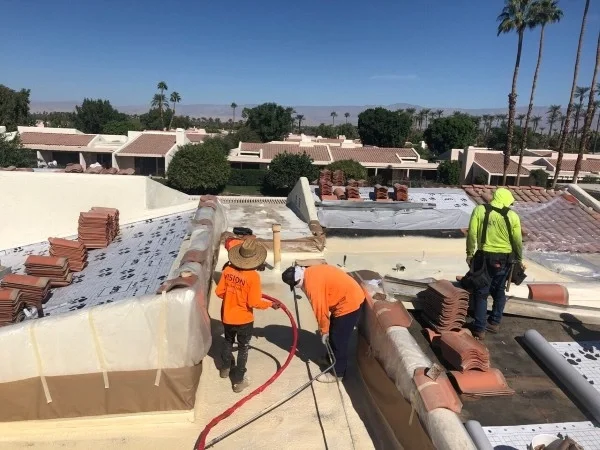
What does "licensed, bonded, and insured" mean for a roofer?
A licensed, bonded, and insured roofer holds three separate protections. A state license shows they passed the exams to do the work legally. A surety bond pays out if they take your deposit and don't finish, or won't fix defective work. Insurance covers injuries and property damage that happen on your job. Each one guards against a different way a roofing project can go wrong, which is why one on its own isn't enough.
Licensed
A license means the roofer registered with the state and passed the trade and business exams for the classification they hold. It's proof they're legally allowed to do the work, not a quality rating. The catch is that "licensed" means something different in every state, and a few states don't license roofers at all. More on that below.
Bonded
A surety bond is a financial guarantee held by a third party. If the roofer disappears mid-project or refuses to correct bad work, you file a claim, the bonding company pays up to the bond amount, and then it goes after the contractor to recover the money. Bonds are smaller than most people expect. In California the contractor license bond is $25,000. That protects you, but it isn't a bottomless account, which is one more reason insurance matters.
Insured
Two policies carry the weight: general liability, which covers damage to your property, and workers' compensation, which covers a roofer who gets hurt on your roof. This is where a property owner gets exposed. If an uninsured crew member falls and there's no workers' comp, the injured worker can come after the person who owns the building. Roofing sits among the most injury-prone trades, so the coverage isn't a formality.
How do you check if a roofer is actually licensed?
You check a roofer's license by searching their license number on your state contractor board's website, which is free and takes about two minutes. Don't accept a photo of a certificate as the answer. Here's the process that works in every licensed state.
First, get the actual license number, not just a company name. Second, search it on the state board site: the California State License Board (CSLB), the Arizona Registrar of Contractors, or the Nevada State Contractors Board, depending on where the work is. You can look up any California contractor on the CSLB site in seconds. Third, confirm three things on the record: the license is active, the classification covers roofing (California uses a C-39 roofing license), and the business name matches whoever is quoting you. Fourth, check the same record for bond and workers-comp status, which California and Nevada display right on the license. Fifth, if the job is in Texas, there's no state license to look up, so verify insurance and local registration instead.
If a roofer gives you a number that doesn't match the database, or the license is expired or suspended, you're done. That's not a paperwork hiccup. It's your answer.
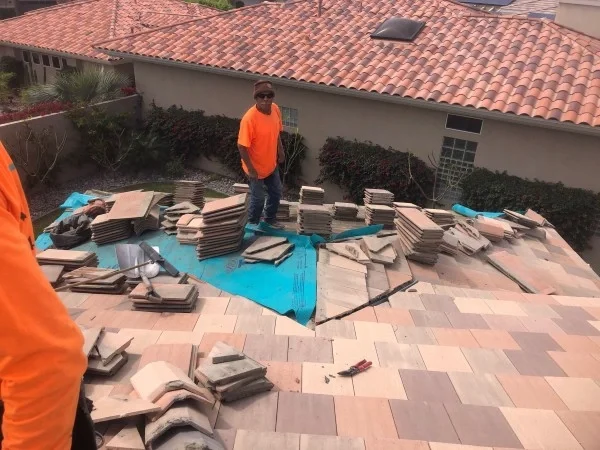
Does a roofer need a license in your state? CA, AZ, NV, and TX in 2026
It depends entirely on the state. Roofing needs a state license in California, Arizona, and Nevada, and the dollar amount that triggers it is different in each. Texas has no state roofing license at all. Here's how the four states we work in compare.
| State | License required over | Roofing license class | Bond required | Verify at |
|---|---|---|---|---|
| California | $500 (labor plus materials) | C-39 Roofing | Yes, $25,000 license bond | CSLB |
| Arizona | $1,000 (labor plus materials) | CR-42 residential, C-42 commercial, KA-42 both | Yes, about $1,000 to $15,000 by license and volume | AZ Registrar of Contractors |
| Nevada | Nearly all contracting work | A roofing classification | Yes, $1,000 to $500,000 set by the board | Nevada State Contractors Board |
| Texas | No state license | None statewide | Not required statewide | City rules and RCAT |
Two things in that table surprise people. The California threshold is $500, so almost any real roofing job needs a licensed contractor, and the state's board confirms that number. And Texas licenses roofers nowhere at the state level. The Texas Department of Licensing and Regulation doesn't regulate roofing, and the Roofing Contractors Association of Texas certification is voluntary. Cities fill the gap on their own terms: Houston requires registration and proof of insurance, San Antonio and Dallas require permits. So in Texas, "are you licensed?" is the wrong question. Ask instead for proof of insurance, any local registration, and whether the roofer holds the voluntary RCAT certification.
The insurance a roofer should carry, and California's roofing-only rule
Every roofer should carry general liability and workers' compensation, and in California a roofing contractor has to carry workers' comp even with zero employees. General liability covers damage to your building if a crew drops a bundle of shingles through a skylight. Workers' comp covers an injured roofer so the medical bill doesn't find its way to you.
California singles out the trade. The state licensing board requires every active C-39 roofing contractor to carry workers' compensation insurance, or a certificate of self-insurance, whether or not they have employees. Most trades get an exemption when they have no employees on the books. Roofers don't, because the injury rate is too high. If a roofer working your California home tells you they skip workers' comp because it's just them, they're either out of compliance or misinformed, and you don't want either on your roof.
Insurance is also why a bigger commercial roofer often quotes higher than a two-person crew. General liability and workers-comp premiums scale with the size and risk of the jobs a company takes, and that overhead lands in the price. It's one of the real factors behind what a new roof costs, and it's the part you're glad is there the day something goes wrong.
Why a certificate of insurance beats a photocopy
A certificate of insurance sent straight from the roofer's insurance agent is worth more than any document the roofer hands you, because you're confirming coverage with the company that would actually pay the claim. A certificate of insurance, often called a COI, is a one-page form from the insurer listing the active policies, the coverage limits, and the dates.
The move is simple. Ask the roofer to have their agent email the certificate with your name, or your company or HOA, listed as the certificate holder. A borrowed or expired certificate falls apart the second you call the agent to confirm it. This is why "ask for a physical copy" is weak advice in 2026. A copy tells you a policy existed on the day it printed. A certificate direct from the agent tells you it's active today.
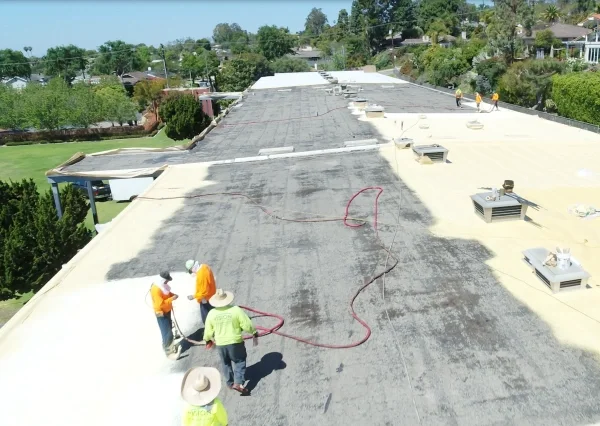
What commercial building owners should ask for that homeowners skip
Commercial jobs carry more risk and more parties, so building owners, property managers, and HOAs should ask for three things a homeowner usually doesn't. Additional insured status, a waiver of subrogation, and liability limits that fit the building.
An additional insured endorsement adds you to the roofer's general liability policy, so their insurer defends you too if a third party sues over the work. A waiver of subrogation stops the roofer's insurer from turning around and billing you to recover what it paid out. And the limits matter: a $1 million general liability limit may cover a house, but a warehouse, a retail center, or an HOA with several buildings usually needs more, so ask what the roofer actually carries and have the certificate reissued for your project dates. This is standard paperwork on commercial roofing projects, and a roofer who handles commercial work will not blink when you ask for it. One who does is telling you something.
Red flags that should end the conversation
If a roofer can't or won't show a verifiable license where the state requires one, a current certificate of insurance from their agent, and a bond, walk away. The specific warning signs are worth knowing before you're standing in your driveway with a salesperson.
Watch for a roofer who won't give a license number, or gives one that doesn't match the state database. Watch for someone who offers only a photo of a certificate and resists a call to the agent. Watch for a large cash deposit demanded before any paperwork changes hands, and for the crews that knock on doors right after a storm and pressure you to sign that day. Those tactics show up again and again in the roofing scams that hit Southern California homeowners. An expired license, a suspended one, or no physical business address belong on the same list. Any single one of these is reason enough to keep looking.
How we prove it at Vision Roof Services
We carry the licenses, bond, and insurance in every state we work, and we'll hand you the numbers before you have to ask. Vision Roof Services is licensed in California (license 651509), Arizona, Nevada, and Texas, and we keep general liability and workers-comp coverage on a 60-person crew that includes a dozen installers certified in spray polyurethane foam through General Coatings. Ask, and our agent sends a certificate of insurance made out to you.
Behind the paperwork is the work. Founder Dave Bienek has been roofing since 1992, the company has completed about 7,500 roofs, and we hold a BBB A+ accreditation, a 2024 BuildZoom Top Contractor nod, and a 4.8-star Google rating across 42 reviews. We install and maintain commercial and residential systems, from spray foam roofs to single-ply and coatings, across Southern California and into Arizona, Nevada, and Texas.
The point of all this isn't to collect paper. It's to make sure that if something goes wrong, you're covered instead of exposed. Before you hire anyone, make them prove they're licensed, bonded, and insured, then verify it yourself in the state database. Or start with a free Roof Health Check and a written report, and call us at 844-348-ROOF.
FAQs
How do I check if a roofer is licensed?
Search the roofer's license number on your state contractor board's website, which is free and takes about two minutes. In California that's the CSLB, in Arizona the Registrar of Contractors, and in Nevada the State Contractors Board. Confirm the license is active, covers roofing, and matches the company name on your quote.
Does a roofer need to be licensed, bonded, and insured?
A roofer should be licensed, bonded, and insured, but state law varies. California, Arizona, and Nevada require a state roofing license, while Texas has no state license at all. Regardless of the license rule, you want a roofer with a bond and current general liability and workers-comp insurance before any work starts.
What insurance should a roofing contractor have?
A roofing contractor should carry general liability insurance for property damage and workers' compensation for on-the-job injuries. California requires every C-39 roofing contractor to hold workers' comp even with no employees. Ask for a certificate of insurance sent directly from the roofer's agent to confirm both policies are active.
What is a certificate of insurance and how do I get one?
A certificate of insurance is a one-page form from the roofer's insurer listing active policies, coverage limits, and dates. Ask the roofer to have their agent email it with your name or company listed as the certificate holder, so you're confirming coverage with the insurer rather than trusting a photocopy.
How much is a roofer's bond?
Bond amounts are set by the state. California requires a $25,000 contractor license bond, Arizona uses a sliding scale of roughly $1,000 to $15,000 by license type and volume, and Nevada sets bonds from $1,000 to $500,000 based on the license limit. The bond pays out if the roofer takes your money and fails to finish.
Can I hire a roofer who isn't licensed in Texas?
Texas has no state roofing license, so a roofer there isn't breaking a state licensing law by not holding one. Verify insurance, any city registration (Houston and others require it), and whether the roofer carries the voluntary RCAT certification. Insurance and local rules do the work a license does in other states.
What are the red flags of an unlicensed or uninsured roofer?
Walk away from a roofer who won't share a license number, gives one that doesn't match the state database, offers only a photo of a certificate, demands a large cash deposit upfront, or pressures you to sign right after a storm. Any one of these is enough reason to keep looking.