How Often Should You Get Your Roof Inspected?
How often should you get your roof inspected? Once a year, at the minimum. If you're in the desert, or you have a flat or foam roof, make it twice a year and add a check after any big storm.
That's stricter than what most roofing sites tell you, and I'll stand behind it. I've spent more than 30 years on roofs from Palm Desert to Orange County. A roof baking under 115-degree summer sun and getting hit by monsoon wind ages on a different clock than a roof in a mild, wet climate. The "every two years" advice written for the rest of the country sets desert homeowners up to miss problems until water is already inside.
Catch it small, and it's a cheap fix. Miss it, and you're paying for the deck and the drywall too.
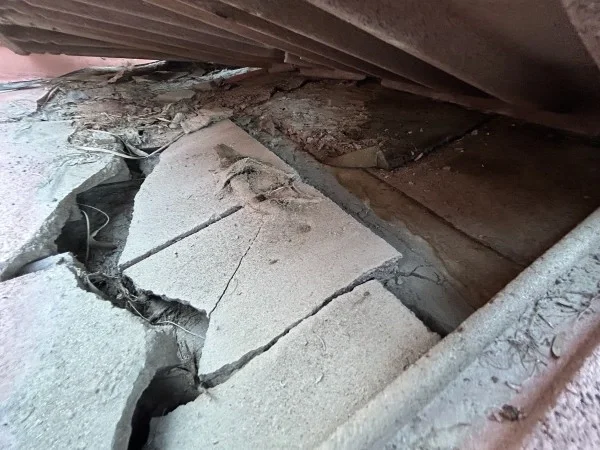
What is a roof inspection?
A roof inspection is a trained check of your roof's condition, inside and out. A roofer examines the shingles or tiles, flashing, seams, drains, and rooftop penetrations, then checks the attic for moisture and poor ventilation. On flat and foam roofs, it also covers coating wear and standing water.
How often should you get your roof inspected?
Once a year is the floor for any roof. The National Roofing Contractors Association points to biannual inspections, meaning twice a year, and I agree with that for anything sitting in desert heat or built flat. Age and weather push the number up, never down.
Here's how I set the schedule by roof type and setting:
| Roof type and setting | How often to inspect |
|---|---|
| Asphalt shingle, mild climate | Once a year |
| Asphalt shingle or tile, desert heat | Twice a year |
| Flat or low-slope (TPO, foam, coated) | Twice a year, and check the drains |
| Any roof 15 years or older | Twice a year |
| Commercial or HOA flat roof | Twice a year, quarterly on large buildings |
| After a major storm or monsoon | Within a few days, any roof |
The pattern is simple. More sun, more age, or a flat design means more frequent looks. A newer shingle roof in a mild spot can go 12 months. A 20-year-old foam roof in La Quinta cannot. If you'd rather build it into a routine, tie each check to a season, the way I lay out in our guide to seasonal roof maintenance.
Why desert heat and monsoons shorten the schedule
Desert roofs wear out faster because they take three hits the rest of the country doesn't. First, UV. Constant sun breaks down asphalt and roof coatings from the top down. Second, heat cycling. A rooftop surface can swing well over 50 degrees between midday and night, so materials expand and contract every single day until seams and fasteners work loose.
Third, the monsoon. The National Weather Service runs the Southwest monsoon from June 15 to September 30, and its downburst winds can top 100 mph. One microburst can lift flashing, drive rain under tiles, and pond water on a flat roof inside an hour. That's why I tell desert clients to book a look after any hard storm, not just on a schedule.
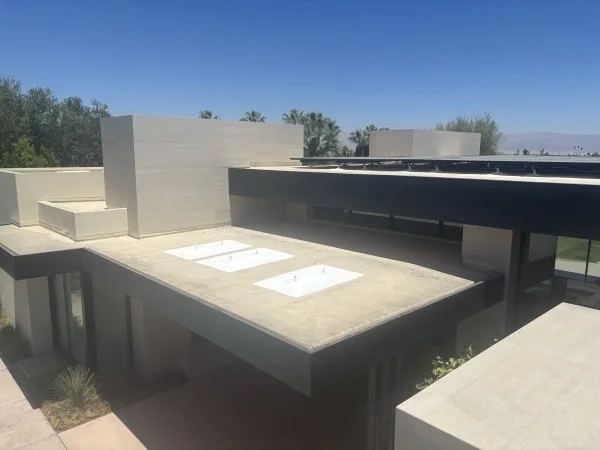
Flat and foam roofs need twice-yearly checks
A flat or foam roof needs inspecting twice a year, and it needs a different eye than a pitched roof. Water doesn't run off fast, so it ponds, and ponding is where flat roofs leak. On a spray foam roof, we also check the coating for thinning, cracks, and blisters, because that coating is the only thing shielding the foam from UV.
Coatings wear out on their own timeline. Under desert sun, foam usually needs a fresh recoat sooner than you'd expect, and the point is to recoat before the foam itself is exposed. Skipping inspections can cost you the roof another way, too. Most manufacturer and workmanship warranties require documented inspections to stay valid, so keeping up with them protects your coverage.
What a roof inspection includes
A real inspection is more than a walk across the roof. On every job, we check the surface, flashing, seams, penetrations, and drainage, then go underneath to look for moisture, daylight, and blocked ventilation. On flat roofs, we probe for soft spots and test where water sits.
At Vision Roof Services, that's our Roof Health Check, and it's free. You get a written report with photos within 24 to 72 hours, so you can see the condition yourself instead of taking our word for it. That report also gives you documentation for insurance or a warranty inspection later. It's the same process behind our 4.8-star rating across 42 Google reviews at our Palm Desert office.
How much does a roof inspection cost in 2026?
A professional roof inspection averages about $252 in 2026, according to Angi, with most homeowners paying between $75 and $1,150 depending on the roof and the tools used. Here's the range by type:
| Inspection type | Typical 2026 cost |
|---|---|
| Physical or visual | $75 to $200 |
| Drone | $150 to $400 |
| Infrared moisture scan | $400 to $600 |
| National average | $252 |
| Vision Roof Services Roof Health Check | Free |
We don't charge for the first look. A basic visual check catches most problems; infrared and moisture scans cost more because they find water you can't see. If a roofer pressures you to pay for a scan before doing a simple look, get a second opinion.
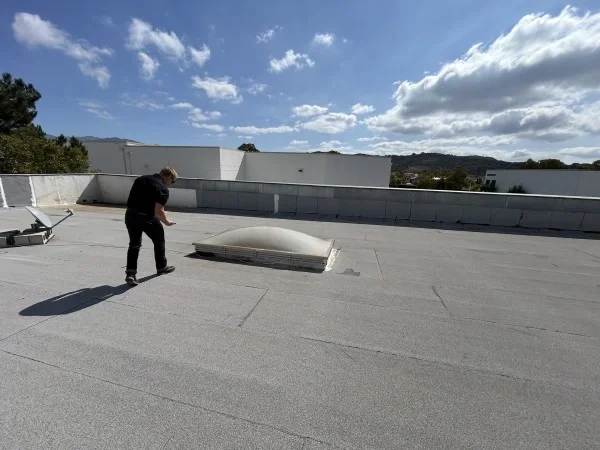
When to book an inspection right away
Some situations shouldn't wait for the calendar. Book now if a major storm or monsoon just passed, if your roof is 15 years or older, if you see ceiling stains or missing tiles, or if you're about to buy or sell the home. Buyers, get your own inspection before closing. A seller's word and a fresh coat of paint hide a lot.
You can do a ground-level look yourself, binoculars from the yard and a glance in the attic after rain. Don't walk a foam or tile roof, though. You can crack tiles or dent the coating, and desert roofs get hot enough to burn you. For a commercial building, keep it on a set schedule, because a leak over tenants costs far more than a check.
FAQ
How often should you get your roof inspected in Arizona or the California desert?
Twice a year is the right cadence for a desert roof, plus a check after any monsoon storm. Constant UV and triple-digit heat age roofing faster than the "every two years" advice written for milder climates assumes. Older and flat roofs sit at the top of that range.
How often should a flat or foam roof be inspected?
Inspect a flat or foam roof twice a year and after major storms. Flat roofs pond water, and foam depends on a coating that thins under desert sun, so trouble hides until it leaks. Twice-yearly checks catch coating wear before the foam is exposed.
How much does a roof inspection cost?
Expect about $252 on average in 2026, or roughly $75 to $1,150 depending on the method, per Angi. A basic visual check is cheapest; drone and infrared moisture scans cost more. Vision Roof Services does the first Roof Health Check for free.
Does homeowners insurance require a roof inspection?
Many policies ask for proof of roof condition or a recent inspection, especially on older roofs, and some deny claims without it. A written inspection report with photos gives you that proof. Check your policy's roof language before you renew.
Can I inspect my own roof, or do I need a professional?
You can do a ground-level check, look for missing tiles, sagging, and ceiling stains, but you shouldn't walk a hot foam or tile roof. A professional finds hidden moisture and coating damage you can't see from the yard, and has the safety gear and moisture tools most homeowners don't own.
How long does a roof inspection take?
Most take 45 minutes to a couple of hours, depending on roof size, slope, and whether the roofer runs a moisture or drone scan. A written report follows. Our Roof Health Check report lands within 24 to 72 hours.
How often should you get your roof inspected if it's over 20 years old?
Twice a year, at least. Roofs past 15 to 20 years fail more often at seams, flashing, and fasteners, so the twice-yearly schedule catches wear before it becomes a leak. If yours is that old and hasn't been looked at, start now.
Get your roof checked before the next storm
Don't wait for a stain on the ceiling to learn how your roof is doing. If you're in the Coachella Valley, Orange County, or anywhere across Southern California, we'll tell you exactly where your roof stands. Get your roof inspected with a free Roof Health Check, and you'll have a written report with photos in hand within 24 to 72 hours.