Yes. California homeowners insurance covers storm roof leaks when the storm itself made the opening. Wind tears off tiles or flashing, a branch punctures the roof, or flying debris breaks through, and rain follows. It doesn't cover water that found a gap that was already there, like worn-out underlayment, a thin coating, or cracked flashing. The California Department of Insurance's residential claims guide says rain damage through a roof hole is covered only if "the hole was caused by strong winds or any other covered exposure" in your policy.
That test decides whether a storm leak claim gets paid. The storm has to make the opening. Finding an old one doesn't count.
I'm Dave Bienek. I started roofing at 15 in my father's residential HOA roofing business in Southern California, and I went full-time in 1998. After he sold the business, I spent 8 years at a large commercial spray foam roofing company, then founded Vision Roof Services in Palm Desert in July 2014. Since 1992, my crews have worked on close to 7,500 Southern California roofs.
This winter raises the stakes. Governor Newsom proclaimed a statewide state of emergency on Sept 21, 2026 for the developing 2026-2027 El Niño.
A covered storm roof leak is water damage that starts when a storm physically opens your roof. Wind lifts or breaks the roofing, debris punctures it, or a tree falls on it, and rain comes in through that new opening. California homeowners policies generally pay for the roof repair and the interior damage, minus your deductible.
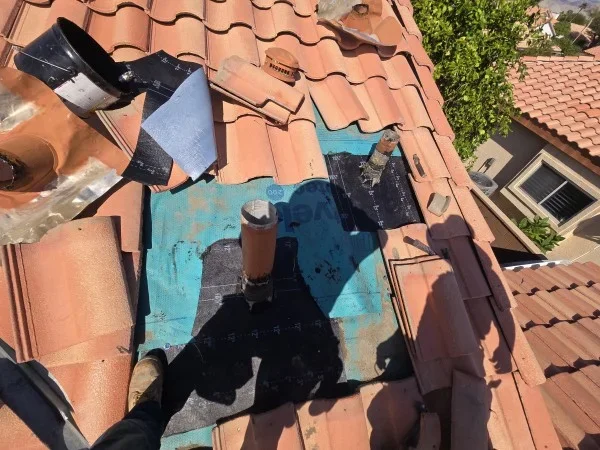
What storm roof leaks does California homeowners insurance cover in 2026?
Insurers pay for leaks where the storm caused the damage that let water in. They deny leaks where the storm only exposed damage that was already there.
| What happened | Usually covered? | Why |
|---|---|---|
| Wind broke or lifted tiles, then rain came in | Yes | The storm made the opening |
| A branch or flying debris punctured a flat roof | Yes | Sudden physical damage |
| Wind peeled back flashing or coating at a roof edge | Usually | Covered when the tear is fresh and matches the storm date |
| Rain got through old underlayment under unbroken tiles | No | Wear and tear; the roof was already open to water |
| Water pooled for days and seeped through a worn coating | No | A drainage and maintenance problem |
| Mudflow or floodwater came into the house | No | Flood needs a separate policy |
| The leak spread for days with no tarp | Partly | Policies can exclude damage you didn't take reasonable steps to stop |
Interior damage follows the same line. If the storm made the opening, the wet drywall, insulation, and flooring are part of the claim in most policies. If the leak came through a worn spot, the interior damage is typically excluded with it.
Why insurers deny storm leak claims
A storm leak claim turns on a single finding: whether the leak came from the storm or from wear and tear. Storms are good at finding old problems.
Wind on its own rarely breaks a well-installed tile roof. When a desert storm does break tile, flying debris is the usual cause: gravel, branches, a patio umbrella. Flat roofs are a different story. Leaks and aging flat roofs are what owners call us about most, and a flat roof that looked fine in June can leak after a single August monsoon storm. The wind drives water into a seam or edge that had been opening for months.
California rules give you some protection. If an insurer denies your claim in whole or in part, it has to do it in writing. The letter must list every reason, with the facts and legal basis behind each one, and tell you the Department of Insurance can review the decision (10 CCR 2695.7(b)). When wind and an aging roof both played a part, California courts look for the predominant cause of the loss (Garvey v. State Farm, 1989). Either way, the evidence decides it.
The record that decides your claim is made before the storm
The record that wins a storm claim is the one made before the storm. Claim guides tell you to start documenting after the leak, and I think that's backwards.
California's insurance commissioner made a similar point ahead of this winter. In a Sept 22, 2026 statement, his office told residents to photograph or record their homes and belongings with a phone before storms hit. Insurers already lean on your roof's history. The underwriting rules that California's largest insurers have filed turn on roof age and material, according to an Insurance Business review published May 26, 2026. The FAIR Plan asks for the year your roof was last updated.
The 3 dates an adjuster lines up
The last date your roof was documented in sound condition
The storm date, with the wind and rain the National Weather Service recorded for your area
The date you found, photographed, and reported the damage
When those 3 dates line up, the timeline makes your case. When date 1 is missing, the adjuster fills the gap with your roof's age.
A free Roof Health Check gives you date 1. We check 4 layers: the roof covering, the underlayment or membrane, every penetration, and the deck from the attic side. You get a written report with photos in 24 to 72 hours, and the report is yours whether or not you hire us. For tile, flat, foam, and any roof 15 years or older, I recommend inspections every 6 months, plus a check within days of any hard storm.
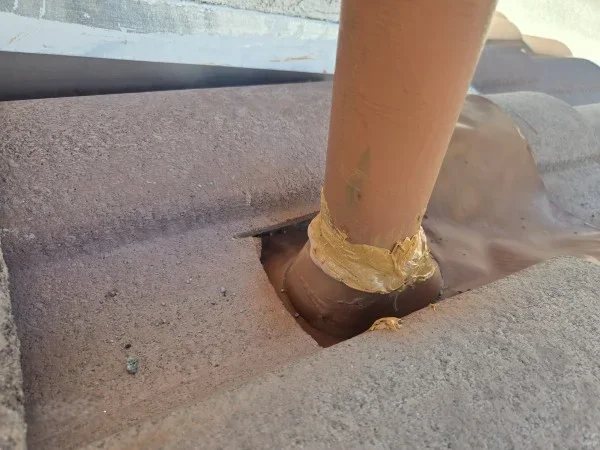
How adjusters tell storm damage from wear on tile, flat, and foam roofs
Adjusters compare the damage to the storm. Fresh damage that follows the wind's direction suggests the storm, while even, slow damage across the whole roof suggests age.
| Roof type | Points to storm damage | Points to wear and tear |
|---|---|---|
| Concrete or clay tile | Fresh breaks with clean edges, tiles shifted the same direction, debris on the roof | Old cracks with dirt in them, slipped tiles from failed fasteners, brittle underlayment under unbroken tile |
| Flat roof with coating or spray foam | Debris punctures, coating or flashing torn back at an edge, fresh splits | Chalky or thin top coat, foam showing through, stain rings where water sits, bird pecking |
| Asphalt shingle | Creased or missing tabs on the side facing the wind | Granule loss, curling, and cracking on every slope |
Tile roofs: the tile breaks, the underlayment leaks
Tile rarely fails first. On our desert tile installs, the tile stays sound about 40 to 50 years, while the underlayment beneath it is usually spent at 20 to 25 years. Desert heat dries it out from below.
That gap matters for insurance. Some insurers that won't cover roofs over 25 years old make an exception for tile, so an older tile roof can stay insured. But a storm leak that comes through underlayment that wore out on its own reads as wear and tear, even with cracked tiles on top. A tile broken by flying debris is a storm claim. The tired underlayment under the rest of the roof rarely is.
Flat and foam roofs: wind gets in at the edges
Summer monsoon bursts and winter storms push rain sideways and pull at edges, flashing, and coatings. Monsoon wind is one of the 9 causes of desert flat roof leaks we see most. A puncture or a fresh tear at a parapet after a storm is storm damage. A chalky top coat, foam showing through, or a ring where water sat for days points to maintenance.
Spray foam rarely leaks through the foam itself. Leaks start where the top coat wears thin, which is why we keep foam roofs on a recoat schedule. 12 of our 60 roofers are certified spray foam applicators, and we're General Coatings certified and members of the Spray Polyurethane Foam Alliance.
Ponding is the problem to fix before storm season. Water still sitting 2 days after rain points to a slope problem. The Insurance Business review found carriers commonly require a minimum slope for flat-roof drainage, so ponding can turn into an underwriting problem as well as a leak.
Storm leaks on older roofs are covered, but paid on age
An old roof can still have a covered storm leak. Age changes how much the insurer pays, and it makes the cause harder to prove.
On an actual cash value policy, the insurer subtracts depreciation for the roof's age, so a 20-year-old roof pays out less than a new one. On a replacement cost policy, the insurer often pays the depreciated amount first and releases the rest after the work is done.
That Insurance Business review covered rules filed by California's 20 largest home insurers, which wrote 90% of the state's homeowners premiums in 2024. It found Farmers may limit asphalt roofs older than 15 years to actual cash value. Mercury and Wawanesa generally won't insure homes with roofs over 25 years old, except tile and slate. A Lemonade underwriting entity doesn't cover homes with flat roofs.
The state's insurer of last resort has its own rule. The California FAIR Plan's replacement cost form makes homes built more than 25 years ago ineligible for replacement cost coverage unless the roof was updated in the last 25 years. A permitted reroof with its paperwork clears that rule. A dated inspection shows the roof was sound before the storm.
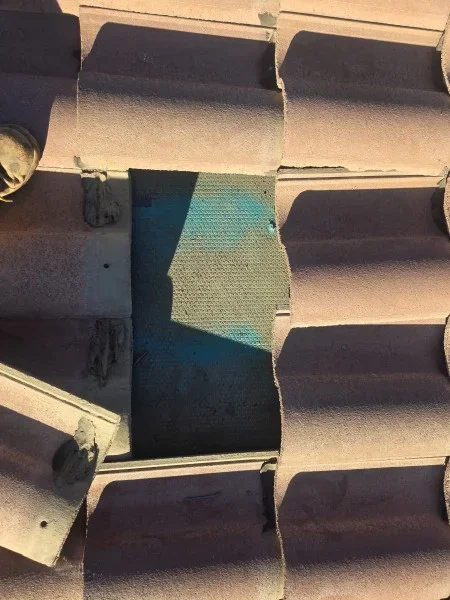
What a covered storm leak pays for
A covered storm leak pays for the roof damage and the water damage inside, minus your deductible. Your belongings and extra living costs can be covered too.
Dwelling coverage handles the roof repair and the inside of the house: ceilings, insulation, walls, and floors.
Your belongings fall under personal property coverage. Standard policies cover rain damage to them when wind or hail first broke an opening in the roof or a wall.
If you can't stay in the home during repairs, loss of use pays the extra living costs.
Mold often has its own cap. Check your declarations page for the limit.
On replacement cost policies, California requires building code upgrade coverage of at least 10% of the dwelling limit (Insurance Code 10103). That matters when a storm-damaged roof has to be rebuilt to today's code.
What to do the day a storm leak starts
Stop the water first, then document the damage and report the loss. Temporary repairs are expected, and permanent ones should wait for the adjuster.
Stop the water. Tarp the area, move belongings, and catch drips. The CDI says insurers reimburse reasonable costs to protect your property when you keep receipts, and those payments count toward your settlement.
Hold off on permanent repairs. The CDI's guide says not to make extensive permanent repairs until the adjuster has been to your home.
Photograph inside and out. Take wide shots and close-ups of ceiling stains and wet insulation. Shoot the roof from the ground or a window, and stay off a wet roof.
Save the storm record. Write down the date and time, and look up the National Weather Service storm reports for your area.
Report the loss. California's standard fire policy asks for notice "without unnecessary delay" (Insurance Code 2071).
Get a licensed roofer's written report. Door-knockers show up fast after storms. Since Jan 1, 2025, California lets unlicensed workers take jobs up to $1,000 only if no permit is needed and they hire no workers (AB 2622). A reroof usually needs a permit, so it needs a licensed contractor. Ask for the license number and look it up on the Contractors State License Board site.
Have your roofer at the adjuster's visit. Scope questions get settled faster on the roof, where the damage is.
California's claim clock: what your insurer owes you and when
California sets hard deadlines for your insurer through its fair claims regulations and the standard fire policy. Here they are in a single table.
| Step | Deadline | Source |
|---|---|---|
| Respond to your written questions about the claim | 15 calendar days | 10 CCR 2695.5(b) |
| Acknowledge your claim, send forms, start investigating | 15 calendar days after notice | 10 CCR 2695.5(e) |
| Accept or deny the claim | 40 calendar days after proof of claim | 10 CCR 2695.7(b) |
| Ask for more time | Written notice within the 40 days, then every 30 days | 10 CCR 2695.7(c)(1) |
| Pay the accepted amount | 30 calendar days after acceptance | 10 CCR 2695.7(h) |
| Send claim-related documents you request | 15 calendar days | Insurance Code 2071 |
| Send a copy of your policy after a covered loss | 30 calendar days | Insurance Code 2084 |
| Your sworn proof of loss | 60 days after the loss, unless the insurer extends it in writing | Insurance Code 2071 |
| Your deadline to sue | 12 months from the loss, or 24 months if it's related to a declared state of emergency | Insurance Code 2071 |
Your policy may tie the proof-of-loss deadline to the insurer's request, so read its duties-after-loss section. Claim-related documents include estimates, scopes of loss, reports, and valuations, though privileged material is excluded. If you hit a wall, the CDI's consumer hotline is 800-927-4357.
Does the 2026 El Niño emergency change my roof claim?
It doesn't change what your policy covers. It raises the odds of a claim, and it may affect a deadline.
The governor's Sept 21, 2026 proclamation covers flooding, coastal flooding, erosion, and mud and debris flows statewide. The next day, Insurance Commissioner Ricardo Lara urged homeowners to review coverage. His office said policies may cover certain water damage from wind-driven rain. Flooding, mudslides, and debris flows are typically excluded, and flood insurance generally takes effect 30 days after purchase.
California's standard policy extends the time to sue from 12 to 24 months when a loss is related to a declared state of emergency (Insurance Code 2071). Whether a roof leak from this winter's storms counts as related to the El Niño proclamation is a legal question. Don't plan around the longer window without advice from an attorney or the CDI.
The prep list is short. Clear gutters, drains, and scuppers. Tie down patio furniture and umbrellas, which turn into roof debris in high wind. Get your date 1 record on file before the first big storm. If you want maintenance done in the same visit, our $299 El Niño Roof Readiness Check pairs a photo-documented condition report with preventive maintenance where the roof needs it, in the Coachella Valley and Orange County.
This article explains how California policies and rules generally work. It isn't legal advice, and your policy's wording controls.
Who pays for a storm leak in an HOA or condo
Your CC&Rs decide first. When they don't say, California's Davis-Stirling Act makes the association responsible for repairing and maintaining the common area, and each owner responsible for their own separate interest (Civil Code 4775).
In a condominium, the roof is usually common area, so the association and its master policy handle the roof. In a planned development of single-family homes, the roof often belongs to the owner. Exclusive use areas split the job: the owner maintains them, and the association repairs and replaces them. Damage inside a unit can land on the owner's policy, the master policy, or both, depending on the CC&Rs.
I learned roofing on my father's HOA jobs. The first question on any HOA leak is who owns the roof, and the CC&Rs answer it. Boards and property managers should keep dated inspection reports where the board and the insurer can both find them.
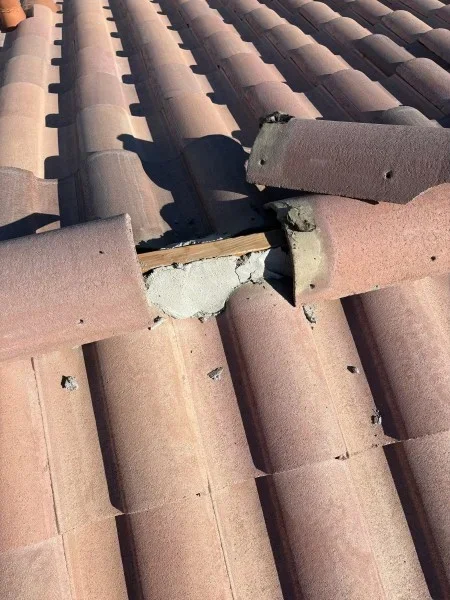
When a small storm leak isn't worth a claim
If the repair costs less than your deductible, or the inspection shows the leak came from wear, pay for the fix and keep the invoice.
A claim denied for wear and tear still takes your time, and a paid claim can come up at renewal. The invoice does more for you. It goes into your roof's record and shows the next adjuster a maintained roof. If the repair runs bigger than you planned, we offer financing through Acorn.
FAQ
Does California homeowners insurance cover storm roof leaks from wind-driven rain?
Usually, when wind made an opening first. The California Department of Insurance said on Sept 22, 2026 that policies may cover certain water damage from wind-driven rain. Rain that gets in through a gap that was already there is treated as wear and tear.
Does homeowners insurance cover storm roof leaks on an old roof?
Yes, if the storm caused the opening, but an older roof is often paid at depreciated value. Filed underwriting rules reviewed in May 2026 show Farmers may limit asphalt roofs older than 15 years to actual cash value.
How long does an insurer have to accept or deny a roof claim in California?
40 calendar days after it receives your proof of claim. If it needs more time, it has to tell you in writing within those 40 days and update you every 30 days until it decides.
How long do I have to sue my insurer over a denied roof claim?
12 months from the loss under California's standard fire policy, or 24 months when the loss is related to a declared state of emergency. Whether this winter's El Niño leaks qualify for the longer window is a legal question, so get advice early.
Does homeowners insurance cover flood or mudflow water that comes inside?
No. Flood, mudslide, and debris flow damage are typically excluded and need separate flood coverage. Flood policies generally take effect 30 days after purchase, so buying one during a storm warning is too late for that storm.
Should I make repairs before the adjuster comes?
Make temporary repairs, like a tarp, and keep every receipt. The CDI says insurers reimburse reasonable costs to protect your property. Hold off on permanent repairs until the adjuster has seen the damage.
Before the next storm
California homeowners insurance covers storm roof leaks that the storm caused, and your proof is a timeline: a dated record of a sound roof, the storm, and a prompt report. Get date 1 on file before the next atmospheric river. If you're in the Coachella Valley, our Palm Desert roofing crew can inspect your roof and send a written report with photos within 24 to 72 hours. In Orange County, our Mission Viejo team does the same.