If your tile roof is leaking when no tiles are broken, the problem sits under the tile or in the metal around it. Water usually gets in through worn-out underlayment, a valley, the flashing where the roof meets a wall, or a hole cut for a vent or solar mount. On Southern California homes, 2 local conditions make this more likely. Summer heat wears underlayment out early. And the dry stretches run so long that a failing roof can go a whole season before a storm tests it.
In our desert installs, the tile stays sound around 40 to 50 years, while the underlayment under it is usually spent at 20 to 25. That gap is why a roof with perfect-looking tile can still let water in. I've worked on Southern California roofs since 1992 and founded Vision Roof Services in 2014. Our crews have worked on close to 7,500 roofs in that time.
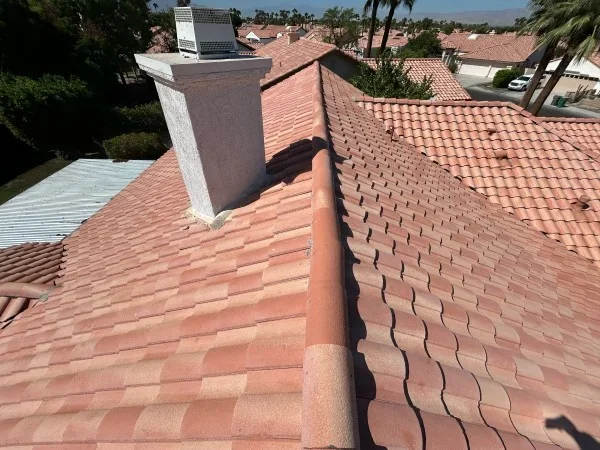
What does it mean when a tile roof is leaking but no tiles are broken?
A tile roof leaking when no tiles are broken means water is getting through the layers beneath or beside the tile. Clay and concrete tile shed most rain, but the underlayment and metal flashing do the waterproofing. When underlayment cracks with age or flashing opens at a valley, wall or vent, water reaches the deck while the tiles look fine.
Rain that blows between tiles is supposed to land on the underlayment and run down to the eaves. Once that layer cracks, or tears where the fasteners go through, the same water soaks into the wood instead. So when a concrete or clay tile roof leaks, the tile is probably fine. What failed is underneath it.
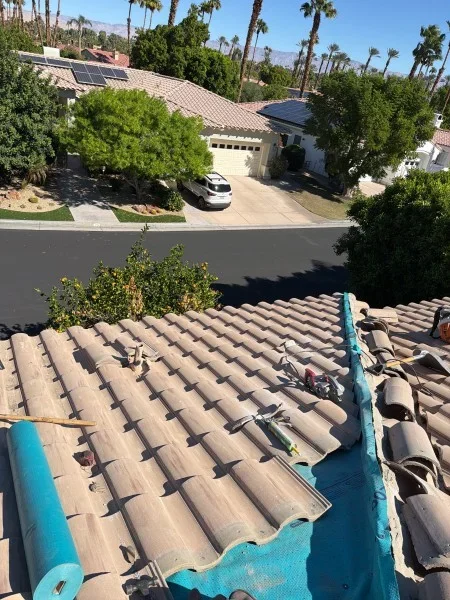
Where Southern California tile roofs leak when every tile looks fine
On a tile roof with no broken tiles, water usually gets in at 1 of 6 spots, and each one leaves a different clue inside. Leaks drive more of our repair calls than any other problem. Most of them start at the flashings and penetrations: the pipes, vents, skylights and curbs that cut through a roof.
| Where water gets in | What you may notice inside | Usual fix |
|---|---|---|
| Underlayment past its life | Stains in more than 1 room, often after long storms | Lift-and-relay: tiles off, new underlayment, same tiles back |
| Valley | A stain under the line where 2 roof planes meet | Clear the debris, then replace the valley metal and the underlayment beside it |
| Wall or stucco flashing | A stain high on an interior wall or in a ceiling corner | New flashing tied into the underlayment, with the stucco patched over it |
| Vent, skylight or solar mount | A stain near a bath fan, a skylight well or under the panels | New flashing at that opening, lapped into the underlayment |
| Low-slope tile section | A stain under a patio cover, porch roof or addition | Double underlayment to code, or a low-slope roof system if the pitch is too low for tile |
| Seam between a flat roof and tile | A stain near where the flat roof meets the pitched roof | Tie the flat roof's coating or membrane back into the tile side's flashing |
Underlayment past its life
Underlayment is the felt or synthetic sheet fastened to the roof deck under the tile. Heat bakes it brittle. Once it cracks, or tears where the fasteners go through, water that slips between the tiles reaches the wood. The tile on top can look new while the layer under it is done.
Valleys
A valley is the channel where 2 roof planes meet, so it carries water from both. Leaves and grit pile up there and push water over the edge of the valley metal, onto underlayment that was never meant to carry a steady stream. Older valley metal can also rust through where the tiles overlap it, out of sight from the ground. Near the coast, salt air speeds up that rust.
Wall and stucco flashing
Where a roof slope runs into a wall, metal flashing turns up the wall and the stucco covers its top edge. When the stucco cracks, or a past repair leaned on caulk alone, water runs down behind the flashing. These leaks often show up as a stain high on an interior wall instead of on the ceiling.
Vents, skylights and solar mounts
Every pipe, vent, skylight and solar mount is a hole through the underlayment, and each one needs its own flashing tied into the layers around it. Solar mounts are often the newest holes on the roof. Installers walking the tile can also crack pieces that stay in place and look fine from the street.
A rushed install can damage a tile roof in ways that don't show until it rains. If the leak started after the panels went up, call the installer about their workmanship warranty before you pay for repairs.
Low-slope tile sections
Patio covers, porch roofs and additions are often pitched lower than the main roof. California's 2025 Residential Code, Section R905.3.2, bars clay and concrete tile from slopes below 2.5:12. That means 2.5 inches of rise per 12 inches of run. Anything from 2.5:12 up to 4:12 needs a double layer of underlayment or a self-adhering membrane the code allows in its place. The double layer starts with a half-width strip at the eaves, then full-width sheets that each overlap the one below by half a sheet plus 2 inches. A low section built with a single layer of felt can leak with every tile intact.
The seam between a flat roof and tile
For a typical Coachella Valley home, the pairing we've found holds up longest is concrete tile on the pitched sections and spray foam on the flat sections. The foam itself has no seams to fail. What needs watching is the joint where the 2 systems meet, because the foam's coating has to tie into the tile side's underlayment and flashing. That joint is where 2 trades' work overlaps, sometimes years apart, so it's worth asking who last touched it. We install spray foam and repair tile, so we check both sides of that seam.
Why does my tile roof only leak in big storms?
Because a Southern California tile roof rarely gets a real test. NOAA's 1991-2020 climate normals show Palm Springs Regional Airport averaging 4.61 inches of precipitation a year. That falls on about 17 days with measurable rain, and only about 8 of them bring 0.10 inch or more. Santa Ana's John Wayne Airport averages 11.18 inches, 19 days at 0.10 inch or more and about 41 days with measurable rain.
A failing underlayment or a loose flashing can get a pass all summer and give out in the first long, windy storm. Wind pushes rain sideways and up under the tile laps, so more water reaches the underlayment than in a calm rain of the same size.
Small leaks also dry out between storms. That hides them, but the wood under them gets wet again with each storm, and decking can rot before a stain ever shows.
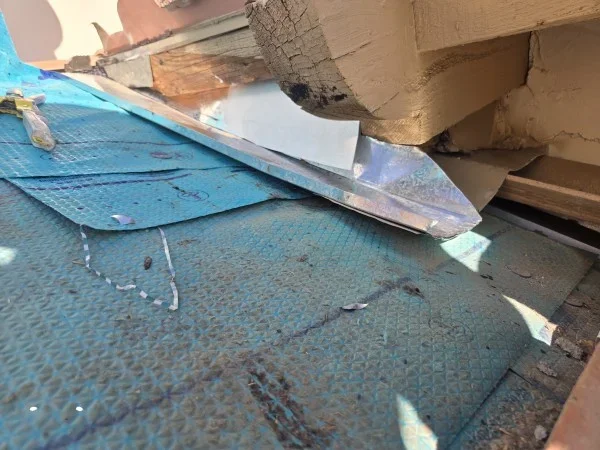
How long does tile roof underlayment last in Southern California?
Usually 20 to 30 years, long before the tile gives out, and closer to 20 to 25 in our desert installs. That's why I push back when an owner tells me their tile roof is good for 50 years.
The tile may well last that long. InterNACHI's life expectancy chart for homes lists clay and concrete tile at 100+ years. The felt under it won't come close, and the felt is what keeps the water out. Every tile roof has that gap built in, so plan for at least 1 underlayment replacement over the life of the tile. If your roof is past 20 years and still has its original underlayment, it's due for a look before it leaks.
Tile is where desert homeowners get caught. The tile can be fine at 40 years while the felt under it went brittle at 22. And the tile is the only layer you can see from the street. Broken roof tiles speed that clock up, since every gap lets sun and rain hit the underlayment directly.
Inland South Orange County summers get hot too, so an older tile roof there deserves the same check.
Why isn't the water stain under the leak?
Because water that gets past the underlayment runs downhill along the deck or a rafter until it finds a place to drop. The stain can show up well downhill of where the water got in, or on a different wall.
Before you call a roofer, take dated photos of the stain after each storm and note which rooms it shows up in. The dates matter if you file a claim, because the timeline is what an adjuster checks. Read your own policy, but sudden storm damage is often covered, while age and worn-out underlayment usually aren't. If your attic is safe to enter, look uphill of the stain for wet or darkened wood. Stay off the tile. A wrong step can crack a tile, and then you have 2 leaks to find.
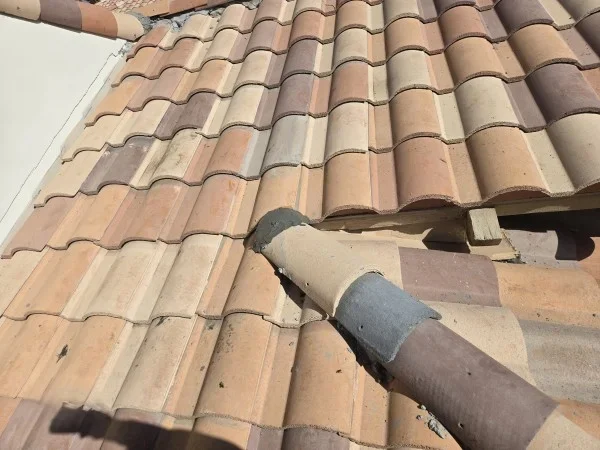
How we find the source without tearing off your roof
Our Roof Health Check follows the same order every time. On a steep tile roof, we fly a drone first, then set a ladder at the eave to confirm what the camera saw. From there we check 4 layers: the tile, the flashings and penetrations, the felt under the tile, and the deck and attic.
Getting to the felt means lifting tile. A roofer who didn't open the roof didn't check the layer that usually failed. We also look hard at valleys and anywhere debris collects. Then we finish inside, checking the attic and ceilings for moisture, daylight and the stains that prove water is getting through.
Our free Roof Health Check is open to homeowners, property managers and business owners. You get a written report with photos from each layer, usually within 24 to 72 hours. It's yours to keep, compare against next year's or hand to a buyer.
Should you repair, lift-and-relay or replace in 2026?
With sound tile and an active leak, the job is under the tile, and replacing cracked tiles won't fix it. The underlayment's age and whether the tile itself is still good decide how big the job gets.
A lift-and-relay is the desert workhorse most homeowners have never heard of, and it's the fix we reach for most on older desert tile roofs. You keep the exact tile you have, which matters when your HOA expects the street to match and your color is no longer made. In our experience it buys another 20-plus years, for far less than all-new tile.
| Option | When it fits | What it involves | Cost |
|---|---|---|---|
| Detail repair | 1 leak at 1 detail, such as a pipe boot, valley or wall flashing, while the underlayment around it still has life | Lift the tiles at that spot, replace the flashing and underlayment there, reset the same tiles | The smallest of the 3 jobs |
| Lift-and-relay | The felt has failed across the roof, but the tile is still sound | Lift and stack the tile, tear off the old felt, re-deck anything soft, install new underlayment, re-lay the same tile | Far less than all-new tile, since most of your tile is reused |
| Full replacement | The tile itself is spent, as well as the layer beneath it | New underlayment and new tile | $9 to $18 per sq ft installed for concrete tile and $12 to $22 for clay, per our 2026 Southern California pricing guide |
We don't post a flat price for a repair or a lift-and-relay, because a number without your deck condition attached to it is a guess. These variables set the price, so you can read bids side by side:
• How much decking is soft. Nobody knows until the tile is off, so ask every bidder for a unit price on deck replacement.
• How much of your existing tile survives the lift. That's a measurement, and it belongs in writing.
• Whether your tile is still made. Matching a discontinued color can mean tracking down salvage.
• The pitch and height of the roof, which set the staging and fall protection a crew needs.
• Every vent, skylight and curb, since each detail carries labor.
• Access, including gated-community work windows and summer heat that pushes crews to early starts.
Our rule of thumb: once a repair passes 30 percent of the cost of a full replacement, replacing usually wins on long-term value. Financing is available through Acorn Financing.
If you're on an HOA board or manage the property
I started roofing at 15 with my father, who worked in HOA roofing. For boards, the rule is the same on every property: map every leak before you approve a repair. A single valley or run of tired underlayment can leak into 2 or 3 units. Ask for 1 report that ties each interior stain to its entry point, with photos, so the board approves 1 repair instead of 3.
Who pays depends on your CC&Rs. Under California Civil Code section 4775, unless the declaration says otherwise, the association repairs, replaces and maintains the common area. Each owner handles their own separate interest. HOA roof replacement rules in California start from that split, and your CC&Rs decide whether your roof counts as common area.
In Mission Viejo, nearly every roof goes through an HOA's architectural review before the city signs off, and that review covers material, color and tile profile. A lift-and-relay keeps all 3 the same, since your own tile goes back on. We prepare and submit both the permit package and the HOA submittal.
What to do before the next storm
If your tile roof is leaking when no tiles are broken, treat the first stain as an early warning. Photograph it, note which storm brought it, stay off the tile and get the source found before the next system comes through. Once a year is the floor for any roof inspection, twice a year for tile in desert heat, and right after any major storm. We handle tile leak repair for homes in Orange and Riverside counties, including the Coachella Valley, and we work on commercial roofs across Southern California. The Roof Health Check is free, and the written report with photos usually reaches you within 24 to 72 hours.
Frequently asked questions
Can a tile roof leak when no tiles are broken?
Yes. Clay and concrete tile shed most rain, but the underlayment and flashing underneath do the waterproofing. In our desert installs, the underlayment is usually spent at 20 to 25 years while the tile stays sound around 40 to 50. So an older roof can leak with every tile intact.
Does a tile roof leaking when no tiles are broken need a full replacement?
Often it doesn't. If the tile is still sound, a lift-and-relay replaces the underlayment and sets the same tiles back, and in our experience it buys another 20-plus years. Full replacement is for when the tile itself is spent, as well as the layer beneath it.
What is the lowest roof pitch allowed for tile in California?
California's 2025 Residential Code, Section R905.3.2, requires a slope of at least 2.5:12 for clay and concrete tile. That's 2.5 inches of rise per 12 inches of run. Slopes from 2.5:12 up to 4:12 need a double layer of underlayment or a self-adhering membrane the code allows in its place. Low patio covers and additions that miss either rule can leak even when every tile is intact.
Who pays for a tile roof leak in a California HOA?
It depends on your CC&Rs. Under California Civil Code section 4775, unless the declaration says otherwise, the association repairs, replaces and maintains the common area. Each owner is responsible for their own separate interest. Your CC&Rs decide whether your roof counts as common area, so check them or ask your HOA's manager before you schedule work.
Can solar panels cause a tile roof leak?
Yes. Every solar mount is a hole through the underlayment that needs its own flashing. Installers walking the roof can also crack tiles in ways you won't see from the ground. If a leak starts after the panels go in, check the installer's workmanship warranty before you pay for repairs.
How often should a Southern California tile roof be inspected?
Once a year is the floor for any roof, and we check tile in desert heat twice a year. After a major storm or monsoon, get any roof checked right away. Real tests are rare here. NOAA's 1991-2020 normals show 19 days a year with 0.10 inch or more of precipitation at Santa Ana's John Wayne Airport, and about 8 at Palm Springs Regional Airport.
Can I find a tile roof leak myself?
You can narrow it down. After a storm, photograph the stain, and if your attic is safe to enter, look uphill of the stain for wet or darkened wood. Stay off the tile itself, since a single step can crack tiles and start a second leak.