Yes. El Niño winds can damage roofs in Orange County, and this winter the odds favor more storms than usual. NOAA's Climate Prediction Center says a "strong-to-very strong" El Niño is likely through March 2027. Wind rarely tears a sound roof apart. It finds what's already loose: a curled shingle tab, a cracked tile, tired ridge mortar, a lifted strip of flashing. The rain that rides in with the storm does the rest.
I started roofing at 15 with my father, who worked in HOA roofing, and I've been in the trade in Southern California since 1992. After 8 years at a large commercial spray foam roofing company, I founded Vision Roof Services in 2014. Our crews have finished about 7,500 jobs. From our Mission Viejo office, we work on homes and commercial buildings in Anaheim, Costa Mesa, Newport Beach, Santa Ana, Laguna Hills, Lake Forest and Westminster.
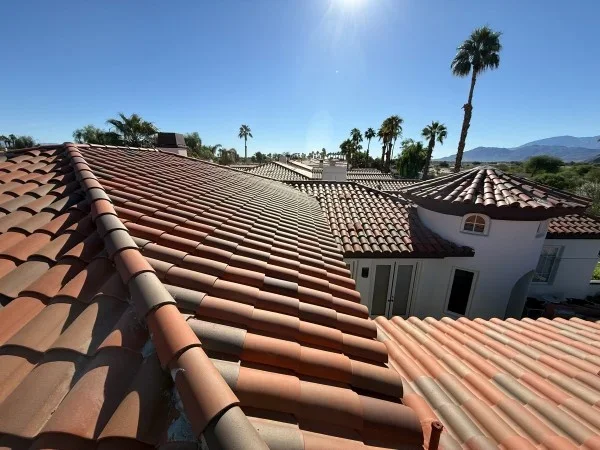
What are El Niño winds?
"El Niño winds" isn't an official weather term. It's shorthand for the gusty winds that come with Pacific storms when El Niño pushes the jet stream south over California. Unlike Santa Ana winds, which blow dry from the northeast, storm winds arrive with rain, so any opening they make in a roof can leak the same day.
The 2026 El Niño forecast for Orange County
This El Niño is on track to be one of the strongest on record, and NOAA's outlook favors a stormier, wetter winter across the southern U.S. In its October 8 update, CPC put the odds at 83% that the event will beat every El Niño since 1950 on its October to December strength measure. Sea surface temperatures in the Niño-3.4 region of the Pacific ran 2.1°C above normal in CPC's latest monthly reading.
NOAA's winter outlook, released October 15, favors wetter-than-average conditions from December through February across the southern U.S., California included. Ken Graham, director of the National Weather Service, said El Niño will likely shift the jet stream south and east, which "tilts the odds toward stormier weather" across the South.
Odds aren't outcomes. CPC's forecasters say a stronger El Niño makes certain impacts more likely, but they aren't guaranteed. The strong 2015-16 El Niño was expected to soak Southern California. The region's rainy season still finished slightly below average, according to a 2019 study by Cash and Burls in the Journal of Climate.
That's why I won't sell anyone a roof on an El Niño headline. Wind damage follows weak spots, and a strong forecast doesn't create new ones. CPC posts its next update November 12.
How do El Niño winds damage roofs in Orange County?
Wind lifts a roof at its edges first, and the rain that comes with the storm gets under whatever lifted. FEMA's fact sheet on sloped roofs in high-wind areas flags the roof border and the eaves as common trouble spots for wind uplift. Once a shingle lifts, wind-driven rain can get underneath it.
On a pitched roof, the sequence usually runs like this:
A gust catches an edge: a shingle tab at the eave or rake, a ridge tile with tired mortar, or a loose strip of flashing.
Rain arrives with the same storm and runs under the lifted piece.
The underlayment holds the water back until it can't. On older tile roofs, that layer is often the part that's worn out.
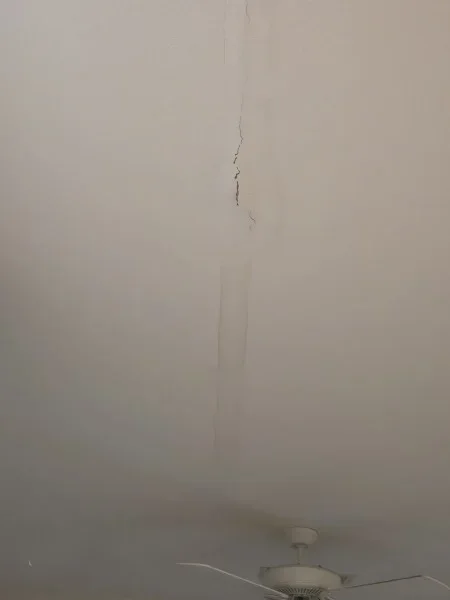
A ceiling stain shows up days later, sometimes feet away from where the water got in.
Wind alone rarely breaks a well-installed tile. Flying debris does, and so does foot traffic. On a tile roof, the underlayment beneath the tile is the real waterproof layer, which is why one slipped tile matters more than it looks. FEMA makes the same point from the other side: an upgraded underlayment adds a second barrier against water.
Commercial roofs add one more risk. FEMA warns that wind can damage rooftop equipment and vents, and a loose panel or a bent vent opens the roof to rain.
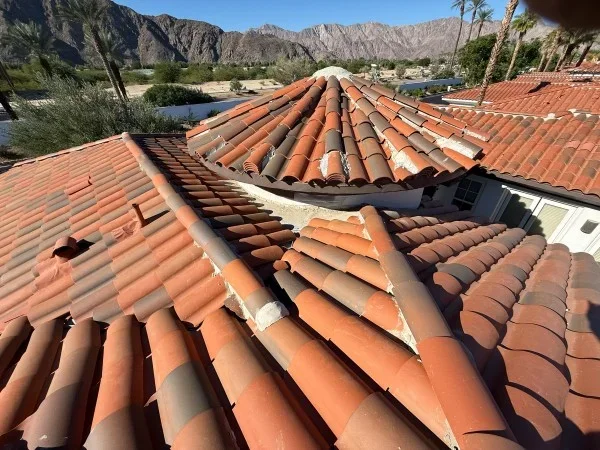
The Orange County roofs wind hits first
Older tile roofs, shingle roofs with curled tabs, and flat roofs with loose edges or rooftop units are where I'd look first. The table shows where wind gets into each roof type and what to check before the next storm.
| Roof type | Where wind gets in | What to check now |
|---|---|---|
| Concrete or clay tile | Ridge and hip caps, slipped or cracked field tiles, flashing at walls and chimneys | Gaps along ridges, broken pieces in gutters, cracked mortar, underlayment age |
| Asphalt shingle | Eaves, rakes and tabs that have curled or lost their seal | Lifted or missing tabs, curled corners, heavy granules in gutters |
| Flat or low-slope (single-ply, modified bitumen, built-up) | Perimeter edge metal, open seams, rooftop unit curbs and panels | Loose edge metal, seam gaps, unlatched panels, debris near drains |
| Spray foam with coating | Coating scuffed or punctured by debris, parapet edges, penetrations | Worn or thin coating, bare foam, punctures, blisters, date of the last recoat |
Concrete and clay tile
Tile sheds water, but it doesn't seal. The underlayment under it does. Ridge and hip caps sit on the high lines of the roof and catch wind from every direction. A cap that shifts in a dry December gust leaves an open line along the top of the roof for the next rain.
Asphalt shingle
Shingle wind ratings assume the shingle is sealed down. According to the National Roofing Contractors Association, shingles rated ASTM D3161 Class F passed a fan test at 110 mph, and ASTM D7158 Class H shingles are rated for basic wind speeds up to 150 mph. The D7158 rating only applies to shingles with a sealant strip. Curled shingle tabs have already let go of that seal, so the rating on the wrapper no longer describes them.
Flat commercial roofs
On flat and low-slope roofs, wind pulls at the perimeter: edge metal, coping and the membrane along the edge. Rooftop HVAC units add panels, curbs and vents that can work loose. Our commercial clients include Yamaha, LifeStorage, KPRS and American Tower.
Spray foam roofs
Spray foam bonds directly to the roof below it. The Spray Polyurethane Foam Alliance, the industry trade group we belong to, says that bond improves wind uplift resistance, and it cites post-hurricane surveys by NIST and RICOWI that found foam roofs performed well. In Orange County, we've sprayed foam on a LifeStorage facility and across a full business complex in San Juan Capistrano, and we restored the spray foam roof on Yamaha's office in Buena Park.
The weak spot is the coating, which wind-blown debris can scuff or puncture. SPFA publishes a repair guideline (SPFA-139) for hail and wind-driven damage on foam roofs. On foam roofs we maintain, we recommend an annual inspection and set recoat schedules from what we find, because a foam roof can last decades when it's properly maintained. A dozen of our 60 roofers hold General Coatings spray foam certification.
Santa Ana winds vs. El Niño storm winds
Santa Ana winds and El Niño storms hit the same weak spots, and this winter their peak months overlap. Santa Anas are dry and blow offshore. A 2016 study in Geophysical Research Letters found they're strongest on west-facing slopes below the mountains and weaker over the ocean. They peak in winter, though some of the strongest have come in fall. A 2019 follow-up study by the same lead researchers puts the peak in November through January.
That window sits on top of NOAA's wetter-than-average outlook for December through February. So an Orange County roof can take a dry offshore gust in December that shifts a ridge tile or strips a curled tab. Nobody notices until the next El Niño storm drives rain into the gap. When the ceiling stains, the storm gets the blame.
Curling shingles show the pattern. We get the most calls about them in the weeks after the first real wind of the season. A curled tab gives the wind something to grab, so a Santa Ana gust well below what sealed shingles survive in testing can take it off. The leak usually shows up later, with wind-driven rain rather than steady rain.
Location changes the mix. Foothill and canyon neighborhoods along the Santa Ana Mountains, like those near the Santiago foothills in east Orange, catch the strongest offshore gusts. Coastal homes, including the ones we've roofed on Balboa Island, see weaker Santa Anas and more salt air, which works on flashing and fasteners all year.
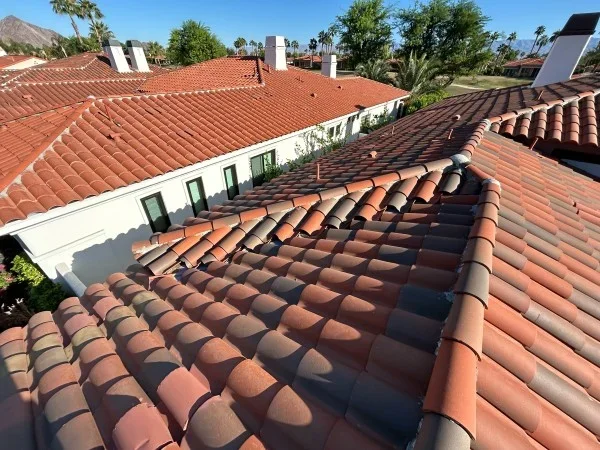
What to check before the next storm
Check your roof's edges, ridges and flashing from the ground now, while it's dry, and get anything that looks off inspected before rain is in the forecast.
From the ground
Stay off the roof. Tile cracks under foot traffic, and a pitched roof is a fall risk even when it's dry. With binoculars or a zoomed phone camera, look for:
Gaps, missing caps or crooked tiles along ridges and hips
Shingle edges at the eaves and rakes that lift or flap in a breeze
Broken tile pieces or heavy granules in gutters and on the ground
Bent or loose flashing at chimneys, skylights and walls
Gutters or downspouts pulling away from the fascia
New ceiling stains near exterior walls after the last rain
On commercial buildings
Walk the perimeter with your maintenance lead. Look for loose edge metal or coping, open seams, unlatched panels on rooftop units, and debris piled near drains and scuppers.
If anything looks off, book a free Roof Health Check. We check the roof's surface, flashing, drainage, underlayment and structure, then send a written report with photos, usually within 24 to 72 hours. Homeowners who want a yearly check can join one of our Roof Assurance Plans, which start at $499, and the top plan adds a storm damage check-up after extreme weather. Our roofers in Mission Viejo cover Orange County homes, HOAs and commercial buildings.
What California insurance covers after wind damage
Wind damage is usually covered when the wind makes the opening. A leak through a roof that was already worn is a different claim.
The California Department of Insurance says homeowners policies don't cover flood. They generally do pay for rain that comes through a hole in the roof "as long as the hole was caused by strong winds" or another covered peril in the policy. Policies typically exclude wear and tear, so the roof's condition before the storm matters. That line is where roof leak claims get decided.
CDI's storm-damage tips also tell you to:
Make temporary repairs to prevent more damage
Take photos and keep records of cleanup and repair costs
Hold off on permanent repairs until the adjuster sees the damage
Ask for a full copy of your policy, which your insurer must send free within 30 days
Check a contractor's license with the Contractors State License Board before you hire
Our California contractor's license number is 651509. This isn't legal or insurance advice; your policy wording decides your coverage.
If wind damages your roof mid-storm
Stay safe first, then document the damage and stop the water.
Stay off the roof until the wind and rain stop.
Photograph the damage from the ground and from inside: missing tiles, lifted shingles, stains, wet insulation.
Catch dripping water, move belongings, and keep receipts for what you buy.
Once it's safe, have a licensed roofer put on a temporary cover, like a tarp or patch.
Call your insurer before any permanent repairs.
Be wary of crews who knock on doors after a storm and ask for a large deposit up front.
Frequently asked questions
Can El Niño winds damage roofs in Orange County?
Yes. NOAA's October 15 outlook tilts the odds toward a stormier, wetter-than-average winter across the southern U.S., California included. Storm winds lift loose tiles, curled shingle tabs and flashing, and the rain that arrives with them gets in through those openings.
When is Santa Ana wind season in Orange County?
Santa Ana winds blow from fall into spring, and a 2019 study in Geophysical Research Letters puts their peak in November through January. That peak overlaps NOAA's wetter-than-average outlook for December through February, so a roof can take a dry offshore gust and a wet storm in the same month.
What wind speed can damage a shingle roof?
It depends on the shingle's rating and condition. According to the National Roofing Contractors Association, ASTM D3161 Class F shingles passed a 110 mph fan test, and ASTM D7158 Class H shingles are rated for basic wind speeds up to 150 mph. Those ratings describe shingles that are sealed down, so a curled or unsealed tab can lift in a gust far below those numbers.
Does homeowners insurance cover El Niño wind damage to roofs in California?
Often, if wind made the opening. The California Department of Insurance says homeowners policies generally pay for rain that comes through a hole caused by strong winds or another covered peril, but they don't cover flood. Policies typically exclude wear and tear, so read yours; your insurer must send a free copy within 30 days of your request.
Will a strong El Niño bring damaging winds to my house?
Not necessarily. NOAA's Climate Prediction Center says a stronger El Niño makes certain impacts more likely, but they aren't guaranteed, and the strong 2015-16 event left Southern California slightly below average for rain. The safer plan is fixing loose edges, ridges and flashing before storms arrive.
What does a Roof Health Check include?
Our free Roof Health Check covers an inspection and documentation of your roof, followed by a written report with photos, usually within 24 to 72 hours. On foam and coated roofs we maintain, we recommend an annual inspection and a recoat schedule. Call our Mission Viejo office at 949-779-5664 to book one in Orange County.
Book a Roof Health Check in Orange County
El Niño winds can damage roofs in Orange County this winter, and the damage starts at edges, ridges and seals that were weak before the first gust. Call our Mission Viejo office at 949-779-5664, and we'll check yours before the next storm.