If your roof is leaking in a storm, do 4 things in this order: cut power to anything wet, catch the water, photograph the damage, and stay off the roof. What you do over the next 48 hours decides how much drywall, insulation, and insurance money the leak costs you.
Leaks and aging flat roofs are the most common reason people call Vision Roof Services. I've worked on Southern California roofs since 1992, when I started at 15 in my father's HOA roofing business. These steps hold for tile, shingle, flat, and foam roofs.
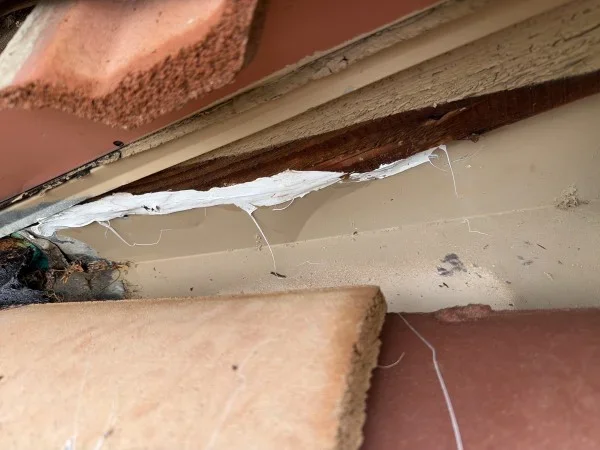
What to do first when your roof is leaking in a storm
When your roof is leaking in a storm, spend the first hour on safety and containment. Shut off power to wet fixtures if you can reach the panel from a dry spot, put buckets under the drips, drain a sagging ceiling into a bucket, and photograph everything. Roof repairs wait until the rain stops and the roof dries.
The first 3 days break down like this:
| Window | What to do | Why it matters |
|---|---|---|
| Hour 1, while it's raining | Cut power to wet fixtures from a dry spot. Catch the water, drain a sagging ceiling, move valuables, and photograph everything. | Water near wiring can shock you. Photos taken before cleanup back up your claim. |
| Hours 1 to 48 | Dry wet rooms with fans and a dehumidifier. Pull wet ceiling tiles and insulation. Make temporary repairs only, and keep every receipt. | EPA says to dry water-damaged areas within 24 to 48 hours. California's insurance regulator says insurers pay back reasonable protection costs. |
| Hours 48 to 72 | Get the dry roof inspected and the findings in writing. | A written report with photos tells you whether you need a repair, a recoat, or a replacement, and it gives your adjuster evidence. |
Why is winter 2026 to 2027 a bad time to ignore a leak?
A strong El Niño is likely this winter, and Southern California rain already arrives in short, heavy bursts. On Oct. 8, 2026, NOAA's Climate Prediction Center issued an El Niño advisory. It said a "strong-to-very strong" El Niño is likely through January to March 2027, with better than an 83% chance. NOAA also says the odds remain high for an event stronger than any El Niño back to 1950. Its forecasters add that El Niño impacts become more likely, not guaranteed.
For a roof, how the rain arrives matters as much as how much falls. Along the West Coast, NOAA says "just a few atmospheric river events each year" bring up to half of the annual precipitation. The desert gets it even harder. When Tropical Storm Hilary hit in August 2023, Palm Springs got 3.18 inches, 69% of its annual average, according to the National Weather Service in San Diego. Thermal took 2.35 inches in a single day, 79% of its yearly average.
A desert roof can go months without rain, so a single storm tests every cracked coating, open seam, and clogged drain at once. Those are the usual failure points on low-slope roofs, and we've covered why flat roofs leak in more detail.
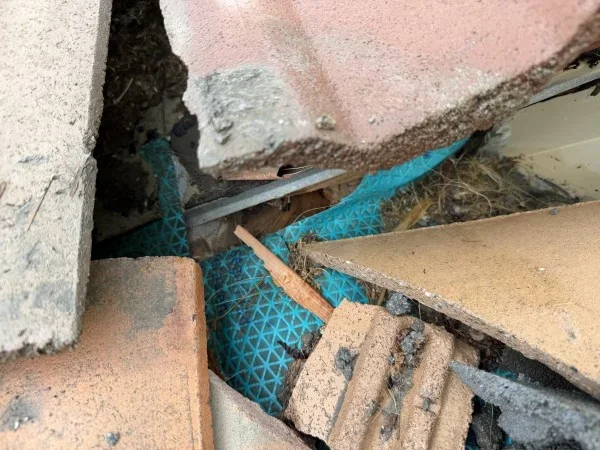
Hour 1: safety, buckets, and photos
In the first hour, keep people away from wet ceilings and wiring, catch the water, and take photos before you clean up.
Move people, pets, rugs, and electronics out of the wet area. Set a bucket or plastic bin under each drip with a towel inside to stop the splash. Cover furniture you can't move with plastic sheeting, and empty the buckets before they overflow.
Cut power to anything wet, if you can do it from a dry spot
Water near wiring is the part of a leak that can hurt someone. FEMA's Ready.gov flood guidance says not to touch electrical equipment if it's wet or if you're standing in water. The same page says to turn off the electricity only if it's safe to do so. If the breaker panel sits in a wet room, leave it alone and call an electrician.
Should you poke a hole in a sagging ceiling?
Yes, if the bulge is small and you can stand clear of it. A drywall ceiling holding water can give way all at once. Put a bucket under the lowest point of the bulge and pierce it with a screwdriver so the water drains slowly. Skip this if the sag covers most of the ceiling or sits near a light fixture. Close that room and keep everyone out.
Photograph before you clean up
Shoot photos and video before you move anything. California's Department of Insurance tells homeowners to photograph the damage and to keep damaged items until the adjuster says they can go. Get wide shots of each room, close-ups of stains, and a short video of active dripping. Your phone's time stamp helps.
Stay off the roof until it's dry
Don't climb up during the storm, even to throw a tarp. A wet roof is slick, and wind can rip a tarp out of your hands.
The U.S. Consumer Product Safety Commission estimates that ladders and stools were involved in 273,000 injuries treated in emergency rooms in 2024. A storm adds wet rungs, wind, and darkness. Each roof type brings its own hazard: tile cracks underfoot, coated flat roofs get slick when wet, and commercial roofs have skylights that are easy to step through. A 2004 NIOSH alert describes 5 workers killed in falls through skylights and roof and floor openings.
Wait for the rain to stop and the surface to dry, and hold anyone you hire to the same rule.
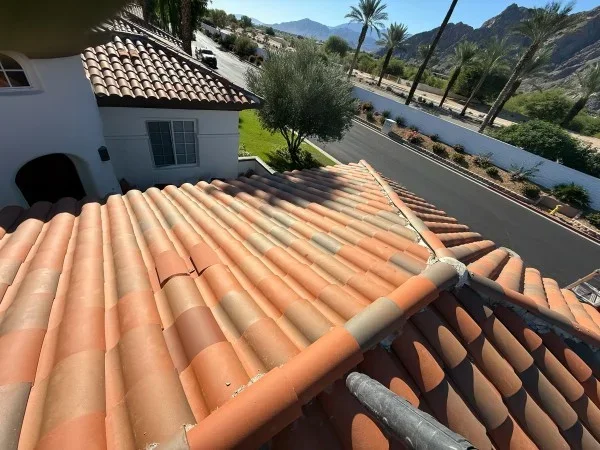
The first 48 hours: dry it out and document it
Dry everything you can within 48 hours and keep a paper trail. EPA's home mold guide says water-damaged areas and items should be dried within 24 to 48 hours to prevent mold growth.
Run fans and a dehumidifier in the wet room, pull up soaked rugs, and open cabinets under a wet ceiling. EPA's cleanup guide for commercial buildings says to discard and replace water-damaged ceiling tiles and insulation. Drywall can sometimes be dried in place if it isn't swollen and the seams are intact. That guide calls 48 hours a guideline, so treat it as a target.
Can you make repairs before the adjuster comes?
Temporary repairs, yes. Permanent repairs should wait until the adjuster has seen the damage. California's Department of Insurance calls temporary repairs "one of the most important things to do after a property loss."
The department also warns that a policy might not pay for further damage if you didn't take reasonable steps to protect the home. Keep every receipt for tarps, fans, and emergency labor, since the department says insurers pay back reasonable costs of protecting the property. It also warns against contractors who push big spending on temporary fixes.
Whether the policy pays for the leak itself depends on the cause. Sudden storm damage and slow wear get treated differently, and that difference decides whether homeowners insurance covers roof leaks like yours.
Hours 48 to 72: get a written roof report
Once the roof is dry, get it inspected and get the findings in writing. The stain on your ceiling rarely sits right under the opening, so someone needs to trace the water on the roof itself.
Our free Roof Health Check ends with a written report and photos, usually within 24 to 72 hours of the visit. That report answers the question every leak raises: repair, recoat, or replace. Your adjuster also gets photos and findings from a licensed roofer instead of a verbal opinion. If the report calls for a recoat or a replacement, we offer financing through Acorn Financing.
Should anyone patch a foam or coated roof in the rain?
No. On a foam or coated roof, a rushed patch with the wrong material won't bond, and it can put a warranty at risk.
Most leak guides tell you to get a patch or tarp on fast. On a coated roof, that advice backfires. In its guidance on repairs to silicone-coated roofs, coating maker Polyglass puts it plainly: "The only thing that sticks to silicone is silicone." Roof cement or an acrylic patch won't hold on a silicone-coated roof, and it has to come off before a proper repair. Foam and coatings also need a dry surface to bond, so a patch applied mid-storm is a guess.
Warranty terms add a second risk. Some require written approval before anyone works on the roof, and an unapproved patch can cost you coverage under a commercial roof warranty.
My advice on a spray foam roof is to keep the fix inside during the storm. Catch the water, and let a certified foam crew patch it once the roof is dry. Of our 60 roofers, 12 are certified spray foam applicators through General Coatings, and we're a member of the Spray Polyurethane Foam Alliance. The foam and coating systems we install carry manufacturer-backed warranties that depend on the system, and we keep them under warranty with annual inspections, maintenance recommendations, and recoats as needed.
If you manage a building or an HOA
The same timeline applies, plus 3 jobs: keep people safe, keep tenants informed, and build the claim file.
Rope off wet floors and post signs before anyone slips.
Lift out wet drop-ceiling tiles before they fall, since EPA's commercial guidance says to discard and replace them anyway.
Tell affected tenants or owners in writing what happened, what you've done, and when the roof will be inspected.
Keep a log with the time you found the leak, the rooms affected, photos, calls, and receipts. California's insurance guide also tells policyholders to log every call and letter.
Don't send maintenance staff up until the roof is dry, and remind them where the skylights are.
In an HOA, check your CC&Rs before the next storm to see whether the roof is a common area or the owner's responsibility.
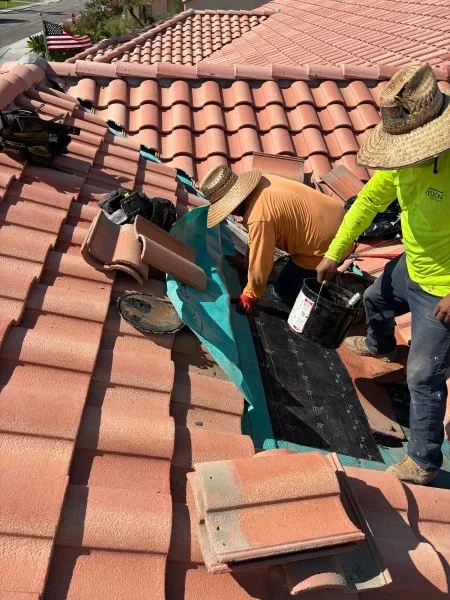
Who should you call, and when?
Call a licensed roofer once the water is contained, and book the inspection for the first dry day.
Vision Roof Services handles homes in Riverside and Orange counties and commercial buildings across Southern California, including Los Angeles and San Diego counties. Our commercial clients include Yamaha, Paramount Studios, LifeStorage, KPRS, and American Tower. We're licensed and insured under CA License 651509.
Call 844-348-ROOF (844-348-7663) from 8 a.m. to 5 p.m., Monday through Friday. Outside those hours, request a Roof Health Check through the form on this site or email connect@visionroof.net.
If your roof is leaking in a storm right now, handle power, buckets, and photos first. Then book a Roof Health Check for the first dry day and get the answer in writing.
Frequently asked questions
What should I do first if my roof is leaking in a storm?
Shut off power to wet fixtures if you can reach the panel from a dry spot, then catch the water and photograph the damage. Drain a sagging ceiling into a bucket if you can stand clear of it. Stay off the roof until the rain stops and the surface dries.
Is it safe to go on my roof during a storm?
No. The U.S. Consumer Product Safety Commission estimates that ladders and stools were involved in 273,000 injuries treated in emergency rooms in 2024. A storm adds wet surfaces and wind. Wait until the roof is dry, and leave the climbing to a licensed crew.
How fast does mold grow after a roof leak?
EPA says to dry water-damaged areas and items within 24 to 48 hours to prevent mold growth. Its cleanup guide for commercial buildings adds that mold won't always grow after 48 hours, so treat the window as a target. That guide also says to discard and replace water-damaged ceiling tiles and insulation.
Can I fix my roof before the insurance adjuster comes?
Make temporary repairs, but hold off on permanent ones until the adjuster has seen the damage. The California Department of Insurance warns that a policy might not pay for further damage if you didn't take reasonable steps to protect the property. Keep every receipt, since insurers pay back reasonable costs of protecting the property.
Can you patch a spray foam or silicone-coated roof in the rain?
Not reliably. Foam and coatings need a dry surface, and coating maker Polyglass says silicone coatings bond only to more silicone. Catch the water inside, and have a certified foam crew repair the roof once it's dry.
Why is my roof leaking in a storm when it was fine all year?
Southern California rain comes in bursts that test every weak spot at once. During Tropical Storm Hilary in 2023, Palm Springs got 3.18 inches, 69% of its annual average, according to the National Weather Service. A roof that sits dry for months can hide cracked coatings and clogged drains until a storm like that hits.
How soon will I get a written roof report?
Book the inspection for the first dry day. Vision Roof Services sends a written report with photos within 24 to 72 hours of a Roof Health Check visit. You can share it with your adjuster.