You spot a legit roofing contractor in Southern California by running 5 tests before you sign anything. Look up an active C-39 roofing license on the state's lookup. Confirm workers' comp and a bond are on file. Ask for proof from your own roof behind every recommendation. Make sure each bid prices the same job. Then hold the payment schedule to California law. The license check takes about 2 minutes, and the other 4 tests take 1 conversation and 1 written report.
I started roofing at 15, working alongside my father in Southern California's HOA roofing market, and I've been at it since 1992. In 2014, after 8 years in commercial spray foam, I founded Vision Roof Services in Palm Desert. Our crews have about 7,500 completed jobs behind them. A license proves a roofer can work here legally. It doesn't prove your roof needs what they're selling, so this guide spends most of its time on that second question.
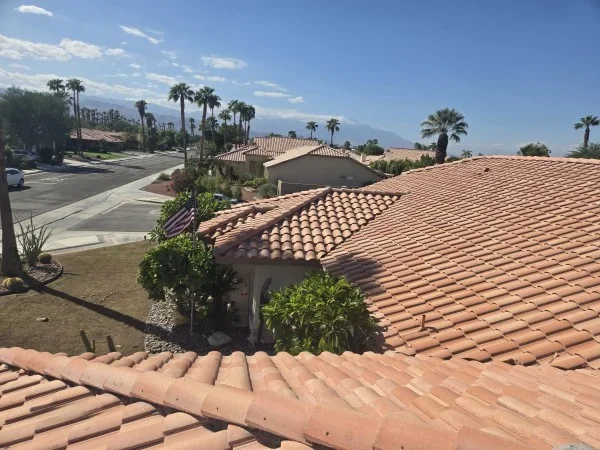
What is a legit roofing contractor in California?
A legit roofing contractor in California holds an active C-39 roofing license from the Contractors State License Board. It keeps workers' compensation and a $25,000 license bond on file with the state. It puts every job in writing and backs each repair, recoat, or replacement call with photos and measurements from your roof.
You can check the first 2 parts online in about 2 minutes. The last 2 take a closer look, and that's where the expensive mistakes happen.
Test 1: An active C-39 license you can look up
Ask for the license number. Then confirm 3 things on the state record: the status reads active, the classifications include C-39 Roofing, and the business name matches your bid.
Search the number on CSLB's free license lookup, which also searches by business name or by a person's name. Per CSLB's guide to hiring a roofer, the record also shows the bond, the workers' comp policy, and any legal action CSLB has filed against the license. Don't accept a photo of a license card in place of the lookup.
The $1,000 exemption almost never covers a roof
California lets an unlicensed person take a job under $1,000 only if the work needs no permit and the person hires no help. CSLB's December 2024 bulletin laid out both conditions when the limit rose from $500 on January 1, 2025.
Roof work is often permit work. Ontario's reroofing permit rules, for example, require a permit for every reroof except repairs under 100 square feet. CSLB's hiring guide also puts the permit on the contractor, and warns that you can be held responsible if the contract doesn't say who pulls it. Once a permit is involved, the exemption is gone at any price.
Test 2: Do they carry workers' comp and a bond in 2026?
They have to. A C-39 roofer must keep workers' compensation on file with CSLB even with zero employees, and every active license needs a $25,000 bond.
Roofing gets singled out here. In a November 2024 briefing, CSLB counted about 118,000 licensees, or 49%, with a workers' comp exemption on file. SB 1455 lets most trades keep that option until January 1, 2028. A roofer can't use it. The bond requirement rose to $25,000 on January 1, 2023, according to CSLB.
Ask for 2 certificates, workers' comp and general liability, and have the roofer's insurance agent email them with your name or company as the certificate holder. Keep copies of both in your job file, as CSLB advises. Commercial owners should also ask about additional insured status, which we cover in our walkthrough on checking a roofer's license, bond, and insurance.
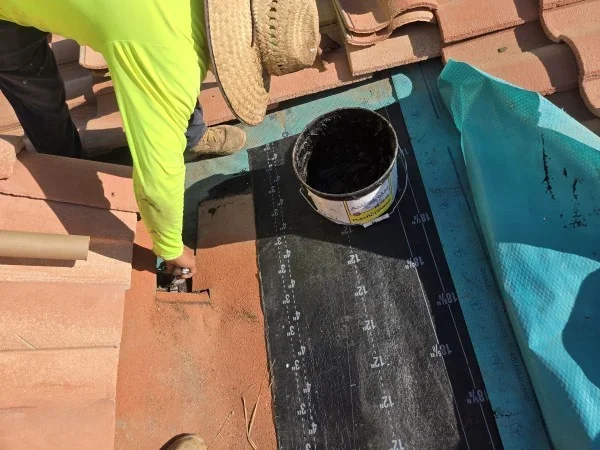
Test 3: Proof from your roof behind every recommendation
A legit roofer shows you where the problem is, how it was measured, and why the fix fits it, in writing, before you sign.
This test catches upsells, and most checklists skip it. Even CSLB's hiring guide says a leak often comes from 1 weathered section or from bad flashing around a chimney or skylight. That doesn't automatically mean a new roof.
Leaks and aging flat roofs are the 2 calls we get most. Our Roof Health Check covers the structure, the surface, the flashings, and the drainage. It ends with a written report and photos, usually within 24 to 72 hours of the visit, and with 1 of 4 calls: monitor, repair, recoat, or replace. We land on a repair, a recoat, or a rejuvenation more often than a full replacement. When the structure is too far gone, the report says so.
What each recommendation should come with
| If the roofer recommends | Proof a legit roofer shows you | Walk away if |
|---|---|---|
| A repair | The leak source, photographed and marked on a roof plan | They can't show where the water gets in |
| A recoat | Photos of a dry, sound surface and the coating thickness in mils | They skip a moisture check or won't name a thickness |
| A spray foam recover | Core samples showing a dry deck and the existing layer count | They won't cut a core, or the cores come back wet |
| A full replacement | A moisture survey confirmed by core cuts, with wet areas mapped | The only proof is a thermal photo with a price on it |
An infrared scan flags suspect areas. A roof core sample is what confirms them, because it shows every layer, the deck, and whether the insulation is wet.
Can a coating go over a wet roof?
No. California's building code doesn't allow a new roof over one that's water soaked or too worn to hold new roofing, and the Ontario bulletin above lists that same limit. A coating sold over wet insulation seals the water in, and the owner pays for the coating and then for the tear-off.
Upsells run in both directions. A tear-off your roof doesn't need costs you money, and so does a cheap coating on a roof that can't take one. We show where that line sits in our commercial guide to roof coating vs. replacement.
We run that moisture check before our own foam and coating jobs. That includes the full spray foam roof restoration on Yamaha's office facility in Buena Park and the spray foam roof on a LifeStorage facility in Orange County.
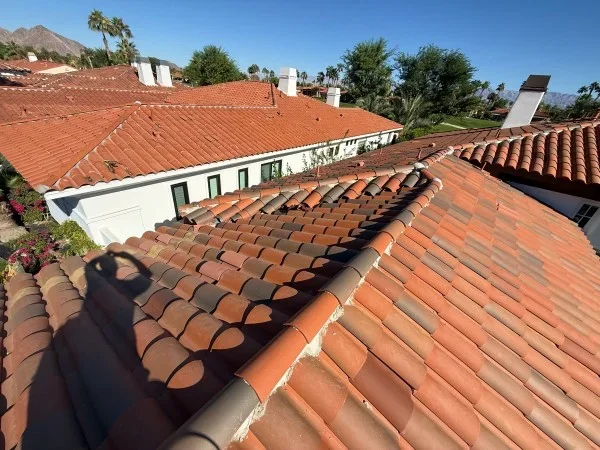
Test 4: Bids that price the same job
Before you compare totals, make sure every bid prices the same roof. A lower number on a smaller scope isn't a better deal.
When we lose a bid, it's usually to a lower price. Sometimes the other roofer found a cheaper fix that works, and sometimes the cheaper bid left something out. Line up these 6 items to see which:
Square footage, measured on the roof
System, brand, and thickness, in inches of foam or mils of coating
Tear-off or not, and the number of layers coming off
Who pulls the permit, and whether it's in the price
Warranty terms: who backs it, the length in years, and what voids it
Exclusions, like wet insulation, deck repair, or asbestos testing
Test 5: Does the payment schedule follow California law?
For a home, a contractor generally can't take more than $1,000 or 10% of the price up front, whichever is less. For a commercial building, that cap doesn't apply, so the payment schedule has to do the protecting.
National advice trips people up here. Some national guides call a 10% to 20% deposit normal. On a $20,000 reroof of a California home, that cap is $1,000.
Homeowners: the $1,000 deposit cap
CSLB's consumer guide to home improvement contracts sets the cap at $1,000 or 10% of the contract price, whichever is less. The exception is a short list of contractors with blanket performance and payment bonds, which CSLB notes on its site. After the deposit, payments can't run ahead of the work that's been done. Financing doesn't get around the cap, because CSLB applies the same payment limits to money that comes from a lender. That holds for the financing we offer through Acorn Finance, too.
If someone knocks on your door, ask for their home improvement salesperson registration. A salesperson can't sign a home improvement contract unless CSLB has registered them, and the same license lookup checks that registration.
Commercial owners: no cap, so watch the schedule
California's home improvement rules cover work on residential property, so the deposit cap doesn't reach a retail center, an office park, or an industrial building. A 50% deposit still deserves a hard look. On commercial jobs, the contract does the protecting. Tie payments to finished stages of work, and get a signed lien release each time you pay. A release of lien clause, which CSLB recommends, helps protect you if a roofer doesn't pay its subcontractors or suppliers.
On our side, every job runs on a written agreement or an approved proposal, and our 9-step process puts the invoice after the final inspection.
HOA boards reroofing residential buildings should ask the association's attorney which set of rules applies.
Which red flags should end the conversation?
Walk away from a roofer who can't pass the first 2 tests on the spot, or who skips the third.
No license number, or a CSLB record without C-39 or under another business name
Door-to-door salespeople who can't show a CSLB registration
Asking for more than $1,000 or 10% down on a home, whichever is less
Telling you to pull the permit yourself
Tear-off quotes backed only by a thermal image
Pressure to sign before you've seen a written report
Run the 5 tests on us
Start with CSLB license #651509, then ask us for the certificates, the report, and the payment schedule.
Our license is C-39 Roofing, with a $25,000 bond on file. We run about 60 roofers, and 12 of them are certified spray foam applicators through General Coatings. We're also members of the Spray Polyurethane Foam Alliance. Commercial spray foam roofing is the work we do most, so expect cores and coating readings in that conversation. If you're comparing foam roofers, ask each one to name the manufacturer that certified their crew.
We take residential and commercial work in Riverside and Orange counties, and commercial work in San Diego and Los Angeles counties. Our commercial clients include Yamaha, Paramount Studios, LifeStorage, KPRS, and American Tower. On the residential side, we installed the spray foam roof on the Invisible House in Joshua Tree. We hold a BBB A+ rating and a Best of BuildZoom 2024 award. After a job, we keep the roof on annual inspections and schedule recoats as the readings call for them.
A legit roofing contractor in Southern California passes all 5 tests without stalling and won't mind that you ran them. If you want a written baseline before anyone quotes your roof, book a free Roof Health Check, and we'll send the report with photos, usually within 24 to 72 hours.
Legit roofing contractor FAQs
How do I know if a roofing contractor is legit in California?
Look up the license number on the CSLB website and confirm it's active, lists C-39 Roofing, and matches the business name on your bid. Then ask for workers' comp and general liability certificates sent by the roofer's insurance agent. Before you sign, get a written report with photos from your own roof.
How much can a roofer charge up front in California?
On a home improvement job, the down payment generally can't exceed $1,000 or 10% of the contract price, whichever is less, and later payments can't run ahead of the work. The same limits apply when a lender is paying. Commercial jobs aren't covered by that cap. On a commercial roof, tie each payment to finished work and get a signed lien release each time you pay.
Does a roofer need a license for small repairs in California?
In most cases, yes. Since January 1, 2025, an unlicensed person can take a job under $1,000 only if it needs no permit and they hire no help. Reroofing is permit work in cities like Ontario, which requires a permit for every reroof except repairs under 100 square feet.
Do roofers need workers' comp if they have no employees?
In California, yes. A C-39 roofing contractor must keep workers' compensation on file with CSLB even with zero employees, while most other trades can keep filing exemptions until January 1, 2028. You can see the policy on the roofer's CSLB license record.
What should a legit roofing contractor give me after an inspection?
A written report with photos of each problem area, where it sits on your roof, how it was measured, and the repair, recoat, or replacement options with a reason for each. Our Roof Health Check report usually goes out within 24 to 72 hours of the visit. If the only proof for a tear-off is a thermal image, ask for core samples.
Can a roofer put a coating over a wet roof?
They shouldn't. California's building code doesn't allow a new roof over one that's water soaked, and a coating over wet insulation seals the water in. A core sample confirms the roof is dry before any coating goes on.
Is the lowest roofing bid a red flag?
Not by itself. Line up the bids on the same scope first: measured square footage, system and thickness, tear-off, permit, warranty, and exclusions. When we lose a bid, it's usually to a lower price, so check what the cheaper scope leaves out before you compare totals.