Why Is My Flat Roof Leaking? Causes, Signs, And Fixes
Why is my flat roof leaking? Most of the time, because water sat somewhere it shouldn't and found a way in. On a low-slope roof, water drains slowly, so it has time to work through an open seam, a tired flashing, a cracked pipe boot, or a low spot that never fully dries. Leaks and aging flat roofs are the most common call we get at Vision Roof Services, and after about 7,500 roofs since 1992, the causes repeat in a short, predictable list. This guide covers why flat roofs leak, the signs worth catching early, how each cause gets fixed, and what makes Southern California roofs, from the desert to the coast, leak in ways a generic roofing article misses. If you've got a ceiling stain or standing water up top, start with a free Roof Health Check and a written report.
A flat roof leaks when water that can't drain fast enough works through a weak point: an open seam, failed flashing around a pipe or vent, a puncture in the membrane, or a low spot that ponds after rain. On a low-slope roof, slow drainage gives water the time it needs to find those gaps and get underneath.
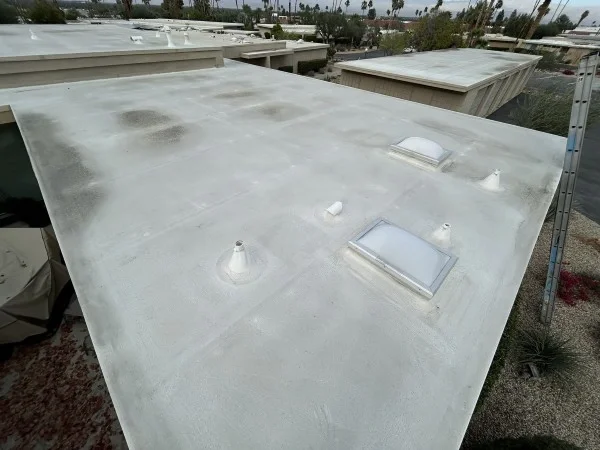
Why flat roofs leak more than pitched roofs
Flat roofs leak more than pitched roofs because water leaves them slowly, and slow water finds weak points. A pitched roof sheds rain in seconds. A low-slope roof moves it by inches. The International Building Code sets a minimum slope of a quarter inch per foot for built-up, single-ply, and modified bitumen roofs, and on a re-roof it requires enough slope to drain within 48 hours of rain, a standard the National Roofing Contractors Association spells out.
Ponding is where most flat roof trouble starts. Standing water softens adhesives, works open seams, and turns a pinhole into a steady drip. Here's the part that gets skipped on most roofing sites: the membrane brand rarely decides whether your roof leaks. The drainage does. Fix a low spot with tapered insulation or a cricket and you often save a roof that a tear-off quote would have condemned. That's why we look at where your water goes before we ever talk about what to put down.
Why is my flat roof leaking? The 7 causes we find most (2026)
Most flat roof leaks trace back to seven causes, and you can usually name each one by the mark it leaves behind. Here are the seven we find most on flat and low-slope roofs across Southern California.
| Cause | The sign you'll notice | Typical fix |
|---|---|---|
| Ponding water and weak drainage | Puddles that sit past 48 hours, spongy spots, stains near roof drains | Clear drains, add tapered insulation or crickets, recoat or foam to level low spots |
| Open or lifted seams | A stain right under a seam line, visible gaps or peeling on single-ply | Re-weld or re-bond the seam, or foam-and-coat to remove seams entirely |
| Failed flashing and penetrations | Stains near a wall, skylight, or rooftop unit, cracked sealant, torn pipe boots | Replace flashing and boots and re-seal, or let foam self-flash around penetrations |
| Membrane damage (blisters, punctures, tears) | Bubbles underfoot, visible holes or cracks, stains after foot traffic or debris | Patch or membrane repair, recoat, or replace if the damage is widespread |
| UV and heat aging | Chalky, cracked, or alligatored surface, a coating gone brittle | Restoration coating or a foam recover, replace at true end of life |
| Age and end of service life | Several leaks at once on a roof past 20 to 25 years | Recover with foam or coating if the deck is sound, full replacement if not |
| Poor prior installation or repair | Leaks that keep returning after patching, stains that come back after fresh paint | Correct the detail properly and document it, often with a full recover |
One sign catches owners off guard: a rising cooling bill. When water reaches the insulation under the membrane, that insulation stops working, and the AC runs longer to hold temperature. On commercial buildings with rooftop HVAC, the utility bill often climbs before anyone spots a stain, which makes an unexplained jump worth a roof check.
Why Southern California flat roofs leak, from the desert to the coast
Southern California flat roofs often leak for the reason people least expect: not too much rain, but too little of it, spread across two very different climates.
In the desert, from Palm Desert to Palm Springs, roofs go months without rain while the sun bakes the seams, coatings, and flashing brittle. Then the summer monsoon arrives in short, hard bursts. NOAA's Climate.gov reports the North American Monsoon drops more than half of the desert Southwest's yearly rain, mostly in intense afternoon storms. A roof that hasn't seen water since spring meets a downpour in minutes, and every dried-out seam can give at once.
On the coast and in the inland valleys, the pattern flips. The marine layer keeps roofs damp most mornings, so ponding water lingers and seams stay wet, aging quietly, until a winter storm opens them up. Same result, slower fuse.
Heat is the other half of the problem. A dark, sun-soaked membrane ages faster and drives cooling costs up. A reflective surface pushes back: the U.S. EPA reports a cool roof can cut peak cooling demand by 11 to 27 percent in air-conditioned homes, and lower indoor temperatures by 2.2 to 5.9 degrees in homes without AC. That's why the roofs that hold up here, and the coatings we recommend, are built to reflect heat instead of soaking it in. We won't promise a number on your bill, because that rides on your insulation and equipment as much as the roof.
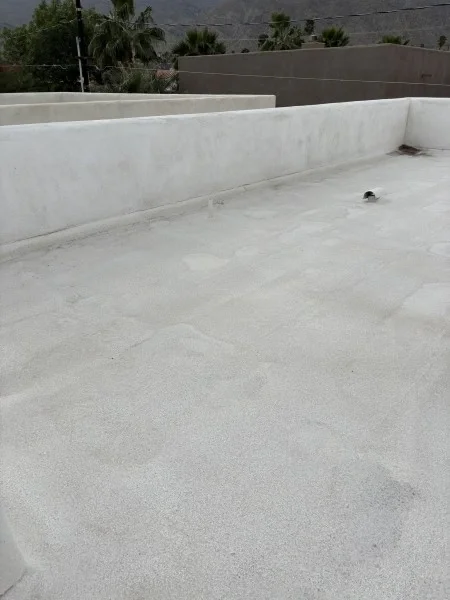
How do you fix a leaking flat roof?
You fix a leaking flat roof by finding where the water actually gets in, then matching the repair to the cause, anywhere from a spot patch to a full recover. Start with the source, not the stain. Water rarely drips through the ceiling right below where it entered. It runs along the deck, the seams, and the insulation first, so the wet spot inside can sit many feet from the real hole. Chase the stain with a tube of sealant and you'll be back up there next season. Our Roof Health Check uses moisture readings, not guesswork, to map where water is traveling, and you get the findings in writing within 24 to 72 hours.
From there the fix follows the cause. A clean puncture or a short open seam takes a compatible patch or a re-weld. Failed flashing and worn pipe boots get replaced and resealed. A roof that's worn on top but sound underneath is a candidate for a restoration coating that seals the whole surface and resets its service life without a tear-off, as long as there's no trapped moisture to cut out first. When the numbers are close, coating versus replacement comes down to the deck's condition and how long you'll hold the building. When the deck is wet or the roof is genuinely past saving, replacement is the honest call, and we'll tell you that rather than sell you a coating over a dead roof.
Spray foam, the flat roof leak fix few contractors mention
Spray foam stops the two most common flat roof leaks at the source, because it goes on as one continuous surface with no seams and no exposed flashing to fail. Open seams and failed penetrations cause most of the leaks in the table above. A spray foam roof removes both. It's sprayed as a single layer that rises and self-flashes around every pipe, vent, and curb, so there are no seams for desert heat to pry open and no boots to crack. It's light enough to go over a sound, dry existing roof without a tear-off, and it fills the shallow low spots that used to pond.
The coating on top is the part that lasts. The Spray Polyurethane Foam Alliance, the trade body we belong to, says a foam roof recoated on a regular schedule, every 5 to 20 years, can last the life of the building. Foam isn't magic. Skip the recoats and it fails early like anything else. But on a flat roof that keeps leaking at the seams, it's the one fix that removes the seams instead of chasing them.
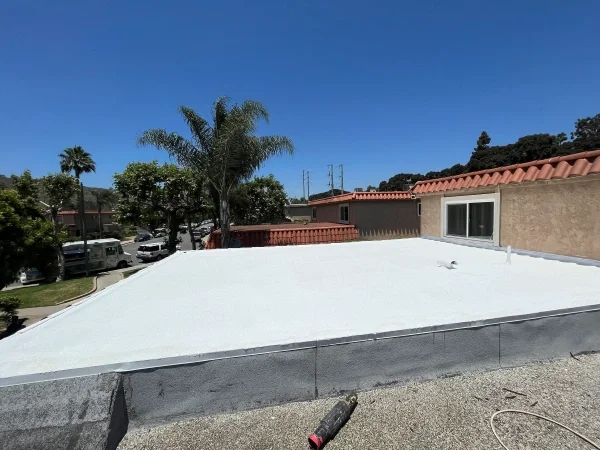
How to prevent a flat roof leak (what 7,500 roofs taught us)
The cheapest flat roof leak is the one you head off with a yearly look and a clear drain. Most of the leaks we're called for were months, sometimes years, in the making. Two habits stop them. First, keep water moving: clear drains, scuppers, and gutters before the rainy season and after the monsoon, so nothing sits and ponds. Second, get the roof inspected once a year, plus a check after any major storm. A yearly roof inspection catches a worn coating or a lifting seam while it's still a cheap fix, which is why the Spray Polyurethane Foam Alliance recommends one.
We've put that approach on roughly 7,500 roofs since 1992, with a 60-person crew that includes a dozen installers certified in spray foam through General Coatings. Our commercial work includes the LifeStorage location in Costa Mesa and the Yamaha facility in Buena Park, and we hold a 4.8 star rating across 42 Google reviews on our Palm Desert profile. We fix flat roof leaks for building owners, property managers, HOAs, and homeowners across Orange County, Riverside, the Coachella Valley, Los Angeles, and San Diego.
If your flat roof is leaking, or you just want to know how much life it has left, book a free Roof Health Check and you'll have a written report, with photos, within 24 to 72 hours. Call 844-348-ROOF. If the timing's tight, we offer financing through Acorn Financing.
FAQs
Why is my flat roof leaking after heavy rain?
Heavy rain finds the weak point that dry weather hides. If water ponds instead of draining, it works through open seams, failed flashing, or a puncture, and low-slope roofs are supposed to drain within 48 hours under the building code. In Southern California, a monsoon burst or a winter storm often exposes damage that had been building for months.
How do I find where my flat roof is leaking?
Don't trust the ceiling stain to mark the spot. Water travels along the deck and insulation before it drips through, so the leak is often several feet from the stain. A moisture survey finds where water actually enters, and our free Roof Health Check maps it and returns a written report within 24 to 72 hours.
Can a leaking flat roof be repaired, or do I need a new one?
Most flat roof leaks are repairable. If the deck is dry and sound, a patch, a seam or flashing repair, or a restoration coating fixes it without a tear-off. Replacement is the honest answer only when the deck is wet or the roof is past its service life, which a moisture inspection confirms.
Can spray foam fix a flat roof leak?
Yes, and it removes the most common leak sources instead of patching them. Spray foam goes on as one layer with no seams and self-flashes around pipes and vents, and it can be sprayed over a sound existing roof. The Spray Polyurethane Foam Alliance says a foam roof recoated every 5 to 20 years can last the life of the building.
Why does my flat roof keep leaking after repairs?
A repair that chases the stain instead of the source will fail, because the water was getting in somewhere else. Recurring leaks usually mean the real entry point was missed, or a flashing detail was done wrong the first time. A full moisture survey, not another spot patch, is what breaks the cycle.
How much does flat roof leak repair cost in Southern California?
It depends on the cause, the size of the damage, and roof access, so a spot repair and a full recover sit far apart on price. We give you a firm number after the free Roof Health Check, once we've measured and documented the actual problem. If the timing is tight, we offer financing through Acorn Financing.
Why is my flat roof leaking in the desert if it barely rains?
Because it barely rains. Months of intense sun bake the seams, coating, and flashing brittle, and then a single monsoon storm finds every weak spot at once. NOAA reports the summer monsoon delivers more than half of the desert Southwest's yearly rain, mostly in short, hard bursts, which is why an annual inspection matters more in the desert, not less.