To check if your roof leaked while you were away, start inside, before you unpack. Walk every room with a flashlight and look up. Check the ceilings along exterior walls, around skylights, inside closets and in the garage. Rain that got in during a SoCal storm may have dried by the time you're home. Look for what it left behind: rings with a darker edge, bubbled paint, soft drywall, swollen baseboards and a musty smell. Photograph anything you find before you touch it. Then check the roof from the ground for slipped tiles, debris and blocked drains. Don't climb up. If you find a stain, or a big storm hit while you were gone, have a roofer check all 4 layers of the roof, including the ones you can't see.
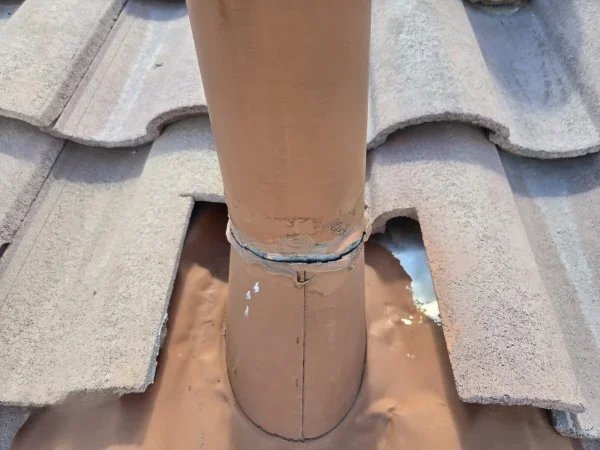
What is a post-storm roof leak check?
A post-storm roof leak check is a room-by-room search for signs that rain got through your roof while nobody was home, followed by a look at the roof from the ground. It looks for evidence that outlasts the water, like stains, bubbled paint, wet insulation and storm debris, so you can show a roofer and your insurer what happened.
The clock started when the rain did. The EPA's mold guidance says that in most cases, mold won't grow if wet or damp items are dried within 24 to 48 hours. If water came in on day 1 of a 2-week trip, nobody dried it inside that window. You may not have mold, but you should look hard, and soon.
The storms you may have missed in 2026
October 2026 was wet at both ends of our residential service area. NOAA's preliminary daily records show the Palm Springs airport took 1.17 inches of rain from October 10 to 12, nearly 6 times its normal for the whole month. Orange County's John Wayne Airport logged 0.69 inch on those same days, then another 0.77 inch from October 21 to 23.
Compare those totals with NOAA's 1991-2020 climate normals, the 30-year averages that define a normal year.
| Rain measure | Palm Springs airport | John Wayne Airport (Santa Ana) |
|---|---|---|
| Normal rain per year | 4.61 in | 11.18 in |
| Days a year with 0.10 in or more | 8.3 | 19.0 |
| Share of a normal year that falls December to March | 75% | 80% |
| Normal rain, July to September | 0.63 in | 0.15 in |
| Normal rain in October | 0.20 in | 0.54 in |
| October 10 to 12, 2026 | 1.17 in | 0.69 in |
| October 21 to 23, 2026 | 0.10 in | 0.77 in |
| Tropical Storm Hilary, August 20, 2023 | 3.18 in | 2.01 in |
Sources: NOAA NCEI 1991-2020 normals and NOAA daily summaries for stations USW00093138 and USW00093184. The 2026 figures are preliminary.
Read the desert column twice. Palm Springs averages only 8.3 days a year with 0.10 inch of rain or more, but a single storm can bring most of a year at once. Tropical Storm Hilary dropped 3.18 inches on the Palm Springs airport on August 20, 2023, about 69% of a normal year in 1 day. If you leave the desert for the summer, that's the storm that hits an empty house. Our roofers in Palm Desert tell desert clients to book a look after any hard storm for that reason.
Orange County runs on a different calendar. At John Wayne Airport, about 80% of a normal year falls from December through March. That stretch includes the holidays, so a house left empty for 2 weeks at Christmas sits through the wettest part of the year.
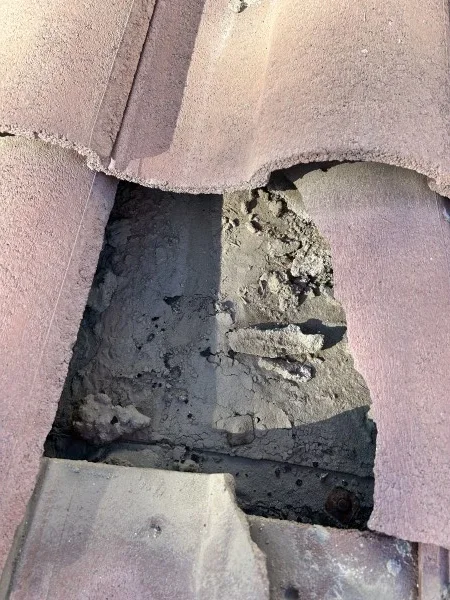
Check if your roof leaked: 7 places to look before you unpack
Look up first, then look low. Water that gets past the roof covering can run along the deck or a rafter before it drips. So a stain often shows up away from where the water got in, and you'll need to open every door you'd normally walk past.
Ceilings along exterior walls on the top floor, where the roof edge, gutters and wall flashing sit directly above.
Ceilings around skylights, bath fans and light fixtures. Each one is an opening water can follow.
Closets and corners. Nobody walked into them while you were gone, and a closet on an exterior wall can hide a stain for weeks.
The garage ceiling, plus the wall where the garage roof meets the house.
The tops of window and door frames, where wind-driven rain and roof-edge leaks both show up.
The attic, if you can get in safely. Step only on the joists, never on the drywall between them. Look for wet or matted insulation, dark stains on the wood, rusty nail tips and daylight where there shouldn't be any.
Floors and baseboards under any stain. Swollen baseboards, cupped wood floors and a musty smell can point to water that's already gone from the ceiling.
These 2 tricks help. Hold your phone's flashlight flat against the ceiling and sweep it across; the low-angle light shows bubbles and ripples that room lights hide. And press a bare hand on any stain. Cool and damp means water's still in it. Dry and stiff means it dried out, not that the leak stopped.
| What you find | What it usually points to | What to do next |
|---|---|---|
| A ring-shaped stain with a darker edge, dry to the touch | Water came in and dried, and the opening may still be there | Photograph it, trace its outline in pencil with the date and book an inspection |
| Bubbled paint or soft, sagging drywall | Water pooled on top of the ceiling | Put a bucket under it, keep people away and call a roofer the same day |
| A stain at the top of a window or door frame | The window, the wall or the roof edge above it | Photograph the outside of that wall too |
| Wet or matted attic insulation, dark wood, rusty nail tips | Water got past the roof covering, or moisture is condensing in the attic | Photograph it from the hatch and leave it in place for the roofer |
| A stain directly under a rooftop AC unit or evaporative cooler | The unit, its drain pan or the curb it sits on | Check the unit's drain line and have the roofer check the curb |
| A musty smell and no visible stain | Moisture behind drywall, in insulation or under flooring | Open closets and cabinets on exterior walls, then ask about a moisture check |
Why doesn't a dry ceiling prove your roof held?
Because rain can soak into a roof and stay there. On flat and foam roofs, water that gets past the surface can wet the insulation or foam and spread along the deck. It can show up in a ceiling days or weeks later, far from where it got in. Wet roof insulation is a known enough problem that ASTM International publishes a standard practice, C1153, for finding it with infrared cameras.
The usual advice is to wait for the next rain and see whether it drips again. I don't agree, at least not in the desert. NOAA's normals give the Palm Springs airport 0.11 inch of rain, total, from April through June. Wait for the next real storm and you could wait months while the water already in your roof sits in the insulation and on the deck. Orange County gets more chances, with 19 days a year of 0.10 inch or more at John Wayne Airport, but the storm you missed already told you something.
At Vision Roof Services, we'd rather find the water on a dry day. Roofers find hidden water with moisture meters, infrared scans and small core samples, and a controlled water test can recreate a leak while the sky's clear.
Look at the roof from the ground, not from a ladder
Stay on the ground. The CPSC estimates that ladders and stools sent 227,000 people to U.S. emergency departments in 2020, and a roof after a storm can carry loose tiles and debris. Use binoculars or your phone's zoom, and photograph each side of the house.
Walk the yard and the driveway first. Pieces of tile, shingle, metal flashing or roof coating on the ground came from somewhere above you.
Tile roofs
Look for cracked, slipped or missing tiles, and broken pieces in the gutters. A tile roof that looks fine can still leak, because on Palm Desert tile roofs the tile usually isn't what failed. The underlayment beneath it is, and you can't see it from the ground. Tile roof leaks are 1 of the 2 calls we take most often in the Coachella Valley, along with flat roofs past their service life.
Flat and foam roofs
Check from a second-story window, or a neighbor's, if you can. Look for standing water, dark rings where water sat and dried, blisters, debris piled against parapet walls, and drains or scuppers packed with leaves or sand. The National Roofing Contractors Association counts water that's still there more than 48 hours after rain, in weather that should dry it, as ponding. Our guide to flat roof ponding covers what causes it and how it's fixed.
Look hardest where things pass through the roof or where it ends: pipe boots, AC curbs, skylights, drains and the edges where the roof meets a wall. On flat roofs, that's where most of the leaks we chase start.
Shingle roofs
Look for missing or lifted shingles, bare patches and granules piled at the bottom of downspouts. Granules collecting there mean the shingles are losing their surface.
Is it the roof, the AC or a window?
Not every stain after a storm is a roof leak. Wind can push rain through window frames, door frames and stucco cracks, and equipment on the roof can leak whether it rained or not.
A stain at the top of a window frame points to the window or the wall above it before the roof. A stain directly under a rooftop AC unit or evaporative cooler points to the unit, its drain pan or its curb. If you left the AC running to protect the house, check under the indoor unit and along its drain line too. And if the ceiling keeps getting wet on dry days, our guide to leaks with no rain walks through AC lines, coolers, plumbing and water trapped inside the roof.
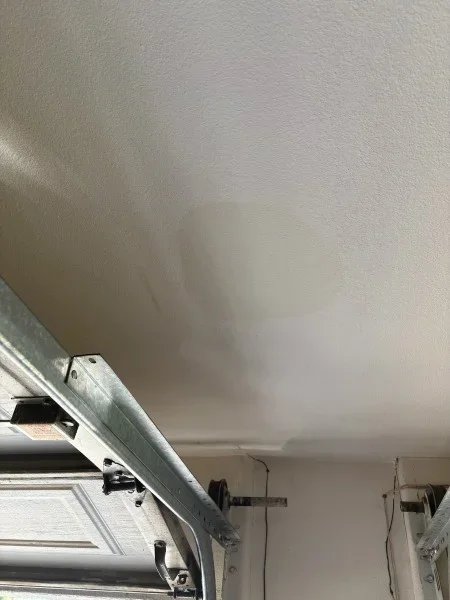
What should you photograph before you call anyone?
Photograph everything before you move, wipe or fix anything. The California Department of Insurance's residential property claims guide tells homeowners to photograph damage, protect the property from more damage and keep receipts for materials. It also says to report damage to your insurer, including new damage you find later, and to hold off on extensive permanent repairs until the adjuster has seen it.
Build a simple file as you go.
Wide shots of each affected room, then close-ups of each stain with a tape measure or a coin in the frame for scale.
The dates you left and got back. A roofer or adjuster can match them against NOAA's daily rain records.
Photos of the roof from each side of the house, plus any roof debris in the yard.
A log of every call with your insurer and your roofer, with dates and names.
Any damaged items you'd normally throw out. The CDI guide says to keep them until the adjuster says otherwise.
Your policy decides what's covered, so ask your agent. A roofer's written report with photos gives the adjuster something concrete either way.
What does a free Roof Health Check cover after a storm?
A Roof Health Check is a free inspection of all 4 layers of your roof, with a written report and photos in 24 to 72 hours. The report is yours whether you hire us or not.
We call it the Four-Layer Check. Every Roof Health Check photographs each of these 4 layers.
The covering: tile, shingle, metal, foam or single-ply.
The underlayment or membrane under it.
Penetrations and terminations: pipe boots, curbs, skylights, drains and roof edges.
The deck and the attic side.
After a storm, the fourth layer tells an owner who was away the most. Water that reached the deck leaves marks there, even when the ceiling below looks clean.
I started roofing at 15 with my father, who worked on HOA roofs. My crews and I have worked on about 7,500 roofs since 1992, and our team of about 60 roofers includes 12 certified spray foam applicators. We inspect homes and commercial roofs in Riverside and Orange counties, and commercial roofs in San Diego and Los Angeles counties. Book a free Roof Health Check online, or call 844-348-ROOF from 8 a.m. to 5 p.m., Monday through Friday. CA License 651509.
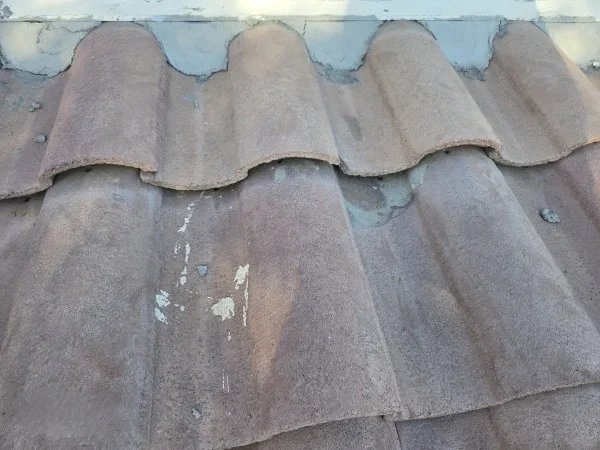
Before your next trip: get the house ready for storm season
Book the inspection before you leave, not after you get back. A roof that's checked in the fall goes into the wet months with its weak spots found while it's dry.
Keep an eye on this winter's forecast. NOAA's Climate Prediction Center issued an El Niño Advisory on October 8, 2026, and put the chance of a "strong-to-very strong" El Niño through January to March 2027 above 83%. The CPC is careful to say that makes El Niño-type impacts more likely, not certain.
Then set up the house so the next storm can't go unnoticed.
Photograph every ceiling before you go, so you're comparing against a picture, not your memory, when you get back.
Have gutters, drains and scuppers cleared, by you or a gutter service. A blocked scupper holds water on a flat roof instead of draining it.
Ask a neighbor or property manager to walk through the house within 48 hours of any real storm, inside the EPA's drying window. Send them this article.
Put water leak sensors under the indoor AC unit, the water heater and any spot that's leaked before.
Get on a schedule. We recommend twice-a-year inspections for desert homes and for flat or foam roofs, plus a look after any hard storm.
If you're already home and looking at a stain, you don't have to wait for the next storm to check if your roof leaked. Trace it, photograph it and have the roof looked at while it's dry.
Frequently asked questions
How do I check if my roof leaked if the ceiling looks dry?
Check the attic if you can get in safely, and look for wet or matted insulation and dark stains on the wood. Open closets and notice any musty smell along exterior walls. On flat and foam roofs, water can sit in the insulation and show up in a ceiling weeks later, so a roofer's moisture check is how you rule it out.
How soon after I get home should I check if my roof leaked?
Right away, before you unpack. EPA guidance says that in most cases, mold won't grow if wet or damp items are dried within 24 to 48 hours, so every day counts once you're home. The California Department of Insurance also tells homeowners to report damage to their insurer and protect the property from more damage.
Is it safe to get on my roof to look for storm damage?
No. The CPSC estimates that ladders and stools sent 227,000 people to U.S. emergency departments in 2020. Check the roof from the ground with binoculars or your phone's zoom, and leave the roof walk to a roofer.
How do I check a flat roof after a storm?
Look from a second-story window for standing water, dark rings where water dried, blisters and clogged drains or scuppers. The National Roofing Contractors Association counts water that's still there more than 48 hours after rain, in weather that should dry it, as ponding. Most of the flat-roof leaks we chase start at penetrations and terminations, such as pipe boots, AC curbs, skylights and drains.
When do Southern California storms usually hit?
Most rain falls from December through March, about 80% of a normal year at John Wayne Airport and 75% at the Palm Springs airport, based on NOAA's 1991-2020 normals. The desert also gets summer monsoon storms, and July through September averages 0.63 inch in Palm Springs. Tropical Storm Hilary dropped 3.18 inches there on August 20, 2023.
Will insurance cover a roof leak that happened while I was away?
That depends on your policy, so ask your agent. The California Department of Insurance tells homeowners to photograph damage, protect the property from more damage, keep receipts and hold off on extensive permanent repairs until the adjuster visits. A roofer's written report with photos gives the adjuster something concrete to review.