Ponding Water On A Flat Roof: Causes And Fixes For Desert Buildings
Water sitting on your flat roof two days after the rain stopped isn't normal, and it isn't harmless. Roofers call it ponding water, and the number that matters is 48 hours. Water weighs about 62 pounds per cubic foot, so a puddle the size of one parking space and just an inch deep adds more than 800 pounds to the deck. Day after day, that weight presses a dip into the roof, and water always finds the dip again. In the desert the trap is sneakier: the sun dries the puddle fast, the stain fades, and the building owner forgets it while the roof keeps taking the hit underneath. In more than 30 years on these roofs, ponding is behind a big share of the leaks we get called for.
What is ponding water on a flat roof?
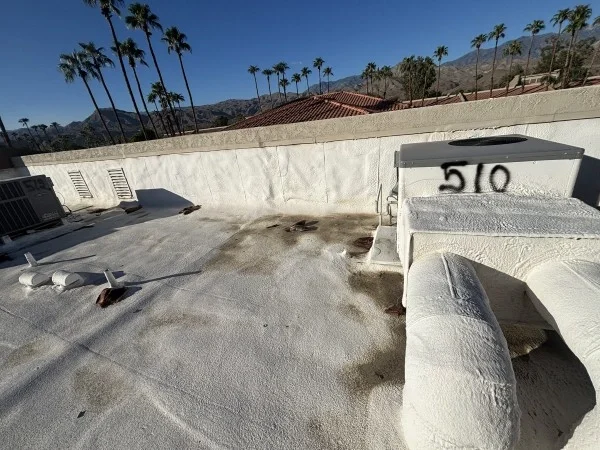
Ponding water is rain that stays on a flat or low-slope roof more than 48 hours after the weather clears. A little standing water right after a storm is fine. Water that's still sitting there two days later, in dry weather, is the kind that does damage.
Ponding water on a flat roof is standing water that remains more than 48 hours after rain stops, in conditions that should let it dry. The National Roofing Contractors Association treats water that's still there 48 hours after the rain as a drainage problem, not bad luck. Before that mark, a puddle is normal. After it, the roof can't drain the way it should.
The real damage from standing water
Standing water hurts a roof three ways: weight, wear, and leaks. Each one feeds the next.
Start with weight. A pond an inch deep adds about 5.2 pounds to every square foot it covers. Park that load over a soft spot in the deck and the deck bends. Once it bends, water pools deeper there, so the load grows and the dip gets worse. That's called deflection, and past a point it's permanent.
Then wear. Desert sun and standing water are hard on a roof surface at the same time. A pond holds heat, grows algae, and traps dust and debris that keep it from drying. Coatings chalk and thin. Seams and old patches soak. On a commercial low-slope roof, the low seam is usually where the first leak shows up.
Last, leaks. Water on a slope runs off before it finds a flaw. Water that sits presses down on every pinhole and seam under it, hour after hour, until it works through. By the time you see a stain on the ceiling, the water has usually been getting in for a while.
What causes ponding water on a flat roof?
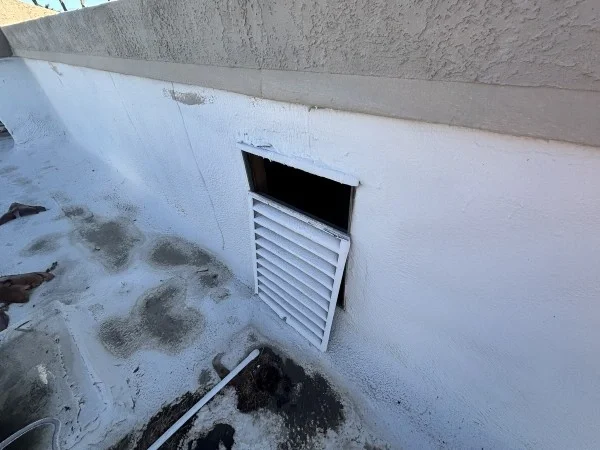
Ponding almost always comes down to one thing: the water has no fast way off the roof. A handful of causes create that.
Not enough slope is the big one. The International Building Code says a new low-slope roof has to be built with at least a quarter inch of fall for every foot it runs, which is a 2 percent slope. Older or cheaply built roofs sometimes never got it. And here's a point most articles get wrong: the code lets you re-cover an existing roof without that full slope as long as the roof still drains within 48 hours. A flat-looking roof isn't automatically against code. A roof that won't drain is the problem.
Bad drains cause the rest. Drains and scuppers that are clogged, undersized, or set too high leave water with nowhere to go. In the desert, dust and palm debris pack a drain fast, and plenty of roofs have no overflow scupper for when the primary drain backs up, even though the building code calls for that backup drainage. Heavy rooftop units and foot traffic press the deck down over time, and so does a building settling with age. Roof insulation under all that load compresses and creates a bowl. Skylights, vent pipes, HVAC condensate lines, and parapet corners all make little dams that hold water where it collects.
The desert trap that hides ponding
In the desert, ponding is easy to miss and easy to shrug off. The dry heat evaporates the puddle in a day or two, so the stain is gone before anyone climbs up to look. The damage, though, adds up every time.
Think about how a desert year actually goes. Months of dry, dusty weather, then a monsoon cell drops an inch of rain in an hour. The drains that sat dry and packed with dust can't move that water fast enough, so it ponds. The sun bakes what's left, breaking down the coating right where the water sits. The right roof for a desert building has to shed that burst quickly and take the UV the rest of the year. Reflective, or cool, roof surfaces also lower roof temperature and cut heat gain, according to the EPA, and a dark ring of ponding biofilm kills that reflectivity. So the puddle that dried up by Tuesday still cost you. That's the part desert owners almost never hear.
How to fix ponding water on a flat roof in 2026
The fix depends on why the water is sitting, and it's usually cheaper and less disruptive than people expect. The goal is always the same: get water moving to the drains within that 48-hour window.
There are five common fixes. Clear, resize, or add drains and overflow scuppers when the slope is fine but the water backs up. Add tapered insulation to build slope under a new membrane. Spray closed-cell foam to build slope right over a sound existing roof. Recoat with silicone, which sheds water and handles occasional ponding better than most surfaces. Or replace the roof when the deck or membrane is too far gone to save. This table sorts out which one usually fits.
| What's happening on your roof | The fix that usually fits | Full tear-off? | Typical service life |
|---|---|---|---|
| A few low spots holding water | Re-slope the low areas with spray foam | No | Decades with recoats |
| Whole roof has almost no slope | Build slope across the deck with foam or tapered insulation | Sometimes | 20+ years |
| Water backs up only at the drains | Clear, resize, or add drains and overflow scuppers | No | Depends on the roof |
| Surface is old and chalking, deck is sound | Silicone recoat over the cleaned roof | No | 10 to 20 years |
| Wet insulation and a soft, rotting deck | Full replacement | Yes | 20+ years |
Service life depends on maintenance. A foam or coated roof that gets a recoat on schedule lasts far longer than one that never gets touched again.
Re-sloping with spray foam, and when to replace instead
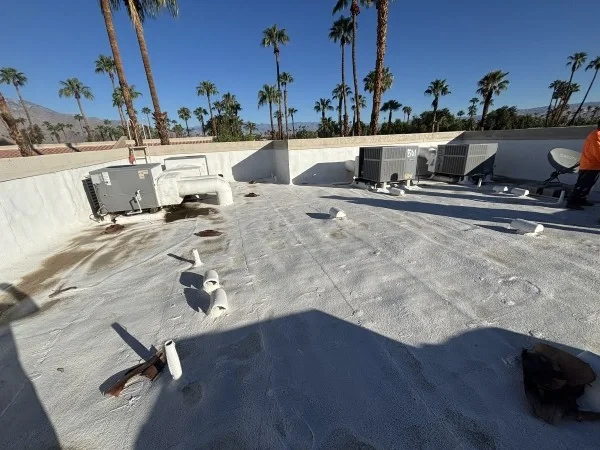
Most ponding roofs don't need a tear-off. On a sound deck, we spray closed-cell foam straight over the existing roof and build the slope the roof never had, so water runs to the drains instead of parking on the membrane. Foam is light, so it won't overload the deck, it fills the low spots exactly, and it goes down as one continuous surface with no seams to leak. Spray foam has been a proven commercial roofing system for decades, and the Spray Polyurethane Foam Alliance sets the material standards for it. About a dozen of our 60 roofers are trained, General Coatings certified foam applicators, and we've put down roofs on buildings like the Yamaha facility in Buena Park and LifeStorage in Costa Mesa. Across 7,500-plus roofs to date, re-sloping a ponding roof with foam is one of the most common jobs we run.
Replacement is still the right call sometimes, and I'll tell you when it is. If the insulation is soaked across the roof, if the deck is rotted or sagging enough that it has to be rebuilt, or if the membrane is cracked and past saving, foam over the top only buries the problem. That's the whole reason we start with a look, not a quote. Our free roof health check gives you a written report and photos of exactly what your roof is doing, so the fix matches the roof.
How to keep ponding from coming back
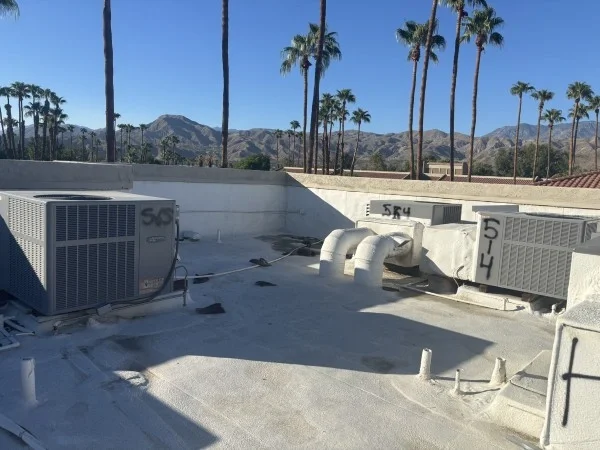
Ponding is mostly a maintenance problem, and maintenance is cheap next to a new roof. Two habits stop most of it.
Keep the water's exit clear. Clear the drains, scuppers, and gutters before the rainy season and again after any big storm, and walk the roof after monsoon cells to check for new low spots. Then keep the surface working with a maintenance plan and a recoat on schedule. Keeping a commercial roof healthy takes a set routine, not a call after the leak. Catch a small low spot while it's small and it's a quick foam patch, not a section of deck.
Does ponding water void your roof warranty?
Often, yes. In my experience, most foam and coating warranties I've handed a client have language about standing water, and many membrane manufacturers exclude ponding damage outright. The industry backs that up: the National Roofing Contractors Association treats long-term ponding as a defect to correct, not a condition to live with. So a pond isn't only a roof problem. It can quietly cancel the coverage you paid for. Read the drainage language in your warranty, and fix ponding before it gives the manufacturer a reason to deny a claim.
When to call a roofer
If water is still on the roof 48 hours after the rain, or you see dark rings, blisters, or green and black growth where it pools, get it looked at before the next storm. Those are the signs the roof has stopped draining. Vision Roof Services handles roof repair and restoration across the desert, from Palm Desert and La Quinta to Rancho Mirage and Palm Springs, plus Phoenix, Tucson, and Las Vegas, with commercial work across Orange County and Southern California. You get a written report and photos back within 24 to 72 hours.
Frequently asked questions
How long can water sit on a flat roof before it's a problem?
About 48 hours. The National Roofing Contractors Association treats water still on the roof more than 48 hours after rain, in drying weather, as a drainage problem rather than normal runoff. A puddle right after a storm is expected. One that lasts two days in dry weather is not.
How much does ponding water weigh?
More than people guess. Water weighs about 62 pounds per cubic foot, so a pond just one inch deep adds about 5.2 pounds to every square foot it covers. A puddle the size of one parking space at that depth is over 800 pounds pressing on the deck, and it gets heavier as the dip deepens.
Can spray foam fix ponding water on a flat roof?
Yes, and it's one of the best fixes when the deck is sound. Closed-cell spray foam is applied over the existing roof and built up to create slope, so water drains instead of pooling. It's light, it fills low spots exactly, and it forms one continuous surface with no seams, usually with no tear-off.
What is the minimum slope for a flat roof to drain?
A quarter inch of fall per foot, which is a 2 percent slope, is the design minimum for new low-slope roofs under the International Building Code. Existing roofs can be re-covered with less as long as they still drain within 48 hours, which the code calls positive drainage.
Does ponding water on a flat roof mean I need a new roof?
Usually not. If the deck is solid, ponding is fixed by re-sloping with foam, adding drainage, or recoating, with no full replacement. Replacement is for roofs with soaked insulation, a rotted or sagging deck, or a membrane that's already failed.
Why does ponding water dry up fast in the desert but still cause damage?
Dry desert heat evaporates the puddle in a day or two, so owners often never see it. The damage is cumulative: each cycle of standing water plus intense UV breaks down the coating in that spot, and dust-packed drains still get overwhelmed by monsoon downpours. Gone by Tuesday does not mean no harm done.
Ponding water that keeps coming back on a flat roof is the roof telling you it can't drain. Catch it early and the fix is usually slope, not a new roof. If you've got standing water anywhere from Palm Desert to Orange County, book a free roof health check and we'll tell you which one you're dealing with.