Most commercial roof inspections take 1 to 3 hours on the roof. A small single-membrane roof on one building can be done in under an hour. A large low-slope roof, or a property with several buildings, can run a half day to a full day. That's the on-site part.
The written report is a separate clock, and it's the one most building owners forget to ask about. At Vision Roof Services, you get a written Roof Health Check report with photos within 3 business days of the visit. I've inspected roofs across Southern California since 1992, and the report is the part clients actually use, for a repair budget, a warranty file, or an insurance claim.
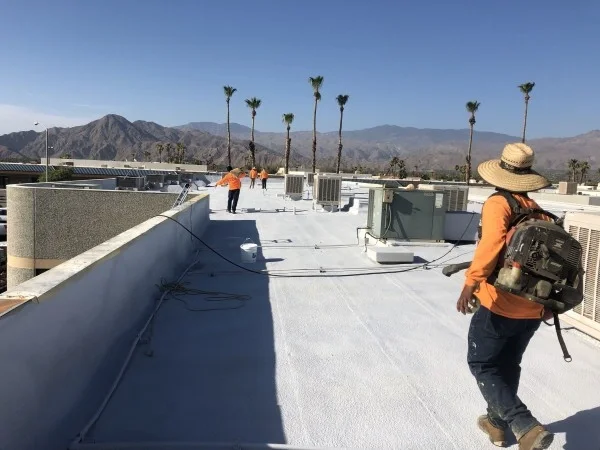
What is a commercial roof inspection?
A commercial roof inspection is a documented check of a low-slope or flat roof's condition, done to catch problems before they spread.
A commercial roof inspection is a hands-on review of a flat or low-slope roof: its seams, flashings, drains, penetrations, and coating. The inspector looks for leaks, wear, and drainage problems, documents each one with photos, then delivers a written report the owner can use for repairs, budgeting, or an insurance claim.
How long it takes in 2026, by building size and roof type
On-site time tracks with three things: roof size, roof type, and how hard the roof is to reach. Here's what we see across our own commercial jobs in Southern California.
| Roof or building | On-site inspection time |
|---|---|
| Small commercial building, under 5,000 sq ft, easy roof access | 30 to 60 minutes |
| Standard low-slope or foam roof, 5,000 to 20,000 sq ft | 1 to 2 hours |
| Large low-slope roof, 20,000+ sq ft, or steep or limited access | 2 to 4 hours |
| Multi-building property or HOA, several roofs | Half day to full day |
| Add an infrared moisture scan | Plus 30 to 60 minutes |
Access is the factor people underestimate. OSHA requires fall protection for roof work at 6 feet or more above the ground, so a tall building, a steep section, or a roof with no safe tie-off means harnesses and anchors before anyone walks it. That setup adds time, and it's why a hard-to-reach roof costs more to inspect than an easy one.
Why flat and foam roofs take longer than pitched shingle roofs
A pitched shingle roof is mostly a visual check from a ladder. A flat commercial roof is a walk-the-whole-field job, and that takes longer.
On a low-slope roof, the inspector walks the entire surface and checks every seam, penetration, drain, scupper, and parapet. Standing water is a real timing factor. The National Roofing Contractors Association treats water still sitting on a roof 48 hours after rain, in drying weather, as ponding, and ponding points to a drainage problem worth documenting.
Spray foam roofs read differently again. The CCPIA's foam roof inspection guidance lists blistering, delamination, exposed or damaged foam, openings in the membrane, and old repairs as the defects to catch. Inspectors don't walk on blistered or delaminated foam, because stepping on it can widen the damage, so a foam roof is slower and more careful by design. Some inspections add an infrared or moisture scan to find wet insulation hiding under the membrane, which adds time but catches leaks a visual pass would miss. If your building has a foam or coated roof, or an aging flat and low-slope roof, plan for the longer end of the range.
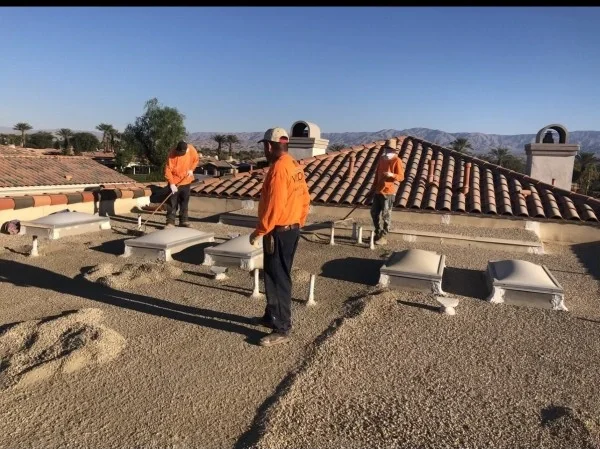
What a commercial roof inspector checks
A good inspection covers the roof surface, the details, and what sits underneath.
What we look for depends on the roof type, since the common commercial roofing materials each age in their own way. On the field, we read the membrane or foam for cracks, blisters, coating wear, and thin spots. Then the details: seams and laps, flashings where the roof meets walls and curbs, penetrations for vents and HVAC, and every drain, scupper, and gutter for backups or ponding. Parapet walls, copings, and rooftop equipment all get a look. Where there's interior access, we check the underside of the deck and the insulation for water stains. On a spray foam roof, the topcoat's condition sets the recoat clock, so we grade it every visit.
How long until you get your inspection report?
The on-site visit is 1 to 3 hours. The report should reach you within a few business days, and that's the number that actually matters.
Most guides measure an inspection by minutes on the roof. That's the wrong yardstick. A fast walk with no photos and no written findings is worthless when you're filing an insurance claim or budgeting a recoat, because adjusters and property managers act on documentation, not on a verbal "looks fine." What counts is whether you get a written report with dated photos you can hand to an adjuster or an HOA board.
Our free Roof Health Check delivers exactly that, within 3 business days. It lays out what we found, where we found it, and what it costs to fix, so you can move on a claim or a repair without waiting weeks. We've run this process on roofs for Yamaha, LifeStorage, and American Tower, plus HOA and small commercial buildings across the desert, over roughly 7,500 completed jobs. If your building is in Orange County, our Orange County roof inspection covers the same report and turnaround.
How often should you inspect a commercial roof?
Twice a year, plus after any major storm.
The Spray Polyurethane Foam Alliance recommends inspecting SPF roofs bi-annually and after severe weather events, and that schedule holds for most commercial low-slope roofs too. A spray foam roof inspected and recoated on time can last 40 or more years, per the SPFA, so the inspections are what protect that lifespan. The SPFA-127 maintenance manual sets out the upkeep that gets a foam roof there. Roofs past 10 years old, or roofs under warranty, need the twice-a-year rhythm to stay covered, since manufacturer warranties usually require a record of maintenance.
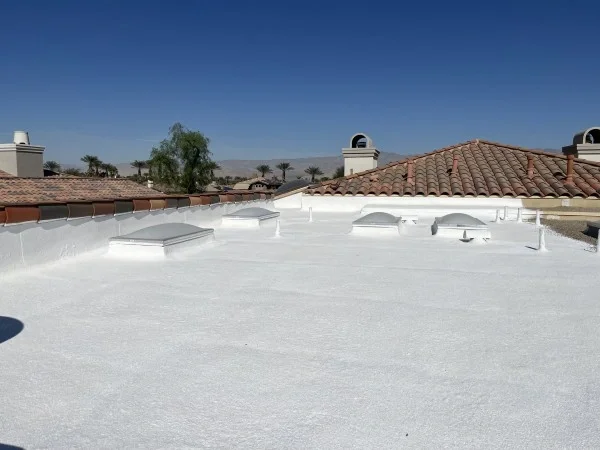
What desert heat does to inspection timing and frequency
In the Coachella Valley, the sun sets the schedule.
Roofs in Palm Desert, La Quinta, and Rancho Mirage bake under UV most of the year, and that's hard on coatings. A silicone or foam topcoat that would hold up for years in a mild climate can chalk, thin, and wear faster out here, so we inspect coated and foam roofs more closely for topcoat wear and recoat timing. Heat also drives up midday roof-surface temperatures, which makes inspections slower and less safe, so we often start desert jobs early in the morning. If your building sits in Palm Springs, Indian Wells, Indio, or Cathedral City, the recoat clock runs faster than a manufacturer's mild-climate estimate, and a yearly look keeps you ahead of it.
On-site access, cost, and what to have ready
You don't need to be on the roof, or even on-site, for most inspections.
Give the inspector roof access, a hatch key, a ladder point, or a gate code, and clear the path to any rooftop equipment. You don't have to be present, though for a building with active leaks we like a quick walkthrough of the interior spots first. On cost: many roofers charge for a standalone inspection. Our Roof Health Check is free, and you get the written report either way. If the report turns up work, we send a proposal you can take to your insurer or budget against, and financing is available through Acorn Financing if you decide to move forward. See all of our commercial roofing services for what we cover.
Frequently asked questions
How long does a commercial roof inspection take? Most commercial roof inspections take 1 to 3 hours on-site. A small roof under 5,000 square feet can be done in under an hour, while a multi-building property or HOA can take a half day to a full day. At Vision Roof Services, the written report with photos follows within 3 business days.
How long does a spray foam roof inspection take?
A standard spray foam roof inspection runs about 1 to 2 hours. It's slower than a shingle roof because the inspector checks for blistering, delamination, and exposed foam, and won't walk on damaged areas. Adding an infrared moisture scan adds another 30 to 60 minutes.
How often should a commercial roof be inspected?
Twice a year, plus after any severe storm. The Spray Polyurethane Foam Alliance recommends inspecting SPF roofs bi-annually and after severe weather, and the same rhythm suits most low-slope roofs. Roofs under warranty usually need documented inspections to stay covered.
Do I need to be there for the roof inspection?
No. You just need to provide roof access, such as a hatch key or gate code, and clear the path to rooftop equipment. Vision Roof Services sends your written Roof Health Check report with photos within 3 business days, so you have a record whether or not you were on-site.
How much does a commercial roof inspection cost?
Cost varies by roofer, roof size, and access. Many companies charge for a standalone inspection. The Vision Roof Services Roof Health Check is free and includes a written report and dated photos you can use for a claim or a repair budget.
What is the difference between a roof inspection and a Roof Health Check?
A Roof Health Check is our documented inspection. Along with the on-site review, you get a written report and dated photos within 3 business days, laid out so you can hand it to an insurance adjuster, an HOA board, or a property manager without translation.
Can I get a roof inspection for an insurance claim after a storm?
Yes. Schedule it promptly after severe weather, even if you see no obvious damage. A documented report with dated photos supports the claim and shows the condition of the roof at the time of the inspection, which is what insurers ask for.
Book a free Roof Health Check. We'll handle your commercial roof inspection, from the on-site visit to a written report with photos within 3 business days. Schedule a free inspection online or call (760) 492-6068.