Do I Need To Be Home During Roof Replacement? An Answer By Roof Type
No, you don't need to be home during roof replacement. The crew works from the outside, your presence isn't required, and most of our residential customers spend the day somewhere else. But there's one exception nobody else writing about this seems to mention, and it comes down to what's going on top of your house.
I'm Dave Bienek. I started roofing in 1992, and the crews at Vision Roof Services have finished about 7,500 roofs across the Coachella Valley, Orange County, and the desert Southwest. On a shingle or tile job, staying home is a comfort question. On a spray foam roof, it's a ventilation question, and there's published guidance on it. Both answers are below.
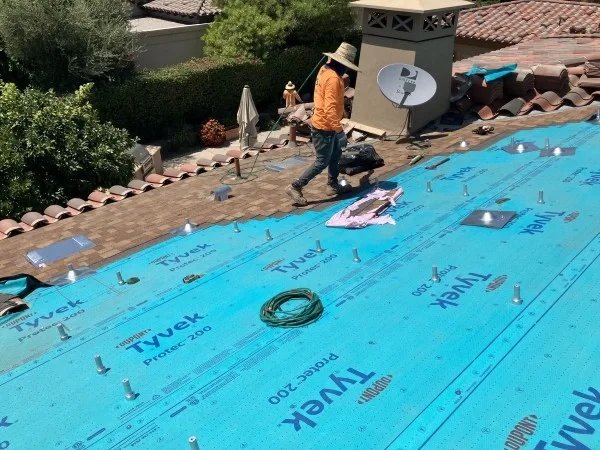
Do you need to be home during roof replacement?
No. You don't need to be home during a roof replacement. Roofing crews work from the outside and rarely need interior access, so the job moves without you. Stay reachable by phone instead. Deck rot found under the old roof is the one discovery that stops work until an owner approves the repair.
That's the short version. What it costs you to stay depends on the roof, the hour, and the building.
Your 2026 roof replacement day, hour by hour
A replacement day runs in 4 phases, and only 1 of them is hard to sit through.
Phase 1: tear-off
The crew strips the old roof down to the deck. Pry bars, shovels, and the sound of material sliding into a trailer. This is the loud part, and it's also the part where your ceilings shake. On a standard asphalt shingle house, tear-off runs a couple of hours to most of a day. On concrete or clay tile, it's slower and heavier, because tiles get hand-stacked rather than shoveled.
If you're going to leave for one stretch of the day, leave for this one.
Phase 2: deck check and dry-in
With the deck open, we walk it and look for soft sheathing, rot, and old repairs somebody buried. Anything bad gets replaced before new material goes down, then the deck gets dried in. This phase is quiet. It's also the phase where you get a phone call if the number on your contract has to change.
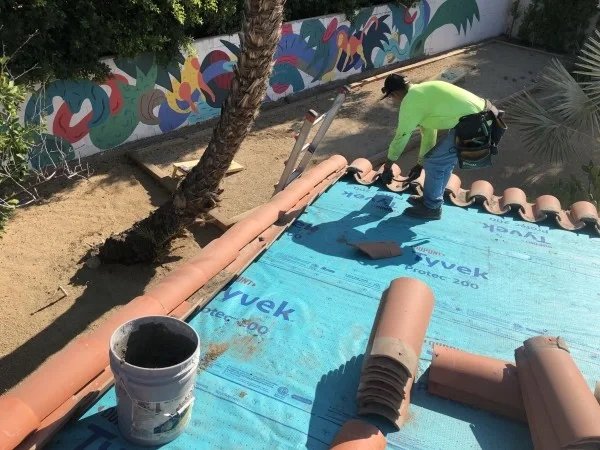
Phase 3: installation
Underlayment, flashing, then the roof itself. Nail guns are steady and rhythmic rather than jarring, and the noise is lower than tear-off. Most people can work through this one with a door closed.
Phase 4: cleanup and the walk
The crew hauls the debris, runs a magnetic roller across the driveway, lawn, and beds for stray nails, and walks the property with you. Do the walk before anybody leaves. From the ground you can see whether the courses run straight, whether the flashing at the chimney and vents looks tight, and whether there are exposed fasteners at the ridge.
How loud is a roof replacement, really?
Loud enough to matter for hours, not minutes. NIOSH puts hand-hammering on a construction site at 87 to 95 dBA, and a pneumatic chip hammer at 103 to 113 dBA. Roof tear-off sits in that first band and stays there. For scale, NIOSH sets its recommended exposure limit at 85 dBA averaged over an 8-hour shift, and cuts the safe duration in half for every 3 dBA above it. Every other article on this question says "loud" and stops.
Those are worker exposure figures measured at the tool, not readings from your living room. Your walls and roof deck knock the level down before it reaches you. But the point stands: tear-off is not background noise you tune out, and it's not a nap, a recorded call, or a video meeting you can talk over. Plan around the tear-off window and the rest of the day takes care of itself.
Your roof type changes the answer
Go for the tear-off on shingle and tile, stay put on flat and single-ply, and plan to be out for spray foam. Almost every guide on this question assumes an asphalt shingle tear-off in a suburb with a lawn, and half the roofs we touch aren't that.
| Roof system | Stay or go | Why | Time on site |
|---|---|---|---|
| Asphalt shingle | Go for tear-off, stay after | Loudest phase is front-loaded, then it drops off | 1 to 3 days |
| Concrete or clay tile | Go for tear-off, stay after | Heavier debris, longer tear-off, breakage risk on walkways | 3 days to over a week |
| Flat or single-ply (TPO, PVC) | You can stay | Work stays on the roof, less vibration, but hot-air welding carries an odor | Several days |
| Spray foam or coating | Plan to be out during application | Off-gassing and overspray drift, published re-entry guidance applies | Several days to several weeks, residential at the short end |
Times move with size, pitch, and access. If you don't know which system you have, that's the first thing a free Roof Health Check settles, and sometimes the report comes back saying you need a coating instead of a replacement.
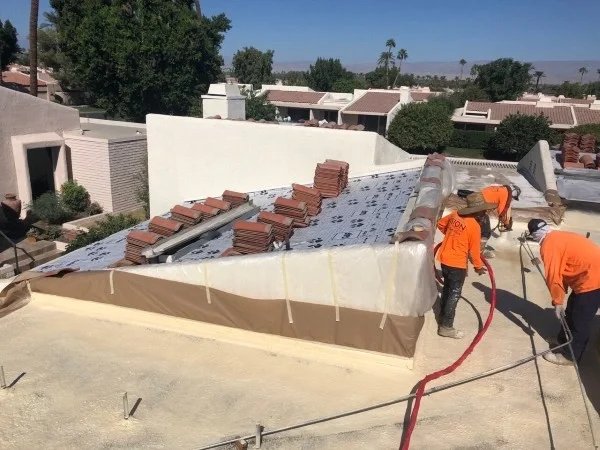
Spray foam is the one job with a published re-entry rule
On a foam job the question stops being about noise and turns into a ventilation question with a published answer. This is where the standard advice breaks down.
The Spray Polyurethane Foam Alliance, the trade body we belong to, puts re-occupancy of the work area at "typically 24 hours," and notes the exact time shifts with the material, the volume of mist and fumes, the size of the building, and how fast the space ventilates. SPFA also says some SPF materials give off a noticeable odor for several days after application, smelling like fish, cat urine, or fresh latex paint, and that the smell is "not indicative of a chemical hazard" but does call for extra ventilation for a few days.
EPA's guidance goes further. Its Safer Choice program says building occupants and other trade workers should vacate during SPF installation, and it names children with asthma as an especially vulnerable group when you're setting a re-entry time. EPA's companion ventilation guidance adds 2 steps most owners never hear about: shut down and seal HVAC openings in the work area so contaminants don't migrate through the building, and keep ventilating until the material has fully cured and off-gassing has stopped.
2 honest caveats, because the difference matters and most contractors won't tell you. First, that guidance was written for interior foam insulation sprayed inside an enclosed space, not for foam applied to the outside of a roof. On a roof, the foam goes down in open air, the exposure path is weaker, and the numbers don't transfer straight across. Second, EPA archived those pages, so they're a reference point rather than a live rule.
What doesn't change: fine particles drift, odor finds open windows and rooftop air intakes, and there's no reason to guess. On our spray foam jobs we mask windows on the work side, cover cars and AC condensers, shut down rooftop intakes during application, and go by the manufacturer's re-occupancy time for the specific system, not a rule of thumb. A dozen of our 60 roofers are certified foam applicators through General Coatings, and that call is theirs to make on site.
If anyone in the building has asthma or a respiratory condition, plan to be somewhere else on spray day. That's the one time I'd tell a homeowner to leave.
When do roofers start and finish in a desert summer?
In Palm Desert in July, "the workday" isn't 8 to 4, and that changes when the noise hits your house.
California's heat illness standard requires shade for outdoor crews once it passes 80°F, and triggers high-heat procedures at 95°F. In a Coachella Valley summer that means our Palm Desert crews start at first light and pull off the roof in the early afternoon. So the loud phase lands early. If you have a baby who naps at 10am, that's a real problem. If you were planning to sleep in, that's a bigger one.
It cuts both ways. Summer jobs run more calendar days than the same roof in spring, because the crew loses the back half of every afternoon. Fall through late spring is the easier window out here, both for the schedule and for whether you can stand to be in the house.
Tenants, HOAs, and occupied buildings
If you manage a building instead of living in one, the question changes from "should I be home" to "do 40 people need to be somewhere else." Usually not.
On commercial roofs we've done for LifeStorage in Costa Mesa and the Yamaha facility in Buena Park, tenants stayed and operations kept running. What makes that work is boring logistics done early: written notice with dates and hours, parking moved out from under the staging area and the roofline, rooftop air intakes identified and shut down during application, and a clear path for equipment that doesn't run through a tenant's front door.
2 exceptions. Ground-floor tenants directly under an open flat roof section should expect dust and vibration through the ceiling, and on foam work anyone in a suite fed by a rooftop intake near the spray zone should be moved or the intake sealed. On an HOA property, sort out board approvals and any color or material rules before the crew orders material, not after. And build the timeline honestly, because commercial roof installs run longer than owners expect.
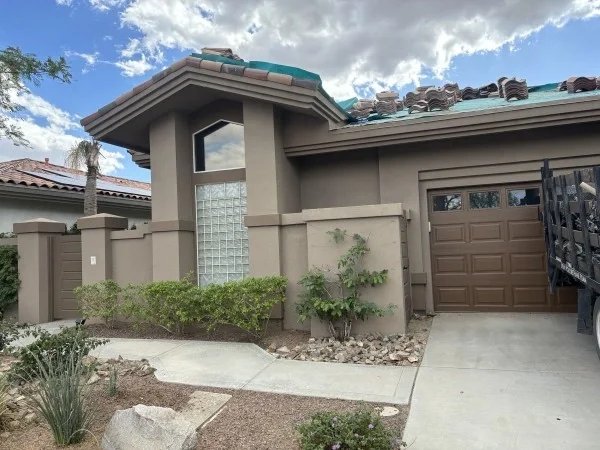
What to do if you stay, and what to do if you go
If you stay, do 4 things. Take art and mirrors off the walls on the top floor. Move fragile items off high shelves. Pick a ground-floor room away from the work and keep kids and pets in it. Skip meetings and calls during tear-off.
If you go, do 3 things. Make sure the foreman has your cell number and knows you'll answer, because deck rot is the one decision that can't wait. Move both cars out, not just one. And leave the yard clear so nobody has to work around your patio furniture.
One thing to expect either way: vibration travels through the framing, so top-floor ceilings can shed dust and hairline settling cracks can open at drywall seams. That's normal on a tear-off and it isn't structural damage. New cracks in a ceiling you photographed beforehand are worth raising on the walk-through, which is why the photo set matters.
Pets are the piece people underestimate. A calm dog is not a calm dog when something is pounding on the roof for 5 hours. Inside, one room, door closed, or boarded for the day.
Get your answer before the crew shows up
Whether you need to be home during roof replacement depends on your roof, your building, and who's in it. That's a 10-minute conversation, not a guess. My crews have inspected and installed roofs across Palm Desert, La Quinta, Rancho Mirage, and Orange County since 1992, and the free Roof Health Check gives you a written report with photos back within 24 to 72 hours. It tells you the system you have, whether you need a replacement at all, and exactly what your day is going to sound like. Book your Roof Health Check and we'll start there.
FAQs
Do I need to be home during roof replacement?
No. Roofing crews work from the outside and rarely need to come inside, so the job runs without you. Stay reachable by phone, because rotted decking found under the old roof is the one discovery that stops work until you approve the repair. The exception is spray foam, where you should plan to be out during application.
Do I need to be home during roof replacement if I'm getting a spray foam roof?
Plan to be out during the spray itself. The Spray Polyurethane Foam Alliance puts re-occupancy of the work area at typically 24 hours, and EPA's Safer Choice guidance says occupants should vacate during SPF installation and that HVAC openings in the work area should be sealed. That guidance was written for interior foam insulation rather than roof application, so go by your contractor's manufacturer-specific re-occupancy time.
How loud is a roof replacement?
Tear-off is the loud phase and it runs for hours. NIOSH measures hand-hammering on construction sites at 87 to 95 dBA and sets its recommended exposure limit at 85 dBA over an 8-hour shift. Those are worker readings taken at the tool, so what reaches your living room is lower, but it's still too loud for calls, meetings, or a nap.
Do roofers need to get inside my house?
Rarely. Most crews never come inside on a replacement. The exceptions are attic access to check for daylight or existing leaks, and interior work tied to a skylight, chimney, or vent. Ask your contractor at contract signing so you can leave a key or plan to be there for that window.
Can I work from home during a roof replacement?
Not during tear-off. Plan to work elsewhere for the first few hours, or move anything with a microphone to the opposite end of the house on the ground floor. Installation is quieter and most people can work through it with a door closed. In a desert summer the loud phase lands early, because Cal/OSHA heat rules push crews to start at first light.
What should I do with my pets during a roof replacement?
Keep them inside, in one ground-floor room away from the work, with the door closed. Animals that are calm around normal household noise often aren't calm during 5 hours of pounding overhead. Boarding for the day is worth it for anxious pets, and it removes the risk of a dog getting into a yard that has stray nails in it.
Do tenants have to move out during a commercial roof replacement?
Usually not. On occupied commercial jobs, tenants typically stay and operations keep running with written notice, parking moved away from the staging area, and a clear equipment path. 2 exceptions: ground-floor tenants directly under an open roof section will feel dust and vibration, and on spray foam work anyone served by a rooftop air intake near the spray zone should be relocated or the intake sealed.