Are Solar Panel Roofs Worth It?
A solar panel roof can cut your electricity bills by 40%-60% and add real resale value. But it's not a slam-dunk for every home. The honest answer depends on three things: which type you install, whether your roof needs replacing anyway, and what you pay per kilowatt-hour locally. Most homeowners researching this topic are comparing traditional rack-mounted panels against the newer solar shingles (also called BIPV). This guide covers both, including the cost data most articles skip.
One thing this article won't cover: every possible government rebate in every state. The federal 30% Residential Clean Energy Credit expired December 31, 2025 for new residential installations. State and utility incentives still exist in some markets, but they change constantly. I'll give you the national cost picture and point you to where those local programs live.
I've seen dozens of homeowners spend two or three times more than they needed to because they bought on aesthetics without running the numbers. This guide is meant to prevent that.
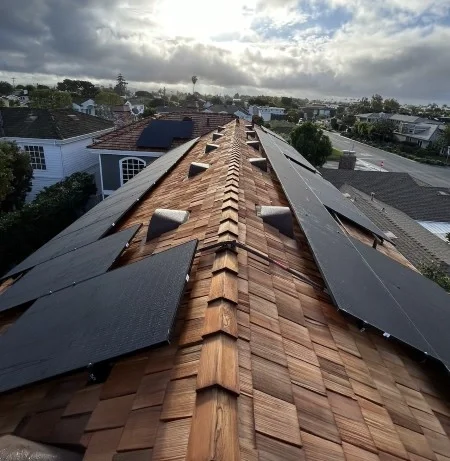
What Is a Solar Panel Roof?
A solar panel roof is any roofing system that generates electricity from sunlight. Two distinct products live under that label, and confusing them is the most common mistake homeowners make.
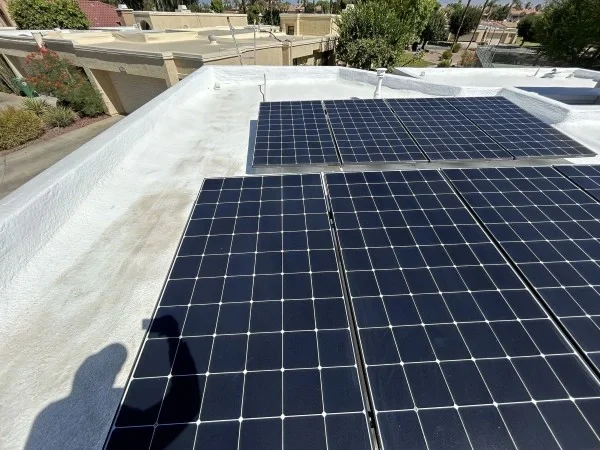
Traditional rack-mounted panels sit on frames bolted to your existing roof. They don't replace roofing material. They go on top of it. The photovoltaic (PV) cells inside each panel capture sunlight and convert it to direct current (DC) electricity. An inverter converts that to alternating current (AC) your home can use.
Solar shingles, or BIPV (building-integrated photovoltaics), replace your roof surface entirely. Each shingle contains PV cells and functions as both weatherproofing and power generation. Premium integrated systems dominate the high end of the market, while entry-level BIPV products offer a more accessible starting point.
Both systems feed electricity into your home's panel and, where net metering applies, back to the grid. The difference is cost, efficiency, complexity, and which scenario actually makes financial sense.
Definition: A solar panel roof is a residential roofing system that generates electricity through photovoltaic cells. It includes two main types: rack-mounted solar panels installed over existing roofing, and solar shingles (BIPV) that replace the roof surface entirely. Each type differs in efficiency, aesthetics, installation complexity, and which scenario makes financial sense.
Solar Shingles vs. Solar Panels: Which One Actually Makes Sense?
For most homes, traditional panels win on cost and output. But solar shingles earn their price tag in one specific scenario: you need a new roof anyway. That framing changes the math entirely.
Here's the comparison that matters.
| Factor | Traditional Solar Panels | Solar Shingles (BIPV) |
|---|---|---|
| Installed Cost | $2.74-$3.30/watt ($21,900-$26,400 for 8kW) | $15-$35/sq ft ($25,000-$60,000 avg) |
| Efficiency | ~20%+ (modern mono panels) | 12-16% (most BIPV shingles) |
| Aesthetics | Visible on roof; mounting hardware shows | Blends with roof; minimal visual impact |
| Payback Period | 9-12 years (post-ITC expiry, 10-13+ yrs) | Often 15-25+ years |
| Repair/Maintenance | Individual panels replaceable; wide labor pool | Specialty labor; hard to match tiles |
| Best Fit | Most homes, especially with sound roof | Roof replacement due anyway; aesthetics a priority |
| Warranty | 25-year panel warranty (standard) | 25-30 yr combined roof + power warranty |
Efficiency: Why the Gap Matters More on Smaller Roofs
Modern monocrystalline panels run at roughly 20%+ efficiency. Most BIPV shingles land between 12% and 16%, according to EnergySage. That 4-8 point gap doesn't sound dramatic until you map it to real square footage. A 1,500 sq ft roof covered in solar shingles may generate 25%-35% less power than the same area with high-efficiency panels.
On a large south-facing roof with no shading, shingles can still cover a typical home's energy needs. On a smaller or partially shaded roof, they often can't, and you'd need to supplement anyway. That's when the premium stops making sense.
What Does Solar Shingle Installation Actually Cost in 2026?
According to Fixr's 2026 installation cost guide, solar shingles run $21-$25 per square foot nationally. For a 1,700 sq ft roof, that puts you at $35,000-$42,500 in materials alone, before labor and components.
Budget tiers break down like this:
| Tier | Product Example | Typical Cost Range |
|---|---|---|
| Entry BIPV | Entry-level BIPV products | $20,000-$45,000 |
| Mid-Range | Other integrated systems | $40,000-$70,000 |
| Premium BIPV | Premium integrated BIPV systems | $60,000-$120,000+ |
| Traditional Panels + New Roof (Comparison) | Asphalt replacement + panels | $30,000-$65,000 combined |
Premium BIPV system quotes frequently come in at $100,000+, sometimes exceeding $160,000 on complex roofs. I've talked with contractors who've seen clients get those quotes, run the comparison to a new asphalt roof plus traditional panels (often totaling $30,000-$65,000 combined), and walk away entirely. That's not a rare outcome.
Traditional Panels: The Cost Breakdown
Per the U.S. Department of Energy, traditional rooftop panels run $2.74-$3.30 per watt installed. For a typical 8kW residential system, that's $21,900-$26,400 before any state incentives. Regional pricing varies: California averages around $2.83/W, Arizona near $2.54/W, and higher-cost markets like Massachusetts closer to $3.45/W.
Payback periods post-ITC (with the 30% federal credit now expired) run 10-13+ years on average nationally. That timeline shortens in high-rate electricity markets and lengthens in low-rate ones.
Is a Solar Panel Roof Worth It for Your Home?
Worth it? For traditional panels on a sound roof in a high-electricity-rate market: yes, for most homeowners. For solar shingles installed on a roof with 10 years of life left: almost never. The numbers don't support it.
Here's a quick decision framework based on scenarios I see play out repeatedly:
1. Your roof needs replacement within 2 years: Solar shingles are worth serious consideration. You're paying for a new roof regardless. Adding BIPV at that stage turns a sunk cost into a 25-30 year energy asset.
2. Your roof is 5+ years from needing work: Install traditional panels now. They'll pay back in 10-13 years. When the roof eventually needs replacing, evaluate BIPV at that point with whatever technology and pricing look like then.
3. You live in a shaded yard or have a north-facing pitch: BIPV shingles are a poor fit. They can't be repositioned for optimal sun angle the way rack-mounted panels can.
4. Aesthetics matter more than ROI: Solar shingles are the right call. But go in knowing you may never fully recoup the premium cost through energy savings alone.
A note on the property value argument: older Zillow and Lawrence Berkeley National Laboratory data put traditional solar at roughly a 4.1% home value bump, or about $5,900 per installed kW. BIPV data is newer and thinner. Local appraisers in many markets still don't know how to value solar shingle homes, which makes that premium speculative. Build your business case on electricity savings, not assumed resale uplift.
The contrarian take most installers won't tell you: the marketing pitch that premium BIPV systems "pay for themselves like regular solar" is built on outdated math. At a national average around $106,000 for top-tier integrated systems versus a combined new-roof-plus-panels alternative that often runs $35,000-$65,000, you're paying a steep premium purely for aesthetics. The calculus only works if you're in a very high electricity rate area, need the roof replaced now, and genuinely value the curb appeal enough to justify that gap.
How Many Solar Shingles Does a Typical Home Need?
Most homes need 150-200 solar shingles to cover annual electricity consumption, though the number depends heavily on your roof's sun exposure and your actual usage.
Here's the math for a typical American household consuming about 10,400 kWh per year (roughly 867 kWh per month, per the U.S. Energy Information Administration):
5. A single shingle in good conditions produces roughly 13-63 watts depending on the brand.
6. Assuming a mid-range 50W output and 4.5 hours of peak sun daily, each tile generates about 0.225 kWh per day.
7. Daily household need: ~28.5 kWh.
8. Under ideal conditions, that's about 127 shingles. In real-world conditions with shading, angle losses, and efficiency variation, plan for 160-200.
On a standard 1,700 sq ft roof, 160-200 shingles typically means covering your entire roof surface, not just a portion. That's a key practical constraint: unlike rack-mounted panels, which you can size to your budget and add to later, solar shingles are usually an all-or-nothing installation.
If your roof has significant shading from mature trees, that number climbs further, often past 220 shingles, to compensate for reduced per-tile output. At $21-$25 per square foot, every shingle you add pushes the total cost higher in a linear, unforgiving way.
How Does Solar Panel Roof Installation Work?
Both systems involve professional installation. Neither is a DIY project. Attempting either without licensed electrical and roofing trades voids your warranties and likely violates local permit requirements. The same holds for larger buildings, where commercial roofing projects add structural load reviews and code requirements that a homeowner job won't have.
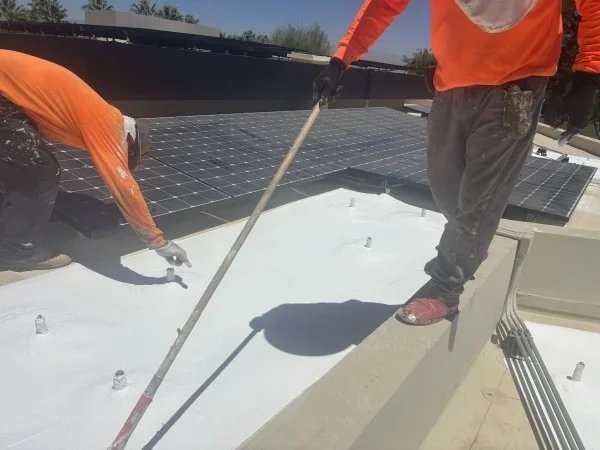
Installing Traditional Rack-Mounted Panels
9. Assessment and permitting. A licensed installer pulls your local permit and conducts a structural and electrical assessment. Most municipalities require this before any roof penetration.
10. Mounting brackets. Brackets are bolted through the roof into rafters. Flashing around each penetration is critical. A sloppy installation here is where leaks start, often years later.
11. Rail system. Aluminum rails attach to the brackets. Panels clip onto the rails with manufacturer-specified hardware that allows for individual panel removal.
12. Wiring. Panels connect in series to form strings. Cabling runs through the roof to an inverter (usually wall-mounted in the garage or utility room) that converts DC to usable AC power.
13. Inspection and interconnection. Your local inspector signs off. Then your utility connects the system for net metering, where applicable.
Total installation time for a standard 8kW residential system is typically 1-3 days for a crew, once permits are in hand. Permit timelines vary wildly by municipality, from a few days in faster jurisdictions to 6-8 weeks in parts of California with heavier review.
The NRCA's July 2025 white paper on PV-ready roofs makes one point worth remembering: roofing materials under your panels should have a service life that matches or exceeds your PV array's lifespan (typically 25+ years). If you're putting panels on a 12-year-old asphalt roof, factor in a replacement around year 13 that will require the panels to come down and go back up. That costs $1,500-$4,000 extra depending on system size.
That's one reason getting solar roof preparation handled correctly matters so much before you sign anything. If your roof isn't ready for a 25-year commitment, the panels shouldn't go on it yet.
Installing Solar Shingles (BIPV)
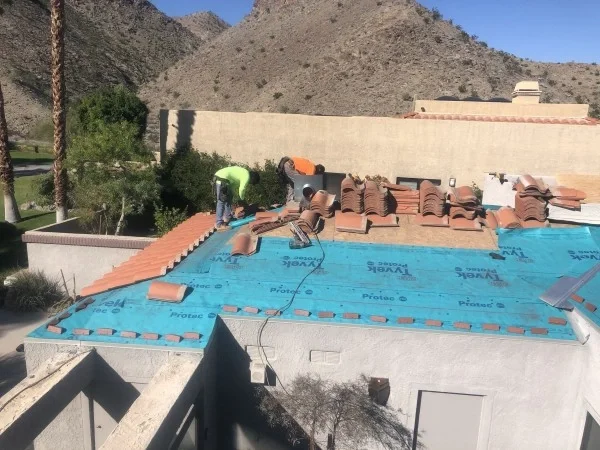
14. Full tear-off. Unlike panel installation, BIPV requires removing your existing roofing material down to the deck.
15. Structural assessment. Some older homes require rafter reinforcement or deck repair before shingles go on. Factor this into your budget upfront.
16. Shingle installation with integrated flashing. Each shingle seals to the adjacent ones and to the flashing system per IBC 2024 Section 1507.16 requirements. This is where warranty voids most often occur from poor workmanship.
17. Sub-roof wiring. Electrical connections run beneath the tile layer through the roof structure to a centrally located inverter. Access for future repairs requires partial tile removal.
18. Grid interconnection and inspection. Same permit and utility interconnection process as rack-mounted panels.
BIPV installation is more complex because it combines two trades: licensed roofing and licensed electrical, which don't always coordinate smoothly. Contractor forums are full of stories about warranty coordination headaches when something goes wrong between the roof warranty and the power production warranty. Ask your installer, in writing, who owns the claim if a shingle cracks and causes a leak.
For homes across Southern California, Vision Roof Services handles both the roofing assessment and contractor coordination that BIPV projects require. Getting that professional roof inspection before committing to any solar installation is the step most people skip and later regret.
What Changed for Solar Panel Roofs in 2026?
Two things changed this year that significantly affect whether a solar roof investment makes sense.
The 30% federal tax credit expired. The Residential Clean Energy Credit, which offset 30% of installation costs, ended December 31, 2025. For a $25,000 traditional panel system, that's $7,500 in savings that's gone. For a $60,000 solar shingle install, it was $18,000. Post-credit, payback periods lengthen by roughly 2-4 years depending on your rate and location.
U.S. solar installations fell 14% in 2025. According to the Solar Energy Industries Association's 2025 Year in Review, total U.S. solar capacity additions dropped 14% year-over-year despite solar still accounting for 54% of new electricity capacity. The drop signals market softening post-incentive, which tends to push installer competition up and retail prices down in the near term.
State incentives partially fill the gap in some markets. California, where Vision Roof Services operates, has active state-level programs and strong net metering history, which helps shorten payback compared to states with no support. Local utility credits and rate structures also matter, so check what applies in your specific service territory.
The BIPV market itself is growing, projected at roughly 5.9% CAGR through 2033, which means more product competition and potentially lower costs over time. If you don't need a new roof immediately, waiting 2-3 years for the solar shingle market to mature may be a legitimate strategy.
What Questions Should You Ask Before Installing a Solar Roof?
Most homeowners ask about cost and savings. Fewer ask the questions that actually protect them. Here are the ones I'd push on before signing anything:
How many years of useful life does my current roof have? If fewer than 12-15, a full tear-off and replacement makes sense to consider before or with your panel install.
Who handles the warranty claim if a shingle cracks and causes a leak? Get this answered in writing. Roof warranty and power production warranty often come from different companies.
What's my actual peak sun hours per day at my address? Your installer should pull this from NREL's PVWatts tool, not estimate from regional averages.
Has my roof structure been assessed for load capacity? Standard asphalt panels weigh 2-4 lbs/sq ft. Some BIPV systems run heavier. Older homes sometimes need rafter reinforcement.
How will damaged shingles be sourced and replaced in 10-15 years? This is the question that embarrasses a lot of BIPV salespeople. Specialty tiles from discontinued product lines become expensive and nearly impossible to match.
Does this installation affect my homeowners insurance? Some policies require a rider for solar. Others may change your wind/hail coverage. Call your insurer before installation, not after.
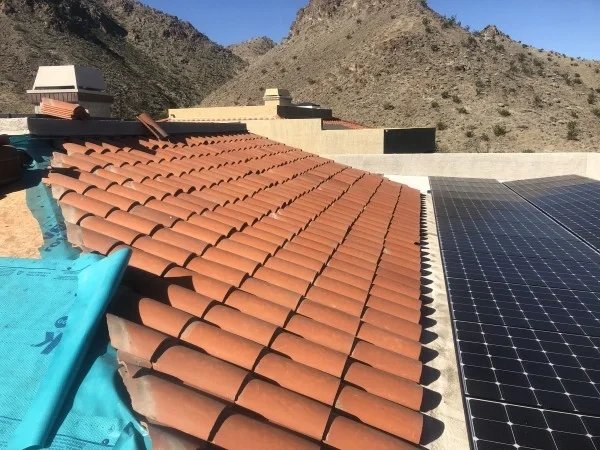
Does my roof type work best with solar panels? This matters in hot, sunny climates like Southern California, where roof material and pitch affect both durability and solar output. A good residential roofing assessment answers this before you commit.
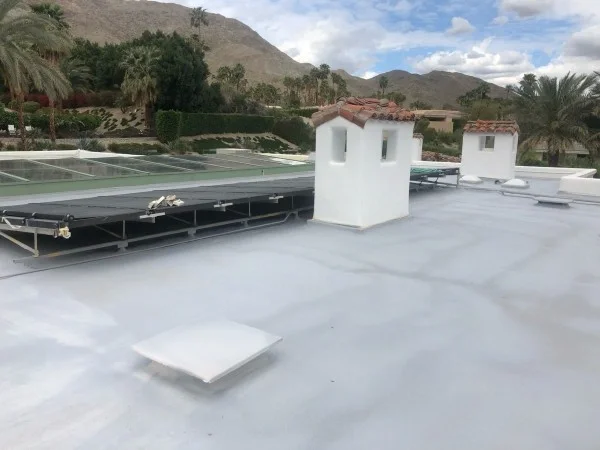
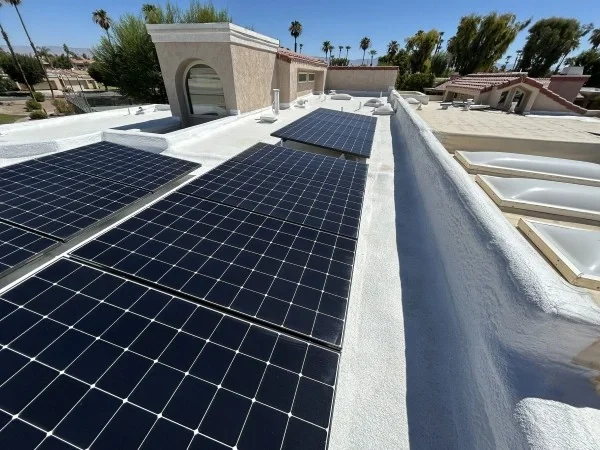
That last point about roof type isn't just an aesthetic consideration. Some roofing materials have different mounting and integration requirements than asphalt shingles. If you have a flat or low-slope roof, a spray foam roofing system changes the solar compatibility picture entirely.
How Do You Maintain a Solar Panel Roof Long-Term?
Maintenance requirements differ more than most buyers realize, and the difference compounds over 25 years.
Traditional panels: Largely low-maintenance. Annual cleaning (or more in dusty climates) removes debris that reduces output. Individual panels can be replaced without disturbing the rest of the system. The inverter typically needs replacement around year 10-15. Labor is widely available. Any qualified solar installer can work on a standard rack-mounted system.
Solar shingles: More involved. Damaged shingles require matching tiles, which aren't always available years later if the product line changes. Repairs involve partial roof disassembly with cross-trade coordination (roofer plus electrician). Contractor forums and online homeowner communities are full of people waiting months for service on damaged BIPV installations in areas without enough qualified technicians. Budget for that reality.
Both systems should be paired with a regular free roof health check. Annual inspections catch flashing failures and small leaks before they become expensive water damage inside your home.
The BLS projects solar PV installer employment to grow 42% through 2034, adding roughly 12,000 jobs. Traditional panel maintenance will become easier to source over time. BIPV specialized labor will improve too, but likely more slowly given the smaller installed base and brand-specific training requirements.
Solar Panel Roof 2026: The Bottom Line
A solar panel roof is worth it for most homeowners who have a structurally sound roof, live in a market with meaningful electricity rates, and plan to stay in the home 10+ years. Traditional rack-mounted panels are the right answer 80% of the time: lower cost, higher efficiency, easier maintenance, shorter payback.
Solar shingles earn their price in one scenario: you're replacing your roof anyway, you care about aesthetics, and you've done the side-by-side math against panels-plus-new-roof. Even then, skip the premium-tier options unless the aesthetics are genuinely worth the cost gap to you personally.
The expired federal tax credit changes the calculus for everyone in 2026. Check your state's incentive programs. Run payback estimates at your actual local electricity rate, not a national average. And get your roof assessed before you sign anything with a solar installer.
An experienced roofing team across Southern California can handle the assessment and repair work that solar prep depends on. Vision Roof Services offers roof repair and restoration specifically for homeowners weighing solar or preparing a roof for a long-term installation. Getting the structural picture first is the step that makes every other decision easier.
FAQs
Are solar panel roofs worth the cost in 2026 without the federal tax credit?
Traditional solar panels still pencil out in most markets where electricity rates are above the national average. The expired 30% federal credit adds 2-4 years to your payback timeline. Solar shingles are harder to justify without the credit unless you're replacing the roof anyway. Run your break-even at your actual local rate, not a national average.
What is the difference between solar panels and solar shingles?
Traditional solar panels mount on frames over your existing roof surface and achieve roughly 20%+ efficiency. Solar shingles (BIPV) replace your roof material entirely and integrate PV cells into each tile, typically achieving 12-16% efficiency. Panels go on top of your existing roof without disturbing it. Solar shingles replace the roof surface entirely, which is why installation is more complex and takes longer.
How long does a solar panel roof last?
Both traditional solar panels and solar shingles carry 25-30 year warranties. Most panels still deliver around 80% of their original output at the end of that warranty period. Traditional panels are easier to maintain because individual units can be replaced without disrupting the rest of the system. Solar shingles require matching specialty tiles, which can be difficult to source years after installation if the product line changes.
How many solar shingles does a typical house need?
A typical U.S. home consuming 10,400 kWh per year needs approximately 160-200 solar shingles under real-world conditions. Each shingle generates roughly 0.225 kWh per day at 50W output with 4.5 hours of peak sun. That calculates to about 127 shingles under ideal conditions; add 25-35% to account for shading, roof pitch losses, and efficiency variation.
Can you install solar shingles on any roof type?
No. Solar shingles require a full tear-off and replacement of your existing roof surface. They work best on new construction or roofs due for replacement. Homes with complex roof geometries, significant shading, or north-facing primary pitches are poor candidates. The NRCA recommends roofing materials with service lives matching or exceeding the 25+ year PV system lifespan.
How long do solar panel roofs last and what is the payback period?
Both traditional panels and solar shingles carry 25-30 year warranties with roughly 80% of original output remaining at end of warranty. Traditional panels have a post-ITC payback period of 10-13 years nationally, shorter in high-rate markets. Solar shingles typically run 15-25+ years to payback due to higher upfront costs, unless the roof replacement cost is factored into the BIPV comparison.
What should I do before installing a solar panel roof?
Get a professional roof assessment first. You need to know how many years of useful life your current roof has, whether your structure can handle the panel load, and what your local peak sun hours look like. If your roof has fewer than 12-15 years of life remaining, plan the roofing work into your solar budget. The NRCA's July 2025 guidance specifically recommends matching roof lifespan to your PV system before installation.