Yes. Most foam roofs need prep before the rain season, and the time to do it is the dry stretch before the first big storm. A spray foam roof keeps water out only while its coating is intact and its drains are clear. Foam roof prep checks both, then fixes what's wrong while the roof is still dry enough to work on.
This year the timing matters more than usual. NOAA's Climate Prediction Center has an El Niño Advisory in effect, and its October 8, 2026 update calls "a strong-to-very strong El Niño likely through January-March 2027." If nobody has checked your roof since last winter, book that check now.
I started on roofs at 15, working alongside my father on HOA roofs, and I've been roofing in Southern California since 1992. Our crews have finished about 7,500 roofing projects. Spray foam is our specialty, and leaks on aging flat roofs are still the call we get most.
What is foam roof prep?
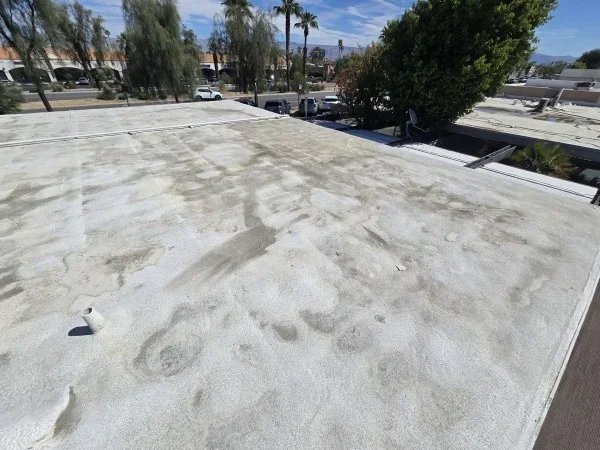
Foam roof prep is the work that gets a spray polyurethane foam (SPF) roof ready for heavy rain. It covers an inspection of the coating and foam, clearing drains and scuppers, resealing pipes, vents and HVAC curbs, patching damage and recoating worn areas. In Southern California, it should be done on dry fall days, before winter storms arrive.
The foam insulates and waterproofs the roof, while the coating on top shields that foam from the sun. The Spray Polyurethane Foam Alliance (SPFA) says foam roofs need a protective coating to block ultraviolet light. When the coating wears through, sun reaches bare foam, and the first real rain of the season is often when that damage turns into a leak.
At Vision Roof Services, 12 of our 60 roofers are trained and certified foam applicators through General Coatings, and we're SPFA members. We do residential and commercial work in Riverside and Orange counties, and commercial work in Los Angeles and San Diego counties.
What the 2026 El Niño forecast means for your foam roof
It raises the odds of a wet winter in Southern California, but it doesn't promise one. NOAA's U.S. Winter Outlook, released October 15, 2026, says wetter-than-average conditions are likely across the southern U.S., including California, from December through February. The Climate Prediction Center also says the chances of El Niño-type impacts are higher this year, though not guaranteed.
Big El Niños don't always deliver. The major El Niño of 2015-16 was widely expected to break California's drought, but the rainy season ended slightly below average, according to a 2019 Journal of Climate study of Southern California rainfall by Benjamin Cash and Natalie Burls.
A normal year packs its rain into a short window anyway. NOAA's 1991-2020 normals put downtown Los Angeles at 14.25 inches a year, and about 87% of it, 12.42 inches, falls from November through March. The normal more than triples from November (0.78 inches) to December (2.48 inches). That's why your prep should be done by the end of November, El Niño or not.
Does my foam roof need a recoat before the rain?
Only if the coating is worn, cracked or missing. If the coating is still sound, cleaning, drain clearing and spot sealing are usually enough.
SPFA says roof coatings may last 5 to 20 years, depending on the climate, the coating type and how thick it went on. It also says a foam roof that's inspected and recoated on schedule can last the lifetime of the building. Coachella Valley sun and heat push coatings toward the short end of that range.
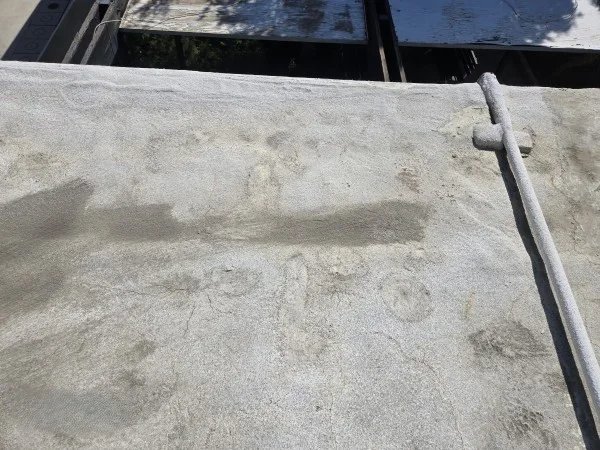
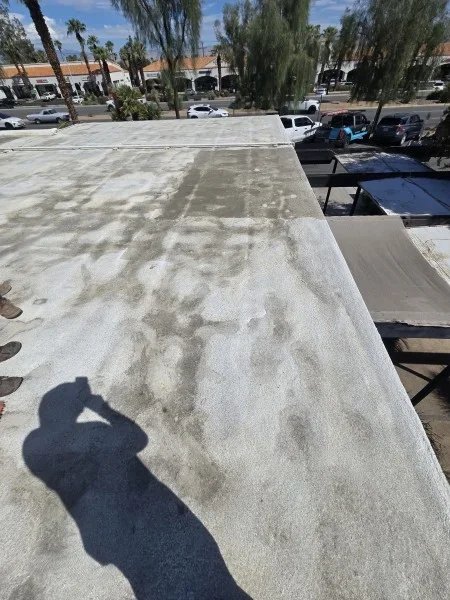
A foam roof can look fine from the street and still be out of coating. Our crews look for chalky film that rubs off on a hand, thin spots where foam shows through, foam that has turned yellow or brown, and coating that's cracked, peeling or blistered. Damage in isolated spots can be patched, but wear across the whole roof calls for a recoat, and fall is when to do it.
6 things to check on a foam roof before the first storm
Check the coating, the drains, the overflow outlets, the low spots, every penetration and every old repair. If you're not comfortable on a roof, leave the walk to a roofer.
Start with the coating. Chalk, thin spots, bare foam, cracks and blisters all go on the repair list, and blisters can mean moisture got under it.
Drains and scuppers come next. Clear leaves, trash and dirt from every drain, scupper, gutter and downspout. Wind-blown dust builds up between storms in the Coachella Valley, so a drain that ran clear in spring can be packed by fall.
If your roof has parapet walls, it needs a backup way out for water. On roofs that need drains, California's building codes call for a secondary drain or scupper wherever the roof edge would trap water if the main drains backed up (Section 1502.2 of the California Building Code, and R903.4.1 of the California Residential Code for homes). For homes, the code puts the overflow inlet 2 inches above the roof's low point. If yours is missing or blocked, fix that first.
Look for low spots. The National Roofing Contractors Association defines ponding as water still sitting on a roof more than 48 hours after rain in weather that should dry it. Foam can be sprayed thicker in low areas to build slope, and that's how we fix ponding water on flat roofs when the deck underneath is sound.
Every pipe, vent, skylight and HVAC curb is a leak path. In desert heat, vent boots harden and split, and flashing sealant shrinks away from stucco.
Recheck old patches and the spots where HVAC techs or solar crews work, since dropped tools and dragged equipment can puncture the coating.
Why storm-week prep comes too late for foam roofs
Foam and coatings only go on a dry roof, and dry days get harder to schedule once the rains start.
The usual storm checklist is built for the week a storm shows up in the forecast: clear the drains, tie down loose items, take photos. Do those things. But the work that stops a foam roof from leaking can't happen that week.
We spray foam only on a bone-dry roof, because spraying over moisture, even morning dew, causes blisters. Coatings need a clean, dry surface too, so a wet roof can't be recoated.
Then there's the calendar. In a normal year, December through February brings 9.41 of downtown LA's 14.25 inches of rain, about 66% of the year's total. A leak found in January has to wait for a dry stretch before anyone can fix it right.
So we schedule foam work by the calendar. October and November give us dry roofs, and work done then holds up in a wet winter or a dry one.
A rain-ready calendar for foam roofs
Inspect in September or October, fix and recoat through November, then clear drains and check the roof after every big storm until spring.
| When | What to do | Why |
|---|---|---|
| September to October | Book a Roof Health Check. The written report and photos arrive within 24 to 72 hours. | Summer heat damage is fresh, and the roof is dry enough to work on. |
| October to November | Patch damage, reseal penetrations and recoat worn areas on dry days. | Foam and coatings need a dry surface, and December's normal rain is more than 3 times November's. |
| December to March | Clear drains after each big storm and get the roof checked after severe weather. | About 87% of downtown LA's normal yearly rain falls from November through March. SPFA recommends checks after severe weather. |
| April to August | Schedule bigger recoats and replacements for the dry months. | April through October brings 1.83 inches of downtown LA's normal rain. In the desert, crews start early to beat the heat. |
Desert owners should book that first inspection in September, right after the hottest months.
Desert foam roofs vs coastal foam roofs
Desert foam roofs mostly fail from sun damage that the first storm exposes. Coastal roofs get 2 to 5 times as much rain in a normal year, so their drains and low spots get tested more often.
| Coachella Valley | Coastal Orange County and LA | |
|---|---|---|
| Normal rain per year (NOAA, 1991-2020) | 4.61 inches in Palm Springs, 2.96 inches in Thermal | 11.18 inches at John Wayne Airport, 14.25 inches in downtown LA |
| How the rain comes | Rare storms that can drop months of rain in hours | Winter storms, mostly November through March |
| What to watch | Chalky, faded coating, split vent boots, flashing sealant pulling away from stucco | Clogged drains, ponding at low spots, seals at pipes and HVAC curbs |
| Best time to inspect | September, right after the heat | September to October, before the rains |
Tropical Storm Hilary showed what a desert storm can do. NASA reported that Palm Springs got about 6 months of rain in 6 hours when Hilary hit in August 2023. Our roofers in Palm Desert see sun damage turn into leaks in the first real rain of the season. We also sprayed the Invisible House in Joshua Tree, up in the high desert, to protect it from desert weather.
Along the coast, the test is volume. A roof near John Wayne Airport averages 11.18 inches of rain a year, and this winter's outlook leans wetter than average. Our Mission Viejo crew covers Orange County.
Should you repair, recoat or replace a foam roof before the rains?
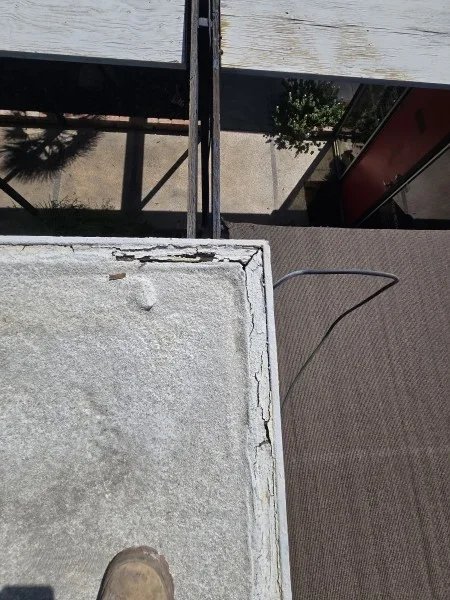
Repair or recoat when the foam underneath is dry and sound. Replace only when water has soaked the foam or damaged the deck below it.
Every Roof Health Check we do ends with 1 of 4 recommendations, and on a foam roof each one points to different prep.
| Recommendation | What we usually find | Prep before the rain |
|---|---|---|
| Continue Monitoring | Coating intact, drains clear, seals tight | Clean the roof, clear drains and recheck after big storms |
| Repair & Protect | Damage in spots: blisters, punctures, a failed seal at a vent or curb | Cut out and patch damaged foam, reseal penetrations and spot-coat the repairs |
| Restore & Extend | Coating worn or chalky across the roof, with dry foam underneath | Clean and recoat the full roof, and add foam at low spots that pond |
| Replace & Renew | Wet foam or a damaged deck | Remove the wet foam and plan a new foam system |
A full restoration is what we completed on Yamaha's office facility in Buena Park. When replacement is the call, new spray foam roofing can often go over a sound existing roof, which can cut tear-off costs.
What does foam roof prep cost at Vision Roof Services?
The Roof Health Check is free. Homeowners who want hands-on prep in the same visit can book our $299 El Niño Roof Readiness Check. Recoats and new foam roofs are quoted per roof.
| Option | Price | Who it's for | What's included |
|---|---|---|---|
| Roof Health Check | Free | Homes, HOAs and commercial buildings | Inspection of the surface, flashing, drainage and structure, with a written report and photos in 24 to 72 hours |
| El Niño Roof Readiness Check | $299 | Homeowners in the Coachella Valley and Orange County | Visual roof inspection, photo-documented condition report, preventative maintenance and written recommendations when needed |
| Essential plan | $499 | Homeowners | 1 roof inspection a year with a 30-point check, drain and valley cleaning, and minor sealant touch-ups at vents and flashing |
| Premium plan | $699 | Homeowners | Everything in Essential, plus a coating inspection, UV assessment, before-and-after photos and 10% off non-warranty repairs |
| Ultimate Protection plan | $1,499 | Homeowners | Everything in Premium, plus 1 no-cost emergency leak response a year and a storm damage check after extreme weather |
| Repair, recoat or new foam roof | Quoted per roof | Homes, HOAs and commercial buildings | Price depends on the substrate's condition, tear-off needs, square footage and the coating system |
Recoats and new roofs can be financed through Acorn Financing.
What to do if your foam roof leaks in a storm
Stay off the roof, protect what's under the leak, document it and call for a check once the storm passes.
Don't climb up during rain or wind. Move anything that can't get wet, catch the water and photograph the ceiling and the drip with the date showing. A dated report from a fall Roof Health Check records the roof's condition before the storm, which helps when you talk to a warranty provider or insurer.
And don't let anyone spray foam or coating over a wet roof to stop a leak. Moisture trapped under new foam causes blisters, and the patch can fail.
Homeowners on our Ultimate Protection plan get 1 no-cost emergency leak response a year. Everyone else can call 844-348-ROOF (844-348-7663).
Foam roof rain season FAQ
Does a foam roof need prep before the rain season?
Yes, in most cases. A foam roof keeps water out only while its coating is intact and its drains are clear, and SPFA recommends inspecting foam roofs every year. In Southern California, book the check in September or October so repairs can be finished on dry days before December.
How often does a foam roof need to be recoated?
SPFA says roof coatings may last 5 to 20 years, depending on climate, coating type and thickness. Desert sun pushes coatings toward the short end of that range. A yearly inspection tells you where your roof sits.
When should I schedule foam roof prep before the rain season?
Book the inspection in September or October and finish repairs or recoats by the end of November. In downtown Los Angeles, NOAA's normal rainfall more than triples from November to December, and about 87% of the year's rain falls from November through March.
Can you spray foam or recoat a roof when it's wet?
No. We spray foam only on a bone-dry roof, because moisture, even morning dew, causes blisters. Coatings also need a clean, dry surface, so foam work has to wait for dry weather.
How long can water sit on a foam roof before it's a problem?
The National Roofing Contractors Association defines ponding as water still on a roof more than 48 hours after rain, in conditions that should dry it. On a foam roof with a sound deck, we can spray extra foam at low spots to build slope and move that water to the drains.
How much does foam roof prep cost?
Our Roof Health Check is free, and homeowners can book a $299 El Niño Roof Readiness Check that adds preventative maintenance. Residential service plans cost $499, $699 or $1,499. Recoats and new foam roofs are quoted per roof.
Will a strong El Niño mean more rain in Southern California this winter?
It raises the odds. NOAA's October 2026 Winter Outlook favors a wetter-than-average winter across the southern U.S., including California. But the major El Niño of 2015-16 still left Southern California slightly below average, so prep for rain either way.
Book your foam roof prep before December
Foam roof prep before the rain season needs a dry roof to work on, and in Southern California that means October and November. Book a free Roof Health Check and we'll send your written report and photos within 24 to 72 hours. You can also call our Palm Desert office at 844-348-ROOF (844-348-7663) or our Mission Viejo office at 949-779-5664.